Genuine Leather vs Synthetic Leather: PVC, PU and Microfiber

Leather materials are widely used in furniture, bags, footwear and automotive interiors.
Today, the most common options can be divided into two groups: genuine leather made from animal hide and synthetic leather such as PVC, PU and microfiber leather.
They may look similar, but their structure, processing and manufacturing characteristics are quite different.
What Are Genuine Leather and Synthetic Leather?
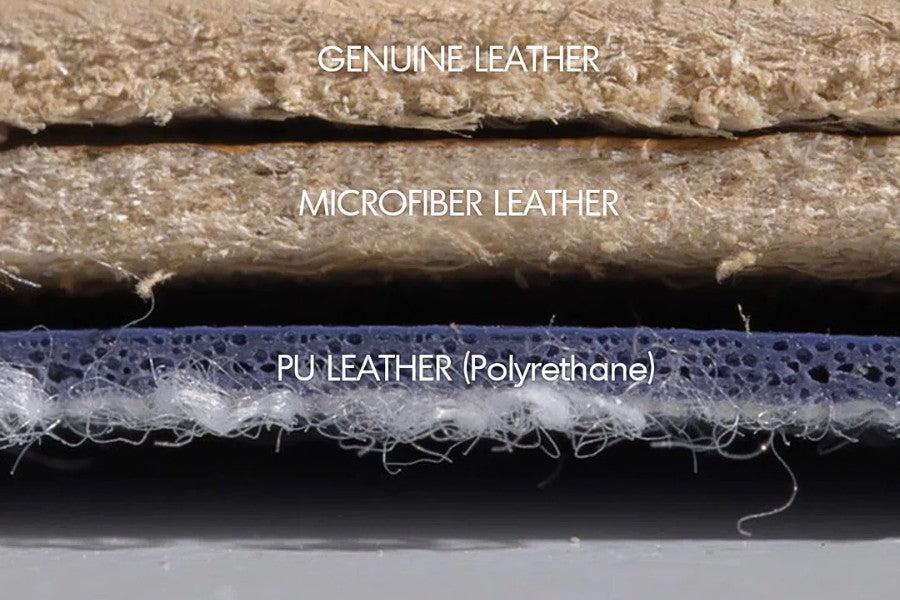
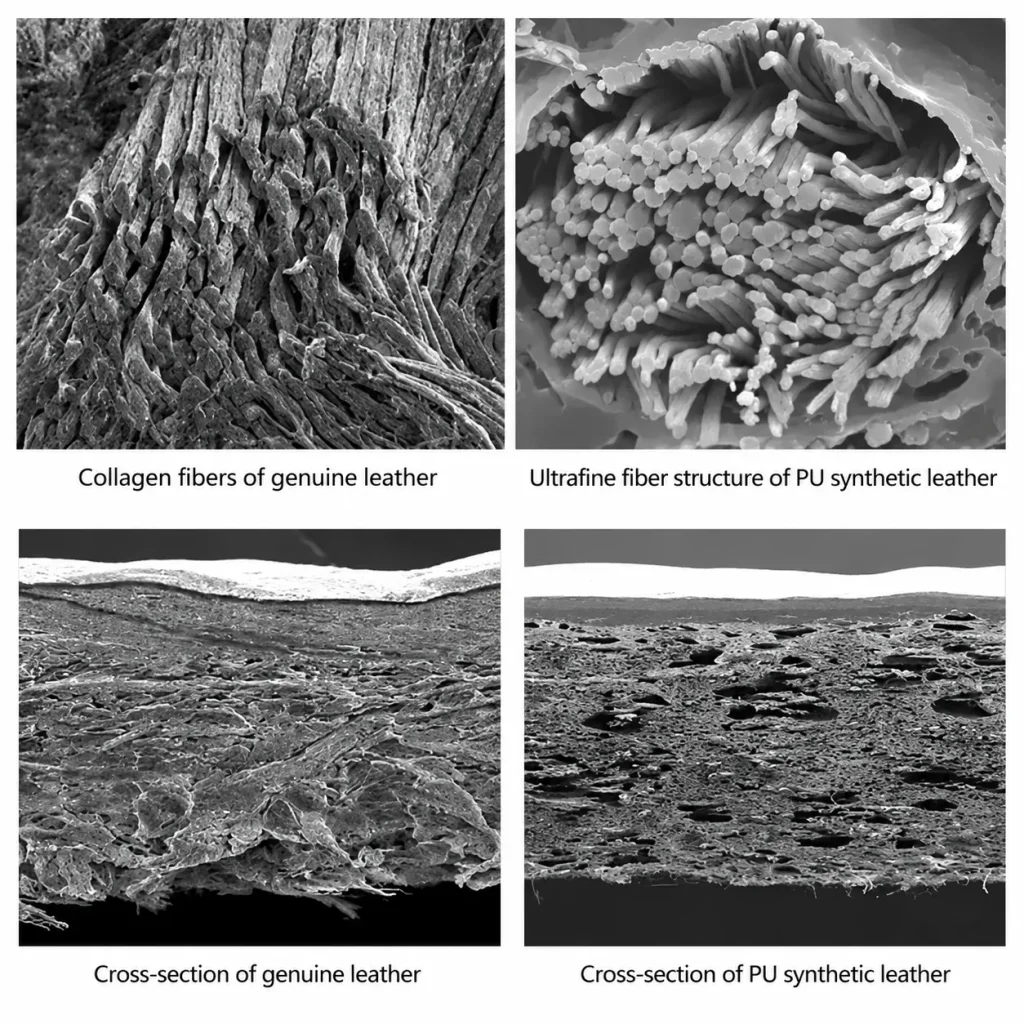
Genuine leather is made from animal hide after tanning, mechanical processing and finishing. Its internal structure is mainly formed by natural collagen fibers.
Synthetic leather is a manufactured material. The most common types include PVC leather, PU leather and microfiber synthetic leather.
PVC leather normally combines a PVC-based surface with a textile backing. PU leather uses polyurethane-based materials, while microfiber leather usually combines a microfiber nonwoven structure with PU systems.
For manufacturers, these materials should not be treated as the same product. Their construction, cost and performance can be very different.
Material Structure and Performance
The biggest difference is the internal structure.
Genuine leather has a natural fiber network, while synthetic leather usually has a more clearly layered structure consisting of a surface coating and textile backing.
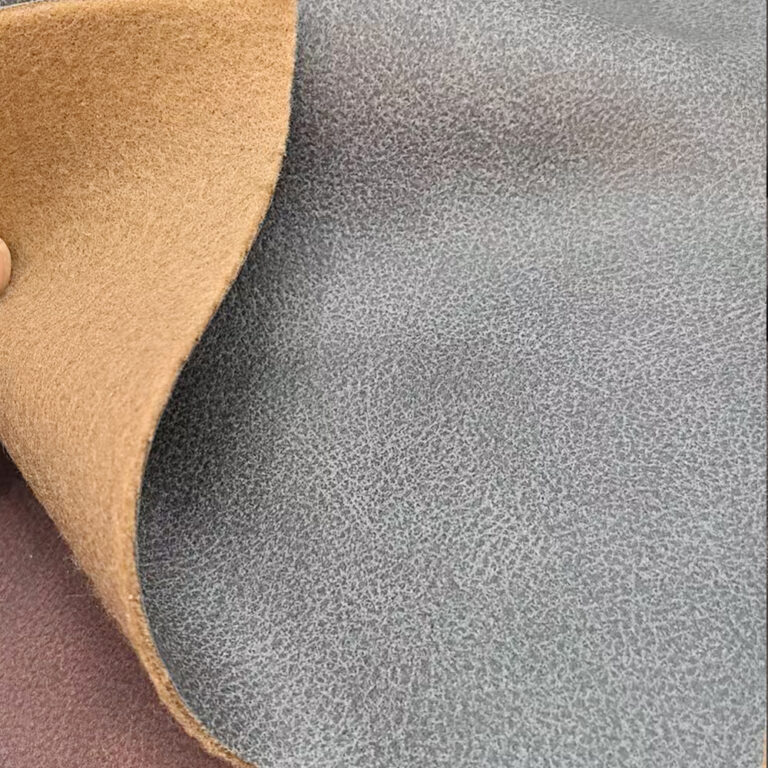
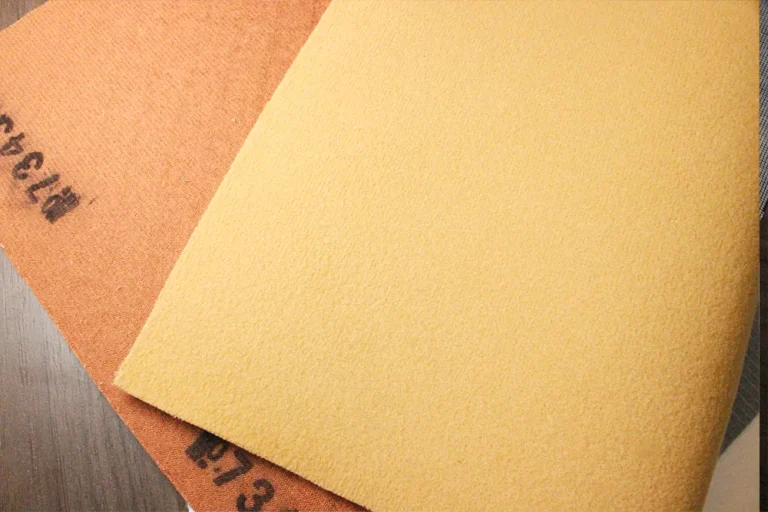
PVC leather can use many different backing materials, including knitted fabric, terry fabric, brushed fabric, woven fabric and mesh.
Different structures can produce different levels of flexibility, tear strength and surface durability.
For industrial applications, buyers normally evaluate the actual specification rather than simply judging whether a material is natural or synthetic.
Important properties may include abrasion resistance, tear resistance, color fastness, UV resistance and aging performance.
Breathability, Feel and Surface Appearance
Genuine leather has a natural fibrous structure and can provide a certain level of air permeability and moisture absorption.
Synthetic leather normally has a more closed coated surface.
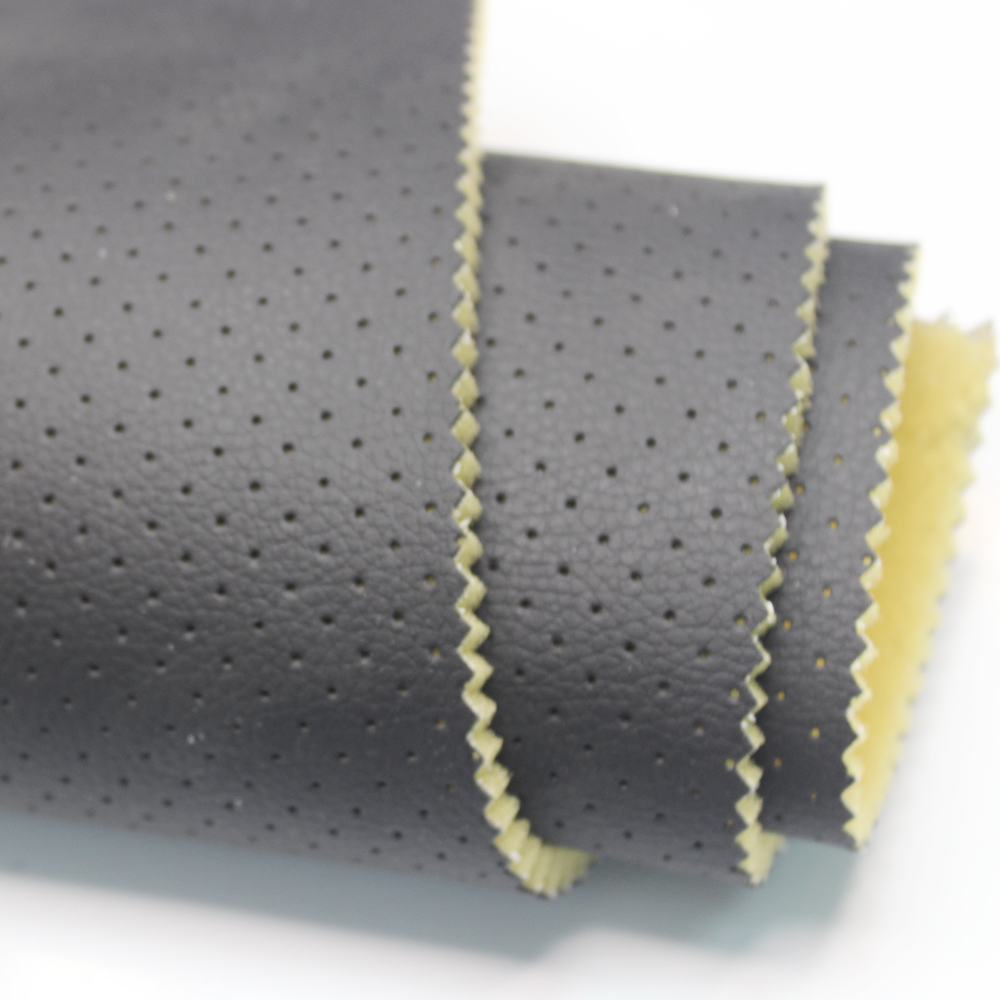
When better airflow is required, synthetic leather can be perforated. This is commonly seen in car seats, motorcycle seats and furniture upholstery.
Genuine leather usually has more natural variation in pores, wrinkles and grain.
Synthetic leather provides better control over surface design.
Manufacturers can select fine grain, litchi grain, pebble grain, wrinkle grain, crocodile patterns, printed surfaces, matte finishes or glossy effects.
This makes synthetic leather especially useful when large production batches need a consistent appearance.
Cutting Efficiency and Manufacturing
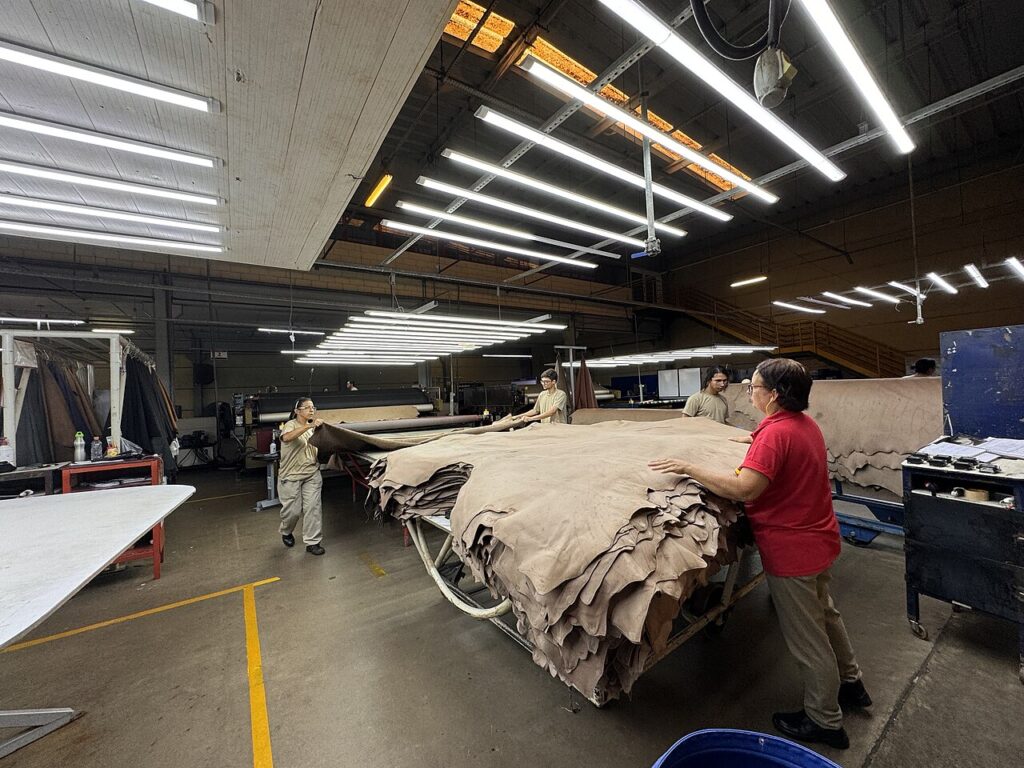
Natural leather is supplied as individual hides.
The shape is irregular, and some areas may contain scars, wrinkles or other natural defects. This means cutting requires more experience and careful pattern placement.
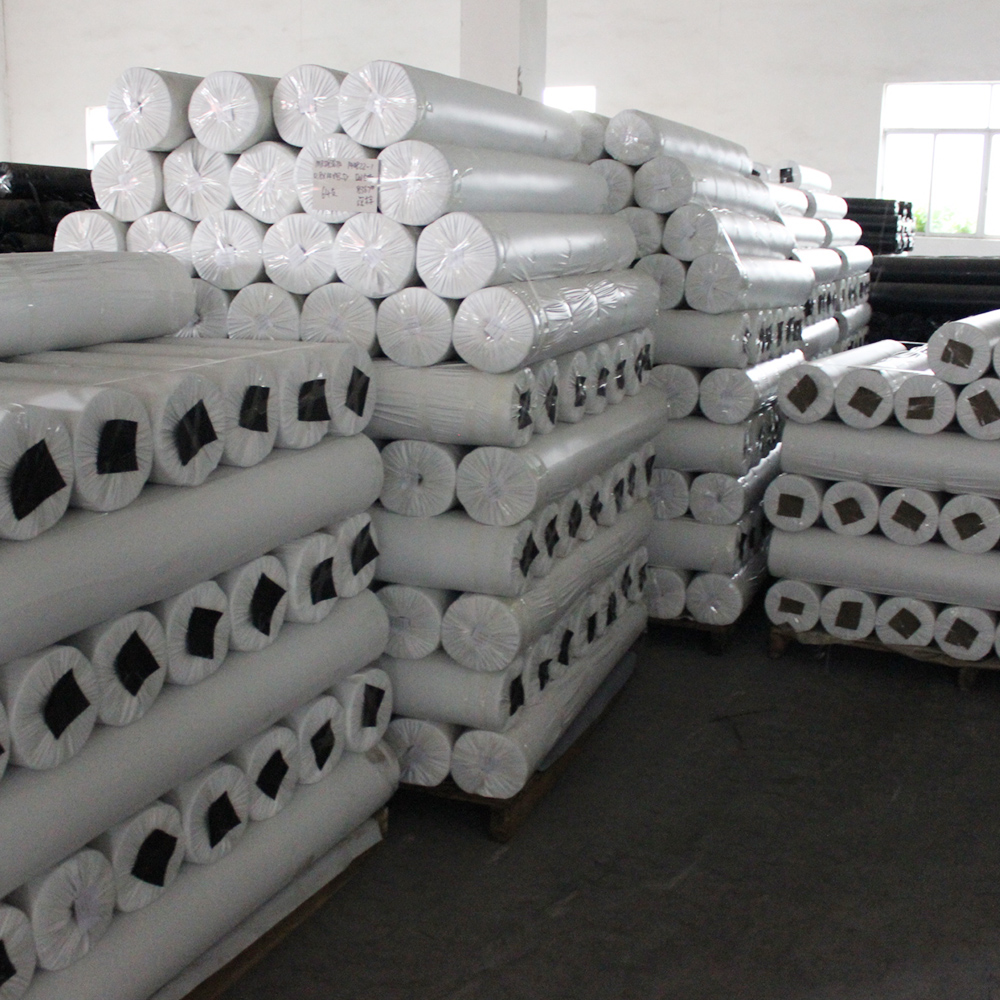
Synthetic leather is normally supplied in continuous rolls with a regular usable width.
For manufacturers, this makes it easier to:
- plan cutting layouts
- calculate material consumption
- repeat production
- control costs
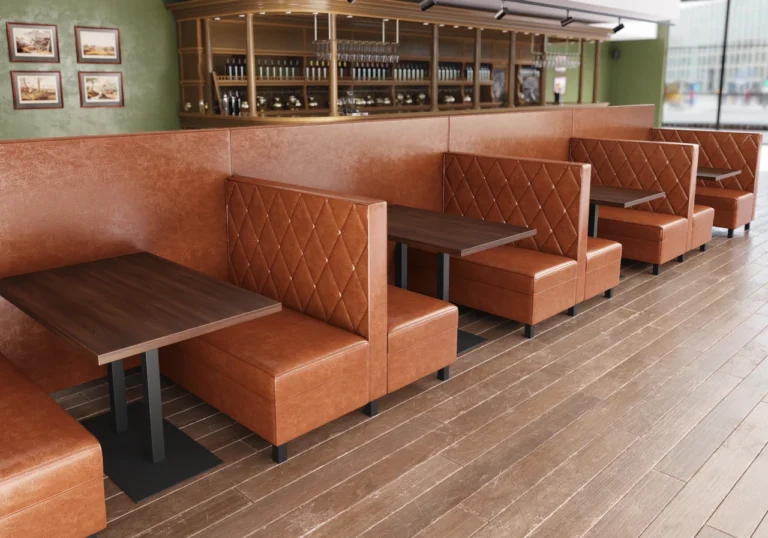
This is one of the main reasons synthetic leather is widely used for mass-produced furniture, bags, footwear and automotive components.
How to Choose Between Genuine and Synthetic Leather
There is no single material that is best for every application.
Genuine leather is often selected when natural grain and natural material character are important.
Synthetic leather is useful when manufacturers need consistent color, controlled thickness, regular roll dimensions and more surface design options.
For B2B buyers, the best approach is to start with the finished product.
Consider:
application → thickness → backing → grain → color → performance → target cost
For PVC synthetic leather, physical samples are also useful for checking hand feel, backing, flexibility and cutting performance before bulk production.
Xiangze Leather supplies PVC synthetic leather for automotive interiors, furniture, bags, footwear, packaging and decorative applications.