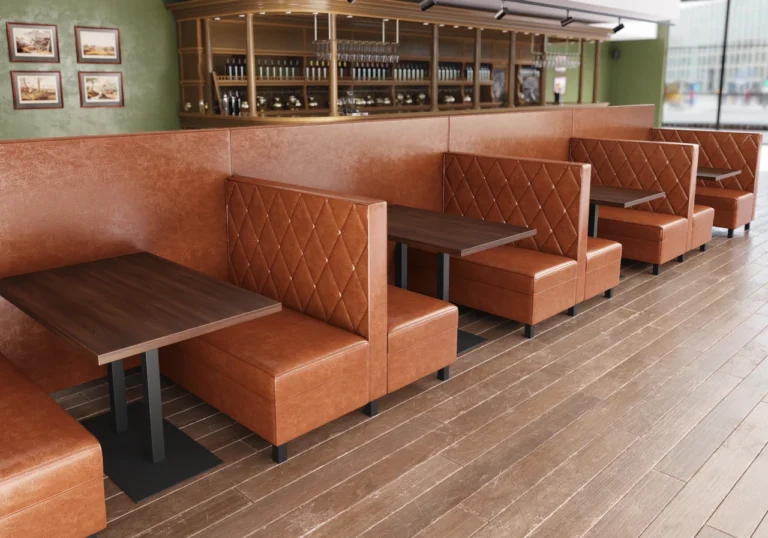
How Backing Fabric Changes PVC Leather for Furniture Upholstery

When choosing PVC leather for furniture upholstery, buyers often compare the surface grain, color and thickness first. However, the fabric underneath the PVC coating can also change how the material behaves.
The backing influences flexibility, stretch, dimensional stability and the way the leather responds during cutting, sewing and upholstery.
This is why two PVC leathers with a similar surface and thickness can feel and perform differently when their backing fabrics are not the same.
What Does the Backing Fabric Do?
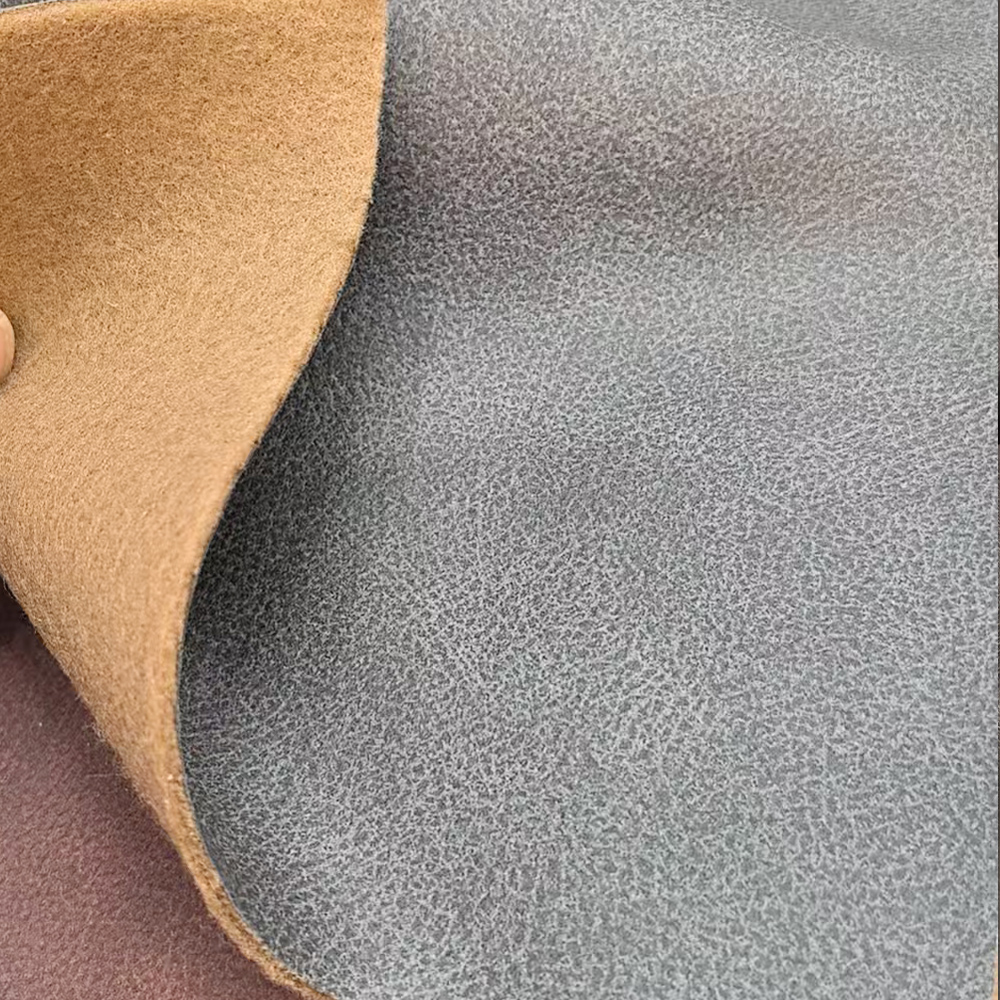
PVC synthetic leather is a composite material rather than a single layer.
The surface provides the visible color, grain and finish, while the textile backing supports the coated structure.
For furniture upholstery, this backing can influence several practical characteristics:
| Backing Characteristic | Effect on PVC Leather |
|---|---|
| Stretch | Changes how easily the material follows curves |
| Stability | Helps the material maintain its dimensions |
| Softness | Influences hand feel and drape |
| Structure | Changes how much body the material has |
| Surface texture | Can influence the feel of the complete construction |
| Processing behavior | Affects cutting, sewing and upholstery |
The backing should therefore be evaluated as part of the complete material rather than as a separate specification.
How Backing Changes Flexibility and Stretch
Furniture contains both flat panels and curved upholstered sections.
When PVC leather is pulled around foam, corners or curved structures, the backing influences how easily the material follows the shape.
A more flexible or stretchable backing can help the material conform to certain curved upholstery components. A more dimensionally stable construction may be useful where excessive movement is undesirable.
Stretch direction is also important.
Some textile constructions allow more movement in one direction, while others provide different levels of multidirectional stretch. This can affect how the material behaves when tension is applied during upholstery.
However, more stretch is not automatically better. Excessive movement can also make positioning and dimensional control more difficult.
The appropriate balance depends on the furniture structure.
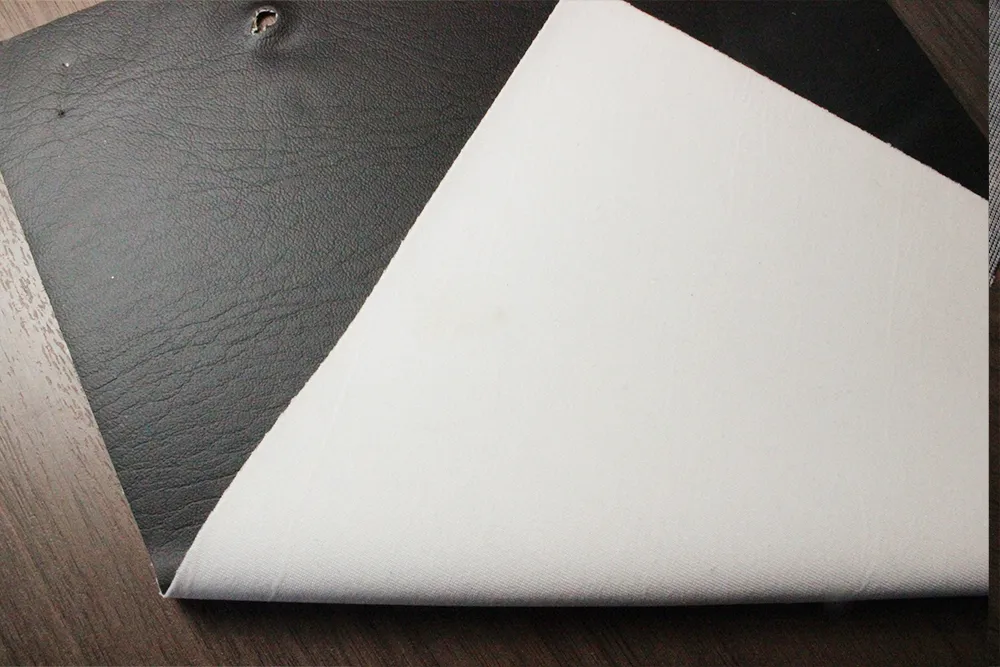
stretch backing fabric for PVC upholstery leatherCommon Backings Behave Differently in Upholstery
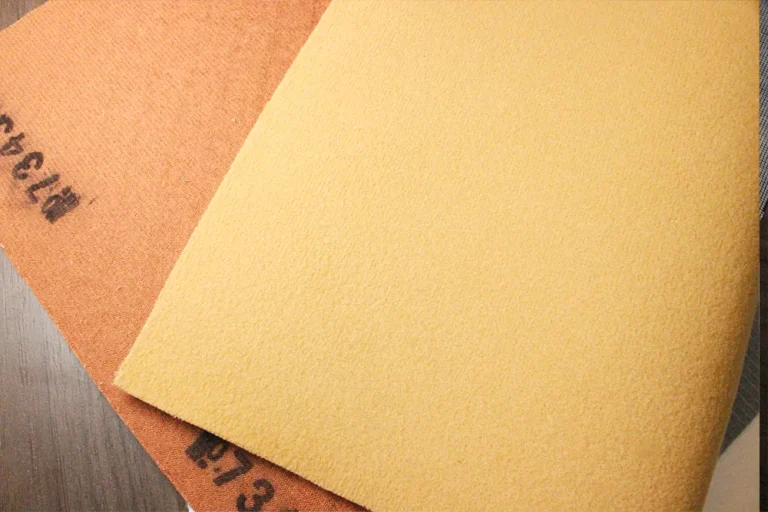
Furniture PVC leather can be produced with different textile backing constructions.
Knitted fabrics generally provide useful flexibility and are common where the material needs to follow upholstered shapes.
Brushed backings can change the hand feel and body of the complete material while providing textile support underneath the coating.
Mesh and other structured textile bases can produce different combinations of support, flexibility and weight.
Stretch fabrics are particularly relevant when the upholstery design requires the material to follow more pronounced curves.
These descriptions are general tendencies rather than fixed performance rules. Fabric construction, yarn, density and the complete PVC coating system all influence the final result.
For a broader overview of the different textile bases, see Common PVC Leather Backing Options.
Backing Also Affects Cutting, Sewing and Upholstery
The difference between backing fabrics becomes especially noticeable during furniture production.
During cutting, the material needs enough dimensional stability to maintain the intended panel shape.
During sewing, the complete PVC-and-textile construction must pass through the machine consistently, particularly where multiple layers overlap.
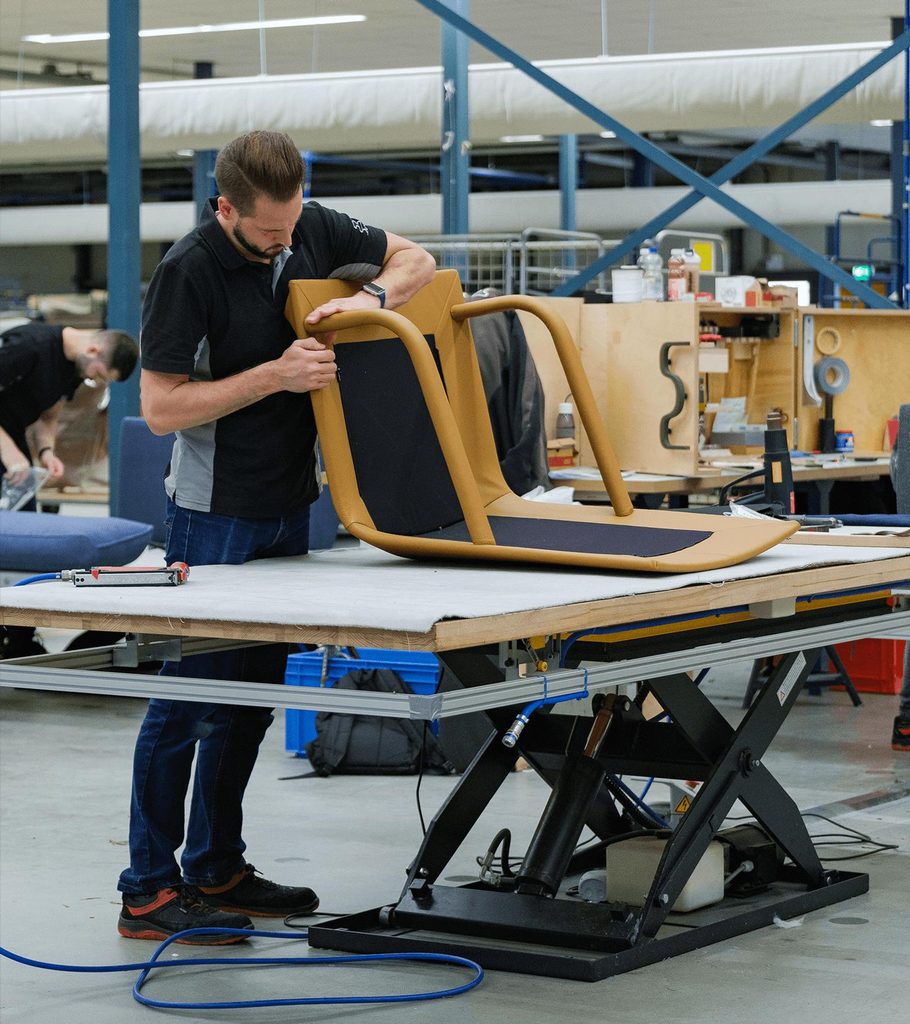
During upholstery, workers may pull the material around foam, corners and frames. The backing influences how the material stretches and distributes this tension.
This means a backing that works well for a relatively flat furniture panel may not behave the same way on a deeply curved chair or sofa component.
The most useful evaluation is therefore performed on the complete PVC leather rather than on the backing fabric alone.
Choose the Backing According to the Furniture Design
There is no single backing fabric that is best for every furniture application.
A sofa cushion, office chair, dining chair and commercial seating system can have different shapes, production methods and usage requirements.
Before confirming the material, consider:
- Shape and curvature of the upholstered component
- Required flexibility
- Stretch direction
- Dimensional stability
- Foam and frame construction
- Seam and edge design
- Cutting and sewing process
A practical upholstery trial is especially useful when changing from one backing construction to another.
Wrap or upholster a representative furniture component and check how the material behaves around foam, seams, corners and areas under tension.
Selecting PVC furniture leather by evaluating the surface, thickness and backing together provides a more reliable basis for production than considering any one specification alone.