Best Practices for Caring and Cleaning PVC Leather Surfaces

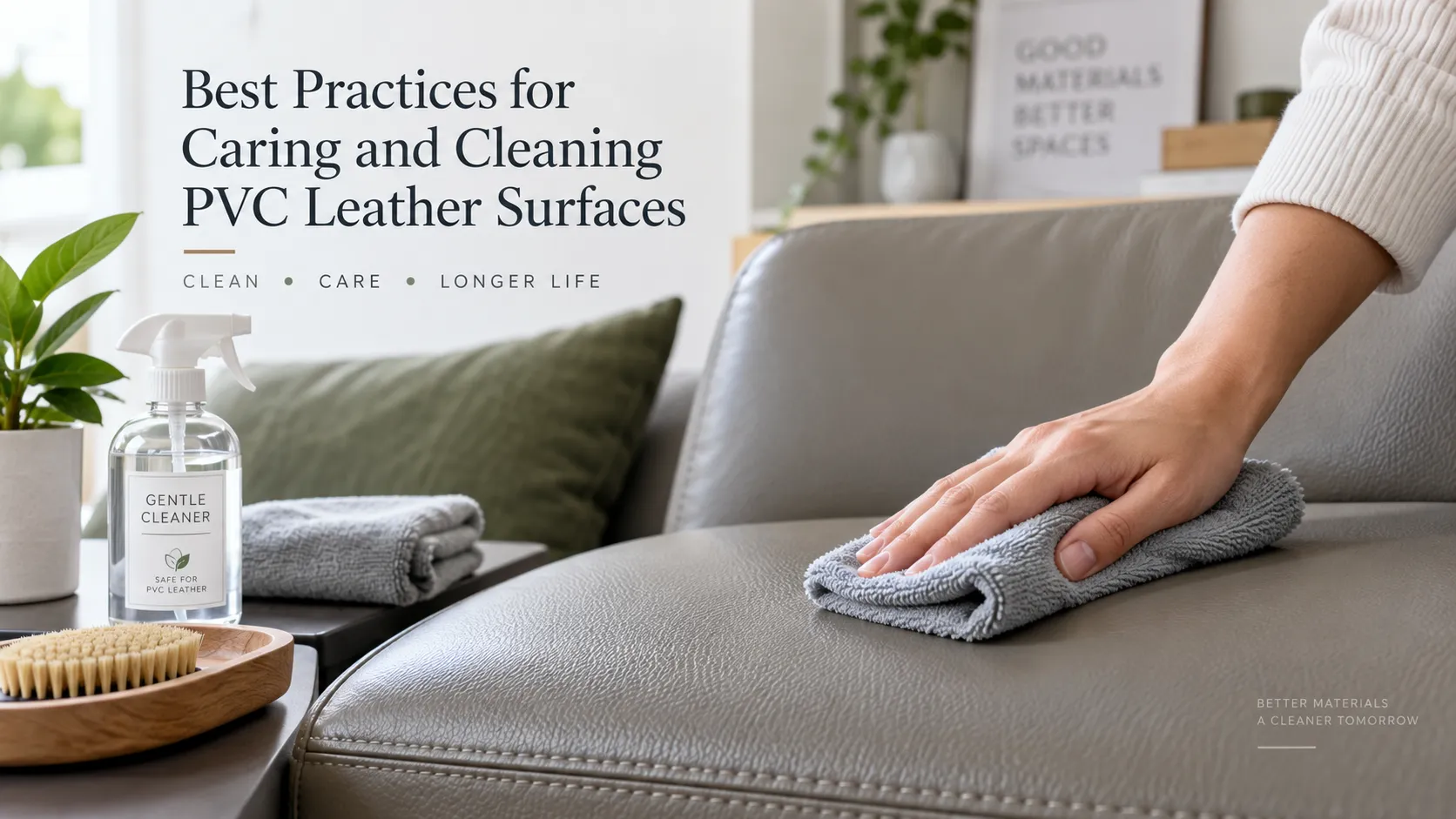
PVC leather is widely used for furniture, automotive interiors, bags, seating and decorative applications partly because its coated surface is relatively easy to clean.
However, “easy to clean” does not mean that every cleaner is safe.
Harsh chemicals, abrasive tools and excessive scrubbing can gradually change the gloss, color or protective surface finish.
For most PVC leather surfaces, the safest approach is:
remove dirt early → use a mild cleaner → wipe gently → remove cleaner residue → allow the surface to dry
Start With Mild Routine Cleaning
For normal dust, fingerprints and light dirt, aggressive chemicals are usually unnecessary.
A simple cleaning process is often enough:
| Step | Recommended Method |
|---|---|
| Remove loose dust | Wipe with a dry or slightly damp soft cloth |
| Prepare cleaner | Use clean water with a small amount of mild neutral soap |
| Clean the surface | Wipe gently with a soft cloth or sponge |
| Remove residue | Wipe again with clean water |
| Dry | Use a clean dry cloth and allow natural drying |
Avoid soaking the material.
Although the PVC surface itself is generally water resistant, excessive liquid can enter seams, perforations or exposed edges and reach the textile structure underneath.
For embossed surfaces, use gentle circular wiping rather than aggressive brushing.
How to Deal With Common Stains
Different contaminants should be treated differently.
The faster a stain is removed, the easier it is to prevent it from becoming difficult to clean.
| Stain | Suggested First Step |
|---|---|
| Dust / mud | Damp soft cloth |
| Food residue | Mild soap solution |
| Sweat / skin oils | Diluted mild soap, followed by clean water |
| Coffee / soft drinks | Blot quickly, then wipe with mild soap |
| Sunscreen / cosmetics | Remove promptly with mild cleaner |
| Grease | Gently remove excess first, then use a compatible cleaner |
| Ink / dye transfer | Check the manufacturer’s recommended cleaner before treatment |
Do not immediately use a stronger solvent when a stain is difficult to remove.
Products such as alcohol, bleach, strong alkaline cleaners, acetone and other solvents may affect some PVC coatings or top finishes.
Chemical resistance varies considerably between formulations.
For commercial projects where specific cleaners or disinfectants will be used regularly, cleaner compatibility should ideally be evaluated during material approval rather than after installation.
Avoid Cleaning Methods That Can Damage the Surface
Some cleaning habits can make PVC leather look clean temporarily while shortening the life of the surface coating.
| Avoid | Possible Result |
|---|---|
| Hard brushes | Scratching and grain damage |
| Abrasive pads | Loss of surface finish |
| Strong solvents | Softening, discoloration or coating damage |
| Undiluted bleach | Color and surface changes |
| Excessive alcohol use | Possible top-coat deterioration |
| Steam cleaning at high temperature | Heat-related surface damage |
| Aggressive repeated rubbing | Premature gloss change and wear |
Another common mistake is using automotive or furniture cleaners simply because the label says “leather cleaner.”
Some products are formulated primarily for genuine leather rather than coated PVC synthetic leather.
Always check whether the product is suitable for vinyl / PVC-coated surfaces.
When using a new cleaning product, test it first on a small hidden area.
Long-Term Care Is More Than Cleaning
Cleaning removes contamination, but long-term surface condition is also influenced by the environment.
PVC leather can age faster when continuously exposed to:
- strong sunlight
- high temperatures
- oils and cosmetics
- repeated chemical cleaning
- sharp objects
- long-term moisture
For automotive or outdoor seating, reducing unnecessary UV and heat exposure can help slow color and surface changes.
For furniture, avoid placing the material directly against strong heat sources.
For bags and other products in storage, keep the surface clean and dry rather than sealing it while damp.
The appropriate maintenance method also depends on how the PVC leather was originally designed.
A general upholstery material, automotive PVC leather and outdoor-grade material may use different surface coatings and therefore have different resistance to cleaning chemicals.
Buyers selecting materials for different applications can compare Xiangze’s PVC Synthetic Leather Materials and application categories.
The simplest care rule is:
Use the mildest cleaning method that works, remove stains early and avoid unnecessary chemical exposure.
That approach is usually safer than repeatedly using strong cleaners on the surface.