How to Choose Synthetic Leather for Decorative Packaging Boxes

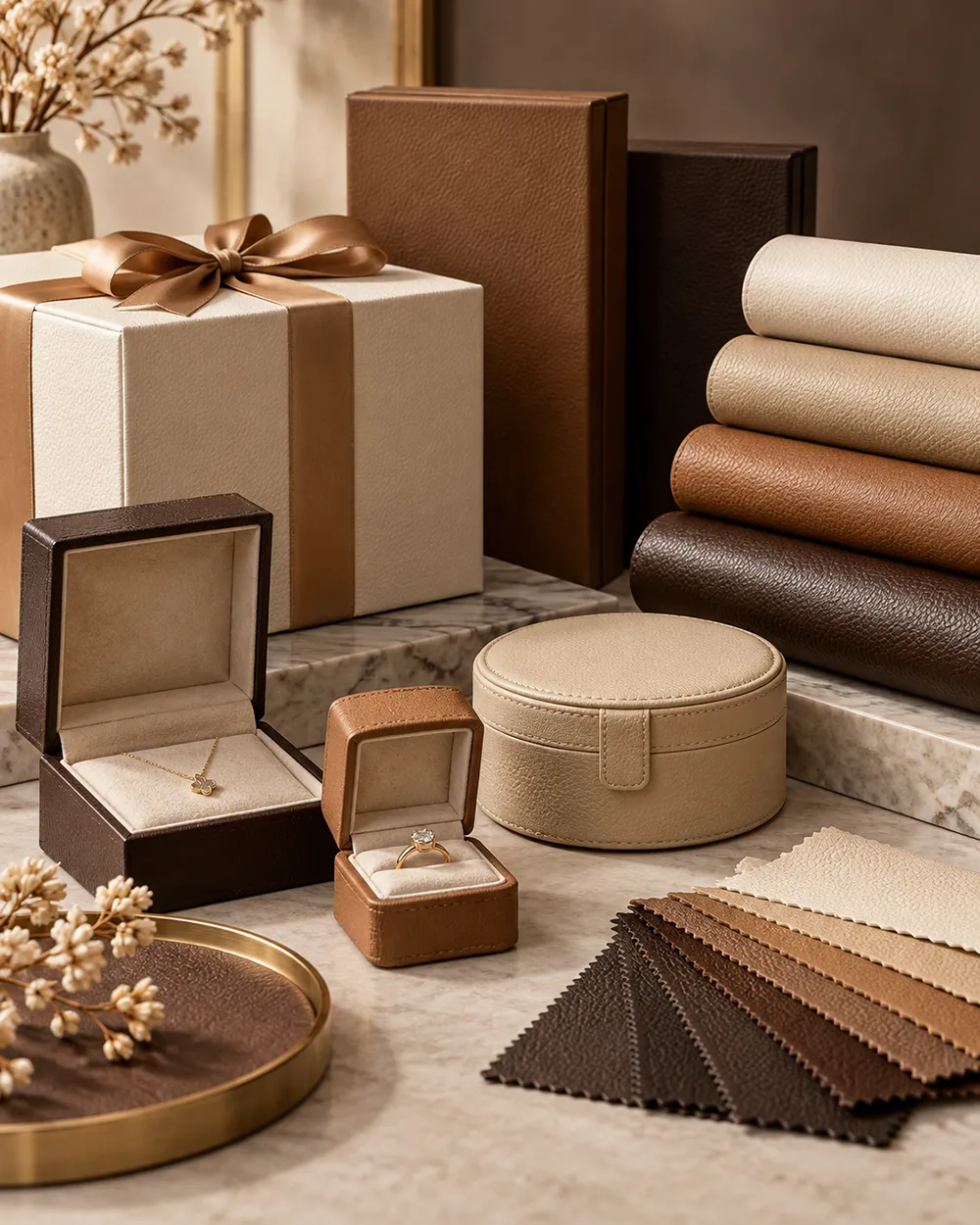
Synthetic leather can turn a simple rigid box into a decorative package with a more distinctive surface, texture and hand feel.
It is used for jewelry boxes, watch boxes, gift boxes, presentation cases and other packaging where the exterior is part of the product experience.
Choosing the material starts with the box design. A leather that looks attractive as a flat sample still needs to wrap cleanly around edges, corners and openings while matching the visual style of the finished package.
Start with the Type of Packaging Box
Different boxes use synthetic leather in different ways.
Some designs cover almost the entire exterior. Others use leather only on the lid, an insert, a decorative panel or a small accent area.
| Packaging Type | Material Priority |
|---|---|
| Jewelry box | Fine texture, clean corners, refined appearance |
| Watch box | Surface consistency and premium hand feel |
| Gift box | Color, decorative effect and wrapping |
| Presentation case | Structure and clean finishing |
| Small accessory box | Fine grain and detail around small edges |
| Decorative panel | Texture, embossing and visual impact |
A small jewelry box, for example, contains tight corners and narrow edges. A large presentation box may have wider, flatter surfaces where grain and color consistency become more visually prominent.
The dimensions and construction of the box should therefore be considered before selecting the leather.
Let the Surface Define the Visual Style
For decorative packaging, the surface is often the first characteristic the customer notices.
Fine grains can create a restrained, clean appearance, while stronger embossed patterns make the packaging more decorative. Smooth, matte, glossy, metallic or printed surfaces can create very different impressions even when used on the same box structure.
Color also interacts with the grain.
Dark colors can emphasize certain embossed textures, while lighter colors may make subtle surface details easier to see. Metallic and special-effect finishes are more visually dominant and are often better used when the packaging itself is intended to attract attention.
The goal is not to select the most complex surface, but to match the leather to the visual identity of the packaged product.
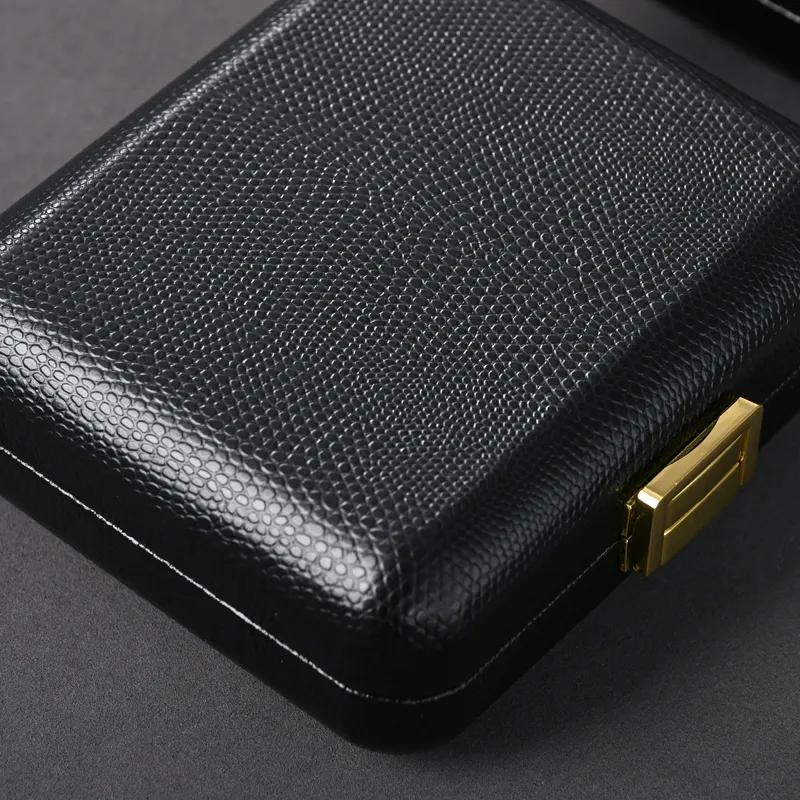
Check How the Leather Wraps Around the Box
A packaging material is not used as a flat sheet.
During production, it may need to be cut, bonded and wrapped around rigid board, curved sections, edges and corners.
This makes wrapping behavior particularly important.
Material that is too bulky for a small box can make corners difficult to finish cleanly. Material with unsuitable flexibility may also create wrinkles or excessive buildup where several edges meet.
Pay particular attention to:
- Tight external corners
- Folded edges
- Lid openings
- Hinged areas
- Overlapping material
- Small decorative components
A useful evaluation is to wrap one actual box rather than judging the leather only from a swatch.
The finished sample quickly shows whether the material can produce the edge and corner quality required by the packaging design.
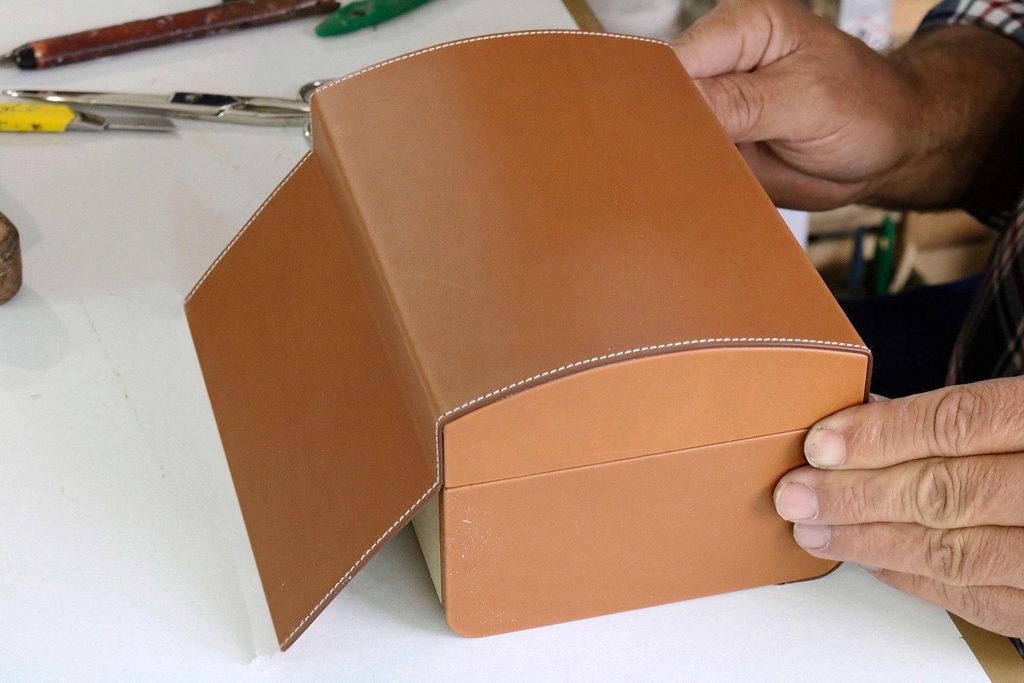
Consider Decorative Finishing After Wrapping
The leather surface may also need to work with additional decorative processes.
Depending on the packaging design, these can include logo embossing, debossing, hot stamping, printing or the addition of metal accessories.
The surface grain can influence how clearly these details appear.
A heavily textured surface may compete visually with a small logo, while a finer surface can provide a cleaner area for subtle branding. Special finishes should also be checked to make sure the intended decorative process produces the expected appearance.
For branded packaging, it is therefore useful to test the leather + box + logo process as one complete combination.
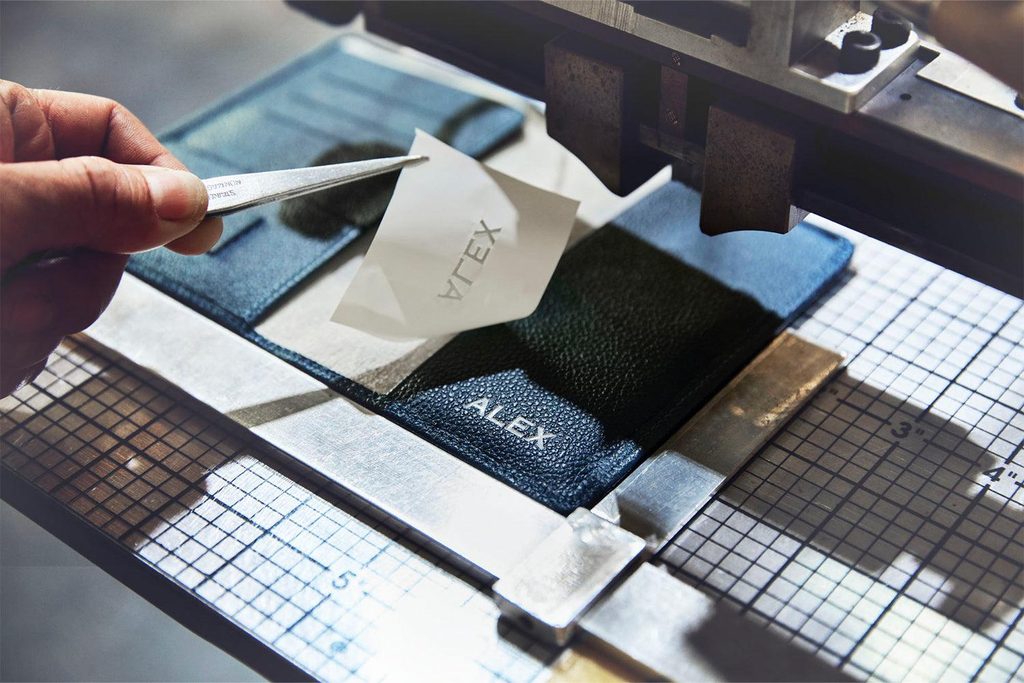
Approve the Finished Box, Not Just the Leather Swatch
Color cards and material swatches are useful for narrowing down options, but the final approval should be based on a completed packaging sample whenever possible.
Check the finished box under normal viewing conditions and look at:
- Overall color and grain
- Corner quality
- Edge finishing
- Wrinkles or material buildup
- Surface marks after wrapping
- Logo and decorative details
- Consistency between different panels
This final step is particularly important for decorative packaging because small finishing details can have a large effect on the appearance of the completed box.
Synthetic leather should therefore be selected as part of the packaging design rather than as an isolated material.
For more material options, explore Xiangze Leather’s synthetic leather solutions for packaging and decorative applications.