PVC Leather Thickness and Backing for Packaging Applications

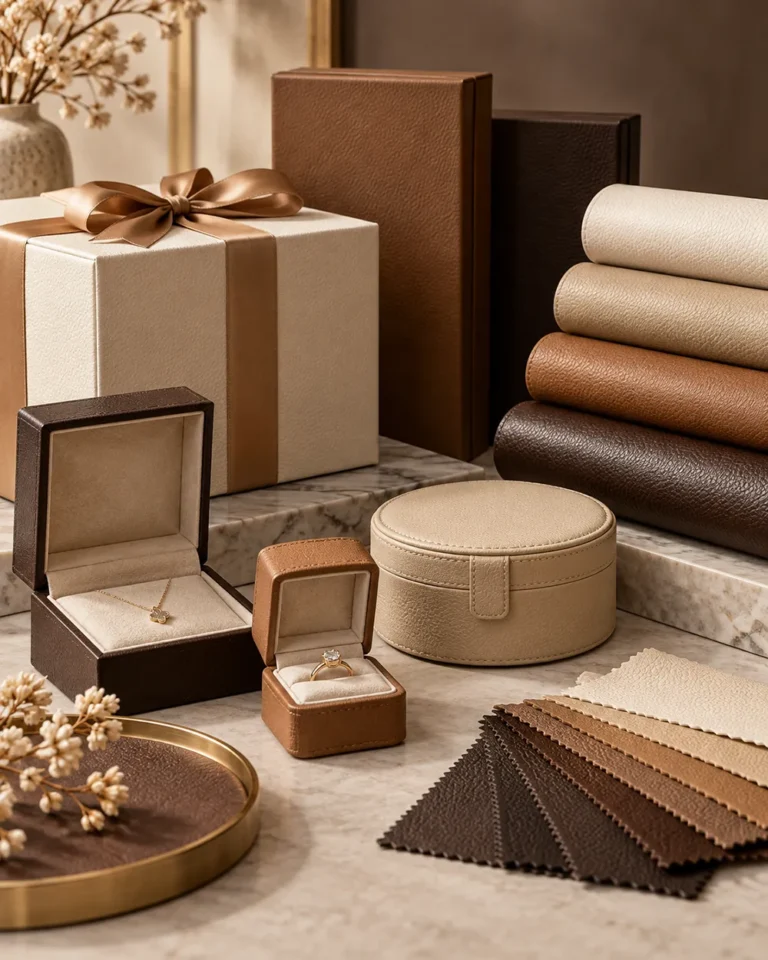
PVC leather used for decorative packaging needs to do more than provide a color or surface texture. It must also work with the structure of the box or case during cutting, bonding, folding and wrapping.
Two specifications have a particularly direct influence on this behavior: thickness and backing fabric.
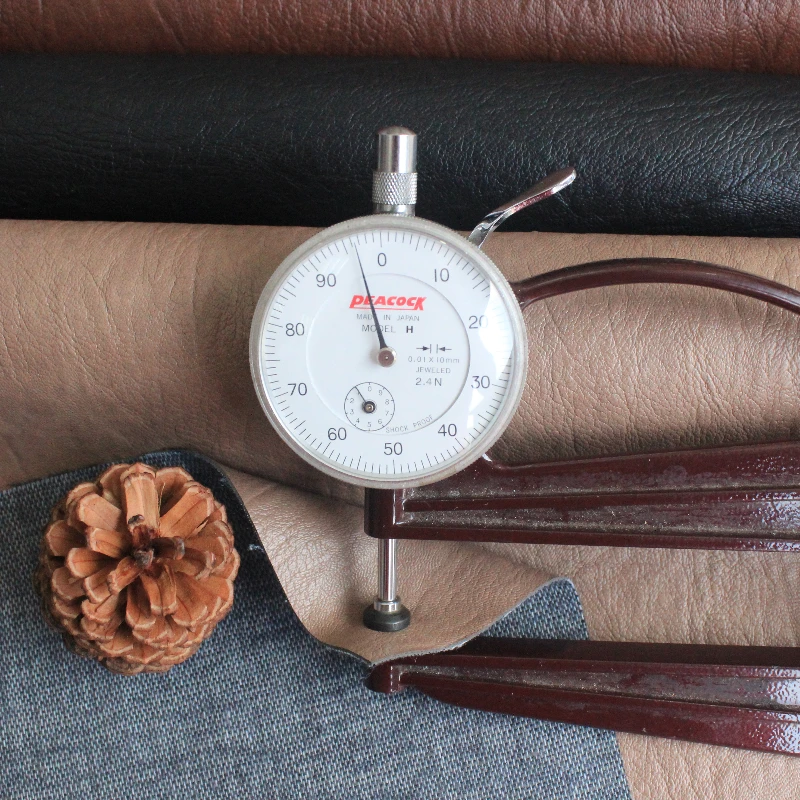
Thickness affects bulk, flexibility and edge construction, while the backing helps determine how the complete material bends, stretches and maintains its shape.
Understanding these two variables makes it easier to evaluate PVC leather for different packaging structures.
What Changes When PVC Leather Becomes Thicker?
Increasing material thickness generally gives PVC leather more body, but it also changes the way the material behaves during wrapping.
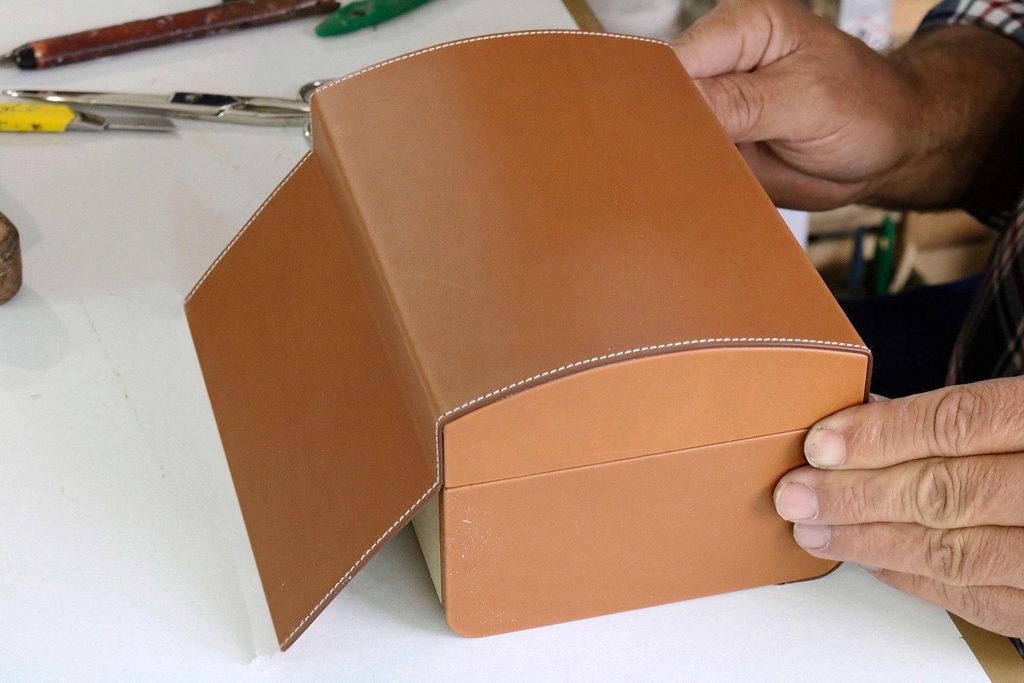
A relatively thin construction can be easier to fold around small edges and tight corners. As thickness increases, the material may feel more substantial, but folded and overlapping areas also become bulkier.
This difference becomes especially noticeable on small packaging boxes.
When material wraps around a corner, several sections can meet within a very small area. Additional thickness at these points can make it more difficult to achieve a clean finished edge.
The effect is different on large, relatively flat panels, where tight folding may be less important.
For this reason, thickness should be considered in relation to the dimensions and geometry of the package rather than as an isolated quality indicator.
Thickness Changes More Than the Flat Material
A thickness specification describes the material before it is converted into packaging.
The actual construction can become quite different after folding.
Consider a simple edge:
Single layer → Folded edge → Overlapping corner
Each step increases the amount of material occupying the same area.
This is why two PVC leathers that look similar as flat samples can produce noticeably different corners after wrapping.
The relationship can be summarized simply:
| Packaging Feature | What Thickness Influences |
|---|---|
| Small corners | Fold bulk and corner definition |
| Narrow edges | Ease of wrapping |
| Large flat panels | Body and surface appearance |
| Hinged areas | Bending behavior |
| Overlapping sections | Total material buildup |
| Small boxes | Precision around details |
The finished package is therefore a better place to evaluate thickness than the material roll alone.
What Does the Backing Change?
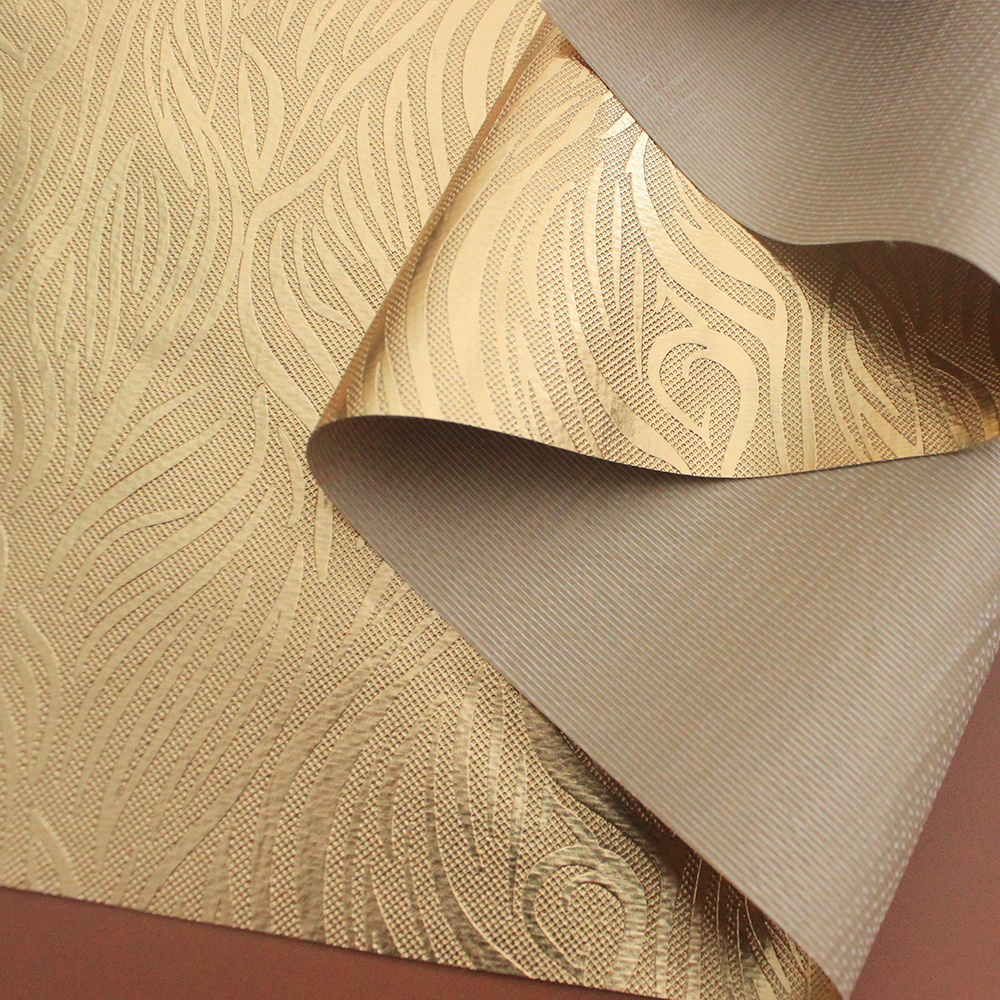
The backing is the textile layer underneath the PVC surface.
It provides support to the coated material and influences how the complete construction behaves when it is cut, folded, bonded or pulled around a packaging component.
Different textile constructions can change:
- Flexibility
- Stretch
- Dimensional stability
- Hand feel
- Fold behavior
- Bonding surface
- Overall material body
A flexible backing can help the material follow certain shapes, while a more stable construction can reduce unwanted movement during processing.
However, the backing should not be judged independently from the PVC layer.
The final behavior comes from the combination of surface coating + base fabric + total thickness.
For a broader explanation of textile bases used in synthetic leather, see Common PVC Leather Backing Options.
textile backing of PVC leather for packagingThickness and Backing Work Together
Thickness and backing should not be selected as two unrelated specifications.
For example, two materials can have the same total thickness but use different backing constructions. One may bend easily around an edge, while another feels more structured.
Likewise, two materials using similar textile backing can behave differently when the coating construction and total thickness change.
For packaging applications, the useful question is therefore not simply:
“What thickness do I need?”
It is:
“How does this complete material construction behave on my packaging structure?”
This is particularly important for decorative boxes with tight corners, curved sections, hinges or multiple folded edges.
If the application is a decorative jewelry, watch or gift box, see How to Choose Synthetic Leather for Decorative Packaging Boxes for the broader material-selection process.
Compare Materials on the Actual Package
A practical way to compare thickness and backing is to make the same packaging component with different material samples.
Instead of comparing only flat swatches, use the same box structure, adhesive and wrapping method.
Then compare:
- Corner definition
- Fold thickness
- Wrinkles around edges
- Surface flatness
- Ease of positioning
- Bonding behavior
- Appearance at overlapping areas
This makes differences between material constructions much easier to identify.
For packaging manufacturers, the most useful PVC leather specification is therefore not necessarily the thickest, thinnest or most flexible option. It is the combination of thickness and backing that works with the intended packaging structure and production process.