How to Choose Decorative PVC Leather for Interior Applications

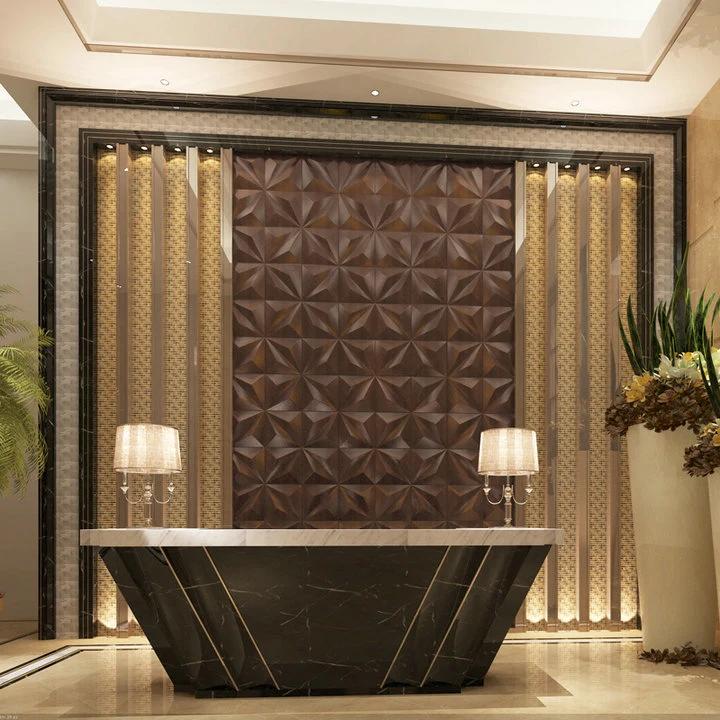
Decorative PVC leather can add color, texture and a soft-touch surface to interior panels, headboards, wall features and other covered components.
Unlike seating upholstery, where repeated body contact and wear are often major considerations, decorative interior applications place greater emphasis on surface appearance, panel geometry, edge finishing and the relationship between the material and the surrounding interior design.
The right material therefore depends first on where and how it will be installed.
For a broader overview of related materials and applications, see our Synthetic Leather for Packaging & Decorative Applications.
Match the PVC Leather to the Interior Application
Decorative interior surfaces can have very different structures.
A large flat wall panel does not place the same demands on PVC leather as a padded headboard or a small decorative insert.
| Interior Application | What Matters Most |
|---|---|
| Decorative wall panels | Surface consistency and grain scale |
| Padded wall panels | Flexibility around foam and edges |
| Headboards | Texture, hand feel and clean finishing |
| Decorative inserts | Fine details and grain proportion |
| Panel coverings | Flatness, bonding and edge wrapping |
| Feature panels | Color, texture and visual impact |
Large panels make color and surface consistency more noticeable. Smaller or more complex components place greater emphasis on how easily the material can be wrapped around edges and corners.
If the project is primarily seating, sofas or chairs rather than decorative surfaces, the material requirements are different. See Synthetic Leather for Furniture Upholstery for those applications.
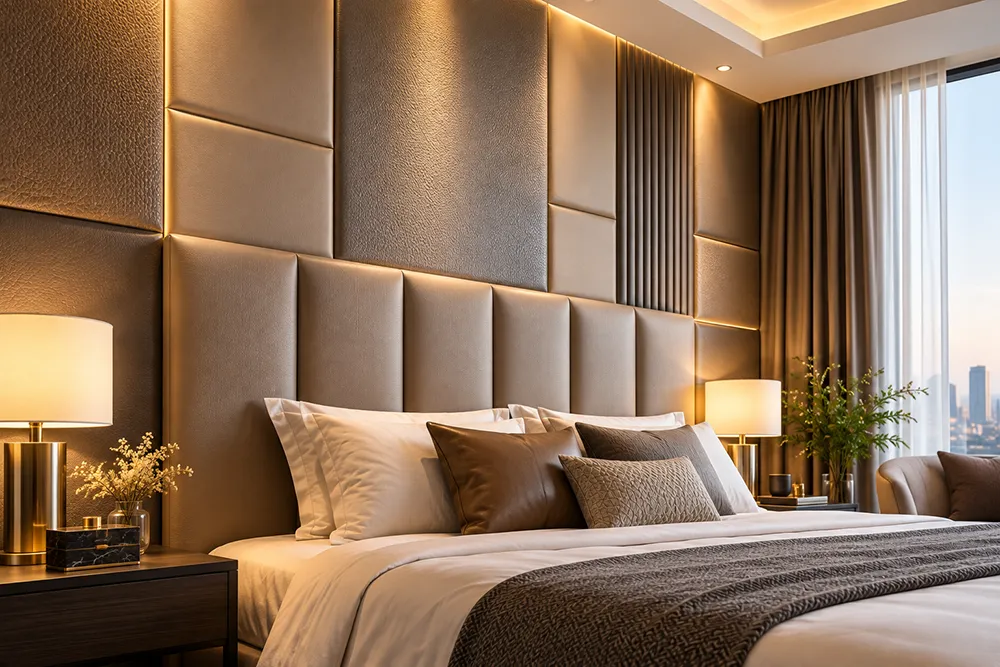
Use Grain, Finish and Color as Design Elements
For decorative applications, PVC leather becomes part of the visible interior design rather than simply acting as a covering material.
Fine grains can create a relatively restrained appearance across large panels, while stronger embossed patterns can make feature areas more visually prominent.
Finish changes the effect further.
A matte surface can produce a softer appearance, while higher-gloss finishes reflect more surrounding light. Embossed surfaces create highlights and shadows that change as the viewing angle changes.
Color should also be evaluated at the scale of the finished component.
A strong color that works well on a small sample may become visually dominant across a large wall panel. Wood, metal, fabric, flooring and surrounding finishes can also change how the color is perceived.
For projects where appearance is important, compare the PVC leather beside the other interior materials rather than approving it in isolation.
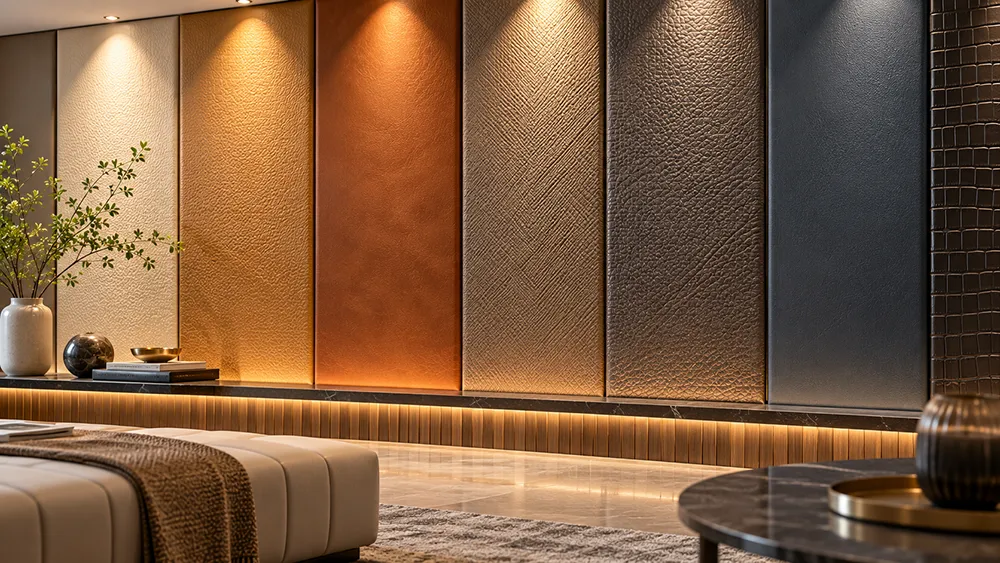
Check How the Material Handles Panels, Foam and Corners
Decorative PVC leather still has to be converted from a roll into a finished interior component.
Depending on the design, it may be:
bonded to a rigid panel → wrapped around an edge → formed over foam → folded around a corner
Each step places different demands on the material.
For rigid panels, check whether the surface remains smooth after bonding. For padded panels and headboards, the material needs to follow the underlying shape without creating unwanted wrinkles.
Corners and small-radius edges deserve particular attention because several sections of material can meet within a limited area.
The textile backing underneath the PVC surface can influence flexibility, stretch, dimensional stability, folding and bonding behavior. For a detailed explanation of the different constructions, see PVC Leather Backing Options: Types & Applications.
Instead of choosing a backing by name alone, evaluate how the complete PVC leather construction behaves on the intended panel.
Evaluate the Details That Remain Visible After Installation
A decorative panel is judged as a finished object, not as a small material swatch.
Once installed, the eye is often drawn to details such as edges, corners, joints and transitions between adjacent panels.
Check:
- Grain consistency across larger areas
- Surface flatness
- Corner finishing
- Wrapped-edge thickness
- Seams or panel joints
- Surface appearance around curves
- Consistency between adjacent panels
Lighting should also be considered.
Directional lighting can emphasize embossed textures, gloss differences and small surface variations that may not be obvious when looking at a small sample under ordinary lighting.
This is one reason a larger sample is useful when PVC leather will cover a visually prominent interior surface.
Approve a Representative Interior Panel Before Production
Before confirming the material, produce a representative panel using the intended construction.
Use the actual substrate, foam where required, adhesive or fixing method, and the same edge treatment planned for production.
Then evaluate the complete result.
A useful mock-up should answer three questions:
Does the surface look right at the intended scale?
Can the PVC leather be installed cleanly around the actual edges and geometry?
Does the finished panel work with the surrounding materials and lighting?
If the application changes from decorative panels to conventional upholstered furniture, material selection should also consider seating construction, flexibility and backing requirements. Our PVC Leather for Furniture: How to Choose guide covers that selection process in more detail.
For other end-use categories, you can also browse the Synthetic Leather Applications overview to compare materials according to the finished product.