From Concept to Production: Managing Material Selection for PVC Leather

A PVC leather project often starts with a simple idea:
“We need a black leather for a car seat.”
or:
“We need a beige grain for a new sofa collection.”
But before that idea becomes a production material, many details need to be confirmed.
Color, grain, thickness, surface finish, processing behavior and performance requirements all affect the final result.
A practical sourcing process is:
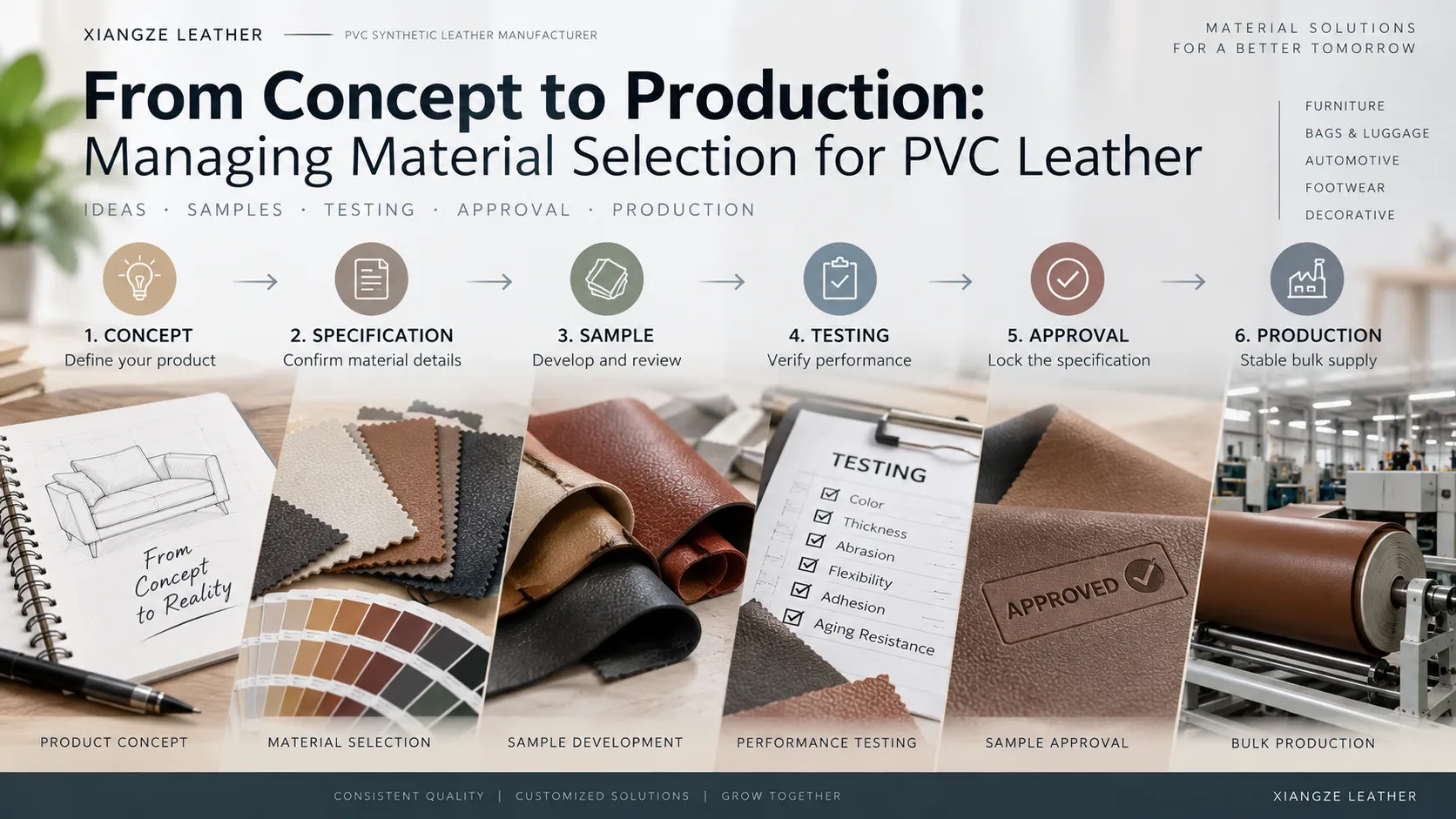
Concept → Material Specification → Sample → Testing → Approval → Bulk Production
Define the Product Before Selecting the Leather
The finished product should determine the material, not the other way around.
Before asking a supplier for samples, buyers should first define the basic application.
| Project Information | Example |
|---|---|
| Application | Sofa, car seat, handbag, shoe upper |
| Target Market | Domestic / export |
| Product Positioning | Economy / mid-range / premium |
| Appearance | Matte, gloss, fine grain, embossed |
| Color | Standard or custom |
| Production Process | Cutting, sewing, wrapping, bonding |
| Expected Quantity | Trial order / bulk production |
A sofa manufacturer and a bag factory may both ask for 1.0 mm PVC leather, but the required flexibility, grain and surface behavior can be very different.
This is why a clear application description helps the PVC leather supplier recommend more relevant materials from the beginning.
Turn the Concept Into a Material Specification
Once the application is clear, the next step is to convert the idea into measurable specifications.
| Specification | What Buyers Should Confirm |
|---|---|
| Material | PVC synthetic leather |
| Thickness | Target range |
| Width | Required usable width |
| Grain | Fine, litchi, pebble, crocodile, etc. |
| Color | Standard / custom / reference sample |
| Surface Finish | Matte, gloss, printed, metallic |
| Hand Feel | Soft / medium / firm |
| Performance | Abrasion, aging, cleaning, tear, etc. |
The goal is to move away from vague requests such as:
“We need high-quality leather.”
and replace them with something more useful:
“PVC leather for sofa upholstery, 1.0 mm, matte fine grain, warm beige, suitable for repeated seating use.”
If an existing material needs to be reproduced, a physical reference sample is often the fastest starting point. See How to Match PVC Leather from an Existing Material Sample.
Evaluate Samples Before Approving the Material
The first sample should not be treated as the final product automatically.
It should be evaluated from both appearance and production perspectives.
| Sample Check | What to Evaluate |
|---|---|
| Color | Match against approved reference |
| Grain | Pattern, depth and scale |
| Thickness | Whether it fits the product design |
| Flexibility | Suitability for forming or wrapping |
| Surface | Gloss, texture and finish |
| Cutting | Stability during cutting |
| Sewing | Needle response and seam appearance |
| Performance | Required physical or aging tests |
Whenever possible, the sample should be tested using the actual manufacturing process.
For example:
- furniture factories can wrap the leather around foam
- bag factories can test cutting and sewing
- automotive suppliers can test upholstery and surface durability
For vehicle applications, additional evaluation may include abrasion, adhesion, light aging or other project-specific tests. Buyers can review Synthetic Leather for Automotive Interiors for application examples.
The approved physical sample should then become the reference for production.
Control the Transition From Approved Sample to Bulk Production
One of the most important stages is the transition from a successful sample to large-scale production.
The buyer should confirm that the final order matches the approved specification.
| Before Bulk Production | What to Confirm |
|---|---|
| Approved Sample | Keep as physical reference |
| Color | Confirm final color |
| Grain | Confirm embossing pattern |
| Thickness | Confirm tolerance |
| Width | Confirm usable width |
| Quantity | Confirm order volume |
| Packing | Roll length and packaging |
| Performance | Confirm agreed test requirements |
| Lead Time | Confirm production schedule |
This becomes particularly important for repeat orders.
A material used for a furniture collection, bag style or vehicle program may be reordered months later. The supplier should therefore be able to identify the original approved specification and reproduce it consistently.
For buyers, the safest workflow is:
define the finished product → confirm the material specification → approve the physical sample → test the real production process → lock the specification → start bulk production
That process reduces the risk of choosing a material that looks correct in a sample book but performs poorly during manufacturing.
For new sourcing projects, buyers can contact Xiangze Leather with the intended application, reference sample and basic specification to narrow suitable material options before requesting samples.
Good material selection begins with the finished product and ends with a clearly approved production specification.