How to Match Bag Leather with Lining, Hardware and Edge Paint

Choosing synthetic leather is only one part of bag material development.
The finished result also depends on how the leather works with the lining, hardware, reinforcement, thread and edge paint used in the same product.
A material that looks suitable as an individual swatch may behave very differently after these components are combined.
For this reason, bag materials should be evaluated as a complete system rather than selected separately.
Start With the Bag Leather as the Main Reference
The outer synthetic leather usually determines the main visual direction of the bag.
Before selecting supporting materials, confirm the important characteristics of the leather:
- Surface color
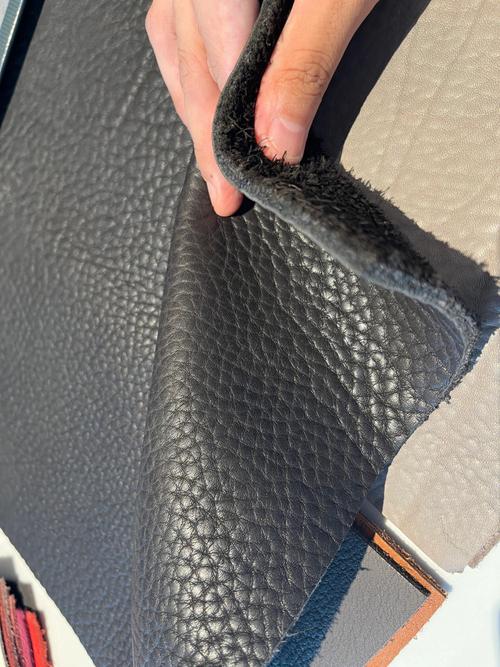
- Grain and texture
- Gloss level
- Thickness
- Flexibility
- Backing construction
- Edge structure
- Overall material body
A soft matte leather creates a different visual and structural requirement from a high-gloss or heavily embossed material.
For example, a soft bag leather may work better with a flexible lining and lighter reinforcement, while a structured outer material may require a more stable internal construction.
The leather should therefore be treated as the starting point for the rest of the material selection.
For PVC leather for bags and luggage, surface appearance should be considered together with the way the material will be sewn, folded and reinforced.
Match the Lining to Structure and Thickness
Lining is not only decorative.
It changes the total thickness, flexibility and feel of the finished bag.
A heavy lining combined with thick synthetic leather and reinforcement can create excessive bulk around seams and corners.
A very light lining, however, may not provide enough support for certain bag constructions.
| Outer Leather | Lining Direction to Consider |
|---|---|
| Soft flexible leather | Lightweight or flexible lining |
| Medium-body leather | General woven or textile lining |
| Structured leather | Stable lining according to bag construction |
| Thick leather | Avoid unnecessary lining bulk |
| Thin leather | Lining may contribute more to structure |
The lining should also be checked around:
- Zipper openings
- Inside pockets
- Gussets
- Corners
- Handle attachment points
- Turned seams
A combination that feels acceptable in a flat sample can become difficult to sew once several layers overlap.
This is why lining should be included during prototype testing rather than added only after the outer leather has already been approved.
Match Hardware With Leather Thickness and Color
Hardware affects both appearance and construction.
Common bag hardware includes:
- Buckles
- D-rings
- O-rings
- Snap hooks
- Rivets
- Magnetic closures
- Zippers
- Strap adjusters
The first consideration is physical compatibility.
Strap thickness must fit the opening of buckles and adjusters. Rivets need enough material thickness to hold securely without crushing the leather. Rings and hooks should also match the intended strap width.
Hardware weight matters as well.
Heavy metal components can pull on soft or thin synthetic leather, particularly around narrow straps and attachment tabs.
Reinforcement may therefore be required around these areas.
The second consideration is visual matching.
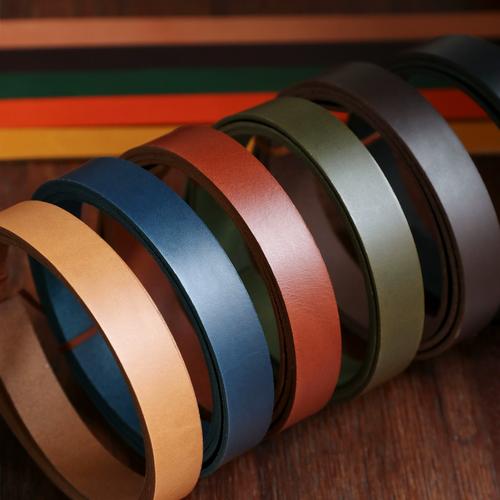
Warm brown, tan and cognac leather often works naturally with brass, antique gold or warm metallic finishes.
Black, gray or cooler colors may pair well with nickel, silver or gunmetal finishes.
These are design directions rather than fixed rules.
The safest method is to place the actual leather and hardware together under normal lighting before confirming the combination.
Choose Edge Paint From the Actual Cut Edge
Edge paint should not be selected only by matching the surface color of the synthetic leather.
The exposed cut edge may contain:
- PVC coating
- Backing fabric
- Reinforcement
- Adhesive
- Multiple leather layers
These layers influence both the appearance and the way the edge paint adheres.
Two common approaches are:
Tone-on-tone edge paint
Uses a color close to the surface leather for a clean and understated finish.
Contrast edge paint
Uses a visibly different color to make the edge part of the design.
Whichever approach is used, test the color on the finished edge rather than only comparing liquid paint against the leather surface.
The same edge paint can appear darker or lighter depending on:
- Number of coats
- Base or filler layer
- Edge preparation
- Underlying backing color
- Surface gloss
Handles, straps and flaps also bend repeatedly, so edge-paint flexibility matters as much as color.
A visually perfect edge that cracks after repeated bending is not a suitable combination.
For components with exposed painted edges, test the actual synthetic leather together with the intended preparation and edge-paint system before bulk production.
Build a Complete Material Sample Before Approval
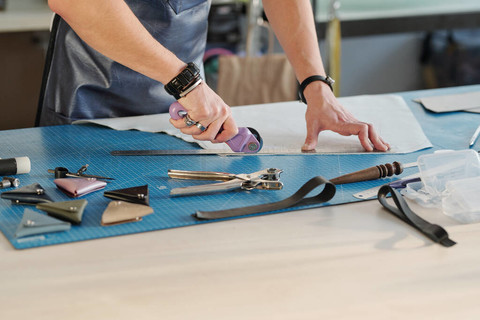
The most reliable way to confirm compatibility is to create a small material combination sample.
Include the actual:
- Synthetic leather
- Lining
- Reinforcement
- Thread
- Hardware
- Adhesive
- Edge paint
Then evaluate both appearance and production behavior.
| Check | What to Evaluate |
|---|---|
| Color coordination | Leather, lining, hardware and edge paint work together |
| Total thickness | Finished layers are not excessively bulky |
| Sewing | Layers feed and stitch consistently |
| Folding | Corners and straps bend correctly |
| Hardware | No excessive pulling, crushing or distortion |
| Edge paint | Good coverage and adhesion |
| Surface | Hardware does not create unwanted marks |
| Finished shape | Material combination supports the intended design |
For handles and straps, make the actual reinforced construction and install the intended hardware.
For gussets, test the lining and outer leather together around the expected corner radius.
For painted edges, complete the full finishing process before judging the result.
A useful development sequence is:
material swatches → combined material sample → component sample → prototype bag → bulk approval
This is more reliable than approving every material separately.
The best bag material combination is not necessarily the one with the thickest leather, strongest lining or heaviest hardware.
The goal is to make all components work together according to the intended appearance, structure and manufacturing process.
Xiangze Leather supplies synthetic leather for handbags, backpacks, luggage and other bag applications in different thicknesses, surface grains and backing constructions. Material samples can be evaluated together with the buyer’s lining, hardware and finishing process before bulk production.