Comparing PVC Leather and Genuine Leather for Packaging and Decorative Projects

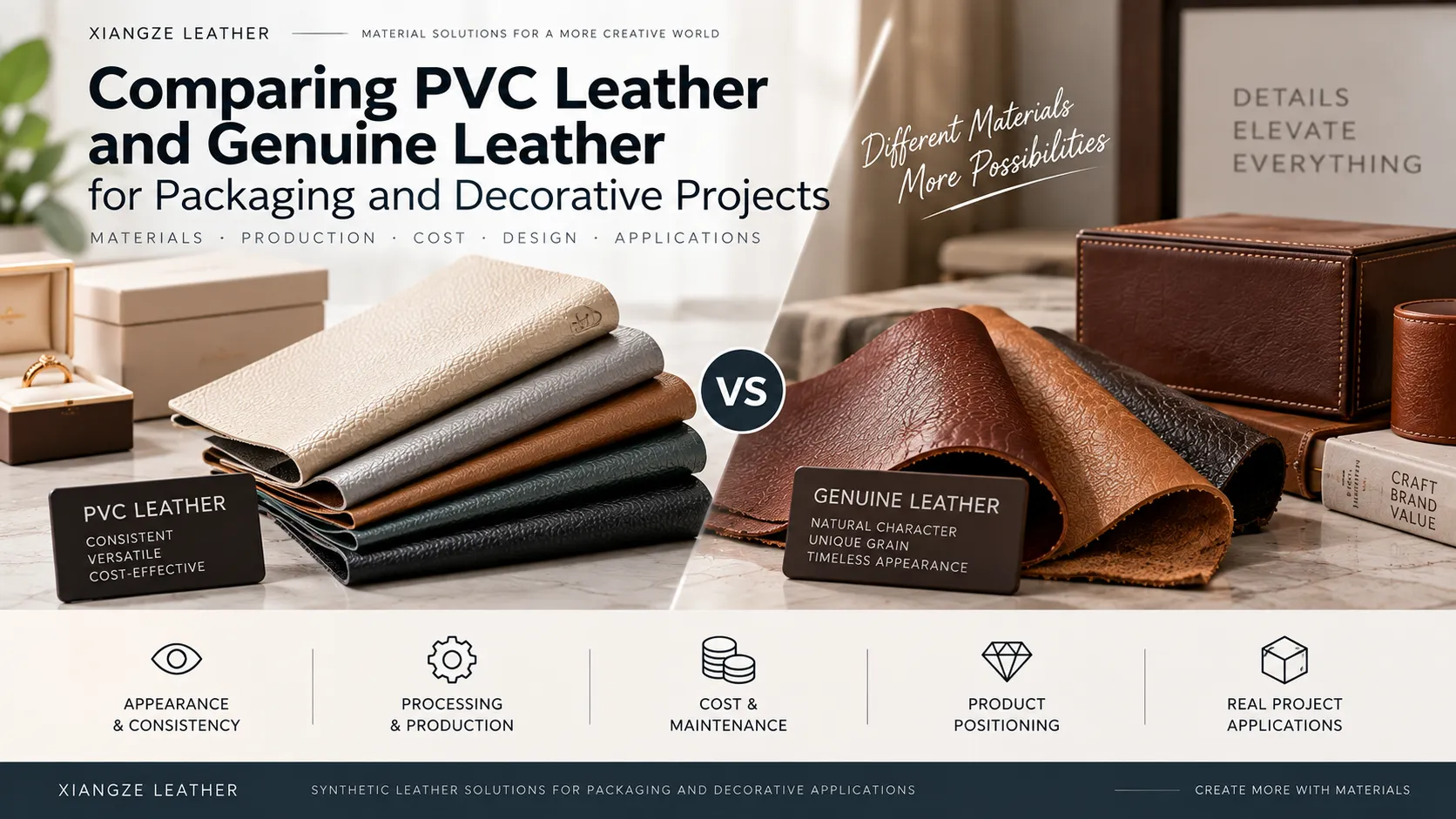
Leather-covered boxes, presentation cases, display panels and decorative products can be made with either genuine leather or synthetic materials such as PVC leather.
Both can create a premium appearance, but they offer very different advantages during production.
For buyers, the better choice depends less on which material is “more premium” and more on:
appearance → consistency → processing → quantity → budget → final product positioning
Appearance and Surface Consistency
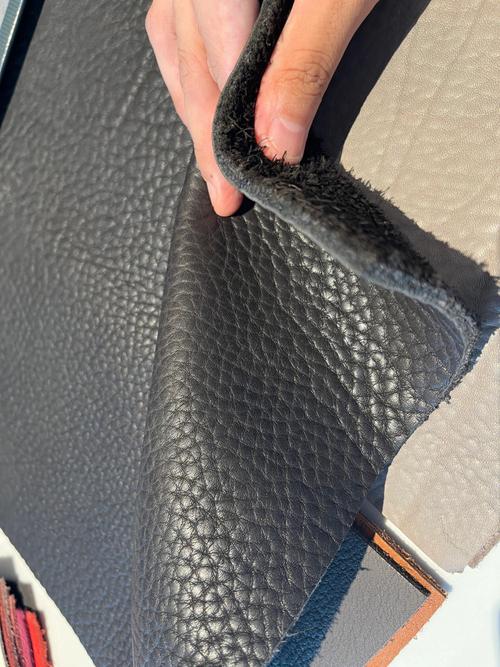
Genuine leather has natural variation.
Grain, pores, scars and color can vary across the hide, which can be attractive when the product is designed around a natural leather appearance.
PVC leather is engineered to provide a more controlled surface.
| Factor | PVC Leather | Genuine Leather |
|---|---|---|
| Grain | Repeatable embossed pattern | Natural variation |
| Color | Easier to standardize | May vary between hides |
| Surface Effects | Matte, gloss, metallic, printed, embossed | Mainly natural or finished leather effects |
| Large Batch Consistency | Generally easier to control | More sorting may be required |
| Visual Character | Uniform and design-driven | Natural and individual |
For packaging manufacturers producing hundreds or thousands of identical boxes, this consistency can be important.
A jewelry box collection, for example, may require the same beige tone and fine grain across every unit. PVC leather can make this easier to reproduce between panels and production batches.
For projects where natural variation is part of the design, genuine leather may be preferred.
Processing and Production Efficiency
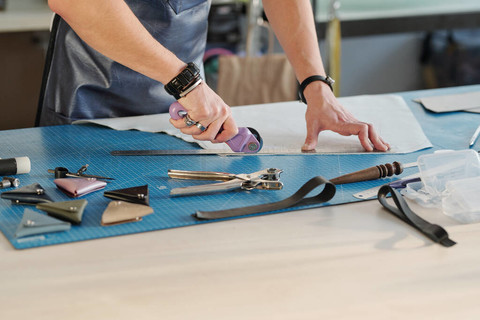
Packaging leather is often cut into relatively small panels and then wrapped, folded, bonded or laminated onto cardboard, MDF, plastic or other substrates.
This makes processing behavior especially important.
| Production Factor | PVC Leather | Genuine Leather |
|---|---|---|
| Thickness Consistency | Usually more uniform | Can vary across a hide |
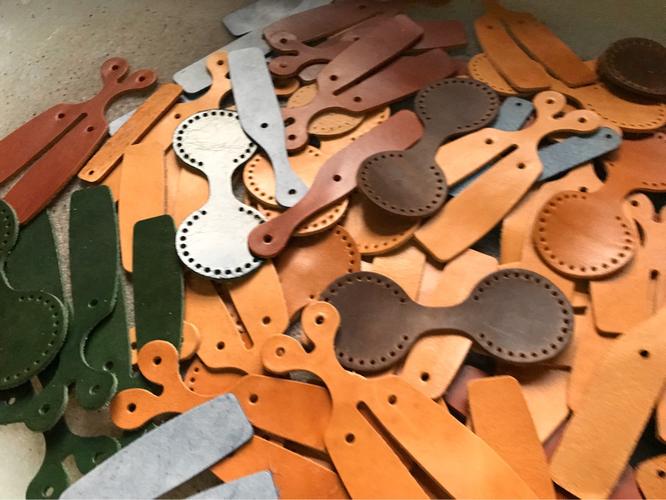
| Cutting Yield | Predictable roll material | Natural defects affect usable area |
| Panel Matching | Easier for repeat production | Requires more selection |
| Adhesive Process | Can be standardized after compatibility testing | Depends on finish and leather condition |
| Edge Folding | Consistent construction can simplify wrapping | Natural thickness variation may require adjustment |
| Repeat Orders | Specification can be reproduced | Natural variation remains |
For high-volume packaging, roll-format synthetic leather can also simplify material planning.
Manufacturers can calculate usable width, panel size and cutting yield more easily than with irregular natural hides.
However, adhesive compatibility should still be confirmed during sample development. A visually suitable material is not automatically suitable for every glue, substrate or wrapping process.
Xiangze’s Packaging Leather range includes PVC materials developed for decorative wrapping and packaging applications.
Cost, Maintenance and Product Positioning
The lowest material price is not always the most important factor.
The total production cost also includes cutting waste, sorting, processing time and consistency between finished products.
| Project Requirement | PVC Leather May Be Better When… | Genuine Leather May Be Better When… |
|---|---|---|
| Large Production Runs | Repeatability is important | Natural variation is acceptable |
| Custom Colors | Exact project colors are needed | Natural leather tones are preferred |
| Decorative Effects | Metallic, printed or embossed effects are required | Traditional leather appearance is required |
| Cost Control | Material utilization needs to be predictable | Higher material cost fits product positioning |
| Maintenance | Easy-clean coated surface is preferred | Natural leather care is acceptable |
| Luxury Presentation | Consistency and design flexibility matter | Natural material story is part of the product |
This is why PVC leather is commonly considered for:
- jewelry boxes
- watch boxes
- gift boxes
- cosmetic packaging
- presentation cases
- display panels
- decorative covers
Genuine leather may be more appropriate for limited-edition luxury packaging where natural grain, aging characteristics and the material itself are part of the brand story.
How Should Buyers Choose?
The decision should start with the finished product rather than the material name.
A practical comparison can be made using five questions:
| Question | Why It Matters |
|---|---|
| How many units will be produced? | Large runs increase the importance of consistency |
| Must every product match exactly? | Color and grain control become more important |
| Is the design natural or decorative? | Determines whether natural variation or engineered effects are preferred |
| How will the material be processed? | Cutting, folding and bonding affect suitability |
| What is the target price and positioning? | Helps balance material cost and product image |
For a large packaging project requiring consistent color, embossed grain and repeat production, PVC leather may be the more practical option.
For a small luxury series where natural variation is intentional, genuine leather may provide the desired character.
The best material is therefore not determined by whether it is natural or synthetic.
It is determined by how well the material fits the design, production method and commercial requirements of the finished packaging project.
Buyers can also review Xiangze’s Synthetic Leather for Packaging & Decorative Applications for related material options.