How PVC Leather Thickness Affects Bag Sewing

PVC leather thickness affects much more than the feel or structure of a bag.
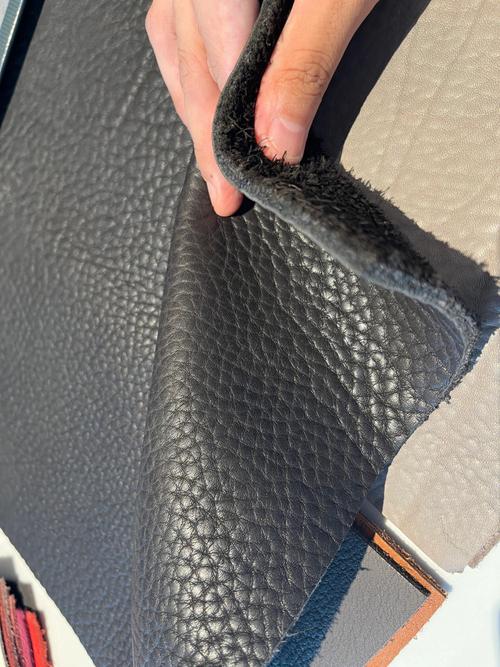
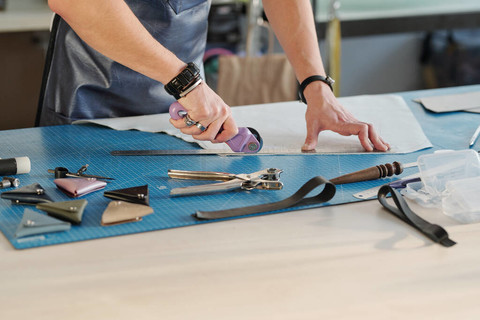
During production, thickness changes how easily the material feeds through the sewing machine, how the needle penetrates the material, how bulky seams become and how cleanly corners and folded edges can be finished.
This becomes especially important because bag sewing rarely involves only one layer of synthetic leather. Seams may combine PVC leather, lining, reinforcement, foam, piping and folded edges.
For this reason, the thickness of the complete sewn construction is often more important than the thickness of one sheet alone.
Thicker PVC Leather Creates More Seam Bulk
A thicker material generally creates more body, but it also increases the amount of material passing through the sewing area.
A simple seam may contain two layers:
PVC leather + PVC leather
But a folded bag edge may contain:
folded PVC leather + reinforcement + lining + another folded layer
A material that measures only 1.0 mm as a single sheet can therefore create a much thicker sewing section after folding and layering.
This can affect:
- Presser-foot movement
- Needle penetration
- Stitch consistency
- Seam appearance
- Turning around corners
- Edge folding
- Hardware installation
This is why bag manufacturers should evaluate the thickest sewing area of the actual product rather than testing only a flat single layer.
Thickness Changes Needle and Stitching Behavior
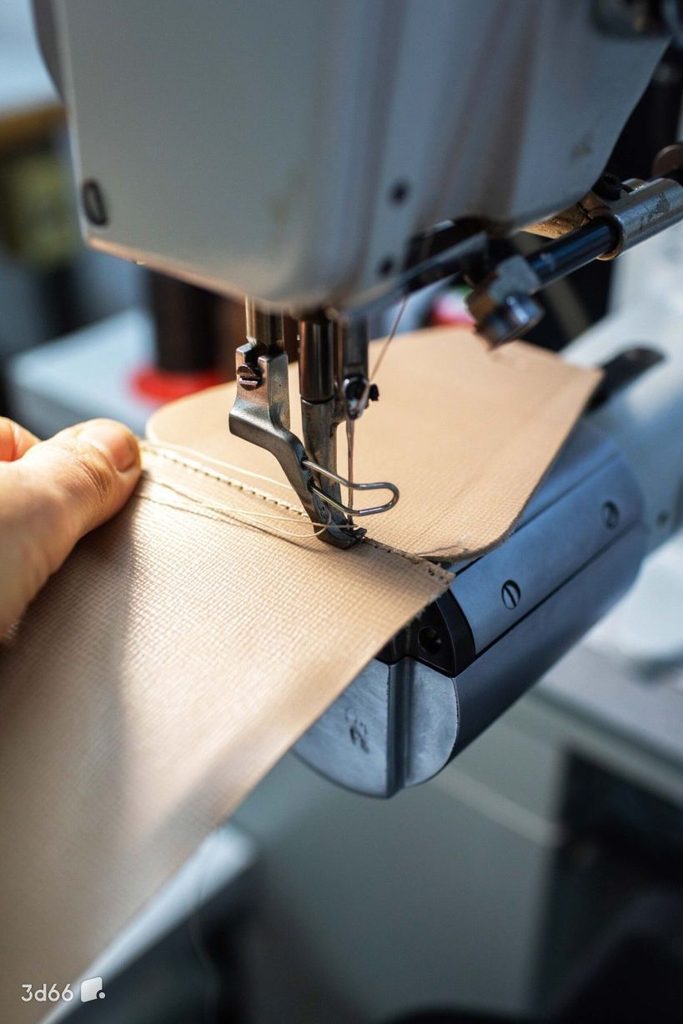
As material thickness increases, the needle must pass through more PVC coating, backing fabric and sometimes several additional layers.
If the sewing setup is not matched to the material, problems may include:
- Skipped stitches
- Uneven stitch length
- Needle deflection
- Large stitch holes
- Surface marking
- Thread breakage
- Poor seam alignment
Very thin synthetic leather can create a different problem.
If the material is too soft or flexible for the machine setup, it may move during sewing, causing the layers to shift.
The relationship is therefore not simply:
thicker = harder to sew
Instead, sewing behavior depends on:
Thickness + backing + material hardness + number of layers + machine settings
The backing fabric is particularly important because it influences how the material stretches and feeds during sewing.
For more detail, see How Backing Fabric Changes PVC Leather for Bags.
Thickness Affects Different Bag Components Differently
Not every part of a bag needs the same material thickness.
| Bag Component | Sewing Consideration |
|---|---|
| Main body panel | Requires stable, even feeding |
| Gusset | Needs enough flexibility for curves and corners |
| Flap | May require clean folding without excessive bulk |
| Handle | Often contains multiple folded layers |
| Strap | Thick seam areas can develop after reinforcement |
| Bottom panel | May combine leather with stiff reinforcement |
| Piping | Requires flexible material around a narrow radius |
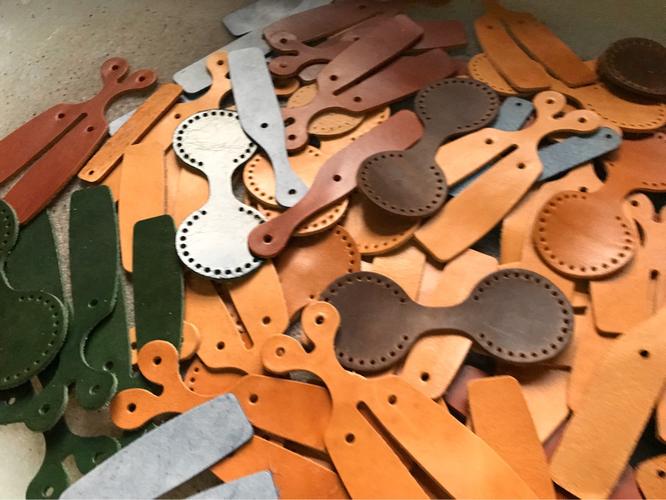
| Small folded parts | Excess thickness can make edges difficult to finish |
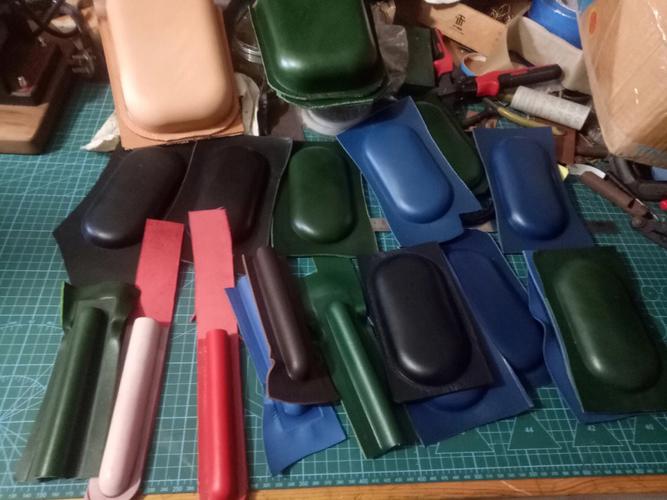
For example, a material that works well for a large flat front panel may feel too bulky when folded several times around a handle.
Likewise, a thinner PVC leather may be easier to sew around tight curves but may require additional internal reinforcement to achieve the desired structure.
The best thickness therefore depends on the specific component rather than only the overall bag type.
Folding Can Multiply the Effective Thickness
One of the most common sewing problems appears when synthetic leather is folded.
Consider a 1.0 mm PVC leather.
A simple double fold can already create approximately several millimeters of material before lining, reinforcement or another panel is added.
At a seam intersection, the sewing machine may suddenly move from a relatively thin section to a much thicker stack.
This can lead to:
- Uneven stitch length
- Presser-foot tilting
- Misaligned seams
- Difficult corner turning
- Visible surface compression
Skiving or reducing the thickness of hidden folded areas can sometimes help.
However, whether skiving is suitable depends on the PVC construction and backing. Excessive material removal can weaken the backing or make the folded area uneven.
Another option is to adjust the pattern so that unnecessary material layers do not overlap at the same point.
Good sewing performance therefore depends on both material selection and pattern construction.
Test the Actual Sewing Construction Before Bulk Production
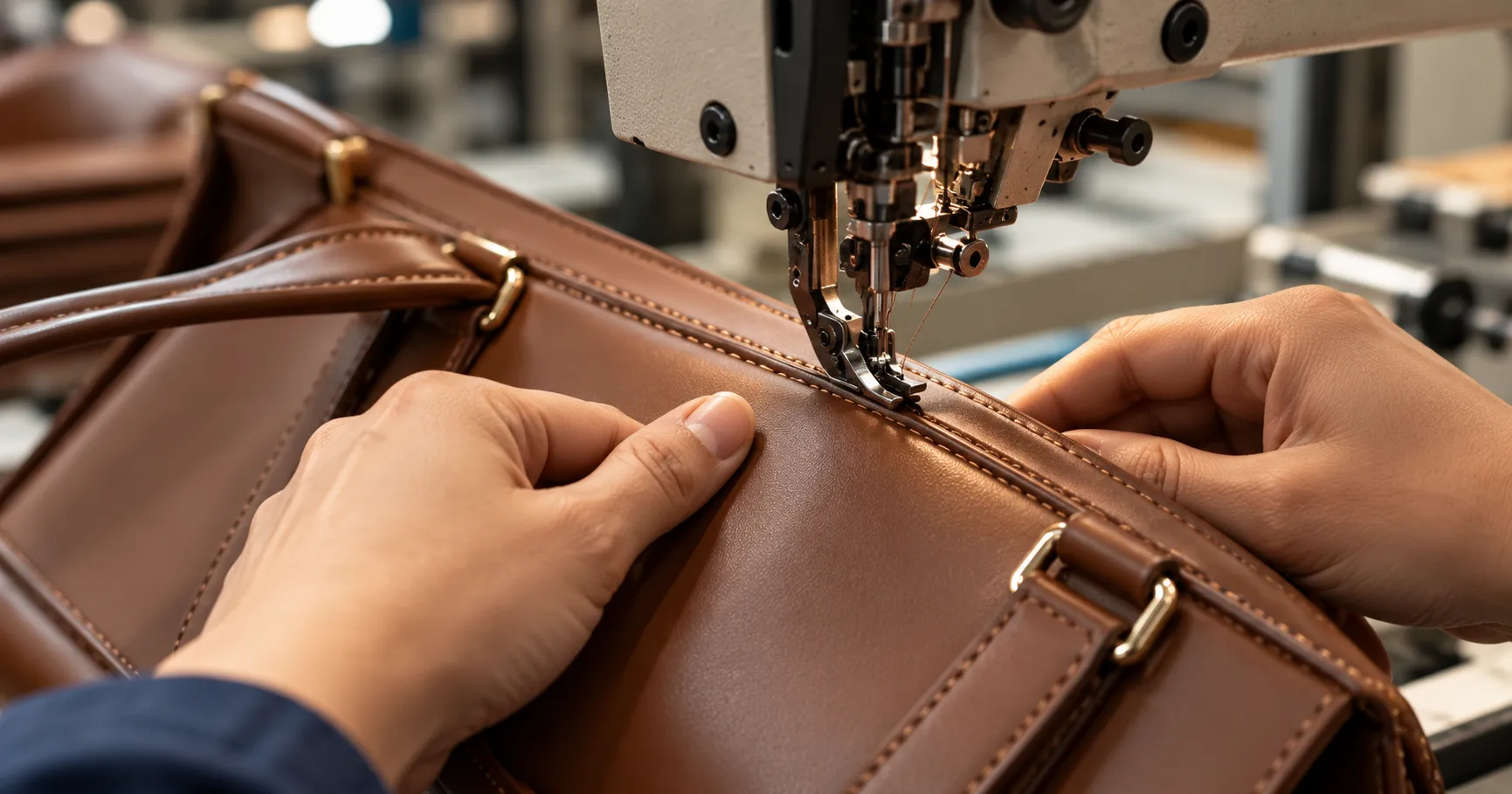
A small flat swatch is not enough to judge sewing performance.
Before approving PVC leather for bag production, make a sample using the real construction.
Test:
- Straight seams
- Curved seams
- Folded edges
- Corners
- Handles or straps
- Multilayer junctions
- Piping where required
Use the intended:
- Sewing machine
- Needle
- Thread
- Stitch length
- Lining
- Reinforcement
- Foam
- Adhesive
Then check whether the material feeds evenly and whether the seam remains flat after sewing.
Pay particular attention to areas where several layers meet.
A useful test sequence is:
Flat sample → folded sample → multilayer seam → representative bag panel → prototype
This identifies sewing problems much earlier than discovering them after bulk material has already entered production.
For a broader material approval process, see How to Test Synthetic Leather Before Bag Production.
When selecting PVC leather for bags and luggage, thickness should therefore be considered together with backing structure, flexibility and the final sewing construction.
Xiangze Leather supplies PVC bag leather in different thicknesses, surface grains and backing constructions for handbags, backpacks, luggage and fashion accessories. Samples can be evaluated using the intended bag structure before bulk specifications are confirmed.