How to Choose a Forklift Seat Leather Manufacturer: 5 Things Buyers Should Check

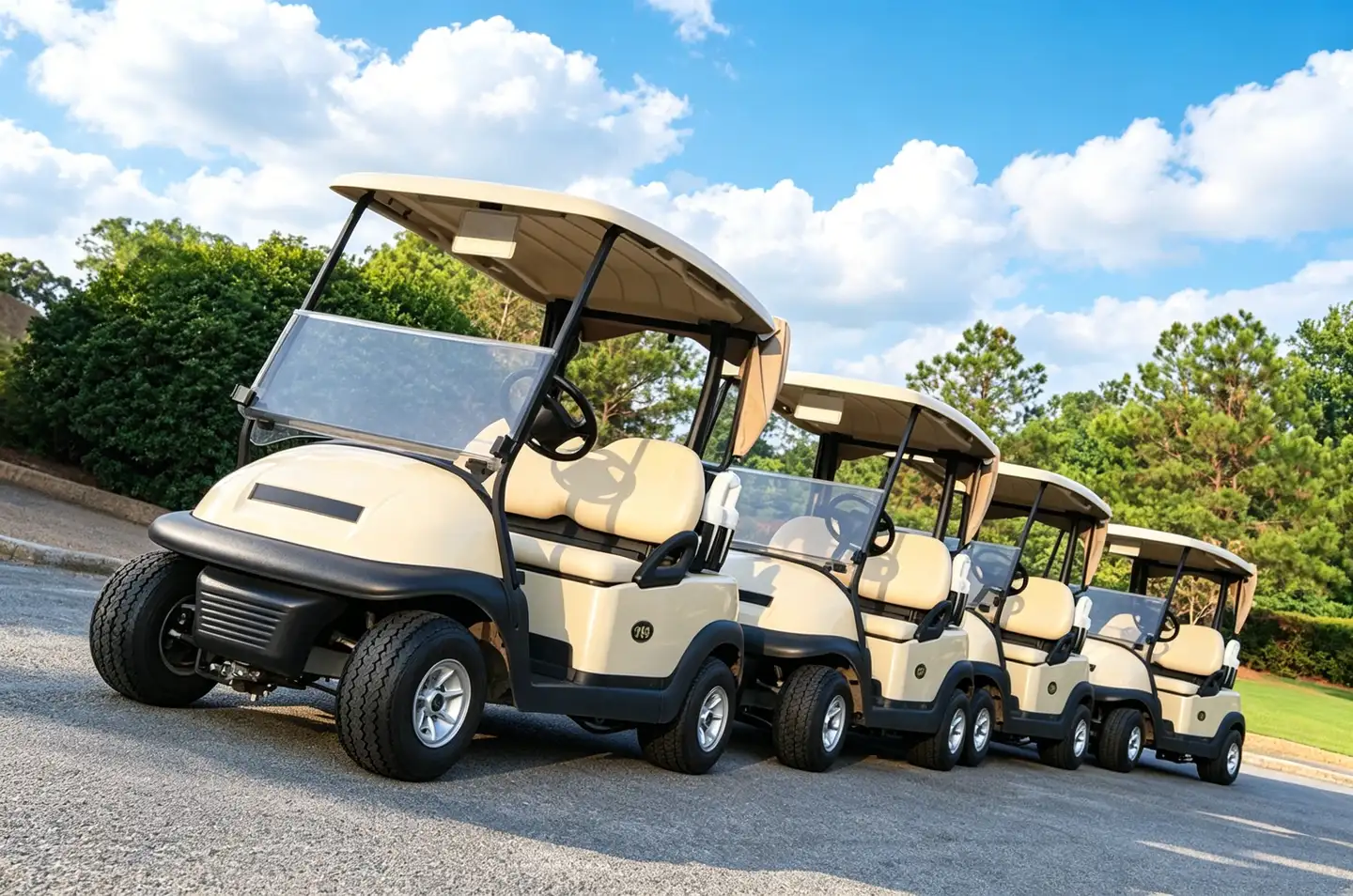
Forklift seats operate in a very different environment from ordinary indoor furniture.
Depending on the application, the upholstery may face repeated climbing on and off the vehicle, workwear friction, dust, oil contamination, cleaning chemicals, sunlight and temperature changes.
For forklift manufacturers and replacement-seat suppliers, choosing leather by price, thickness and surface grain alone can lead to premature wear or cracking.
A better purchasing process starts with the operating environment and then checks the material construction, performance data and supplier capabilities.
Check the Actual Forklift Operating Environment
The first question should not be:
“What is the cheapest PVC leather?”
It should be:
“Where and how will this forklift be used?”
A warehouse forklift working indoors has very different requirements from a forklift operating in an open yard, port, factory loading area or construction environment.
Important conditions may include:
- indoor or outdoor use
- daily operating hours
- UV and temperature exposure
- oil or chemical contamination
- cleaning method and frequency
- repeated edge abrasion during operator entry and exit
- required service life
For outdoor forklifts, weather resistance and color stability become more important.
For high-use industrial vehicles, abrasion and tear resistance may become the main priorities.
Many of these requirements overlap with other vehicle upholstery applications. Buyers can compare different constructions in our Synthetic Leather for Automotive Interiors range.
Ask for Abrasion, Tear and Surface-Resistance Data
Forklift seats experience concentrated wear, especially around the front edge and side bolsters where operators repeatedly slide across the seat.
For this reason, buyers should not rely only on a soft hand feel or attractive grain.
Depending on the project, useful evaluation may include:
abrasion resistance · tear strength · tensile strength · peel strength · rubbing color fastness · cold flexibility
For demanding industrial or outdoor projects, additional requirements can include UV aging, cleaning resistance and resistance to substances encountered during daily operation.
Where required, suitable constructions can also be developed around higher abrasion targets such as Taber abrasion up to 50,000 cycles, depending on the agreed test method and specification.
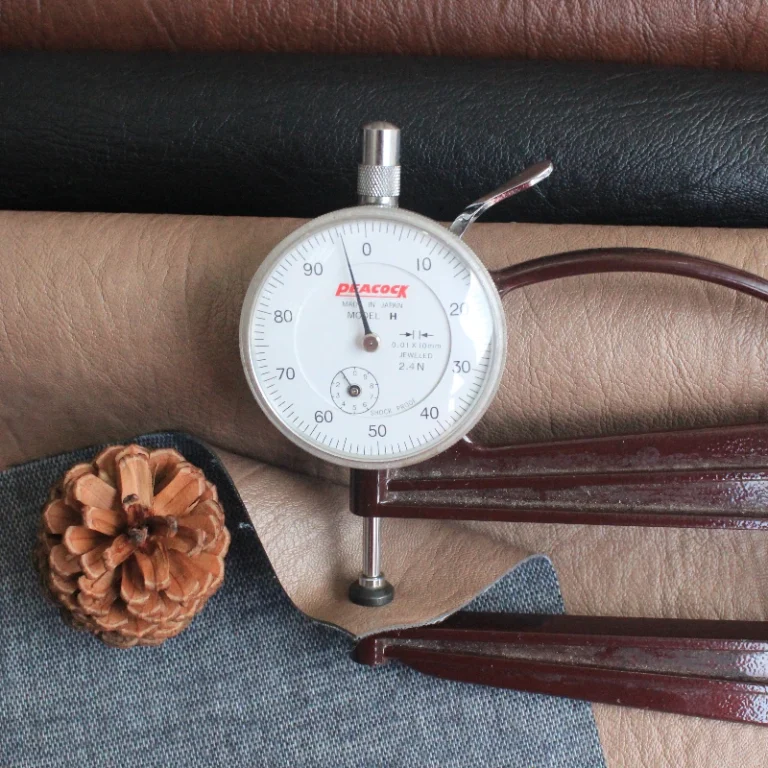
Xiangze conducts several physical and durability evaluations in-house, including Martindale abrasion testing and tear-resistance testing, while additional test requirements can be discussed according to the project.
Available documents can also be reviewed on our Downloads & Test Reports page.
Choose the Right Thickness and Backing
A forklift seat material is not defined by the surface coating alone.
The textile backing affects:
stretch · dimensional stability · sewing · wrapping · tear behavior · recovery
For example, a material that is too rigid may be difficult to wrap around seat foam and side contours.
A construction with excessive stretch may distort during upholstery or create uneven tension around seams.
Common automotive and vehicle upholstery backing options include:
- Terry fabric
- Knitted fabric
- Brushed fabric
- Mesh
- Other textile-supported constructions
Thickness should therefore be evaluated together with the backing and actual seat design.
A 0.7 mm flexible construction and a 1.0 mm structured construction may both work for seating, but they can behave very differently during cutting and upholstery.
Our PVC Leather Backing Options guide explains the main differences between common backing constructions.
For vehicle seating materials, buyers can also browse the Car Seat Leather collection.
Check Customization and Batch Consistency
Forklift manufacturers rarely need only one standard black leather.
Different vehicle models may require different:
- grain patterns
- colors
- thicknesses
- backing constructions
- surface finishes
- flexibility levels
Seat geometry also matters.
A flat warehouse-vehicle cushion may use a different construction from a deep molded seat with side bolsters and complex curves.
For OEM and repeated-production projects, batch consistency is equally important.
The approved sample should become the reference for subsequent production, including:
color → grain → thickness → backing → surface condition → agreed performance requirements
Xiangze supports customization of color, grain, thickness and backing for different vehicle upholstery projects.
A physical upholstery trial is recommended before bulk approval whenever possible.
The material should be cut with the actual seat pattern, sewn with the intended thread and wrapped around the representative foam structure before the final specification is confirmed.
Choose a Supplier That Can Support Testing and Samples
A forklift seat leather supplier should provide more than a product photo and quotation.
For professional sourcing projects, buyers should be able to discuss:
material specifications · physical samples · backing options · performance targets · test requirements · production consistency
This is especially important when the material will be used for OEM production or long-term replacement programs.
For example, Xiangze automotive PVC leather products include constructions such as XZ60111 0.7mm Litchi Grain PVC Car Seat Leather with Terry Backing, which provides a flexible textile-supported construction for cutting, sewing and upholstery processing.
The exact material for a forklift seat should still be selected according to the seat structure and operating environment rather than by model number alone.
For a new forklift or industrial vehicle project, a practical sourcing process is:
define operating conditions → select construction → request samples → test the actual seat → confirm performance requirements → approve bulk production
If you are sourcing synthetic leather for forklift seats, utility vehicles or other industrial seating, contact Xiangze Leather with your required thickness, backing, grain, color and operating environment.