How to Choose Synthetic Leather for Sandals

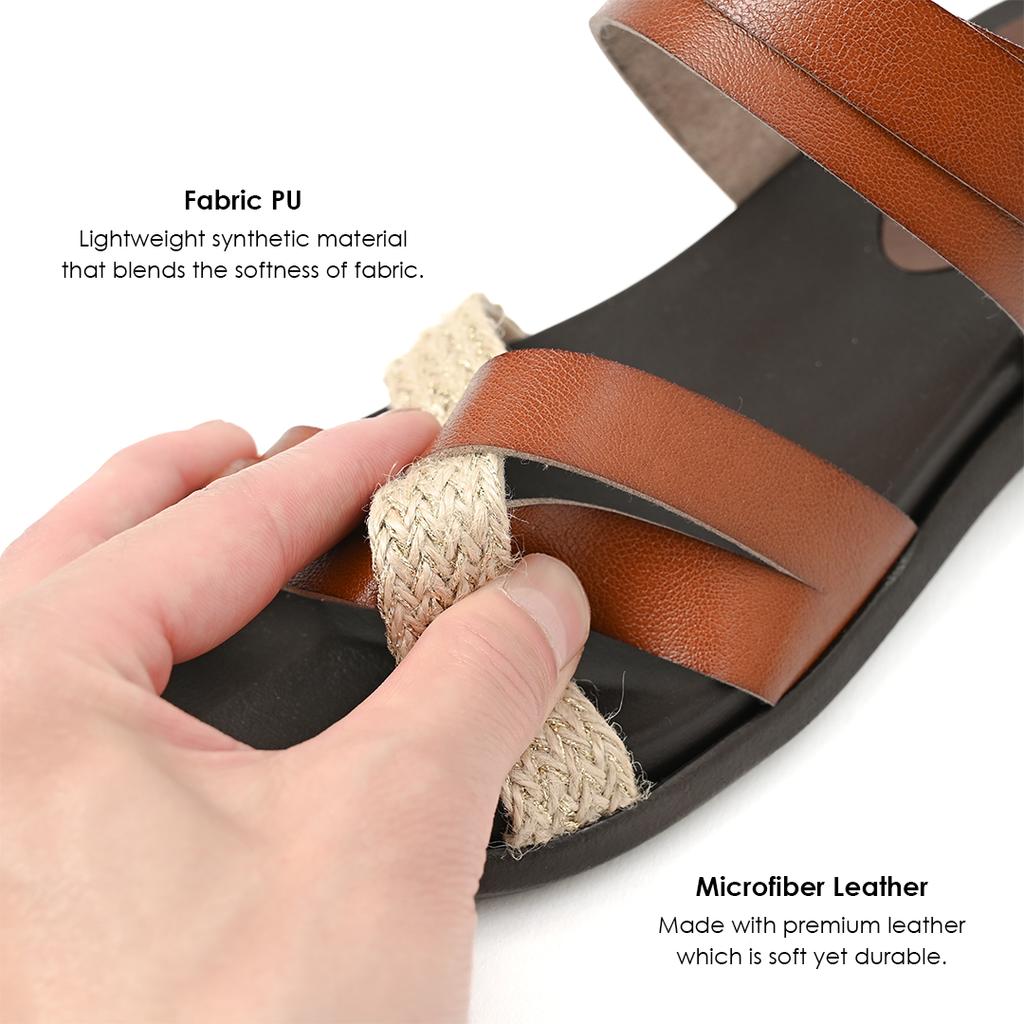
Synthetic leather is widely used for sandal uppers, straps, linings, footbeds, and decorative components. However, the same material specification is not suitable for every part of a sandal.
A soft material may work well for straps that contact the foot, while a firmer construction may be preferred where more shape and support are required. Thickness, backing fabric, surface texture, flexibility, and finishing should therefore be selected according to the actual sandal design.
This guide explains the main factors to consider when choosing synthetic leather for sandal production.
Match the Leather to the Sandal Component
The first step is to identify where the synthetic leather will be used.
| Sandal Component | Main Material Requirements | Typical Considerations |
|---|---|---|
| Upper | Appearance, flexibility, shape retention | Grain, color, thickness |
| Straps | Softness and repeated bending | Flexible construction, comfortable surface |
| Footbed Cover | Surface feel and stability | Easy cleaning, texture, bonding |
| Lining | Soft hand feel | Lightweight and flexible material |
| Decorative Parts | Appearance and processing | Embossing, printing, metallic or special finishes |
For example, wide sandal straps normally require enough flexibility to bend naturally during walking. Decorative upper panels may place more emphasis on grain definition, color, gloss, or embossed effects.
This is why selecting sandal leather only by appearance can lead to problems during cutting, stitching, bonding, or final assembly.
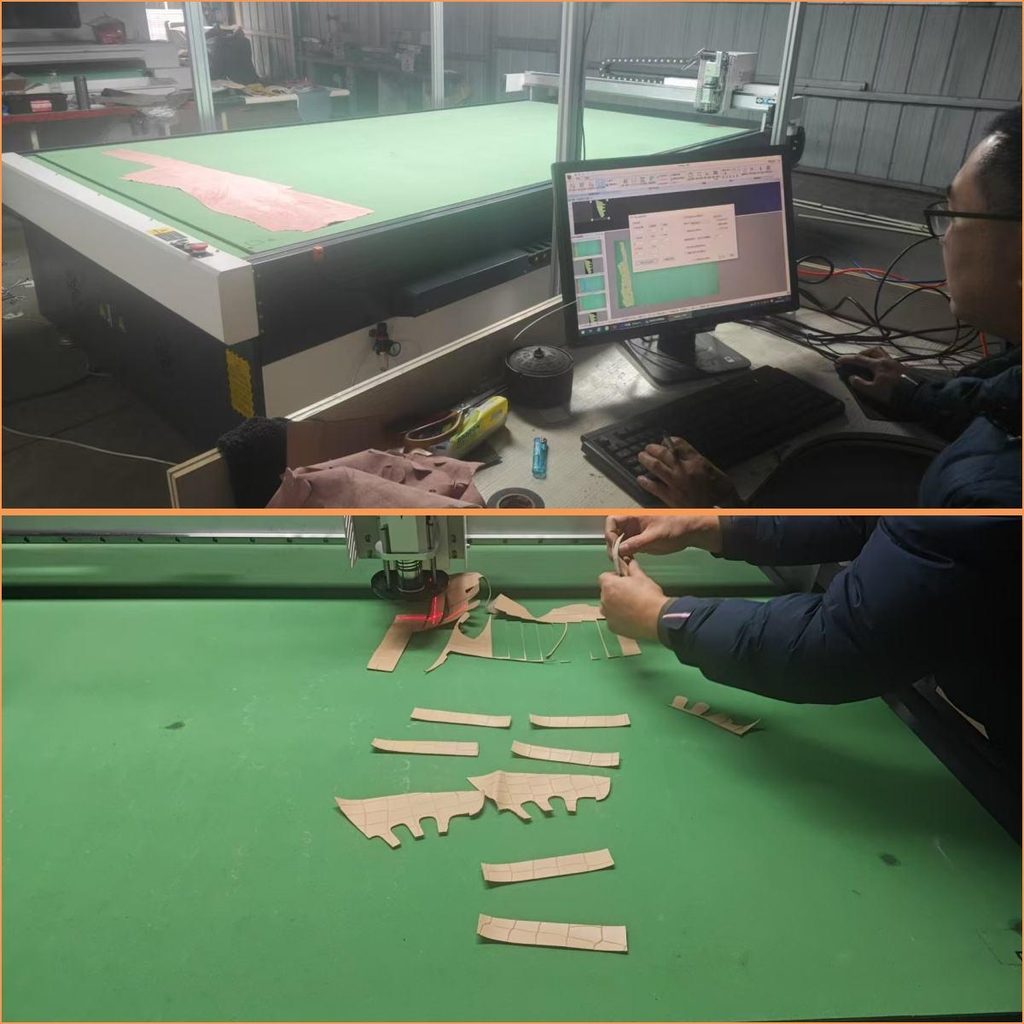
Choose the Right Thickness and Flexibility
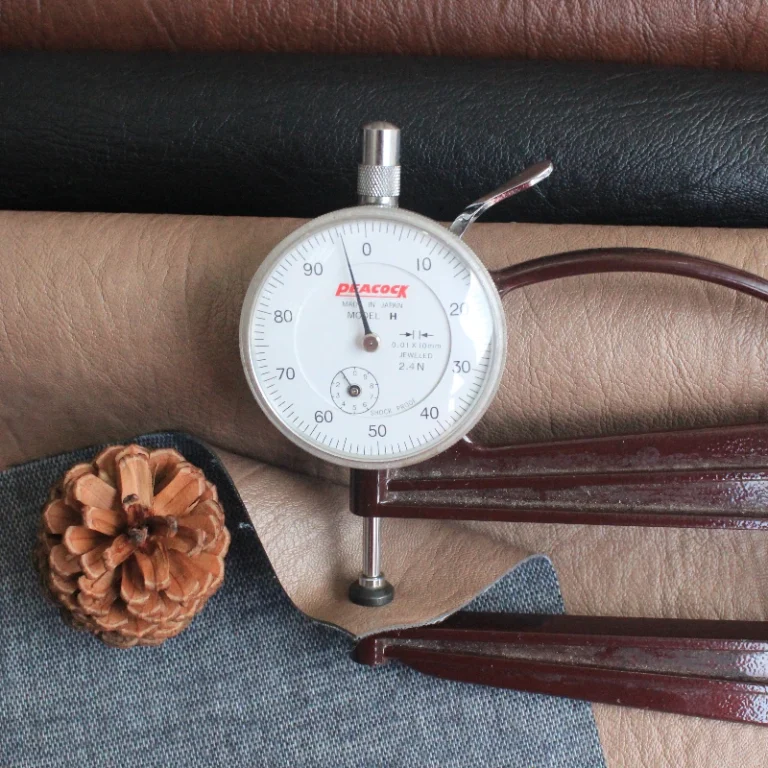
Thickness affects both the feel of the sandal and the way the material behaves during production.
Lightweight synthetic leather is generally easier to fold and bend, while thicker material can provide more structure. The appropriate specification depends on the construction of the sandal rather than one universal thickness.
For flexible straps and lightweight uppers, relatively thin material may be preferred. Structured upper sections may require additional thickness or a stronger backing.
Flexibility should also be evaluated together with thickness. Two synthetic leathers with similar thickness can behave differently because of differences in the coating, backing fabric, and overall construction.
For manufacturers, testing a sample in the actual sandal design is often more useful than selecting material based on thickness alone.
Consider the Backing Fabric
The backing fabric supports the coated surface and has a significant effect on flexibility, strength, stretch, and processing behavior.
Common backing constructions for synthetic leather include knitted fabrics, brushed fabrics, woven fabrics, and other textile bases.
A knitted backing can provide good flexibility for sandal uppers and straps, while a more stable backing may be useful when the component needs better dimensional stability.
The choice also depends on the production process. Materials intended for folding, stitching, laminating, or adhesive bonding may require different backing characteristics.
When comparing materials, buyers should therefore check both the surface specification and the backing instead of treating thickness as the only technical parameter.
For a broader explanation of backing structures, see our guide to Common PVC Leather Backing Options.
Select the Surface Grain and Finish
Surface design has a major influence on the final appearance of sandals.
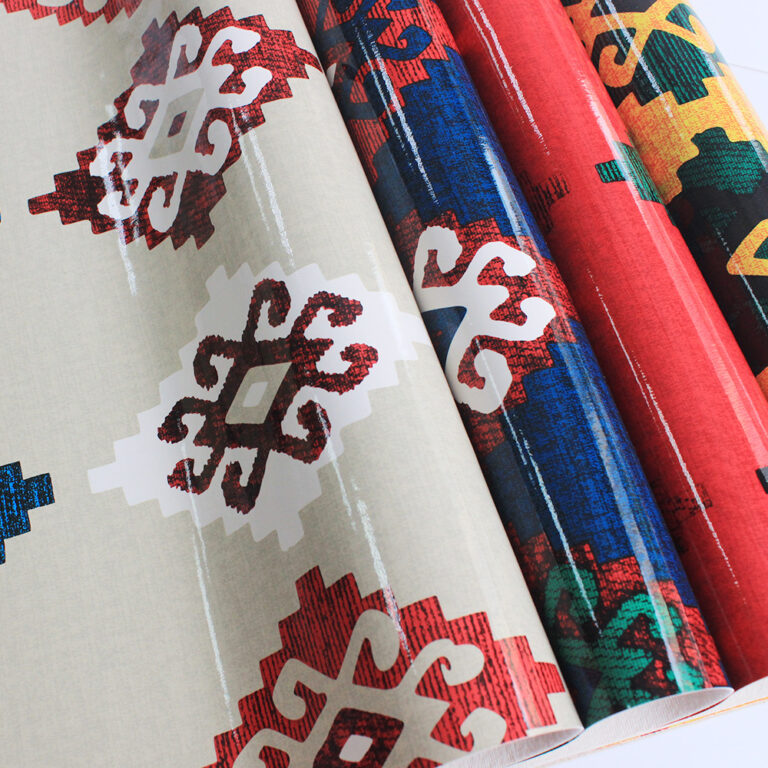
Synthetic leather can be produced with many finishes, including smooth surfaces, fine grains, embossed textures, printed patterns, metallic effects, and higher-gloss finishes.
Fine grains and relatively simple textures are versatile for everyday sandal designs. Embossed surfaces can create a stronger visual identity, while metallic, printed, or decorative finishes are often used for fashion-oriented styles.
Color should also be considered together with the surface finish. The same color can look noticeably different on matte, semi-gloss, and high-gloss surfaces.
For commercial production, it is useful to evaluate physical samples under normal lighting and compare them with the other sandal components before confirming a color or finish.
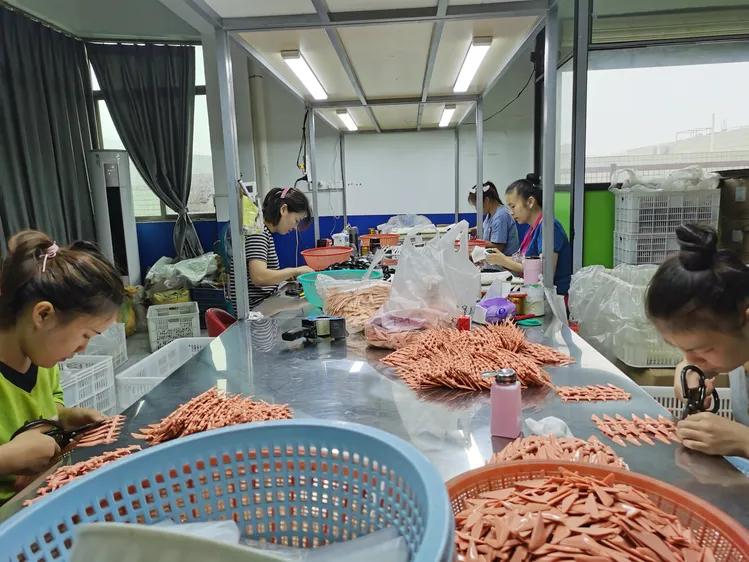
Check the Material Before Bulk Production
A material that looks suitable in a swatch should still be tested in the actual product construction.
Before placing a bulk order, sandal manufacturers can evaluate:
- Cutting and edge quality
- Folding performance
- Stitching behavior
- Adhesive compatibility
- Flexibility after assembly
- Surface appearance after bending
- Color and grain consistency
- Compatibility with the intended sandal construction
The most suitable synthetic leather is therefore not necessarily the thickest or softest option. It is the material whose surface, thickness, backing, flexibility, and processing characteristics match the sandal component and production method.
For manufacturers sourcing material for sandal uppers, straps, footbeds, or decorative components, Xiangze Leather supplies customizable synthetic leather options with different grains, colors, thicknesses, and backing constructions.
Explore our PVC Leather for Footwear & Garments range or contact us with your required application, thickness, backing, color, and surface finish to discuss suitable material options.