How to Choose Synthetic Leather for Handbags

Choosing synthetic leather for handbags involves more than selecting an attractive color or surface texture.
A handbag combines appearance, structure and manufacturing requirements. The material needs to match the bag design, sewing method, reinforcement system and finishing process.
A suitable synthetic leather should provide the right balance of:
- Appearance
- Hand feel
- Flexibility
- Shape retention
- Sewing performance
- Edge finishing quality
- Long-term durability
For handbag manufacturers, material selection should begin with understanding how the leather will be used in the finished product.
Consider the Handbag Style Before Choosing Material
Different handbag styles require different material behavior.
A soft fashion handbag, a structured tote and a luxury-style handbag may use different synthetic leather constructions even when they belong to the same product category.
| Handbag Type | Material Considerations |
|---|---|
| Soft handbag | Flexible material with good drape |
| Structured handbag | Better body and dimensional stability |
| Tote bag | Balance between flexibility and support |
| Shoulder bag | Comfortable handling and suitable folding |
| Crossbody bag | Lightweight structure with controlled stretch |
| Mini bag | Clean edges and suitable thickness |
| Evening bag | Surface appearance and special finishes |
The internal construction also affects the final result.
Reinforcement boards, foam, lining and adhesive layers can change how the synthetic leather feels after assembly.
Therefore, the best material is not always the softest or thickest option.
It is the material that matches the complete bag structure.
Choose the Right Surface Grain and Finish
The surface is usually the first feature buyers evaluate.
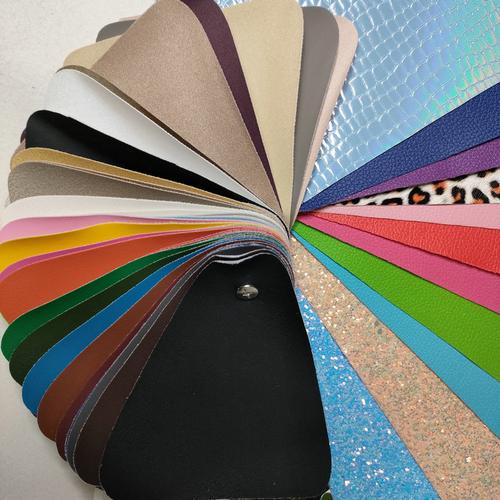
Synthetic leather for handbags can include many different finishes:
- Pebble grain
- Litchi grain
- Natural wrinkle grain
- Smooth grain
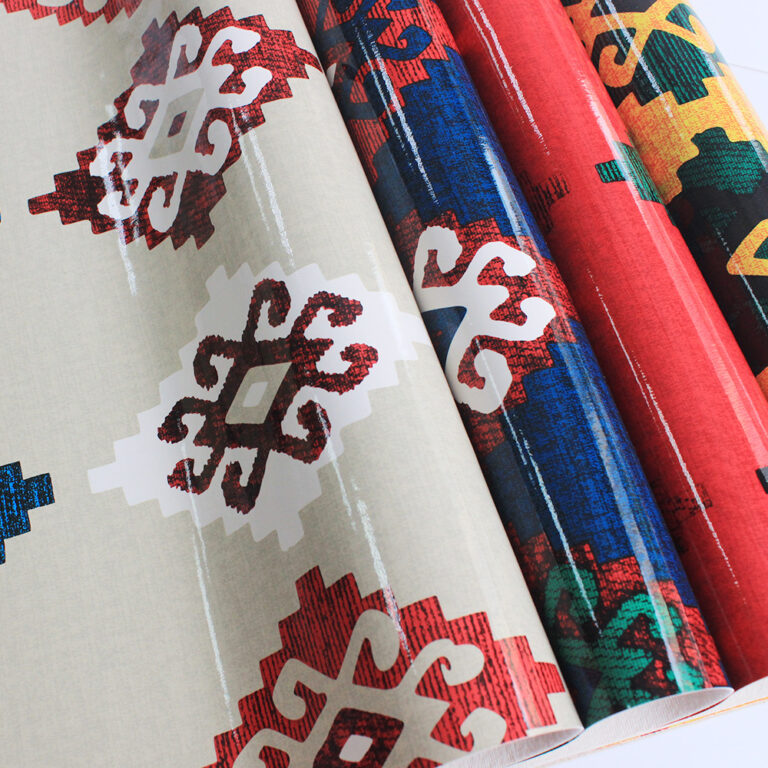
- Embossed patterns
- Printed designs
- Metallic finishes
- Glitter finishes
- Special decorative surfaces
The surface affects both appearance and practical performance.
For example:
- Deep embossing can influence folding behavior.
- High-gloss surfaces may show scratches or fingerprints more easily.
- Soft matte finishes may provide a more natural appearance.
- Printed or decorative surfaces may require additional care during production.
The surface should match the intended market positioning and manufacturing requirements.
A beautiful grain is only successful when it remains stable after cutting, sewing and finishing.
Select Thickness According to Bag Construction
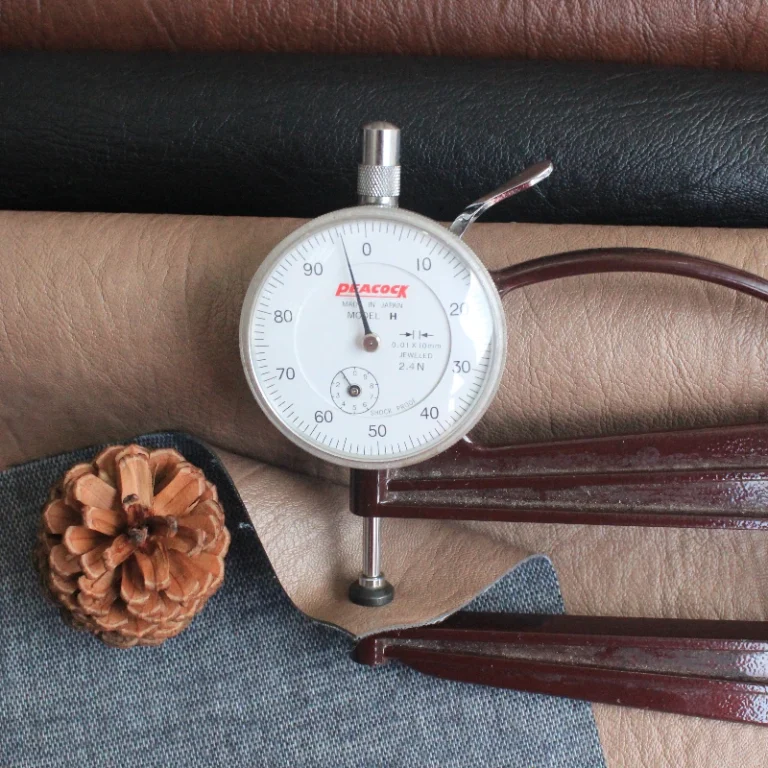
Thickness influences the structure and sewing behavior of a handbag.
A thicker synthetic leather can provide:
- More body
- Better shape support
- A fuller hand feel
A thinner material may provide:
- Easier folding
- Lower seam bulk
- Better flexibility
- Easier handling around curves
However, thickness should always be considered together with backing and reinforcement.
For example:
1.0 mm flexible synthetic leather
may behave differently from:
1.0 mm structured synthetic leather with a stable backing
When selecting thickness, consider:
- Main body panels
- Gussets
- Handles
- Straps
- Flaps
- Folded edges
- Hardware attachment areas
For detailed information, see:
PVC Leather Thickness for Bags: How to Choose
and
How PVC Leather Thickness Affects Bag Sewing
Understand the Role of Backing Fabric
The backing fabric supports the PVC surface and influences how the complete material behaves.
Different backing constructions can affect:
- Flexibility
- Stretch
- Recovery
- Sewing stability
- Folding behavior
- Material body
Common backing directions for handbag synthetic leather include:
- Brushed fabric backing
- Single-needle brushed backing
- Double-needle brushed backing
- Knitted backing
- Woven backing
- Terry backing
- Toweling backing
- Imitation cotton fleece backing
- Microfiber backing
The correct backing depends on the bag design.
A soft handbag may require a flexible construction, while a structured handbag may need more dimensional stability.
For a deeper explanation, see:
PVC & Synthetic Leather Backing Fabrics: Types, Structures and Applications
and
How Backing Fabric Changes PVC Leather for Bags
Check Sewing and Edge Finishing Requirements
A handbag material must work during production, not only look good as a sample.
Before bulk production, test:
Cutting
Check:
- Edge cleanliness
- Dimensional stability
- Stretch during cutting
Sewing
Check:
- Stitch consistency
- Needle penetration
- Seam bulk
- Layer compatibility
Folding
Check:
- Corner bending
- White marks
- Wrinkle formation
- Surface recovery
Edge Painting
Check:
- Cut edge quality
- Fiber exposure
- Edge paint adhesion
- Flexibility after finishing
These processes are especially important for:
- Handles
- Straps
- Gussets
- Flaps
- Small accessories
A material suitable for a large flat panel may not perform equally well on smaller folded components.
Match Synthetic Leather With Lining and Hardware
A handbag is a complete material system.
The outer synthetic leather works together with:
- Lining fabric
- Reinforcement
- Foam
- Thread
- Zippers
- Buckles
- Rings
- Rivets
- Edge paint
The combination affects:
- Finished thickness
- Weight
- Shape
- Sewing difficulty
- Appearance
For example, adding a thick lining and reinforcement can make an already structured leather too rigid.
A soft leather may require additional support to achieve the desired handbag shape.
Hardware selection also matters.
Heavy metal components can create stress around handles and attachment points, especially when the outer material is relatively flexible.
For detailed matching considerations, see:
How to Match Bag Leather with Lining, Hardware and Edge Paint
Approve Samples Before Bulk Production
Before confirming a large order, evaluate the material using a realistic production sample.
A useful approval process is:
Synthetic leather swatch
↓
Cutting and sewing test
↓
Component sample
↓
Prototype handbag
↓
Bulk production approval
Check:
| Item | Approval |
|---|---|
| Color | ✓ |
| Grain | ✓ |
| Thickness | ✓ |
| Backing | ✓ |
| Flexibility | ✓ |
| Sewing performance | ✓ |
| Folding performance | ✓ |
| Edge finishing | ✓ |
| Hardware compatibility | ✓ |
| Final appearance | ✓ |
Testing the complete construction helps prevent problems that cannot be identified from a small material sample.
For more detailed evaluation, see:
Bag Leather Sample Approval Checklist for Manufacturers
Xiangze Leather supplies synthetic leather for handbags, backpacks, luggage and fashion accessories with different surface designs, thicknesses and backing constructions.
Samples can be evaluated according to the intended bag structure, sewing method and finishing requirements before bulk production.