How to Test Upholstery Leather for Abrasion, Tear and Cleaning

Synthetic leather used for sofas, chairs and other upholstered furniture is exposed to repeated friction, pulling and regular cleaning throughout its service life. Appearance alone cannot show how a material will behave under these conditions.
Abrasion, tear and cleaning tests are therefore useful when evaluating upholstery leather before production. Each test examines a different aspect of the material, and the results should be considered together with the actual furniture application.
Why Test Upholstery Leather Before Production?
Different upholstery applications place different demands on synthetic leather.
A decorative chair used occasionally does not experience the same wear as a sofa in a hotel lobby or seating in another high-use environment. Material construction, coating, thickness, backing fabric and surface finish can all influence performance.
Testing helps buyers compare candidate materials and identify potential problems before they are used in finished furniture.
Three practical areas are particularly useful to evaluate:
| Test Area | What It Evaluates | Why It Matters |
|---|---|---|
| Abrasion | Surface resistance to repeated rubbing | Helps evaluate wear in frequently contacted areas |
| Tear | Resistance to propagation of a cut or tear | Important around seams, edges and stressed areas |
| Cleaning | Response to cleaning agents and repeated wiping | Helps evaluate appearance and surface stability |
The required performance should always be determined by the intended application and the specification agreed between the buyer and supplier.
Abrasion Testing for Upholstery Leather
Abrasion testing simulates repeated rubbing against the surface of the material.
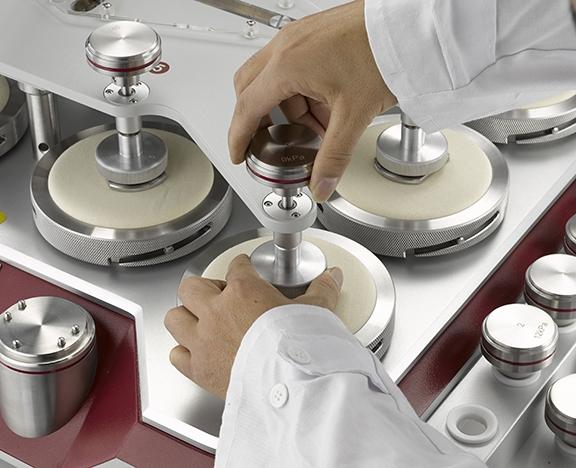
One commonly used approach for upholstery materials is the Martindale method. A specimen is subjected to repeated rubbing under controlled conditions, allowing changes in the surface to be evaluated over a defined number of cycles.
During or after testing, the material may be examined for changes such as:
- Surface wear
- Loss of finish
- Color change
- Damage to the coating
- Exposure of the underlying layer
The number of cycles alone should not be treated as a universal measure of quality. Test method, load, abrasive material, evaluation criteria and intended application all affect how a result should be interpreted.
For this reason, buyers should compare abrasion results only when the testing conditions are clearly defined.
Tear Testing and the Role of the Backing
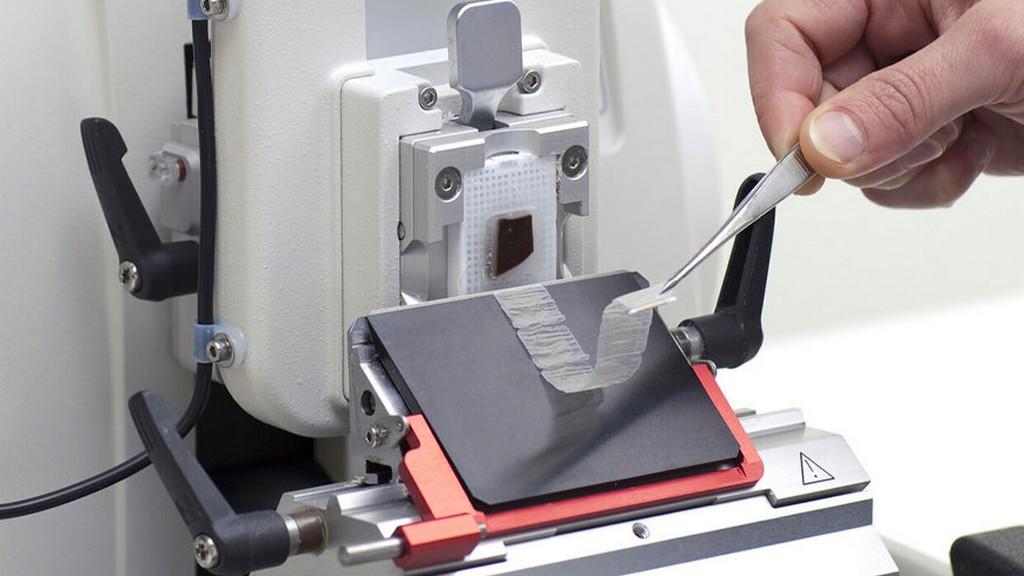
Tear testing evaluates how a material resists the growth of an existing cut or tear.
This is different from abrasion. A synthetic leather may have good surface wear resistance but behave differently when mechanical force is concentrated around a cut, seam or edge.
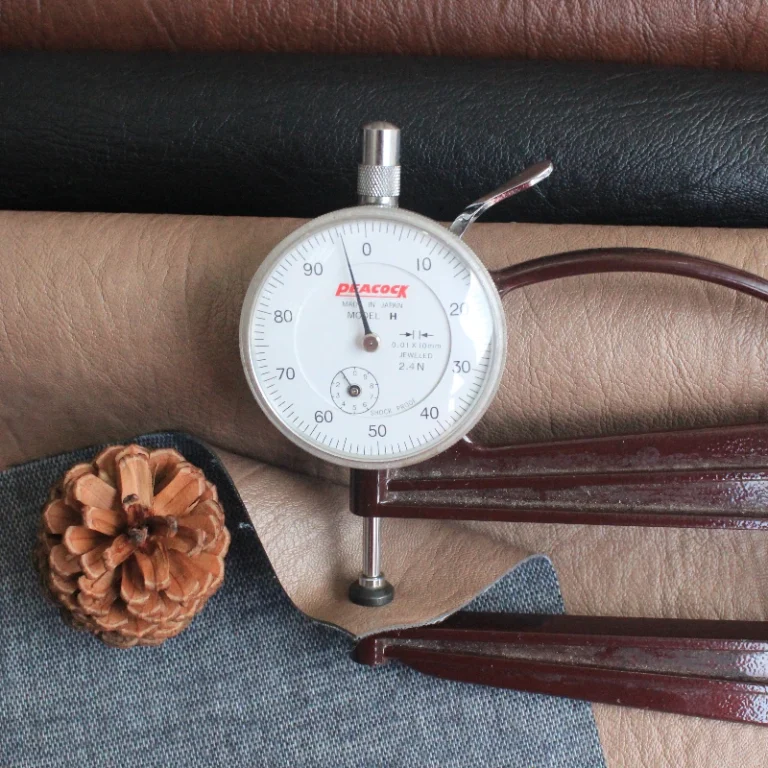
The textile backing plays an important role because it provides structural support underneath the coating. Backing construction, yarn structure, material thickness and the bond between layers can all affect tear behavior.
This makes tear testing particularly relevant for upholstered areas where the material is pulled, stapled, stitched or tensioned during furniture production.
When comparing materials, buyers should consider tear performance together with thickness, backing construction and the actual upholstery method rather than evaluating a single property in isolation.
Cleaning Tests for Synthetic Upholstery Leather
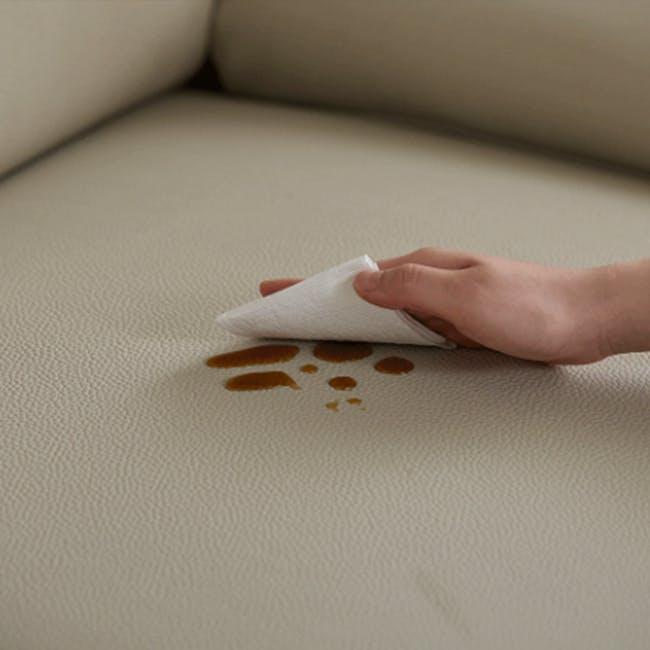
Furniture surfaces may be wiped frequently, especially in commercial environments.
A basic cleaning evaluation involves applying the intended cleaning method to a representative sample and checking whether repeated cleaning changes the material.
Depending on the project, the evaluation may consider:
- Color change
- Gloss change
- Surface tackiness
- Staining
- Coating damage
- Changes in texture or hand feel
The actual cleaning agent matters. Water, mild detergent and stronger cleaning or disinfecting products can interact differently with a coated surface.
Therefore, a material described simply as “easy to clean” should not automatically be assumed to tolerate every cleaning chemical.
For projects where a particular cleaner or disinfectant will be used regularly, testing that specific product on the upholstery material before mass production provides more useful information.
How Buyers Should Evaluate Test Results
Abrasion, tear and cleaning tests answer different questions, so there is no single test result that defines the best upholstery leather.
Instead, start with the final application.
For a sofa or frequently used chair, abrasion resistance may receive greater attention because the surface experiences repeated contact. Areas under tension may make tear performance more important. Furniture that requires frequent wiping should also be evaluated using the expected cleaning procedure.
When requesting synthetic upholstery leather, it is useful to provide the supplier with the intended application, construction requirements and any required test method or acceptance criteria.
Xiangze Leather can perform abrasion and tear testing in-house when these evaluations are required during material selection and development.
For material options, explore our PVC Upholstery Leather range and compare different surface, thickness and backing constructions for your furniture application.