How Synthetic Leather Thickness Affects Shoe Upper Flexibility and Sewing

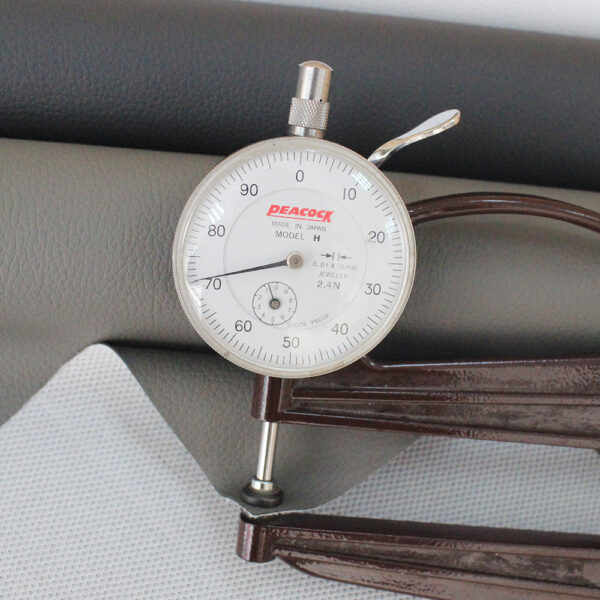
Thickness is one of the first specifications buyers check when selecting synthetic leather for shoe uppers. However, choosing a thicker or thinner material is not simply a question of durability.
Thickness changes how the material bends, folds, feeds through sewing equipment, and conforms to the shape of the shoe. The right specification therefore depends on both the footwear design and the manufacturing process.
Why Thickness Matters for Shoe Uppers
A shoe upper must combine appearance with practical processing performance.
During production, synthetic leather may be cut, stitched, folded, bonded and shaped around a shoe last. After production, the upper continues to flex during walking.
Thickness influences how easily the material responds to these operations.
| Thickness Characteristic | Typical Effect |
|---|---|
| Thinner construction | Easier bending and folding |
| Greater thickness | More body and structure |
| Excessively thin for the design | May provide insufficient support |
| Excessively thick for the design | Can make folding and sewing more difficult |
There is therefore no single ideal thickness for every shoe upper.
How Thickness Affects Flexibility
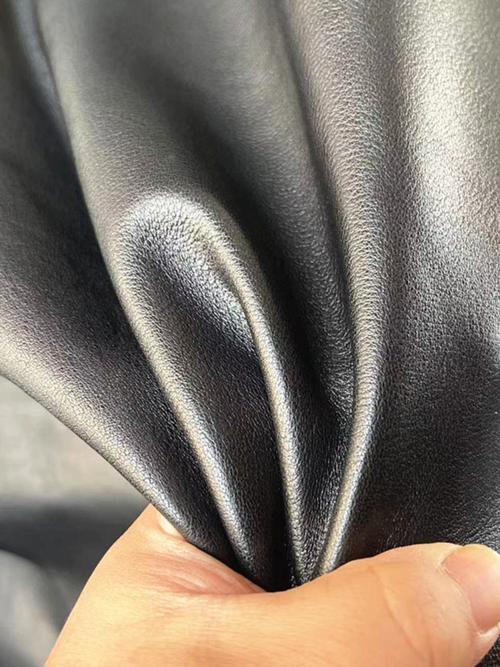
In general, thinner synthetic leather can bend more easily than a thicker construction made from similar materials.
This can be useful for lightweight footwear, flexible upper sections and designs that require the material to follow curved shapes.
A thicker material usually provides more body. This can help certain upper components maintain their shape, but additional thickness may also increase bending resistance.
Thickness, however, should not be evaluated alone.
The coating formulation, backing fabric and overall material construction also affect flexibility. Two synthetic leathers with the same measured thickness can therefore have noticeably different hand feel and bending behavior.
For this reason, buyers should evaluate a physical sample rather than assuming that thickness automatically determines flexibility.
How Thickness Affects Sewing and Folding
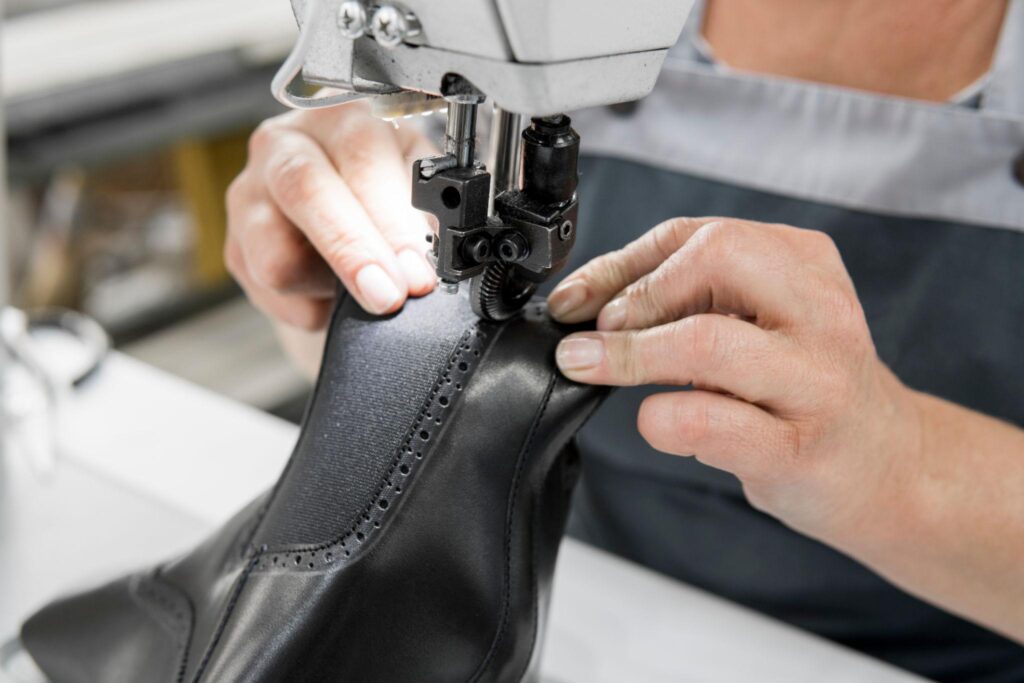
Thickness becomes especially important when the upper contains folded edges, overlapping layers or multiple stitched components.
When several layers meet at a seam, the effective thickness increases. A material that is easy to sew as a single layer may behave differently when folded or overlapped.
Greater thickness can affect:
- Needle penetration
- Feeding through the sewing machine
- Seam appearance
- Edge folding
- Turning around curves
- Bulk at overlapping seams
Thinner materials are generally easier to fold into tight shapes, but they still need enough stability for the intended upper construction.
Manufacturers should therefore test the material using the actual seam and folding structure planned for production.
Match Thickness to the Shoe Design
Different shoe constructions can require different material characteristics.
Lightweight casual footwear may prioritize flexibility and easy folding, while more structured designs may require additional body. Sandal straps, sneaker panels and conventional shoe uppers can also place different demands on the material.
Instead of selecting thickness from a fixed rule, consider how the material will be used.
The size of individual panels, number of overlapping layers, seam design, required flexibility and shaping process can all influence the appropriate specification.
If the design combines several synthetic leather components, different thicknesses may even be used within the same shoe.
For sandal applications specifically, see How to Choose Synthetic Leather for Sandals.
Test the Complete Material Before Production
Thickness should ultimately be evaluated together with the complete construction of the synthetic leather.
Before confirming bulk material, a footwear manufacturer can check:
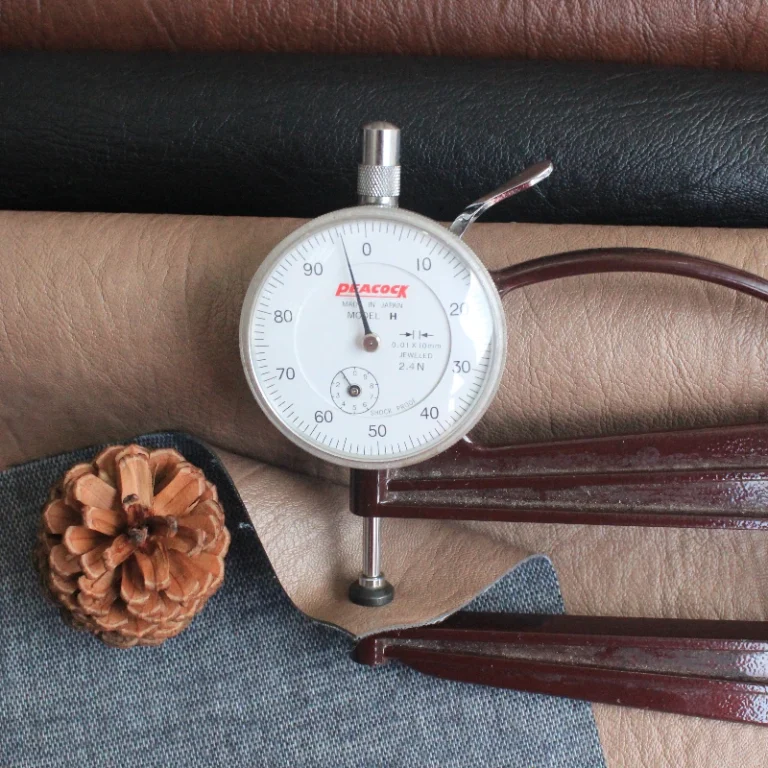
- Actual measured thickness
- Hand feel and bending
- Cutting behavior
- Edge folding
- Stitching performance
- Behavior at multilayer seams
- Shaping around curved areas
- Appearance after repeated flexing
Backing construction is another important factor. If you are comparing different textile bases, see How Backing Fabric Affects Synthetic Leather for Shoe Uppers.
Testing the material in a real upper prototype provides more useful information than choosing synthetic leather based on a thickness number alone.
For additional material options, explore our PVC Leather for Footwear & Garments range and compare different thickness, surface and backing constructions for your footwear project.