What Leather Is Best for Golf Cart Seats? Abrasion and Outdoor Durability Guide

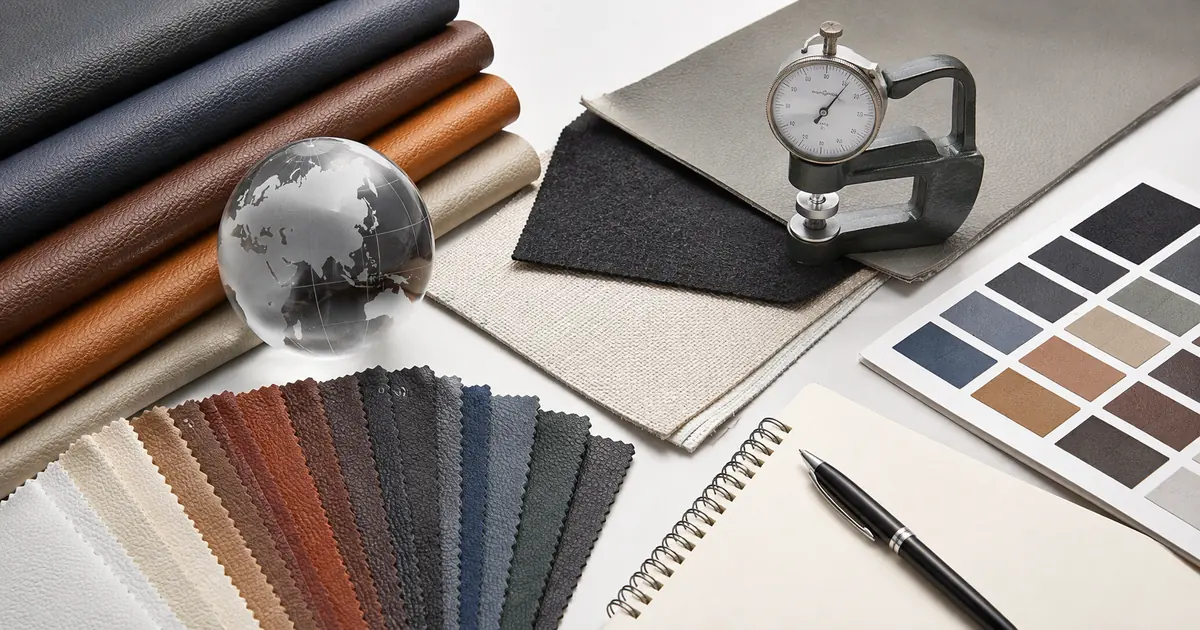
Golf cart seats experience a different type of wear from conventional enclosed automotive seats.
They are frequently used outdoors, exposed to direct sunlight and humidity, and repeatedly contacted as passengers enter and leave the vehicle.
This is one reason major golf cart manufacturers use marine-grade seating rather than treating the seat exactly like a conventional passenger-car interior. Club Car, for example, specifically describes its golf carts as using marine-grade seating for outdoor durability, and its Villager passenger vehicles use marine-grade vinyl seats designed for easy cleaning.
For buyers, the key is therefore not simply:
PVC or PU?
A better question is:
Will the material maintain its abrasion and surface performance after long-term outdoor exposure?
Why Golf Cart Seats Wear Faster
Several forms of stress usually occur at the same time.
| Main Stress | What Happens to the Seat | Material Property to Check |
|---|---|---|
| Repeated passenger movement | Seat edges and contact areas wear first | Abrasion resistance |
| Direct sunlight | Coating may fade, harden or age | UV / xenon weathering |
| Heat and temperature change | Material can lose flexibility | Aging + flex resistance |
| Rain and humidity | Long-term outdoor aging increases | Moisture / mildew performance |
| Sweat, sunscreen and dirt | Surface becomes harder to maintain | Cleaning resistance |
| Repeated flexing | Aged coating may begin cracking | Flexing + coating adhesion |
The important point is that abrasion does not happen in isolation.
A leather surface may initially show excellent abrasion resistance but become more vulnerable after long-term UV exposure or coating degradation.
That is why golf cart seat leather should be considered an outdoor durability system, rather than simply a high-cycle abrasion material.
PVC, PU or Outdoor-Grade Synthetic Leather?
PVC and PU alone do not determine durability.
A general-purpose PVC material and a weather-resistant PVC formulation can behave very differently outdoors. The same applies to PU.
| Material Type | Typical Strength | What Buyers Should Watch |
|---|---|---|
| General-purpose PVC leather | Cost control, surface durability, easy production | Outdoor formulation and UV performance may vary |
| General-purpose PU leather | Softer hand feel and flexible surface options | UV and aging performance depend strongly on PU system |
| Outdoor / marine-grade synthetic leather | Designed around outdoor weathering and maintenance | Confirm actual test specification rather than relying on the label |
This is why the term marine-grade is useful in the golf cart market.
It does not mean every golf cart seat must literally use yacht upholstery. It indicates that outdoor vehicle manufacturers recognize requirements beyond ordinary automotive interior use, especially weather exposure, moisture and cleaning. Club Car explicitly describes marine-grade seats as durable materials intended for outdoor use.
So for golf cart purchasing, the better selection logic is:
outdoor exposure first → polymer type second
rather than automatically assuming that PU is better than PVC or vice versa.
How Should Abrasion Resistance Be Tested?
“50,000 cycles” sounds impressive, but by itself it is incomplete information.
For automotive vinyl and related trim materials, SAE J948 includes a Taber method for evaluating abrasion resistance of automotive fabrics and vinyl-coated fabrics; the current revision listed by SAE is J948_202305.
For plastics- or rubber-coated fabrics, ASTM D3389-21 specifically covers rotary-platform abrasion testing and can evaluate mass loss or the number of cycles required to wear through the coating. ASTM also notes that laboratory abrasion is only one factor in real-world durability and that results are affected by the abradant, pressure, specimen mounting and test conditions.
Therefore, buyers should ask:
| Instead of Asking Only… | Ask This |
|---|---|
| “Is it 50,000 cycles?” | Which test method was used? |
| “Is it Taber tested?” | Which abrasive wheel / abradant? |
| “Did it pass?” | What load was applied? |
| “How many cycles?” | What was defined as failure? |
| “Is it wear resistant?” | Was the material tested before or after aging? |
For suitable Xiangze projects, a Taber abrasion target up to 50,000 cycles can be discussed, but it should be tied to an agreed test method and acceptance criterion rather than treated as a universal golf-cart industry threshold.
And abrasion should not be evaluated alone.
Useful supporting tests include:
| Performance | Reference Method | Why It Matters |
|---|---|---|
| Automotive xenon aging | SAE J2412 | Evaluates accelerated light/heat exposure of automotive interior trim |
| Coating adhesion | ISO 2411:2024 | Helps evaluate peeling and delamination |
| Repeated flexing | ISO 7854 | Evaluates damage from repeated bending |
| Cleaning behavior | VDA 230-212 | Evaluates soiling and cleaning of leather/coated textiles |
SAE J2412 specifies controlled xenon-arc exposure procedures for automotive interior materials, while ISO 2411 specifically measures coating adhesion and ISO 7854 evaluates repeated flexing damage. VDA 230-212 addresses soiling and cleaning behavior of leather and coated textiles used in automotive interiors.
Common Mistakes When Buying Golf Cart Seat Leather
| Common Mistake | Better Approach |
|---|---|
| Thicker leather must be more wear resistant | Evaluate the surface coating and abrasion result |
| PU must last longer than PVC | Compare actual outdoor formulation and test data |
| 50,000 cycles means five times the service life of 10,000 | Laboratory cycles do not convert directly into years of service |
| Automotive leather is automatically suitable for golf carts | Confirm direct outdoor exposure performance |
| High abrasion means it will not peel | Check coating adhesion as well |
| UV resistance and abrasion are separate issues | Evaluate abrasion after environmental aging where relevant |
The last point is especially important.
A golf cart seat does not normally fail because of one single factor. Long-term sunlight may first change the coating, repeated flexing then creates small cracks, and passenger friction makes those damaged areas wear more quickly.
This is why the most useful specification is not:
“We need 1.0 mm leather with 50,000-cycle abrasion.”
It is closer to:
“We need a material for an open golf cart with direct UV exposure, repeated passenger use and regular cleaning, with agreed weathering, abrasion, adhesion and surface-performance requirements.”
Xiangze supplies synthetic leather for automotive interiors and vehicle seating applications. For golf cart projects, material samples and test requirements can be confirmed according to the actual outdoor operating environment.
For golf cart seats, the most durable material is not simply the one with the highest abrasion number—it is the one whose surface performance remains stable after outdoor aging.