How to Choose Synthetic Leather for Bags

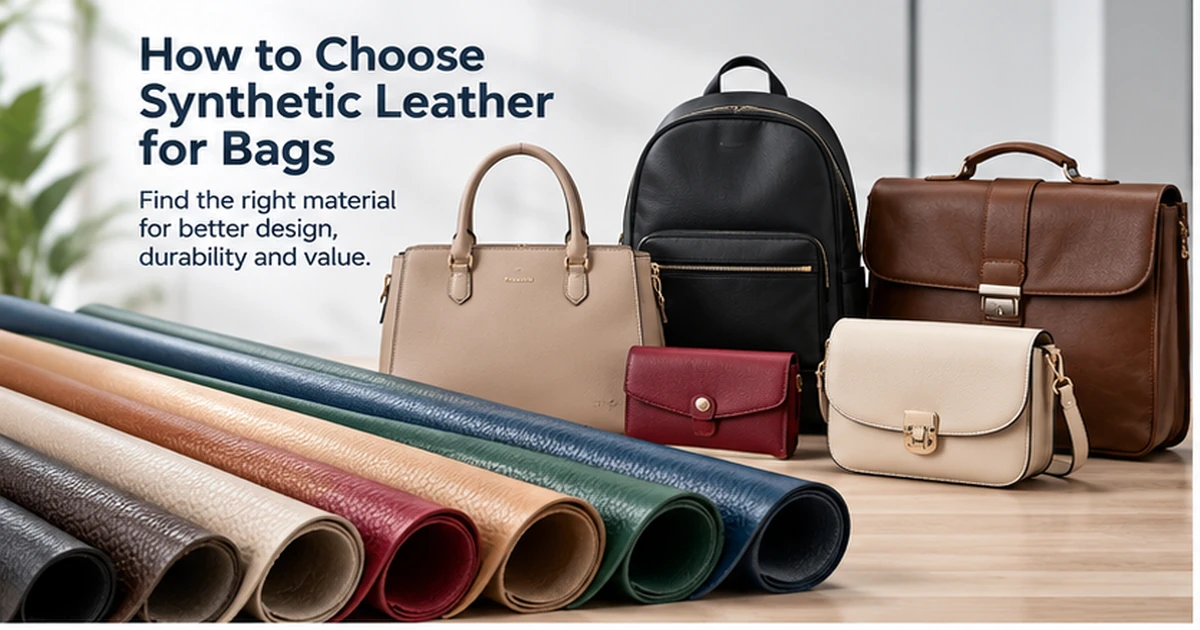
CChoosing synthetic leather for bags involves more than selecting an attractive color or surface grain. The material needs to match the bag structure, target market, production method and expected service conditions.
A soft fashion handbag, structured briefcase, backpack, wallet and travel bag may require very different levels of flexibility, backing strength, abrasion resistance and processing performance.
For bag manufacturers, wholesalers and fashion brands, the most reliable approach is to define the finished product first, compare suitable material constructions and test a representative sample before bulk production.
Xiangze Leather supplies Bag & Luggage Leather for handbags, backpacks, wallets, luggage and fashion accessories. Buyers looking specifically for general-purpose handbag and luggage materials can also explore the Bag Leather collection.
Synthetic leather for bags at a glance
| Selection Factor | Why It Matters |
|---|---|
| Bag type | Determines the required structure and performance |
| Material category | Influences softness, durability and cost |
| Thickness | Affects folding, weight and sewing |
| Backing fabric | Influences tear strength and dimensional stability |
| Hand feel | Determines whether the bag is soft or structured |
| Grain and color | Define the visual style |
| Coating performance | Affects scratching, peeling and repeated flexing |
| Production testing | Confirms cutting, sewing and bonding performance |
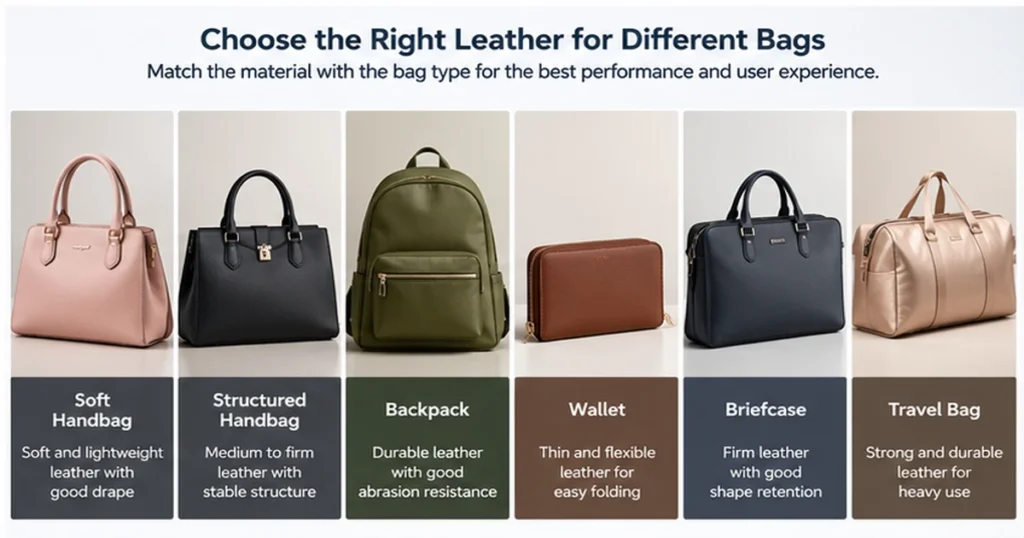
Start with the Bag Type and Product Positioning
The first step is to identify the type of bag, how it will be used and the target market position.
Material suitable for a decorative handbag may not provide enough structure or strength for luggage, backpacks or business bags.
Soft Handbags
Hobo bags, slouch bags, shoulder bags and drawstring bags normally require flexible synthetic leather with a soft hand feel and natural drape.
The material should bend and fold easily without developing excessive wrinkles, surface whitening or permanent deformation.
Very soft material may require lining, foam or reinforcement to help the finished bag maintain its intended shape.
Structured Handbags and Briefcases
Structured handbags, box bags and business cases usually require:
- Firm or medium-firm material
- Controlled stretch
- Stable backing
- Clean edge finishing
- Good dimensional stability
The material should maintain clear lines without becoming excessively stiff around corners and folded sections.
For structured products, material body should be evaluated together with reinforcement board, lining and edge construction rather than according to thickness alone.
Backpacks and Travel Bags
Backpacks and travel bags are exposed to repeated movement, friction and heavier loads.
Greater attention should be given to:
- Tear strength
- Abrasion resistance
- Backing strength
- Coating adhesion
- Strap and handle areas
- Bottom and corner protection
One material does not necessarily need to be used for every part of the bag.
The main body, bottom, straps, handles and decorative panels may use different constructions according to their stress level.
Wallets and Small Leather Goods
Wallets, card holders and small pouches generally require thinner material that is easy to fold, skive, stitch and edge paint.
Material that is too thick can make the finished product bulky and may create problems around repeated folds.
For small leather goods, manufacturers should pay particular attention to fold resistance, edge finishing and stitch-hole performance.
Cosmetic and Promotional Bags
Cosmetic bag materials should normally be flexible, easy to clean and suitable for zipper sewing.
Promotional bags may prioritize competitive cost, lightweight construction, printing performance and production efficiency.
The required durability depends on whether the product is intended for short-term promotion or regular use.
| Bag Type | Main Material Priorities |
|---|---|
| Soft handbag | Soft feel, flexible backing and natural drape |
| Structured handbag | Firm body, stable backing and clean edge finishing |
| Backpack | Tear strength, abrasion resistance and strong backing |
| Wallet | Thin construction, folding and edge-painting performance |
| Briefcase | Dimensional stability and professional appearance |
| Travel bag | Strong backing, scratch resistance and coating adhesion |
| Cosmetic bag | Easy cleaning, flexibility and zipper-sewing performance |
| Promotional bag | Economical construction and efficient production |
Choose the Right Synthetic Leather Type
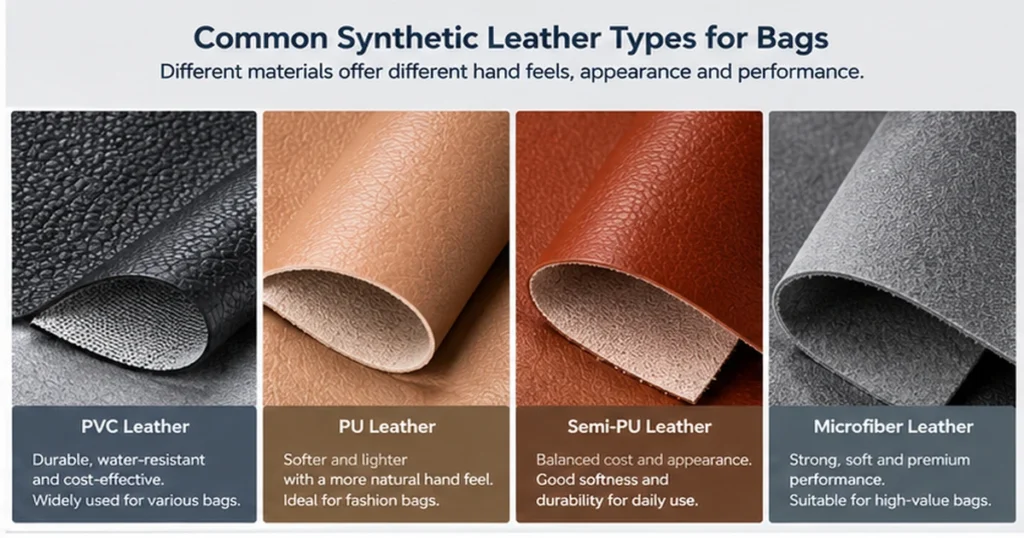
Synthetic leather for bags normally combines a textile backing with a synthetic coating and a decorative or protective surface finish.
Common options include PVC leather, PU leather, semi-PU leather and microfiber leather.
The best material depends on the required appearance, flexibility, performance and target cost rather than the material name alone.
PVC Leather
PVC leather is commonly selected for bag manufacturing because it can provide:
- Consistent colors and grains
- Water-resistant surface
- Easy cleaning
- Stable material body
- Wide decorative options
- Competitive commercial cost
PVC leather can be manufactured from relatively soft to firm depending on the formulation and backing.
It is commonly considered for handbags, backpacks, wallets, luggage, cosmetic bags and promotional products.
Buyers who want to understand the coating, backing and manufacturing structure in more detail can read What Is PVC Synthetic Leather?.
A wider range of general material constructions is also available in the PVC Leather Materials category.
PU Leather
PU leather is generally selected when softness, lightweight construction and natural drape are important.
It can be suitable for fashion handbags, shoulder bags, clutches and decorative panels.
Its long-term performance depends on the coating system, hydrolysis resistance, storage environment and intended market.
Manufacturers should therefore evaluate the actual specification rather than assuming that every PU leather provides the same durability.
Semi-PU Leather
Semi-PU commonly uses a PVC-based construction with a PU surface treatment.
Depending on the formulation, it can provide a balance between:
- Cost
- Surface appearance
- Softness
- Processing performance
- Commercial durability
It can be considered for medium-priced handbags, backpacks and fashion accessories where buyers want a different hand feel or surface character from conventional PVC constructions.
Microfiber Leather
Microfiber synthetic leather can provide a flexible base, good recovery and strong mechanical performance depending on the construction.
It may be considered for higher-value handbags, briefcases and accessories where buyers require a more premium material specification.
Its cost is normally higher than conventional PVC constructions, so the actual performance requirement should justify the material choice.
| Material | General Characteristics | Typical Applications |
|---|---|---|
| PVC leather | Stable, versatile and economical | Backpacks, luggage and handbags |
| PU leather | Soft, lightweight and flexible | Fashion and shoulder bags |
| Semi-PU leather | Balanced cost and appearance | Handbags and accessories |
| Microfiber leather | Higher-specification synthetic construction | Briefcases and premium bags |
| Patent synthetic leather | Smooth and glossy | Fashion bags and decorative panels |
| Printed synthetic leather | Decorative and customizable | Seasonal and fashion collections |
The correct material should always be selected according to the bag structure and production requirements rather than material name alone.
Confirm Thickness, Backing and Hand Feel
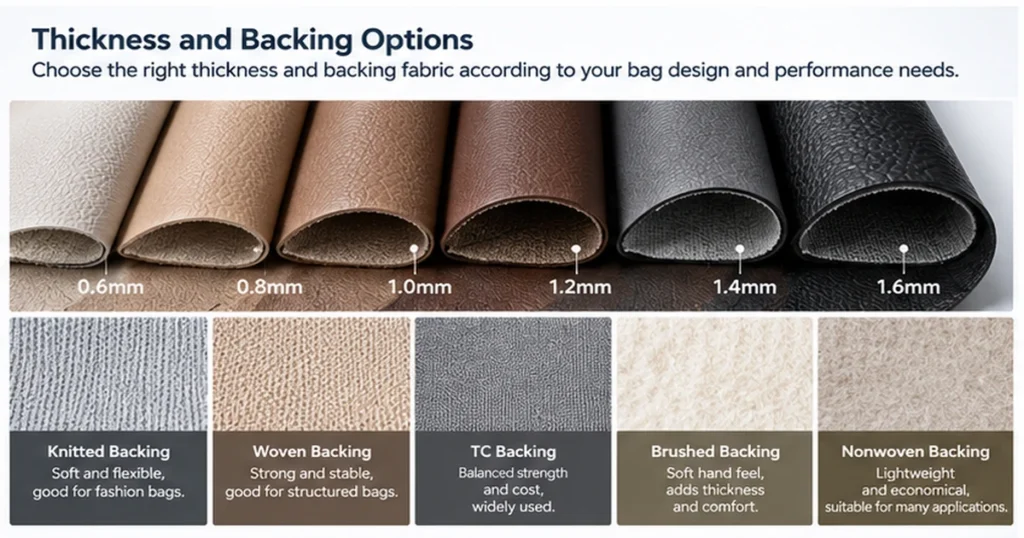
Synthetic leather for bags is available in a wide range of thicknesses.
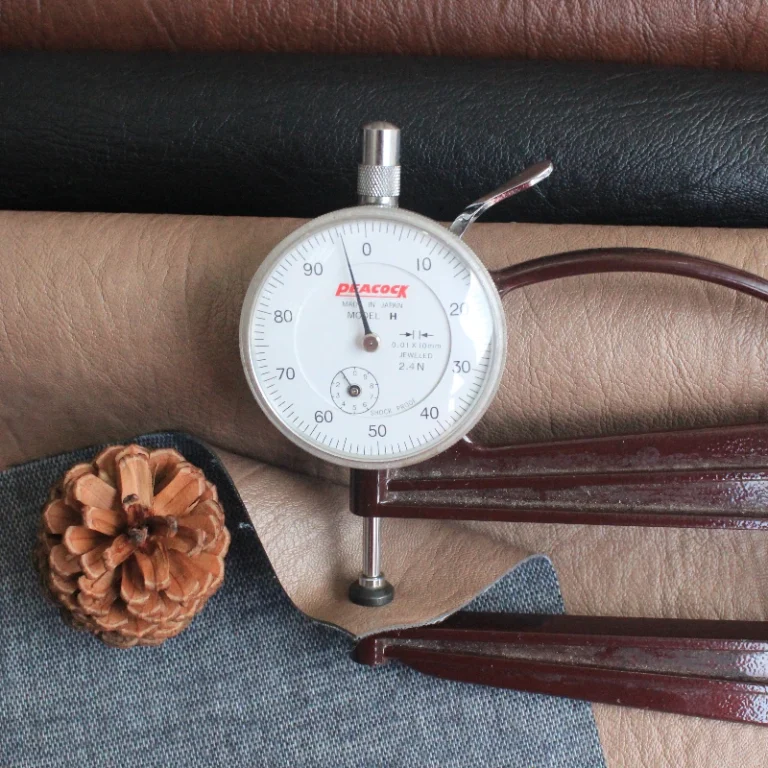
Many handbag and backpack projects begin by comparing materials around 0.7–1.1mm, while wallets may use thinner constructions and structured bags may require thicker or firmer materials.
The final specification depends on the coating, backing, reinforcement and finished bag construction.
Thin Constructions
Relatively thin material may be suitable for:
- Wallets
- Card holders
- Small pouches
- Folded accessories
- Decorative panels
- Selected lightweight constructions
Thin material is normally easier to fold and sew but may need additional reinforcement when used across larger bag panels.
Medium-Thickness Constructions
Medium-thickness material often provides a practical balance between:
- Flexibility
- Material body
- Weight
- Cost
- Sewing performance
It is commonly considered for standard handbags and backpacks.
For example, XZ60128 Soft Fine Grain PVC Leather for Bags uses a 0.8mm construction with brushed backing, providing one example of a relatively flexible bag leather structure.
Thicker Constructions
Thicker or firmer materials may be considered for structured handbags, briefcases, bag bottoms and travel products.
However, excessive thickness can make:
- Folding more difficult
- Seams bulkier
- Edge finishing harder
- Skiving more important
- Tight corners more difficult to form
Thicker leather is not automatically stronger.
Backing strength, coating formulation and adhesion remain equally important.
Backing Fabric
The backing influences tear strength, stretch, cutting stability and sewing performance.
| Backing Type | General Characteristics |
|---|---|
| Knitted backing | Flexible and useful for soft or curved bag structures |
| Woven backing | More dimensionally stable for structured bags |
| Brushed backing | Can provide additional body and a softer reverse side |
| Nonwoven backing | Economical; tear and stitch-hole performance should be tested |
| Heavy woven or canvas backing | Can provide additional support for heavier-use applications |
| Microfiber base | Flexible synthetic base for higher-specification materials |
Knitted backing may be useful for soft handbags and rounded panels, but excessive stretch can cause distortion during cutting or sewing.
Woven or more stable backing constructions may be preferable for backpacks, briefcases, travel bags and larger panels where dimensional control is important.
For a detailed explanation of different backing structures, see PVC Leather Backing Options.
Hand Feel and Structure
Soft synthetic leather is suitable for slouch bags, hobo bags and foldable designs.
Medium-soft material can provide a balance between flexibility and shape retention for general handbags and backpacks.
Firm material may be more appropriate for box bags, structured totes, briefcases and travel cases.
Hand feel should always be evaluated together with the lining, foam, reinforcement board and complete bag construction.
Evaluate Grain, Finish and Decorative Style
After confirming the basic material construction, buyers can focus on the surface design.
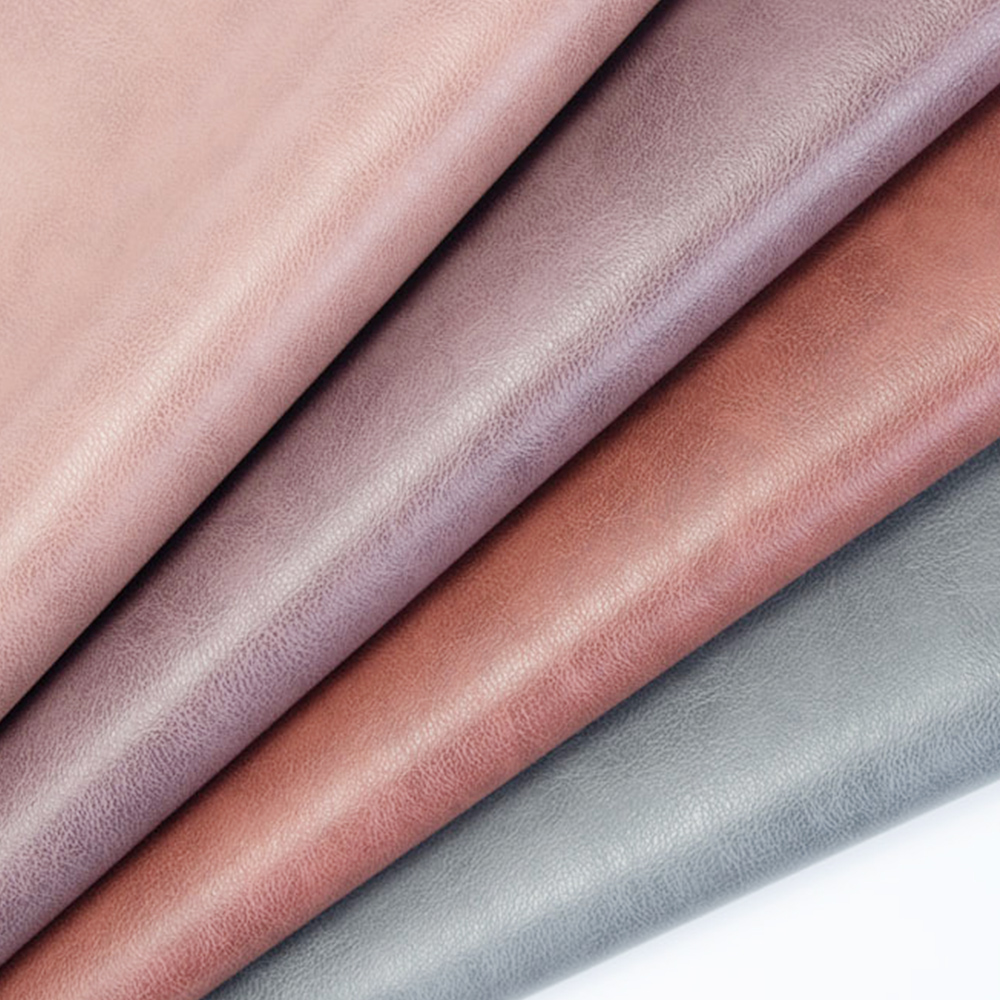
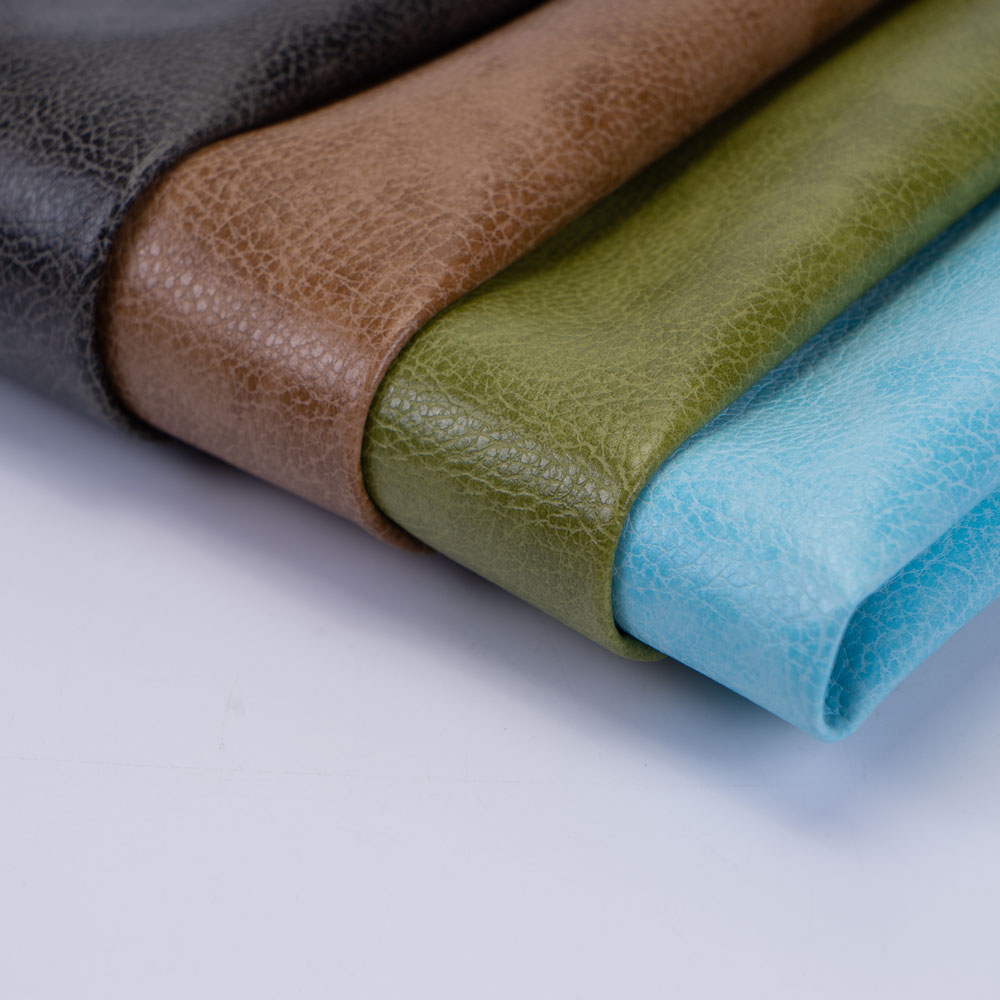
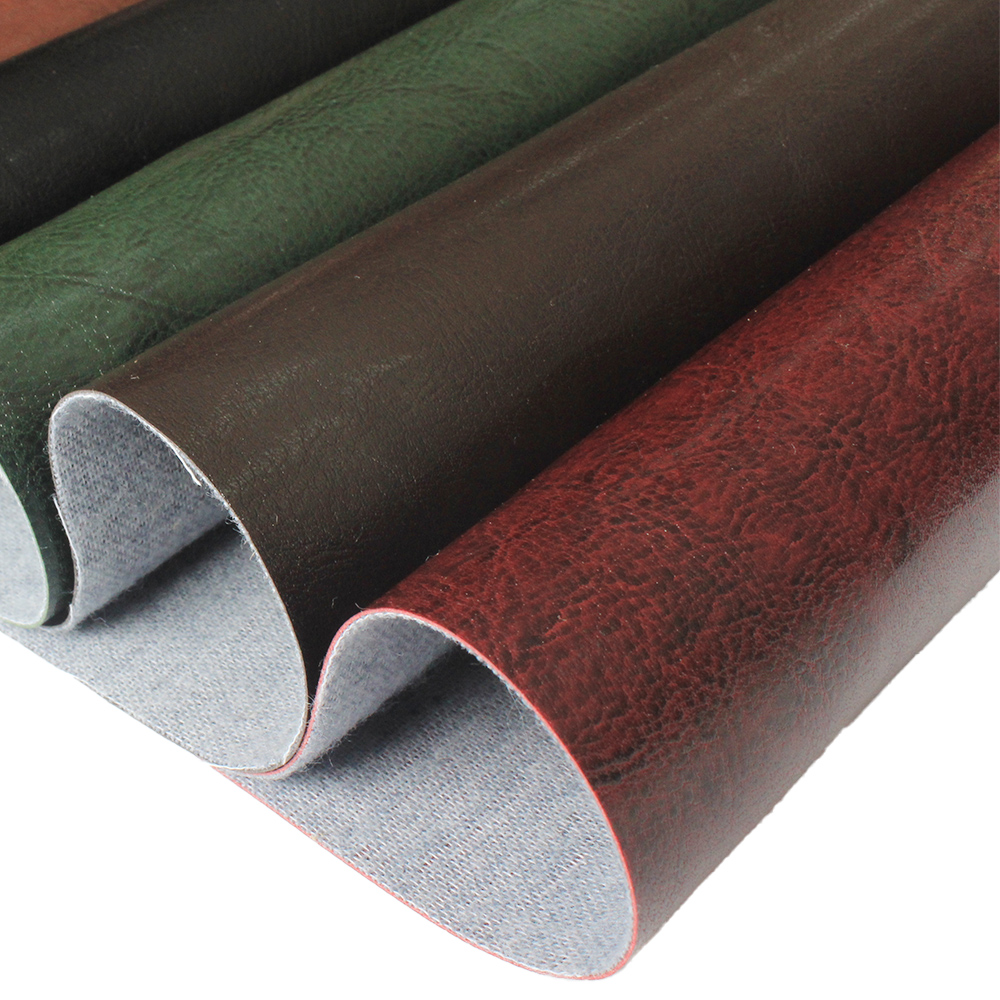
Common bag leather surfaces include:
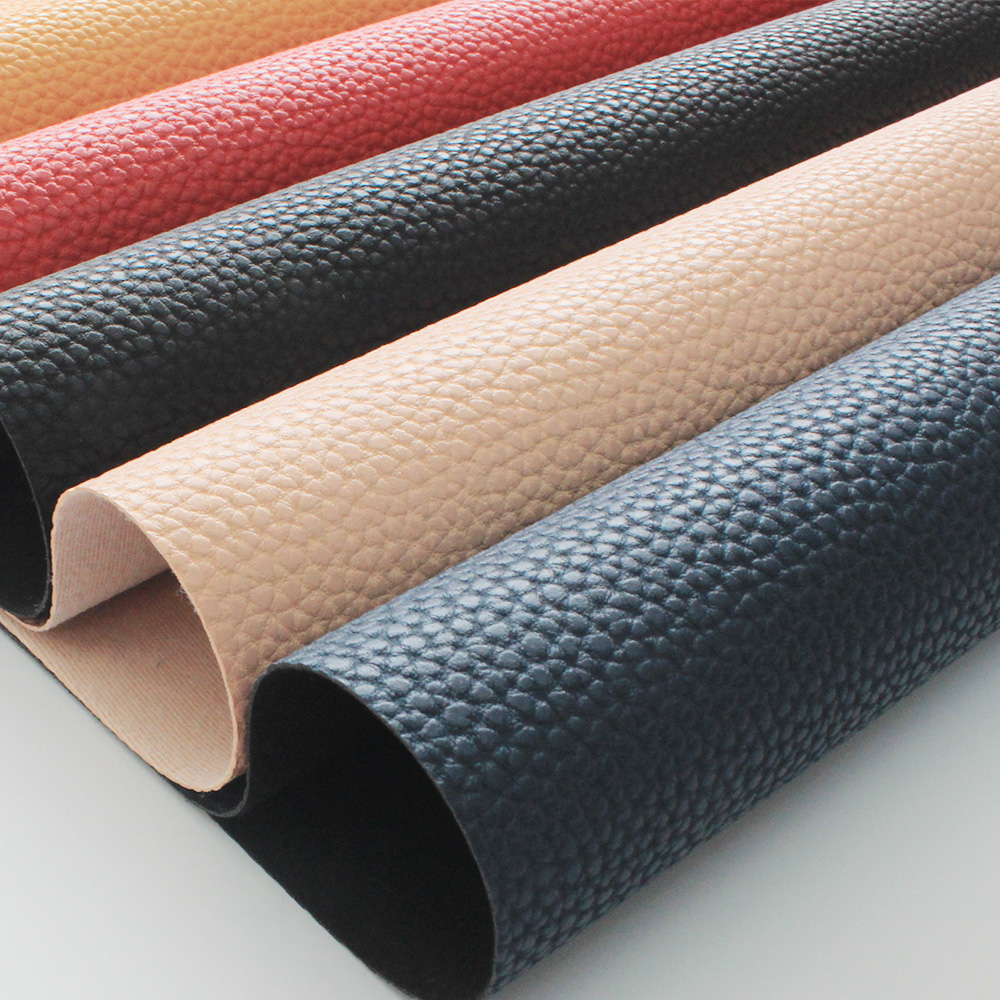
- Litchi grain
- Fine grain
- Pebble grain
- Saffiano-style grain
- Nappa-style grain
- Distressed grain
- Crocodile and animal patterns
- Woven or geometric textures
- High-gloss surfaces
- Printed patterns
- Metallic finishes
- Glitter effects
Litchi and Pebble Grain
Litchi and pebble surfaces are commonly used because they provide an easily recognizable leather-style texture.
They can work across handbags, backpacks, wallets and luggage.
The grain size should match the dimensions of the finished product.
A large grain may work well on luggage or larger handbags but may appear oversized on wallets or small decorative panels.
For example, XZ60029 Two-Tone Litchi Grain PVC Leather combines a 1.0mm construction with terry fabric backing for handbag and luggage applications.
Embossed and Geometric Surfaces
Woven, basket, geometric and other strongly embossed surfaces can give bags a more distinctive visual identity.
Manufacturers developing these designs can compare additional options in the Embossed Leather for Bags collection.
Directional patterns require extra attention during cutting so separate panels remain visually consistent.
Crocodile and Animal Patterns
Crocodile, snake, stingray, leopard and other animal-inspired surfaces are primarily decorative choices.
The scale of the pattern should match the size of the finished bag.
A large crocodile pattern may work on a handbag or travel bag but can appear poorly proportioned on a small wallet.
Buyers looking specifically for these designs can explore the Animal Pattern Leather collection.
Printed and Metallic Surfaces
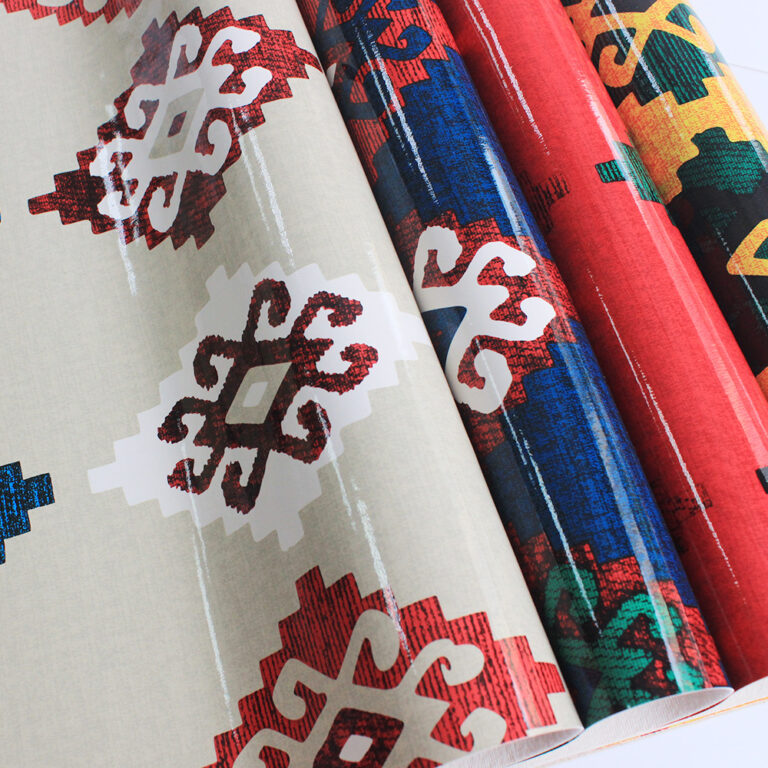
Printed surfaces can be used for fashion collections, seasonal bags and decorative accessories.
Metallic finishes provide another way to differentiate a product without changing the basic bag construction.
For example, XZ73532 Metallic Pebble Grain PVC Leather for Bags combines a metallic surface with a 1.0mm PVC construction.
Additional decorative options are available in the Printed Leather for Bags collection.
For highly decorative fashion products, buyers can also compare Glitter Leather separately.
Confirm Color and Color Fastness
Color should be selected according to both appearance and practical use.
Dark colors are frequently used for backpacks, business bags and travel products because stains and minor marks may be less visible.
Light colors can create a clean and fashionable appearance but may require closer evaluation for:
- Denim dye transfer
- Staining
- Yellowing
- Cleaning marks
- Wet rubbing
- Dry rubbing
Customized colors should be approved through physical samples rather than computer screens alone.
The same color can also appear different on fine grain, deep grain, matte, metallic or glossy surfaces.
For this reason, the approved sample should represent the actual surface construction intended for production.
Check Abrasion, Tear Strength and High-Stress Areas
Appearance should not be the only selection factor.
Different areas of a bag experience different levels of mechanical stress.
Common high-wear areas include:
- Corners
- Bottom panels
- Handles
- Shoulder straps
- Zipper edges
- Folded sections
- Rivet areas
- Buckle attachments
Travel bags and backpacks normally require stronger abrasion and scratch resistance than decorative evening bags.
Tear performance should also be evaluated around stitching holes and hardware.
A material may feel strong when pulled by hand but still fail around closely spaced needle holes or metal fittings.
Testing should therefore use the actual needle size, stitch distance, hardware and reinforcement method planned for production.
Check Coating Adhesion and Repeated Flexing
Poor coating adhesion can lead to peeling, bubbling or delamination.
The selected material should be repeatedly folded and flexed in areas representative of the finished bag.
Pay particular attention to:
- Bag flaps
- Wallet folds
- Zipper openings
- Corners
- Handles
- Repeatedly bent panels
Surface cracking, whitening, coating separation or permanent grain distortion can indicate that the construction is unsuitable for the intended application.
The complete material should be evaluated rather than judging performance from surface thickness alone.
Consider Water, Stain and Climate Requirements
Many synthetic leather surfaces resist light moisture and can be cleaned with a soft damp cloth.
However, a water-resistant leather surface does not make the complete finished bag waterproof.
Water can still enter through:
- Zippers
- Seams
- Stitching holes
- Cut edges
- Perforated areas
If the finished product requires a defined water-resistance level, the complete bag should be tested.
Climate should also be considered.
PU and microfiber constructions intended for hot and humid environments may require defined hydrolysis performance.
Materials used or transported in cold markets may need specific low-temperature or cold-flex testing.
Do not assume these properties from the material name alone.
Confirm Compliance Requirements Before Production
Depending on the customer and destination market, buyers may need to define requirements relating to:
- REACH
- RoHS
- Phthalates
- Heavy metals
- PAHs
- APEO
- Formaldehyde
- Odor
- Other customer-specific restricted substances
The exact standard and test method should be confirmed before quotation and production.
Different brands and destination markets may use different requirements, so a generic statement such as “eco-friendly” should not replace an actual specification.
Test the Material Before Bulk Production
A small swatch can help confirm color and grain, but it is not sufficient for evaluating bag-production performance.
Manufacturers should request a larger sample and test it using the actual factory process.
Check:
- Cutting stability
- Needle penetration
- Stitch-hole strength
- Edge tearing
- Seam appearance
- Material feeding
- Surface scratching
- Folding performance
- Edge painting
- Skiving
- Binding
- Gluing
- Heat sealing if applicable
- Hardware installation
- Coating adhesion
- Adhesive compatibility
For wallets and structured handbags, edge-painting and skiving performance are especially important.
When synthetic leather is bonded to foam, fabric, cardboard, lining or reinforcement sheets, the actual adhesive should be tested.
An unsuitable adhesive or process can result in staining, bubbling, hardening or delamination.
Roll width should also be compared with the cutting pattern. Efficient cutting layouts can reduce material waste and improve production consistency.
Before confirming an order, the written specification should include:
| Specification | Confirmation |
|---|---|
| Bag application | Handbag, backpack, wallet, briefcase or luggage |
| Material type | PVC, PU, semi-PU or microfiber |
| Product code | Supplier material reference |
| Color | Approved physical sample |
| Grain and finish | Confirmed surface reference |
| Thickness | Required specification and tolerance |
| Backing | Fabric type and construction |
| Hand feel | Approved softness or firmness |
| Performance | Required test standards |
| Roll width | Confirmed effective width |
| Quantity | Trial and bulk quantity |
| Packing | Required roll and export packing |
Whenever possible, produce a trial bag or at least a complete representative panel before bulk production.
This can reveal cutting, sewing, folding, bonding and hardware problems that are not visible when the material is inspected flat.
Choosing Synthetic Leather for Your Bag Project
The best synthetic leather for bags cannot be selected according to appearance, material name or thickness alone.
Bag type, surface construction, backing, hand feel, dimensional stability, sewing performance and expected service conditions should be evaluated together.
A practical selection process is:
Define the bag type → select the material category → confirm thickness and backing → choose grain and color → evaluate high-stress areas → test sewing and finishing → produce a trial sample → approve the final specification.
For general handbag, backpack, wallet and luggage materials, explore the Bag Leather collection.
For embossed, printed, glitter and animal-inspired surfaces, the broader Bag & Luggage Leather range provides additional material options for different bag designs.
Tell us your bag type, preferred surface, color, thickness, backing, performance requirements and estimated quantity. We can recommend suitable materials and provide samples for evaluation before bulk production.

About Xiangze Leather
Written by Xiangze Leather Editorial Team
Xiangze Leather supplies PVC synthetic leather for furniture upholstery, bags, footwear, automotive interiors, motorcycle seats and decorative applications. Material samples, specification options and quotation support are available according to project requirements.