How to Choose PVC Leather for Sofa Upholstery?

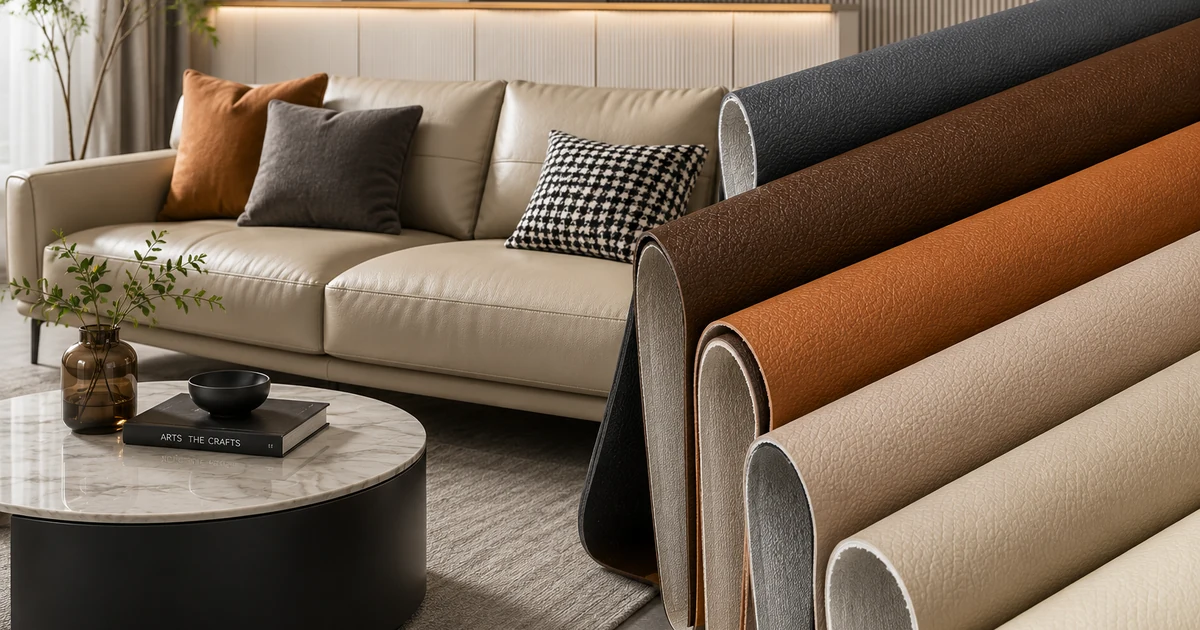
Choosing PVC leather for sofa upholstery involves more than selecting an attractive color or grain.
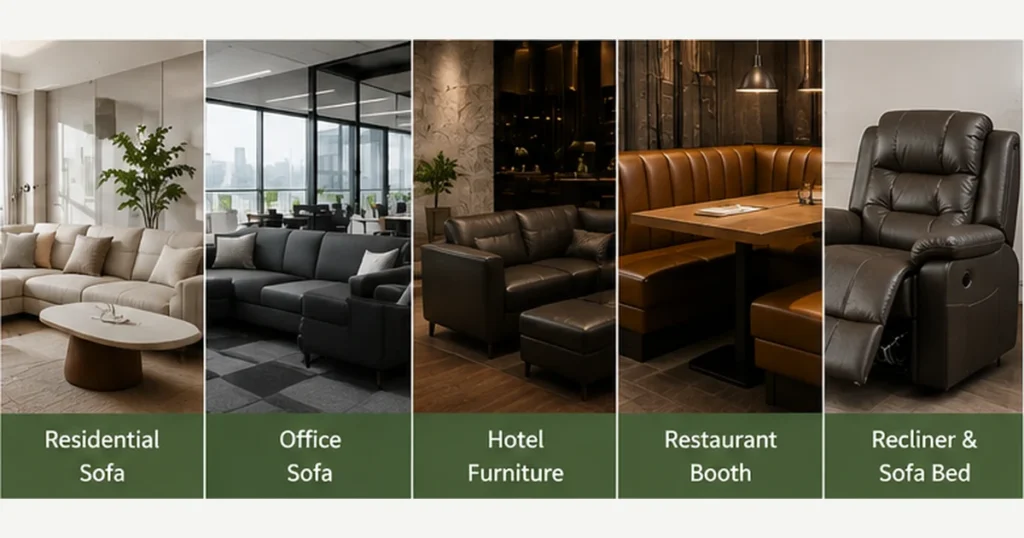
The material needs to match the sofa structure, upholstery process, expected usage level and destination market. A material suitable for a decorative residential sofa may not be the best choice for hotel furniture, office seating, restaurant booths or frequently used recliners.
Thickness, backing construction, flexibility, surface grain, coating performance and required testing should therefore be considered together.
For furniture manufacturers and upholstery buyers, the most reliable approach is to define the finished sofa first, compare suitable material constructions and test a physical sample before bulk production.
Xiangze Leather supplies PVC Leather for Sofa Upholstery in different thicknesses, grains and backing constructions for residential and commercial furniture manufacturing.
PVC sofa leather at a glance
| Selection Factor | Why It Matters |
|---|---|
| Sofa application | Determines the required usage and performance level |
| Thickness | Influences flexibility, body and processing |
| Backing | Affects stretch, stability, sewing and upholstery behavior |
| Softness | Influences wrapping and finished hand feel |
| Grain and finish | Determine the visual style |
| Abrasion resistance | Important for frequently used seating surfaces |
| Cleaning performance | Important for residential and commercial furniture |
| Production testing | Confirms cutting, sewing, stapling and wrapping performance |
| Compliance | May be required for specific customers or markets |
Start with the Sofa Application
The first step is to identify where and how the sofa will be used.
Different furniture applications can place very different demands on the material.
Residential Sofas
Residential sofa leather generally needs a comfortable hand feel, attractive surface, good flexibility and practical cleaning performance.
Soft or medium-soft PVC leather can work well for:
- Cushioned sofas
- Sectional sofas
- Rounded furniture
- Recliners
- Family-room seating
- Comfort-focused furniture collections
The material still needs enough backing support to remain stable when stretched, sewn and stapled over foam.
Office Sofas
Office sofas normally require a more controlled and consistent appearance.
Important factors can include:
- Dimensional stability
- Abrasion resistance
- Easy cleaning
- Stable surface coating
- Consistent color
- Good sewing performance
Medium-soft or medium-firm materials are often easier to use when the furniture design requires relatively clean and structured lines.
Hotel and Commercial Furniture
Hotel sofas, reception seating and other commercial furniture may experience more frequent use than typical residential furniture.
Projects may therefore require more clearly defined specifications for:
- Abrasion resistance
- Coating adhesion
- Backing strength
- Cleaning resistance
- Color fastness
- Odor
- Flame performance
- Chemical compliance
These requirements should be provided before production rather than assumed from the term “commercial upholstery.”
Restaurant Seating
Restaurant booths and other food-service seating are exposed to repeated use and frequent cleaning.
The material may need to be evaluated for contact with:
- Food
- Drinks
- Oil
- Clothing
- Common cleaning products
Easy maintenance can therefore be as important as appearance.
Recliners and Sofa Beds
Recliners and sofa beds create repeated bending, movement and tension around moving sections.
PVC leather used in these areas should provide suitable flexibility and coating adhesion.
A material that is too stiff may wrinkle excessively or become difficult to upholster around moving components.
A construction that stretches too easily may distort during installation or lose the intended panel shape.
| Sofa Application | Main Selection Priorities |
|---|---|
| Residential sofa | Soft feel, attractive grain and flexibility |
| Office sofa | Stable appearance, cleaning and abrasion performance |
| Hotel furniture | Strong construction, repeated-use performance and project compliance |
| Restaurant seating | Cleaning, stain and abrasion performance |
| Recliner | Flexibility, coating adhesion and repeated bending |
| Sofa bed | Controlled stretch, recovery and backing support |
| Decorative panel | Appearance, processing and moderate strength |
These are selection guidelines rather than universal specifications. The final material should be tested according to the actual furniture design.
For chairs, benches, headboards and broader furniture applications, see PVC Leather for Furniture: How to Choose.
Choose the Right Thickness
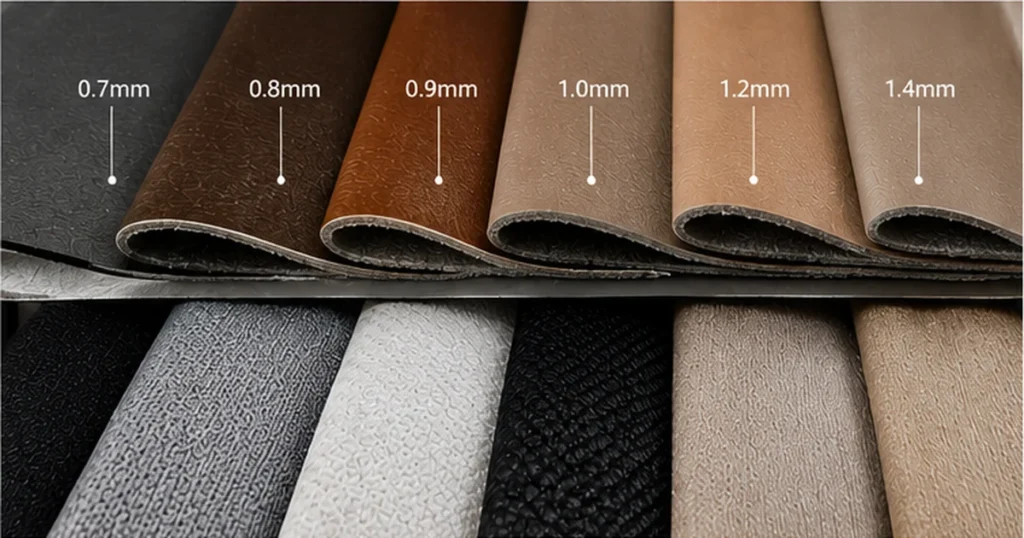
Thickness affects material body, flexibility and upholstery processing, but it should never be evaluated alone.
A thicker PVC leather is not automatically more durable.
The current Xiangze Sofa Leather range includes constructions from relatively thin upholstery materials around 0.6–0.7mm to heavier products reaching approximately 2.0mm. Many general sofa projects may begin by comparing materials around 0.8–1.2mm, but the correct specification depends on the backing, foam, furniture shape and required hand feel.
Thinner Constructions
Relatively thin PVC leather can provide:
- Lower material bulk
- Easier wrapping
- Greater flexibility
- Easier handling around curved areas
It may be considered for decorative panels, lighter upholstery constructions and components requiring higher flexibility.
However, thin material still requires an appropriate backing when it will be stretched, sewn or stapled.
Medium-Thickness Constructions
Medium-thickness materials often provide a practical balance between:
- Flexibility
- Material body
- Sewing performance
- Upholstery handling
- Finished appearance
They can be suitable for many residential sofas, office sofas and general upholstered seating applications.
Heavier Constructions
Thicker materials can create a fuller and more substantial material feel.
They may be useful for particular structured or heavy upholstery designs.
However, increased thickness can also make:
- Tight wrapping more difficult
- Seams bulkier
- Corners harder to form
- Folding more resistant
- Multi-layer sewing more demanding
Thickness should therefore always be evaluated together with backing construction and softness.
Choose the Backing According to the Sofa Structure
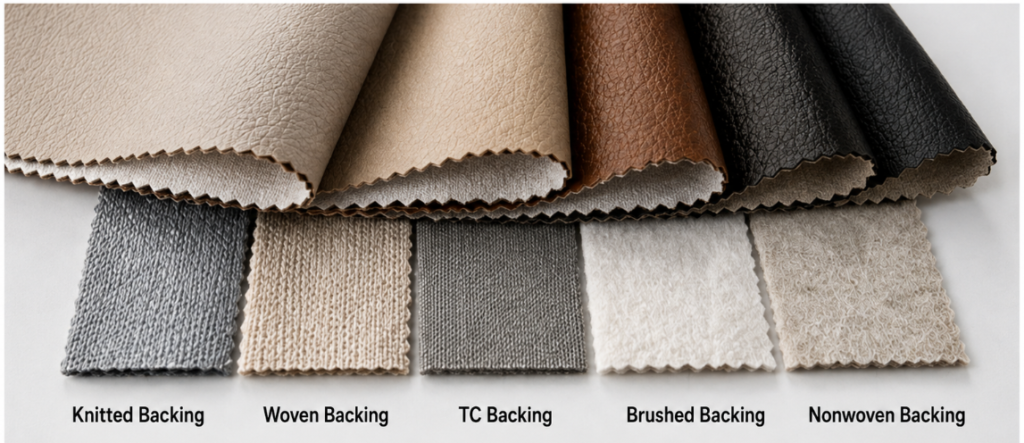
The backing underneath PVC leather can have a major influence on stretch, dimensional stability, material body and upholstery behavior.
This is particularly important for sofas because the leather often needs to stretch around foam while remaining stable at seams and stapled edges.
Xiangze’s current sofa and upholstery products use several different backing constructions rather than one universal furniture backing.
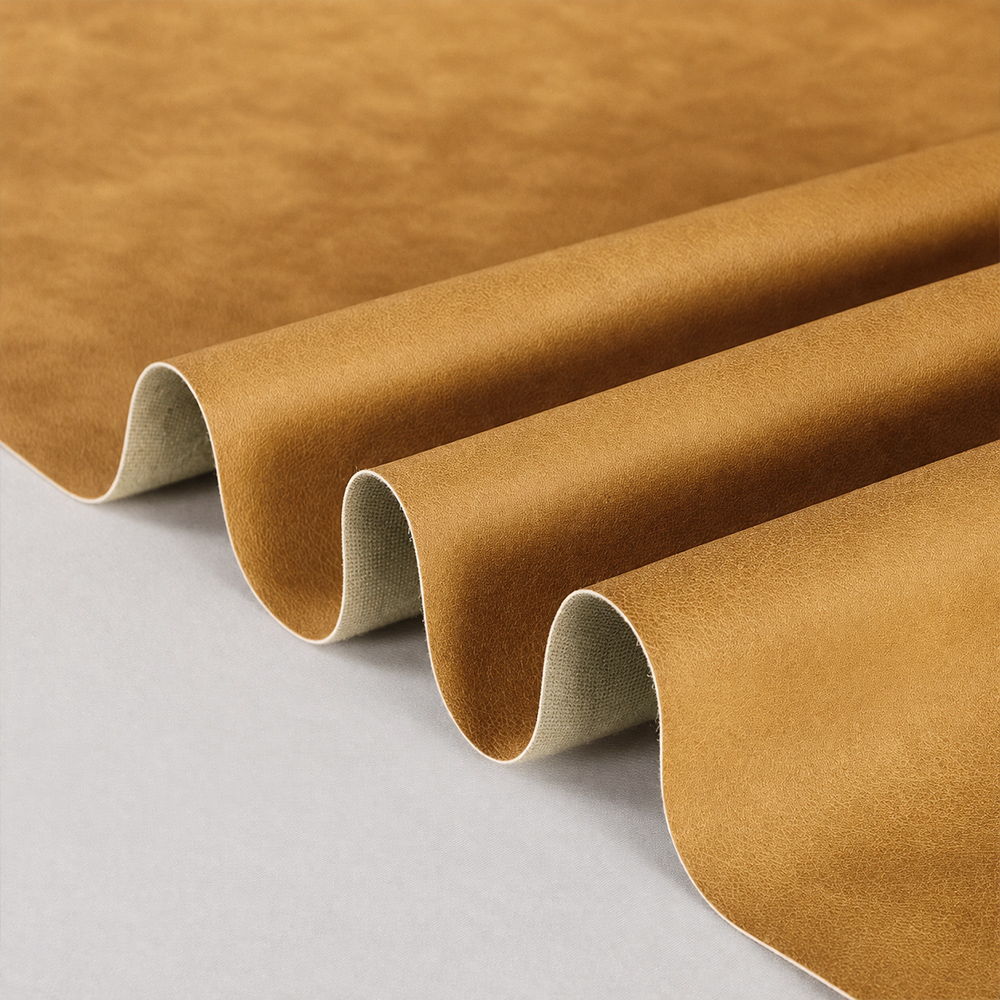
Brushed Fabric Backing
Brushed Fabric Backing provides a soft textile reverse surface and additional material body.
It can provide a useful balance between flexibility and support for general sofa upholstery.
It is used in several Xiangze sofa materials, including fine-grain and distressed constructions.
Double-Needle Brushed Fabric Backing
Double-Needle Brushed Fabric Backing uses a denser textile construction.
It can provide additional body and controlled stretch for upholstery materials where manufacturers want more support during cutting, sewing and installation.
This type of backing is used in products such as natural wrinkle-grain upholstery leather.
Imitation Cotton Fleece Backing
Imitation Cotton Fleece Backing provides a softer, fuller textile structure.
It can contribute to the overall material body and reverse-side hand feel.
Because the backing itself adds thickness, manufacturers should evaluate the complete material rather than comparing only the PVC coating.
Mesh Fabric Backing
Mesh Fabric Backing uses a more open textile structure.
Depending on mesh density, it can provide a balance of flexibility, support and relatively low backing weight.
Xiangze currently uses mesh constructions in several sofa and furniture upholstery materials.
The exact mesh structure should be confirmed because different mesh densities can behave differently during stretching and sewing.
Terry and Toweling Backing
Terry Fabric Backing and Toweling Backing are loop-textured textile constructions used in selected upholstery materials.
They can provide material body and flexibility for sofa and furniture applications.
Although the terms are closely related, buyers should not assume that every terry and toweling construction has identical density, weight or stretch.
Stretch Fabric Backing
Stretch Fabric Backing can be useful for upholstery components that need greater conformity around curved shapes.
However, more stretch is not automatically better.
Excessive stretch can result in:
- Distorted panels
- Uneven grain
- Misaligned stitching
- Wrinkles
- Loss of finished shape
Stretch and recovery should therefore be tested on the actual sofa component.
Textured Fabric Backing
Textured Fabric Backing is used in some heavier Xiangze upholstery constructions.
Depending on the textile structure, it can contribute additional material body and support.
It should be evaluated together with total thickness because heavier textured constructions may behave differently during sewing and wrapping.
Tech Fabric Backing
Selected sofa materials use Tech Fabric Backing or engineered textile-style constructions.
Because this term can cover different textile structures, buyers should confirm the specific product rather than treating “Tech Fabric” as one fixed backing specification.
Recycled Leather Fiber Backing
Recycled Leather Fiber Backing provides a different supporting structure from conventional knitted or brushed fabrics.
It is used in selected upholstery materials where the backing contributes significant material body.
Because this construction can be more substantial, manufacturers should evaluate flexibility, sewing and corner wrapping on the actual furniture.
Microfiber Backing
Microfiber Backing uses a fine-fiber synthetic structure and is used in selected furniture upholstery products.
It can provide a dense and flexible supporting layer.
The complete construction should still be tested according to the sofa design rather than assuming performance from the backing name alone.
Double-Sided Constructions
Some upholstery products use double-sided structures.
These materials should be evaluated individually because their thickness, flexibility and reverse-side characteristics differ from conventional textile-backed PVC leather.
| Backing Construction | What to Evaluate for Sofa Upholstery |
|---|---|
| Brushed Fabric Backing | Flexibility, body and sewing behavior |
| Double-Needle Brushed Fabric Backing | Support, dimensional stability and thickness |
| Imitation Cotton Fleece Backing | Softness, body and total material thickness |
| Mesh Fabric Backing | Flexibility, density and stretch |
| Terry / Toweling Backing | Body, flexibility and textile density |
| Stretch Fabric Backing | Stretch direction, recovery and grain distortion |
| Textured Fabric Backing | Body, thickness and wrapping performance |
| Tech Fabric Backing | Product-specific structure and processing |
| Recycled Leather Fiber Backing | Structural body and folding behavior |
| Microfiber Backing | Flexibility, density and hand feel |
| Double-Sided Construction | Complete composite thickness and processing |
There is no single “best backing” for every sofa.
A curved recliner and a structured office sofa may require different material behavior.
For a complete explanation of the backing types used across Xiangze Leather products, see Common PVC Leather Backing Options.
Match Softness and Flexibility to the Sofa Shape
Softness affects both the finished appearance and upholstery process.
Softer PVC Leather
Soft materials can work well for:
- Cushioned sofas
- Recliners
- Rounded seating
- Deep upholstered sections
- Comfort-focused residential furniture
They generally conform more easily around foam.
However, very soft material can become difficult to control if the backing also stretches excessively.
Firmer PVC Leather
Firmer constructions can help maintain more structured shapes.
They may be useful for:
- Office sofas
- Geometric furniture
- Structured seating
- Flat upholstery panels
- Decorative furniture components
A material that is too firm may become difficult to pull smoothly around tight curves.
The ideal construction therefore requires controlled flexibility rather than simply choosing the softest or firmest option.
Test the material with the actual foam density, seam layout and upholstery tension planned for production.
Select the Surface Grain and Finish
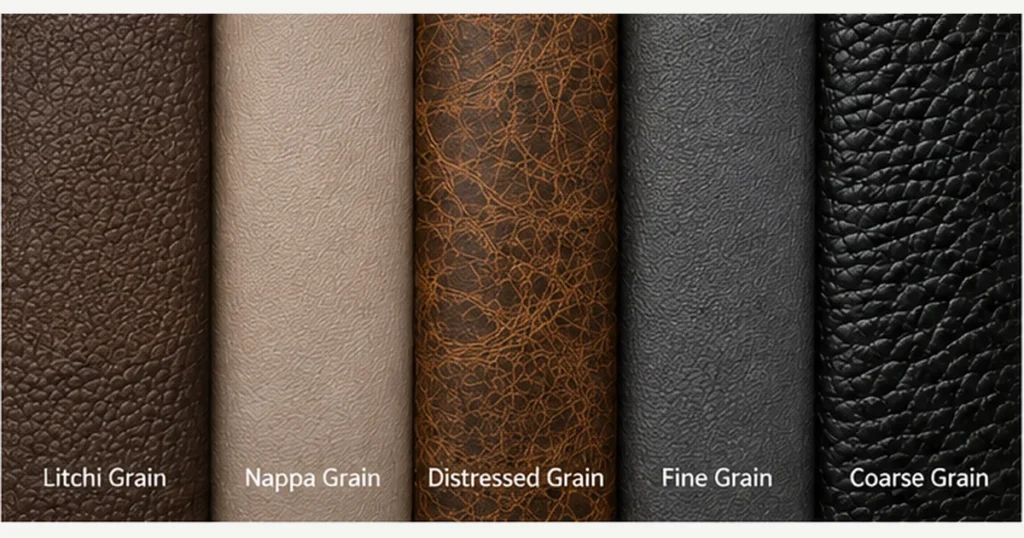
Once the structural requirements are confirmed, buyers can focus on appearance.
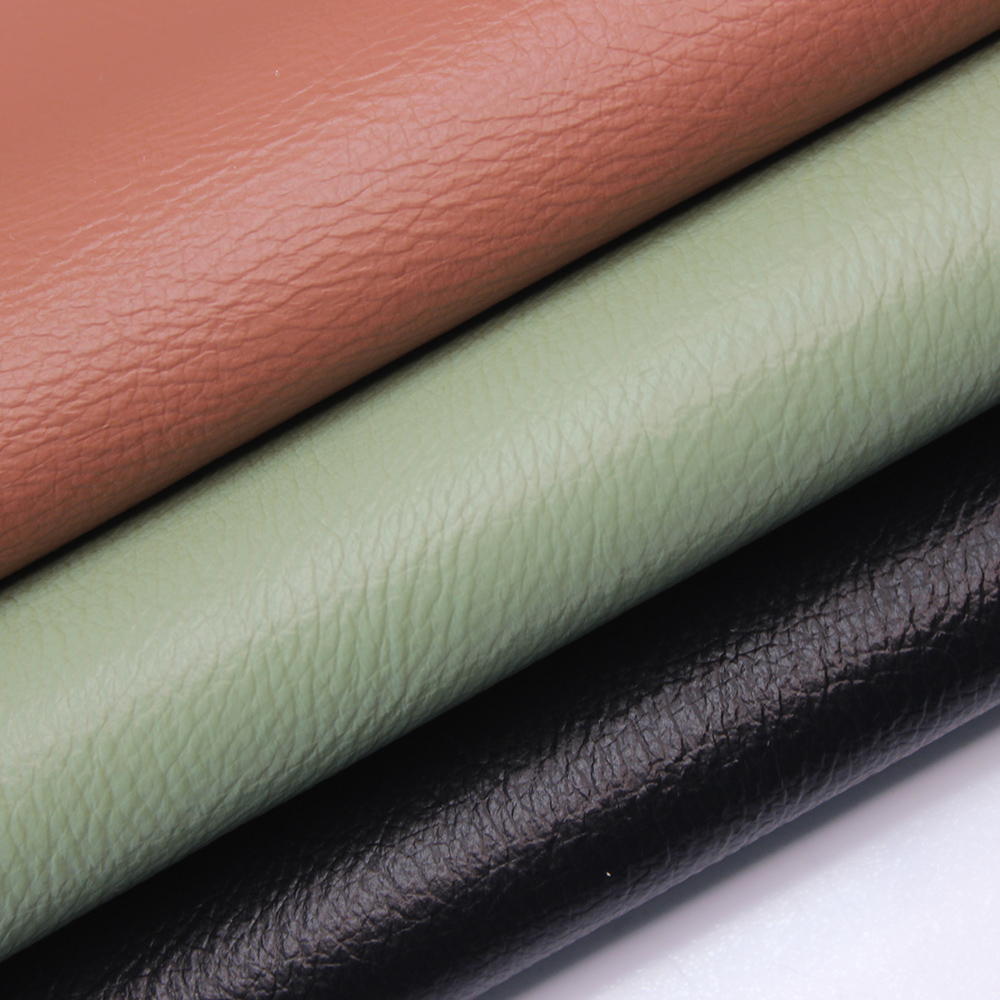
Xiangze sofa materials include fine grains, pebble grains, wrinkle textures, distressed surfaces, fabric-inspired patterns and other decorative effects.
Fine Grain
Fine grain creates a subtle, controlled surface.
It can work particularly well for:
- Modern sofas
- Office furniture
- Minimalist interiors
- Contemporary residential furniture
The restrained grain keeps attention on the furniture shape and stitching.
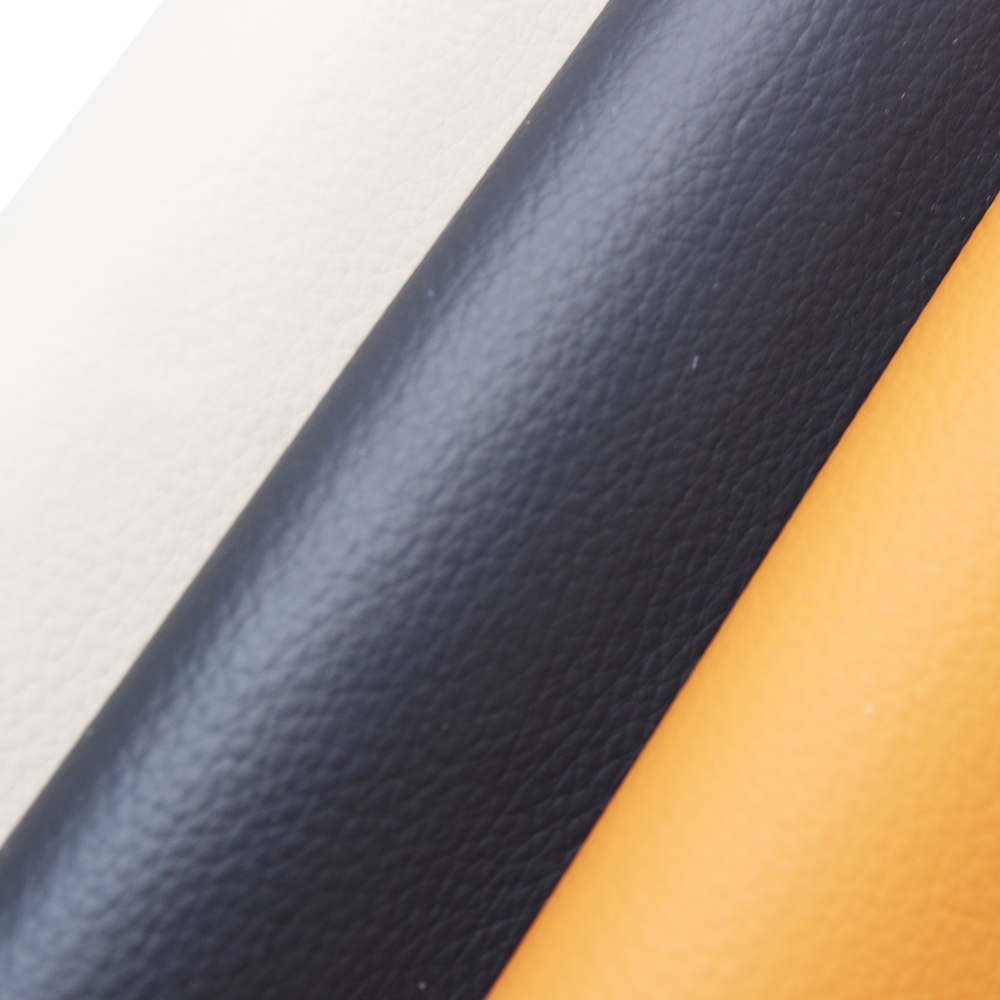
Pebble and Litchi Grain
Pebble and litchi-style grains create a more visible leather-inspired texture.
These grains can be used across both residential and commercial furniture.
A medium grain can also make minor surface variation less visually noticeable than an extremely smooth surface.
Natural Wrinkle Grain
Wrinkle-style surfaces create more irregular texture and can produce a softer, more natural visual effect.
They are particularly useful for larger furniture surfaces where subtle variation adds character.
Distressed and Oil-Wax Effects
Distressed, antique and oil-wax-inspired finishes can work well with:
- Vintage furniture
- Industrial interiors
- Retro sofa collections
- Decorative commercial furniture
The actual appearance should be approved using a physical sample because photographs may not accurately show tonal variation.
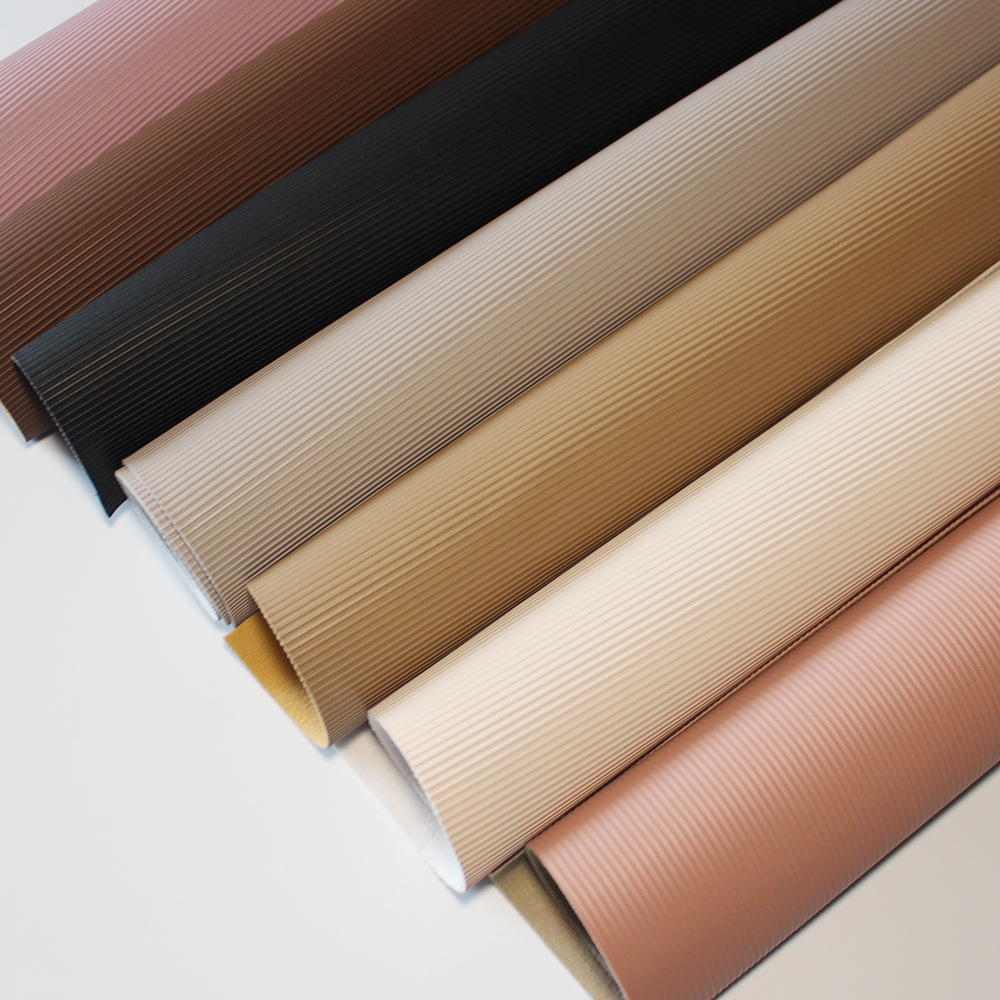
Fabric-Inspired Surfaces
Some PVC sofa materials use woven, ribbed or other fabric-inspired textures.
These provide an alternative to conventional leather grain and can be useful for contemporary upholstery collections.
Surface pattern should always be considered together with the size of the sofa.
A very large or directional pattern may require additional attention during panel cutting.
Choose Color and Gloss Using a Physical Sample
Color should be approved on the actual grain and finish.
Common furniture colors include:
- Black
- Brown
- Coffee
- Beige
- Cream
- Gray
- Navy
- Green
- Burgundy
Dark colors are practical for many office and commercial furniture applications because minor staining and wear may be less visible.
Light colors can create a clean appearance but may require additional testing for:
- Clothing dye transfer
- Staining
- Yellowing
- Cleaning marks
- Wet rubbing
- Dry rubbing
Computer screens should not be used as the final color reference.
Different lighting conditions, cameras and display settings can change how a color appears.
Gloss also affects the finished appearance.
Matte and semi-matte surfaces are commonly suitable for sofa upholstery, while high-gloss surfaces can make scratches, creases and reflections more visible.
Define Abrasion Requirements According to Usage
Seat cushions, armrests and front seat edges normally receive more friction than decorative side panels.
Commercial seating can also receive more frequent use than household furniture.
The required abrasion level should therefore be defined according to the application.
Do not select a universal abrasion value simply because the material is called “sofa leather.”
Consider:
- Expected daily usage
- Seat position
- Commercial or residential use
- Cleaning frequency
- Customer standard
- Destination market
The complete coating and backing construction should be evaluated together.
Check Coating Adhesion and Flexing
The PVC coating and backing should remain stable during manufacturing and use.
Poor coating adhesion can lead to:
- Peeling
- Delamination
- Bubbling
- Surface separation
- Damage around folds
Repeated bending is especially relevant for:
- Recliners
- Sofa beds
- Deep cushion edges
- Folded upholstery sections
- Mechanically moving furniture
Samples should be bent, stretched and processed before bulk approval.
For buyers who want a broader explanation of how the PVC surface and backing work together, see What Is PVC Synthetic Leather?.
Check Cleaning and Stain Requirements
PVC leather generally has a coated surface that can be wiped more easily than many absorbent textiles.
However, different surface formulations may respond differently to:
- Coffee
- Food
- Oil
- Sweat
- Clothing dye
- Household cleaners
- Commercial cleaning products
A soft damp cloth and mild cleaning solution are generally preferable for routine testing.
Strong solvents or aggressive chemicals should not be used unless compatibility has been confirmed.
The PVC surface may resist light water exposure, but this does not make the complete sofa waterproof.
Water can still enter through seams, stitching holes and exposed edges.
Confirm Light, Aging and Temperature Requirements
Furniture positioned close to windows can receive substantial sunlight.
Depending on the project, buyers may need to define requirements for:
- Light fastness
- UV exposure
- Heat aging
- Color stability
- Cold resistance
Standard indoor sofa leather should not automatically be used for outdoor furniture.
Outdoor or semi-outdoor furniture generally requires a different material specification and appropriate weathering tests.
Cold resistance may also be important when furniture is transported, stored or used in low-temperature environments.
Confirm Project Compliance Before Production
Hotels, offices, restaurants and public-space furniture projects may specify particular compliance requirements.
Depending on the customer or destination market, these can include:
- Flame-performance standards
- REACH
- RoHS
- Phthalate restrictions
- Heavy-metal limits
- PAHs
- APEO requirements
- Formaldehyde
- Odor requirements
- Customer-specific restricted substances
These requirements should be confirmed before quotation and production.
A test report for one material should not automatically be assumed to cover every thickness, backing, color or formulation.
Check Sewing, Stapling and Upholstery Performance
The material needs to work with the furniture factory’s actual production process.
Important checks include:
- Cutting stability
- Needle penetration
- Stitch-hole performance
- Seam appearance
- Material feeding
- Stapling
- Stretch recovery
- Wrinkle formation
- Corner wrapping
- Adhesive compatibility where required
A flat sample can look suitable but still create problems once it is stretched around foam.
Whenever possible, use a larger sample to upholster a cushion, seat section or other representative sofa component.
Test Samples Before Bulk Production
Physical sample evaluation is one of the most important stages of sofa leather selection.
Evaluate:
| Item | What to Confirm |
|---|---|
| Application | Residential, office, hotel, restaurant, recliner or sofa bed |
| Surface | Grain and decorative effect |
| Color | Approved physical reference |
| Finish | Matte, semi-matte or required gloss |
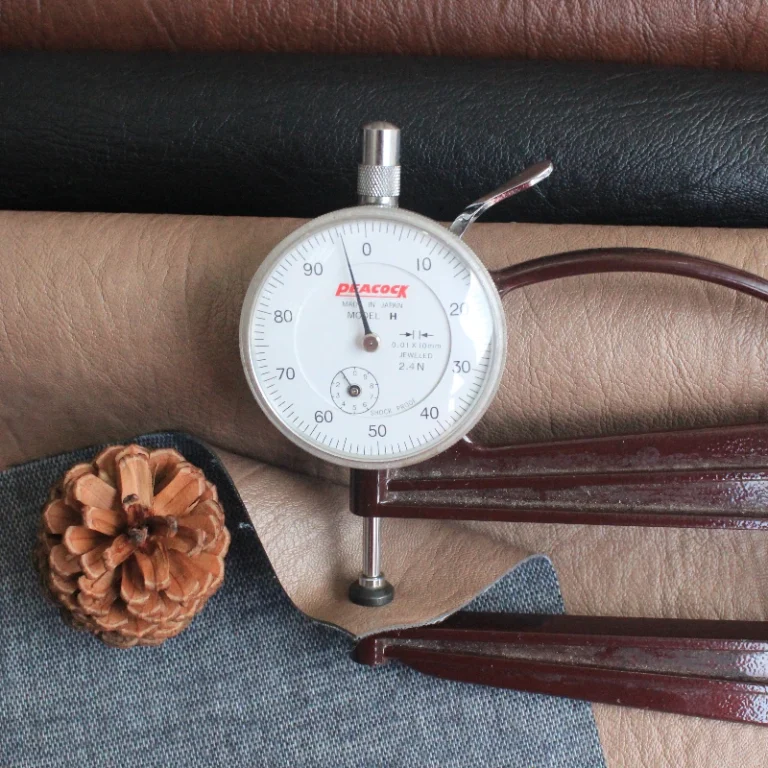
| Thickness | Required specification and tolerance |
| Backing | Exact backing construction |
| Softness | Suitable for the sofa shape |
| Stretch | Direction, amount and recovery |
| Abrasion | Required customer or project level |
| Coating Adhesion | Stable during flexing and production |
| Cleaning | Required stain and cleaner resistance |
| Sewing | Needle-hole and seam behavior |
| Stapling | Edge strength and material stability |
| Wrapping | Performance around foam and corners |
| Compliance | Required destination-market standards |
| Width | Effective production width |
| Quantity | Trial and bulk requirements |
A representative upholstered sample provides much more useful information than a small swatch.
For larger projects, a pilot production run can help identify issues with cutting, sewing, stretching and finishing before full-scale manufacturing.
The final purchase specification should clearly identify:
- Product code
- Color
- Grain
- Finish
- Thickness
- Backing
- Width
- Required softness
- Performance standards
- Approved physical sample
- Order quantity
Choosing PVC Leather for Your Sofa Project
The right PVC leather for sofa upholstery cannot be selected according to thickness or surface appearance alone.
The sofa application, backing construction, softness, flexibility, grain, coating performance and required durability all need to work together.
A practical selection process is:
Define the sofa application → select thickness and backing → confirm softness and flexibility → choose grain and color → define performance requirements → test the upholstery process → approve the physical sample.
This approach helps reduce problems such as excessive stretching, difficult wrapping, seam failure, coating damage and inconsistent finished appearance.
Xiangze Leather supplies Sofa Leather for residential sofas, office seating, hotel furniture, restaurant booths, recliners and other sofa upholstery applications.
For chairs, benches, headboards and other upholstered furniture, buyers can also explore our Furniture Leather collection.
The broader Sofa & Upholstery Leather range provides additional upholstery constructions for different furniture manufacturing requirements.
Tell us your sofa application, preferred grain and color, required thickness, backing, softness, performance standards and estimated quantity. We can recommend suitable materials and provide samples for upholstery evaluation before bulk production.

About Xiangze Leather
Written by Xiangze Leather Editorial Team
Xiangze Leather supplies PVC synthetic leather for furniture upholstery, bags, footwear, automotive interiors, motorcycle seats and decorative applications. Material samples, specification options and quotation support are available according to project requirements.