How to Choose PVC Leather for Packaging

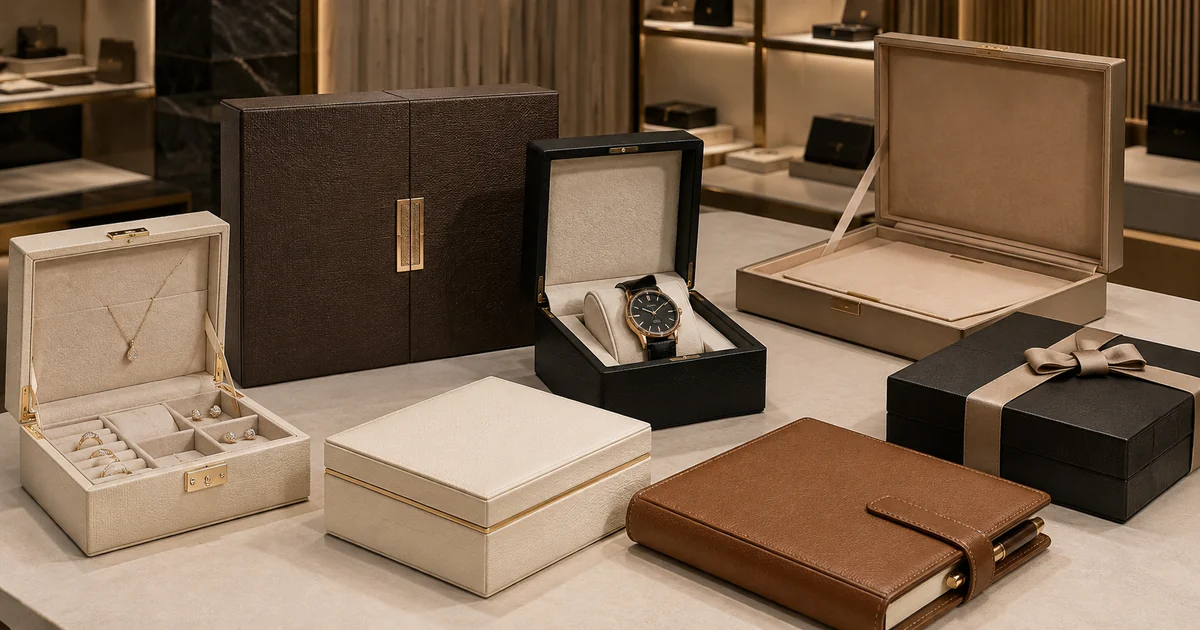
PVC leather for packaging is commonly used as a decorative covering material for jewelry boxes, gift boxes, watch boxes, presentation boxes, notebook covers and other manufactured packaging products.
Unlike furniture or automotive upholstery, packaging leather is often bonded and wrapped around a rigid substrate rather than stretched over thick foam. This means clean cutting, folding behavior, edge wrapping, adhesive compatibility and surface appearance can be especially important.
A material that looks attractive as a flat sample may still create problems if it is too thick for a small box, too stiff around corners or unsuitable for the selected adhesive.
For packaging manufacturers and sourcing teams, the most reliable approach is to select the material according to the finished packaging structure and production process.
Xiangze Leather supplies PVC Packaging Leather in different grains, colors, thicknesses, decorative finishes and backing constructions for packaging and covering applications.
This guide explains the main factors to consider before selecting PVC leather for packaging production.
Start with the Packaging Application
The first step is to define exactly what will be covered.
Decorative packaging can include:
- Jewelry boxes
- Watch boxes
- Gift boxes
- Presentation boxes
- Cosmetic boxes
- Notebook and album covers
- Display cases
- Storage boxes
- Promotional packaging
- Decorative rigid panels
These products can have very different dimensions, corner shapes and finishing methods.
A large presentation box with broad flat surfaces may tolerate a material with more body, while a small jewelry box with tight corners may require a thinner and more flexible construction.
The substrate also matters.
PVC leather may be laminated or wrapped over cardboard, MDF, plastic, wood-based panels or other rigid structures. The material should be evaluated together with the actual substrate rather than only as a loose roll sample.
Before selecting a material, confirm:
- Finished product type
- Panel dimensions
- Corner radius
- Substrate material
- Wrapping method
- Folding method
- Adhesive system
- Edge-finishing method
- Required appearance
Buyers can compare different surface and backing constructions in our Packaging Leather collection.
Choose Thickness According to the Packaging Structure
Thickness is one of the most important specifications for decorative packaging leather.
However, thicker material is not automatically better.
For packaging applications, excessive thickness can make folding and wrapping more difficult, especially around narrow edges and small corners.
Thin PVC Leather
Relatively thin constructions can be useful for applications requiring:
- Tight folding
- Small box corners
- Notebook covers
- Decorative wrapping
- Laminated panels
- Lightweight packaging
- Clean edge finishing
Thin material can normally conform more easily around sharp or narrow structures.
However, the backing and coating still need sufficient stability for cutting and bonding.
For example, Xiangze’s packaging collection includes lightweight constructions such as 0.45mm smooth PVC leather and 0.5mm metallic PVC leather for decorative packaging applications.
Medium-Thickness PVC Leather
Medium constructions can provide more body and a stronger leather-like feel.
They may be suitable for:
- Jewelry boxes
- Watch boxes
- Presentation boxes
- Premium gift packaging
- Larger decorative panels
The additional body can make the finished package feel more substantial, but the material still needs to fold cleanly around the actual box structure.
Thicker Constructions
Some packaging designs may use thicker leather when a fuller hand feel or more pronounced surface effect is required.
These materials should be tested carefully before production.
As thickness increases, manufacturers may encounter:
- Bulkier folded corners
- Greater folding resistance
- More difficult edge wrapping
- Increased adhesive requirements
- More visible material buildup at overlaps
The correct thickness therefore depends on the packaging design rather than a single standard value.
Pay Attention to the Backing
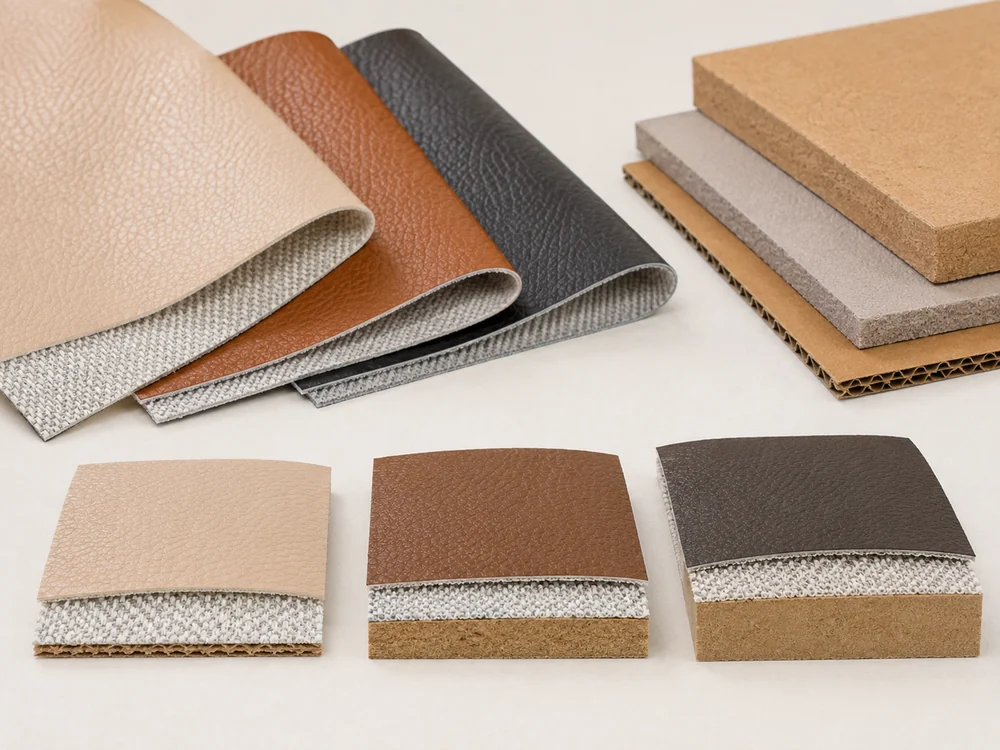
The backing underneath PVC leather affects flexibility, body, dimensional stability and adhesive bonding.
Packaging materials can use several backing constructions, including spunlace, knitted fabric, terry fabric and other lightweight textile structures.
Two PVC leathers with similar surface colors may perform differently during production because their backing structures are different.
Spunlace and Lightweight Backings
Lightweight backing constructions can be useful where clean folding and low material bulk are important.
They may be suitable for:
- Notebook covers
- Small boxes
- Decorative wrapping
- Lightweight presentation packaging
The material should still be tested for coating adhesion and bonding performance.
Knitted Backing
Knitted backing can provide flexibility and may help the leather conform around curved or shaped packaging components.
However, excessive stretch is not always desirable.
Packaging panels usually need accurate dimensions, so a backing that stretches too easily can cause distortion during cutting, laminating or wrapping.
Terry and Heavier Textile Backings
Some packaging leather uses heavier textile backing to create more body.
This may be useful for larger boxes or products where a fuller material feel is required.
The trade-off is increased thickness and potentially greater difficulty around narrow folds.
There is no universal best backing for packaging leather.
The appropriate structure depends on the substrate, adhesive, folding radius and required appearance.
For a broader comparison of textile constructions, see Common PVC Leather Backing Options.
Select the Surface Grain and Decorative Effect
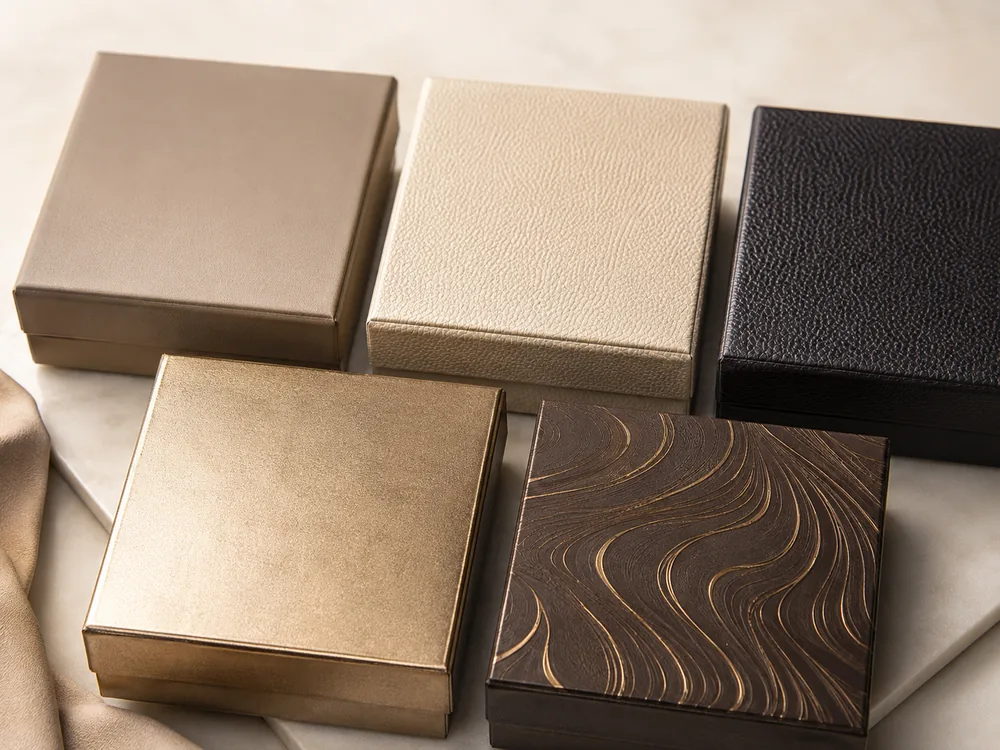
Packaging leather is highly visual.
For many products, the material is part of the customer’s first impression before the box is even opened.
Surface selection should therefore match the positioning of the finished package.
Smooth Surface
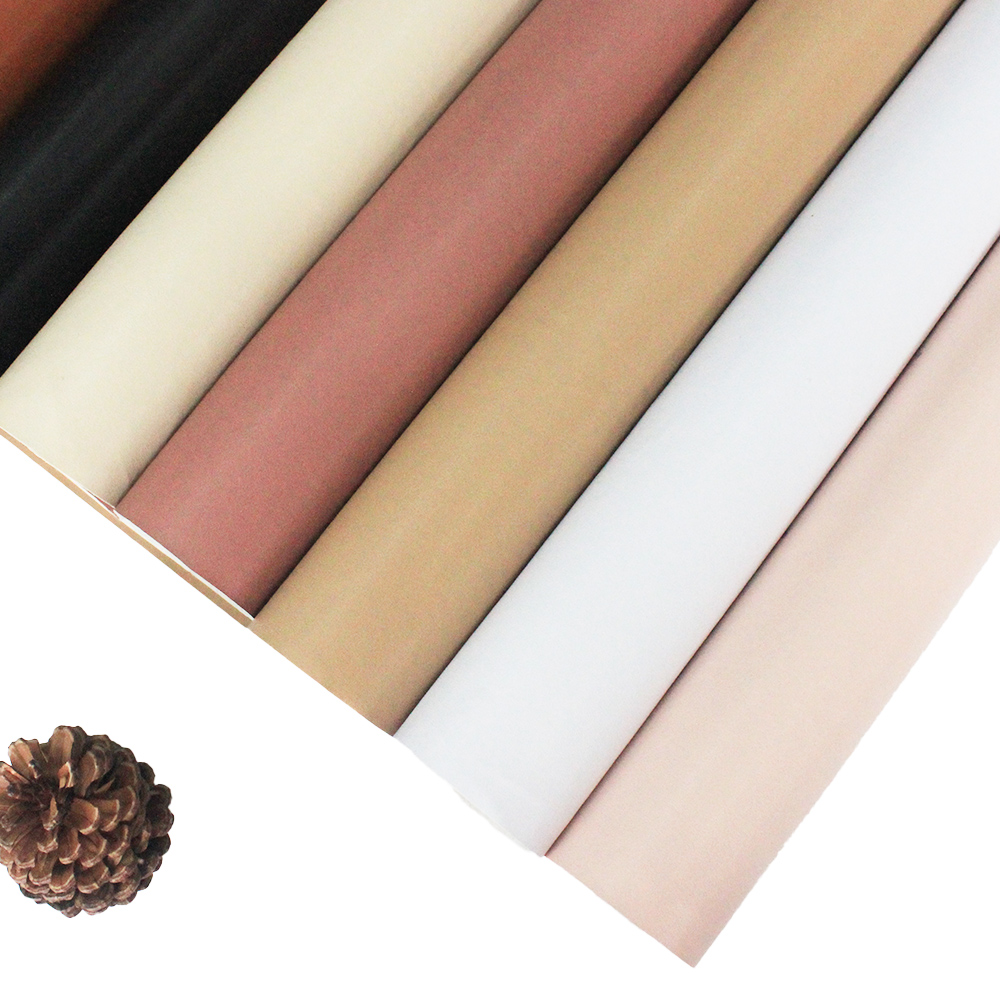
Smooth PVC leather creates a clean and controlled appearance.
It can work particularly well for modern gift boxes, cosmetic packaging, notebook covers and minimalist presentation packaging.
Smooth surfaces can also make printing, logos and decorative hardware visually prominent.
However, very smooth materials may show scratches or surface marks more clearly, so handling requirements should be evaluated.
Fine Grain
Fine-grain PVC leather provides a subtle leather-like texture without making the surface overly busy.
It can be suitable for:
- Jewelry boxes
- Watch boxes
- Corporate gift boxes
- Presentation packaging
- Premium notebook covers
Fine grains are often easy to combine with metal logos, embossed branding and decorative trim.
Pebble Grain
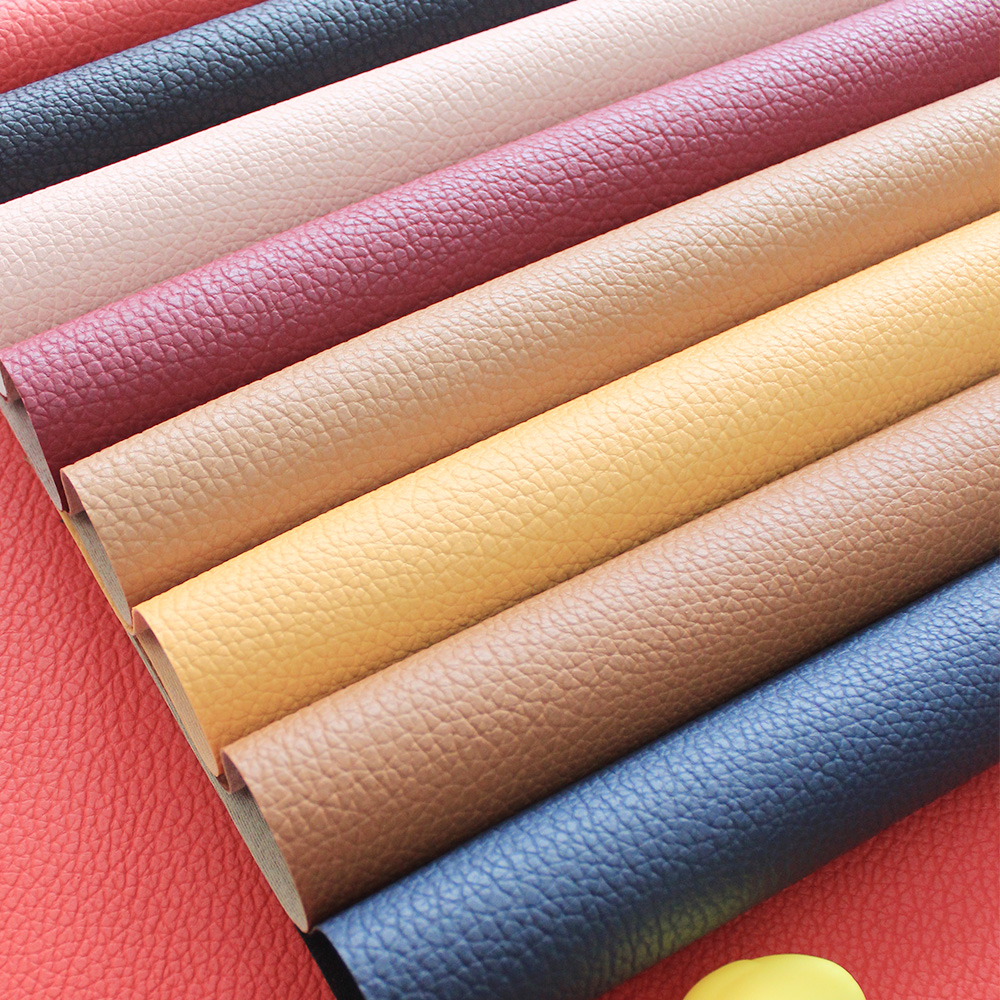
Pebble grain provides a stronger texture and a more obvious leather-style appearance.
It can make the surface visually richer and may help disguise minor surface variations.
Xiangze’s Packaging Leather range includes pebble and fine-pebble constructions with different thicknesses and backing options.
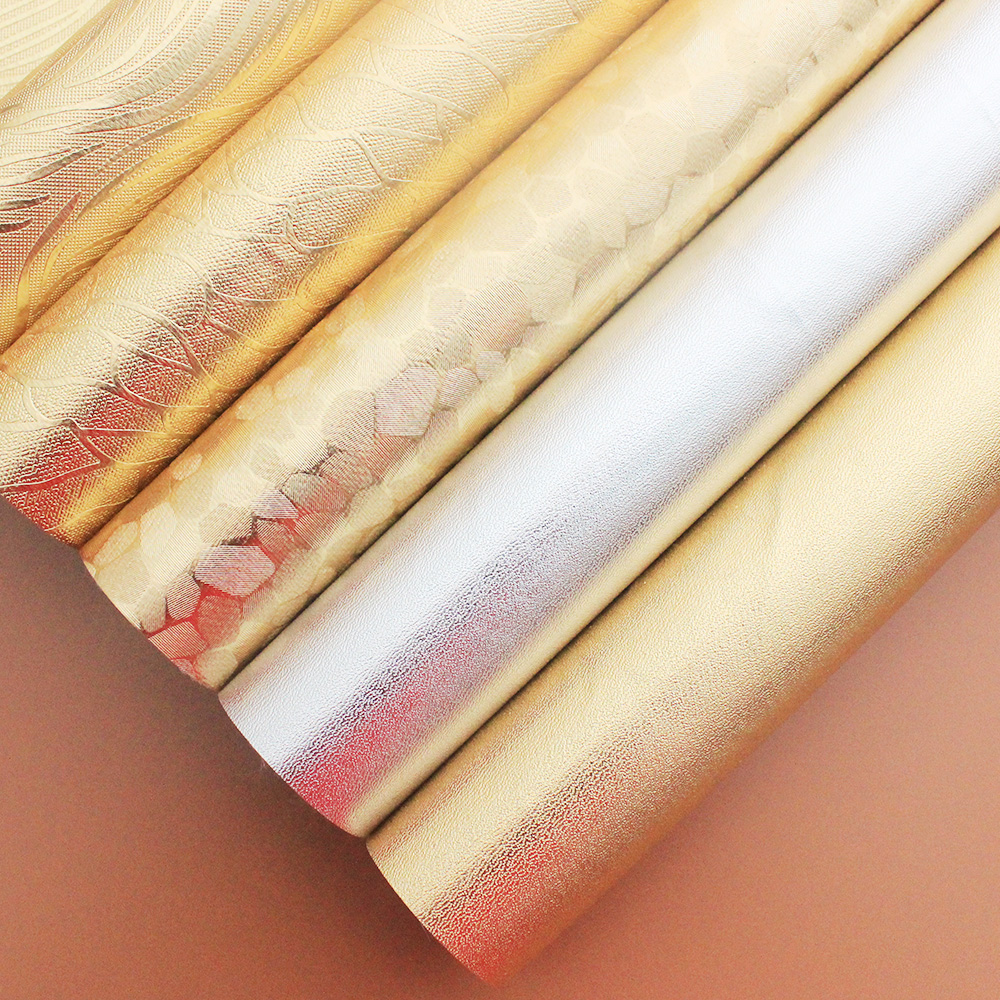
Metallic and Decorative Finishes
Packaging applications can use more decorative surfaces than many conventional upholstery products.
Metallic effects, reflective finishes and other special surface treatments can help manufacturers create visually distinctive packaging.
These materials can be useful for:
- Cosmetic packaging
- Jewelry boxes
- Gift sets
- Promotional packaging
- Fashion-related packaging
Special finishes should always be checked under the actual lighting conditions in which the finished box will be displayed.
Special-Effect Surfaces
Some packaging projects require more unusual visual effects.
For example, pressure-sensitive or color-changing surfaces can create interactive decorative effects for labels, boxes and promotional applications.
These materials should be selected according to the specific design rather than treated as general-purpose packaging leather.
For buyers who need a broader understanding of PVC material construction and surface options, see What Is PVC Synthetic Leather?.
Check Folding and Corner Wrapping
Packaging leather often needs to wrap around corners, edges and narrow panels.
This is one of the biggest differences between packaging applications and conventional flat decorative surfaces.
The material should fold without:
- Excessive whitening
- Surface cracking
- Severe grain distortion
- Bulky corners
- Backing separation
- Permanent creasing in unwanted areas
Corner radius is particularly important.
A large box with rounded corners is easier to cover than a small rigid box with very sharp corners.
When tight wrapping is required, manufacturers may need to adjust:
- Material thickness
- Cutting pattern
- Corner relief cuts
- Adhesive quantity
- Folding sequence
- Overlap position
These details should be tested together.
Choosing the thinnest possible leather is not necessarily the solution. The complete construction still needs enough stability to maintain a clean finished surface.
Confirm Adhesive and Bonding Compatibility
Packaging leather is commonly bonded to another substrate.
This makes adhesive compatibility a key part of material selection.
A leather that performs well during sewing does not automatically perform well during laminating or wrapping.
The backing should allow the selected adhesive to create a stable bond with the substrate.
The actual result can depend on:
- Leather backing
- Adhesive type
- Adhesive quantity
- Substrate
- Surface preparation
- Drying conditions
- Pressing method
- Production temperature
Before bulk production, test the exact adhesive and substrate combination planned for the finished package.
Check for:
- Edge lifting
- Bubbling
- Uneven bonding
- Adhesive penetration
- Surface distortion
- Delamination
- Visible adhesive marks
A physical trial is much more reliable than assuming compatibility from the material description.
Consider Logos and Further Processing
Packaging often includes additional decorative processes after the leather is selected.
These may include:
- Hot stamping
- Foil stamping
- Embossed logos
- Debossed logos
- Printing
- Laser marking
- Decorative stitching
- Metal logos
- Rivets
- Decorative hardware
The selected PVC leather should be tested with the intended process.
A deep grain, for example, can affect the clarity of a small printed or stamped logo.
A very soft material may behave differently during embossing from a firmer construction.
Metallic and specialty finishes can also respond differently to heat or pressure.
If branding is an important part of the package, provide the supplier with information about the planned finishing process during material selection.
Consider Color Consistency and Product Positioning
Packaging is often manufactured in coordinated product collections.
Multiple box sizes may need to use the same color and surface appearance.
For this reason, color consistency across production rolls can be important.
Physical samples should be used to approve:
- Color
- Grain
- Gloss
- Metallic effect
- Hand feel
- Backing
- Overall appearance
Screen photographs should not be used as the only color standard.
The selected material should also match the positioning of the finished product.
For example:
| Packaging Type | Common Selection Priorities |
|---|---|
| Jewelry Box | Fine appearance, clean wrapping, premium hand feel |
| Watch Box | Leather-like grain, structured appearance, clean corners |
| Gift Box | Color, decorative effect, bonding and cost |
| Cosmetic Box | Surface design, color consistency and branding compatibility |
| Presentation Box | Larger-panel appearance, body and dimensional stability |
| Notebook Cover | Flexibility, folding and clean edge finishing |
| Promotional Packaging | Decorative effect, customization and production efficiency |
There is no single surface that is suitable for every packaging category.
Test the Actual Packaging Before Bulk Production
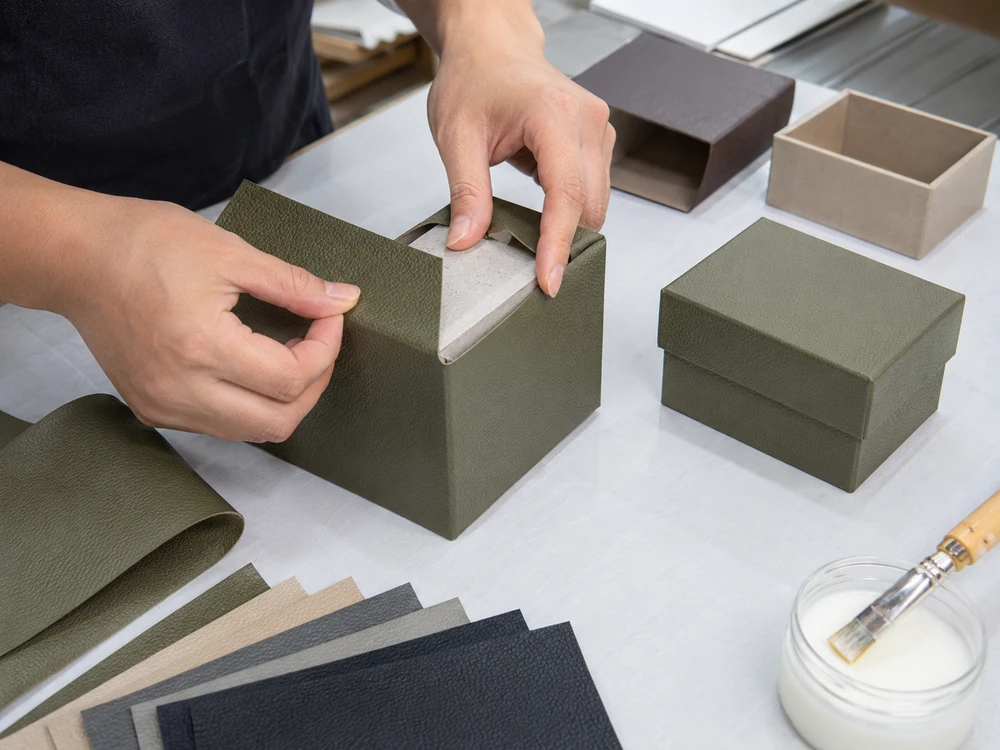
A small material swatch is useful for checking color and grain, but packaging manufacturers should ideally test the material on an actual box or representative panel.
Use the same substrate, adhesive and production method planned for bulk manufacturing.
Check:
- Cutting accuracy
- Folding behavior
- Corner wrapping
- Edge finishing
- Adhesive compatibility
- Surface cleanliness
- Grain distortion
- Color appearance
- Logo application
- Finished hand feel
For multi-panel packaging, also check how seams, overlaps and grain direction align across the finished product.
Before approving production, confirm the complete specification:
| Item | What to Confirm |
|---|---|
| Application | Jewelry box, gift box, notebook cover or other packaging |
| Surface | Smooth, fine grain, pebble, metallic or special effect |
| Color | Approved physical reference |
| Finish | Matte, semi-matte, gloss or decorative effect |
| Thickness | Required value and tolerance |
| Backing | Confirmed textile construction |
| Flexibility | Suitable for folding and wrapping |
| Substrate | Cardboard, MDF, plastic or other structure |
| Adhesive | Tested production adhesive |
| Corners | Required wrapping radius |
| Branding | Printing, stamping, embossing or hardware |
| Width | Effective roll width |
| Quantity | Trial and bulk requirement |
| Packing | Required roll and export packing |
Bulk production should begin only after the physical sample and packaging trial have been approved.
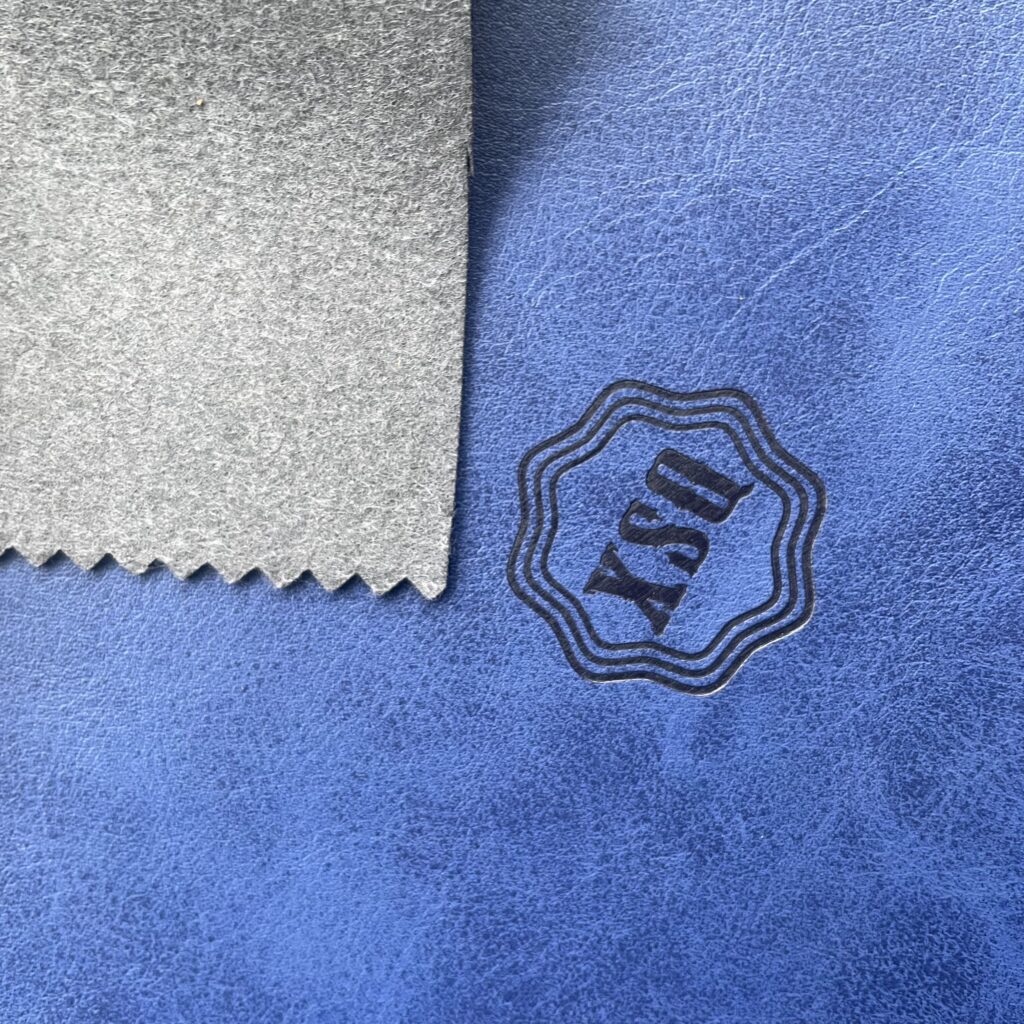
Choosing PVC Leather for Your Packaging Project
The right PVC leather for packaging depends on the complete package design.
Surface appearance attracts attention, but thickness, backing, folding behavior and adhesive compatibility determine whether the material can be processed efficiently.
A practical selection process is:
Define the packaging product → confirm the substrate and production method → choose the surface → select thickness and backing → test folding and bonding → produce a sample box → approve the final specification.
This approach can reduce problems such as bulky corners, poor adhesion, surface distortion and inconsistent finished appearance.
Xiangze Leather supplies PVC Packaging Leather for jewelry boxes, gift boxes, watch boxes, presentation boxes, notebook covers and other decorative packaging applications.
Buyers looking for other decorative PVC materials can also explore our complete Decorative Leather collection.
Tell us your packaging application, preferred grain or decorative finish, required color, thickness, backing, substrate, bonding method and estimated quantity. We can recommend suitable materials and provide samples for evaluation before bulk production.
About Xiangze Leather
Written by Xiangze Leather Editorial Team
Xiangze Leather supplies PVC synthetic leather for furniture upholstery, bags, footwear, automotive interiors, motorcycle seats and decorative applications. Material samples, specification options and quotation support are available according to project requirements.