How to Choose PVC Leather for Shoe Uppers

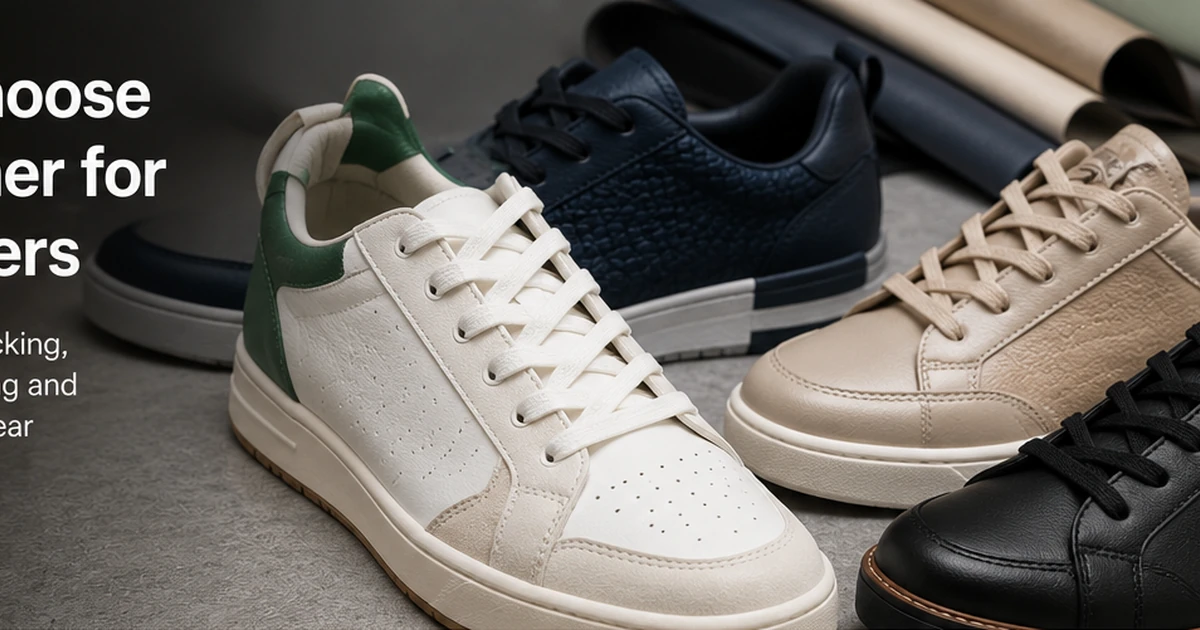
PVC leather for shoe uppers is available in many thicknesses, grains, colors, finishes and textile backing constructions.
However, a material that looks suitable as a flat swatch may behave very differently once it is cut, stitched, folded, lasted and bonded during footwear production.
For shoe manufacturers, material selection should therefore consider more than surface appearance.
The shoe type, upper construction, thickness, backing, flexibility, stitch performance, bonding method and required footwear tests all need to work together.
Xiangze Leather supplies Shoe Upper Leather for casual shoes, fashion footwear, boots and other shoe manufacturing applications.
This guide explains the main factors to consider when choosing PVC leather for shoe uppers.
Start with the Shoe Type and Upper Design
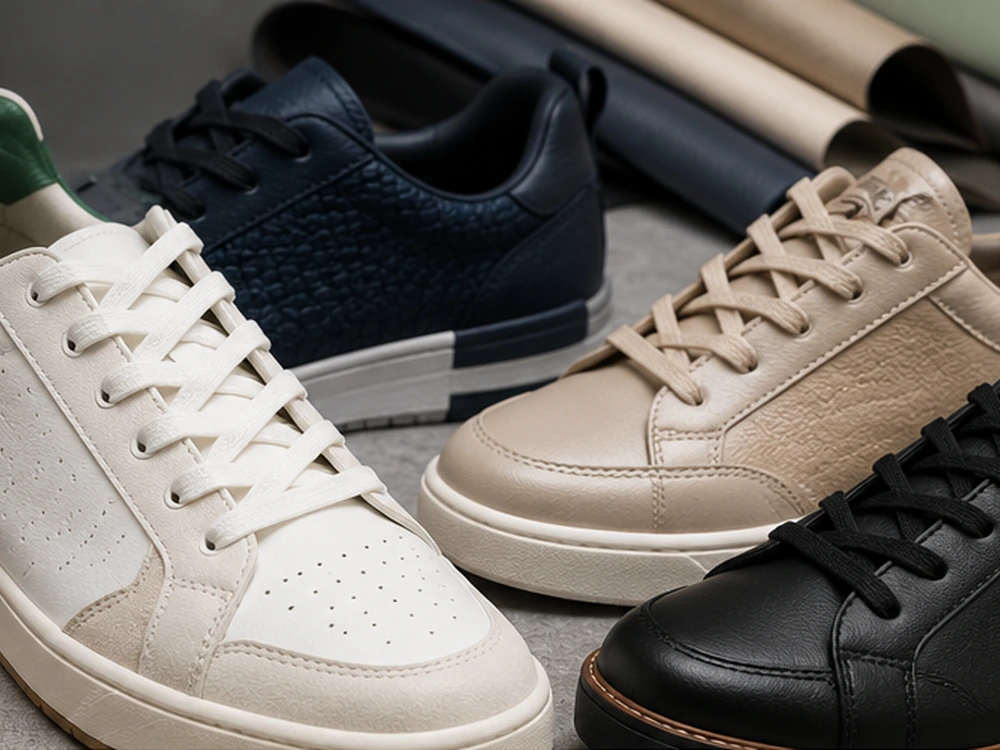
The first step is to define the finished footwear.
Different shoes place different demands on the upper material.
PVC leather may be considered for:
- Casual shoes
- Fashion shoes
- Sneakers
- Boots
- Children’s footwear
- Decorative shoe panels
- Selected sandal components
- Other synthetic leather footwear
A simple casual shoe with relatively large upper panels may use a different material construction from a shoe containing multiple narrow stitched sections.
Boots may also require different flexibility, body and folding behavior from lightweight fashion footwear.
Before selecting the leather, manufacturers should consider:
- Shoe type
- Upper panel shape
- Number of stitched panels
- Toe and heel construction
- Required flexibility
- Folding areas
- Lining construction
- Lasting method
- Bonding process
- Decorative processes
The material should be evaluated according to the actual upper design rather than simply being described as “shoe leather.”
For buyers comparing a wider range of footwear materials, our Footwear & Garment Leather collection includes shoe upper, sandal and garment-oriented synthetic leather constructions.
Choose the Right Thickness and Material Body
Thickness has an important influence on the body, flexibility and processing behavior of shoe upper leather.
However, thicker material is not automatically stronger or better.
The correct thickness depends on the shoe structure and complete material construction.
Lightweight Constructions
Relatively thin PVC leather can provide greater flexibility and lower material bulk.
It may be useful for:
- Lightweight fashion footwear
- Flexible upper panels
- Decorative shoe sections
- Shoes containing several overlapping layers
- Designs requiring easier folding
A thinner material can also reduce bulk around stitched seams and folded edges.
However, it still needs enough backing support and coating stability for cutting, stitching and footwear assembly.
Medium-Thickness Constructions
Medium constructions can provide a balance between body and flexibility.
They may be suitable for many casual shoes and general footwear uppers where manufacturers need a visible leather-like surface together with sufficient structure.
The backing becomes especially important because two materials with the same total thickness can behave differently if one uses a soft knitted fabric while the other uses a denser or brushed textile construction.
Heavier Constructions
Thicker shoe upper leather can create greater body and a more substantial hand feel.
It may be considered for selected boots, structured footwear or designs where the upper should maintain a stronger shape.
However, increased thickness can also create:
- Greater folding resistance
- More difficult stitching through multiple layers
- Bulkier seams
- More difficult lasting
- Increased material weight
- Greater edge-finishing requirements
The correct material should therefore be selected by testing the complete upper construction.
Xiangze’s current Shoe Upper Leather collection includes both relatively lightweight constructions and thicker materials, allowing manufacturers to compare different body and flexibility levels according to the shoe design.
Pay Attention to the Backing Construction
The textile backing underneath PVC leather is particularly important for footwear production.
The backing supports the PVC coating and can affect:
- Flexibility
- Stretch
- Shape stability
- Tear resistance
- Stitch-hole performance
- Folding
- Bonding
- Hand feel
- Finished thickness
Common footwear backing options can include knitted fabric, terry fabric, brushed fabric and other textile constructions.
Knitted Fabric Backing
Knitted fabric generally provides more flexibility than highly stable woven constructions.
This can help the material move around curved shoe components and during upper forming.
A flexible backing may be useful where the upper needs to conform to the shoe last.
However, excessive stretch can create problems.
If the material stretches too much during cutting or stitching, panel dimensions may change and surface grains can become distorted.
The goal is controlled flexibility rather than maximum stretch.
Terry Fabric Backing
Terry fabric can provide a different balance of body and flexibility.
For shoe uppers, it should be evaluated together with total thickness, panel design and stitching requirements.
A material with terry backing may feel different from a thinner knitted construction even when the PVC surface grain looks similar.
Brushed Fabric Backing
Brushed backing can add body and softness to the reverse side of the material.
It may be useful for fashion footwear or constructions where manufacturers want a slightly fuller material feel.
The additional textile structure can, however, influence bonding and multi-layer sewing.
Manufacturers should therefore test the same adhesive, needle, thread and machinery planned for production.
There is no single best backing for all shoe uppers.
For a more detailed comparison of backing constructions, see our PVC Leather Backing Options guide.
Match Flexibility to the Shoe Construction
A shoe upper bends repeatedly during manufacturing and use.
This makes flexibility one of the most important factors to evaluate.
The material should be flexible enough to:
- Fold around upper components
- Form over the last
- Bend in the forefoot area
- Follow curved panel shapes
- Work with lining and reinforcement materials
At the same time, excessive softness or stretch may make the upper difficult to control during production.
If a material is too stiff, manufacturers may experience:
- Difficult lasting
- Wrinkles around curved areas
- Poor folding
- Excessive tension around seams
- Surface whitening during bending
- Cracking under severe folding
If the material is too soft or unstable, possible problems include:
- Distorted cutting dimensions
- Uneven upper panels
- Stretch during stitching
- Grain deformation
- Poor shape retention
Flexibility should therefore be tested together with recovery and dimensional stability.
A useful material should bend sufficiently without permanently losing the intended panel shape.
Select Grain and Surface Finish According to the Footwear Design
After the basic construction has been selected, surface appearance becomes an important design decision.
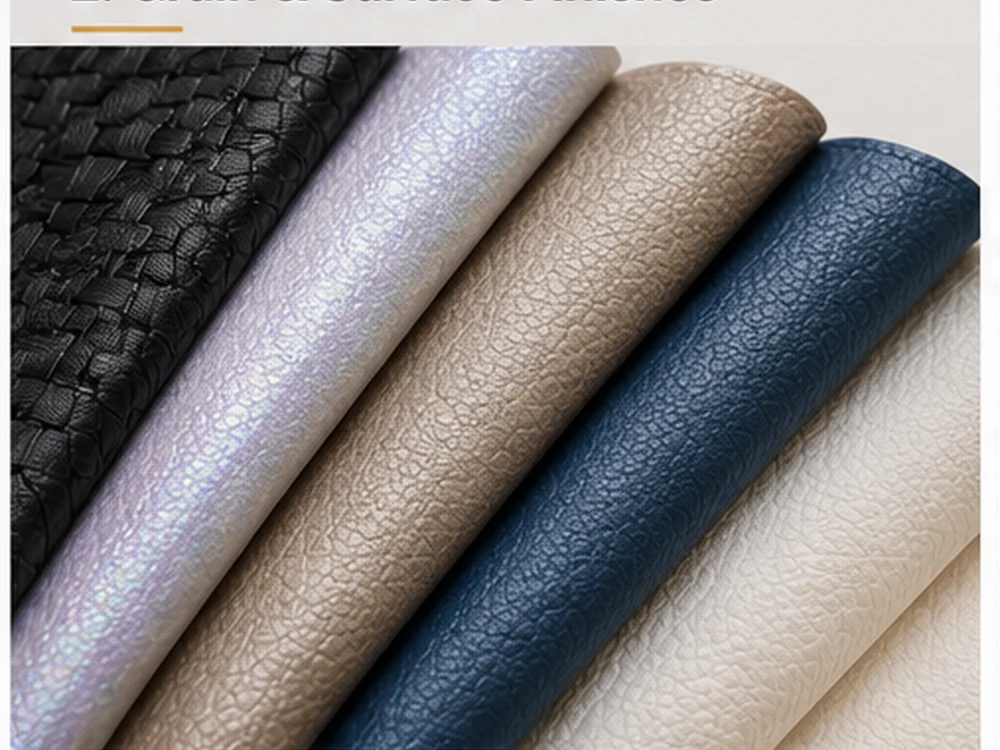
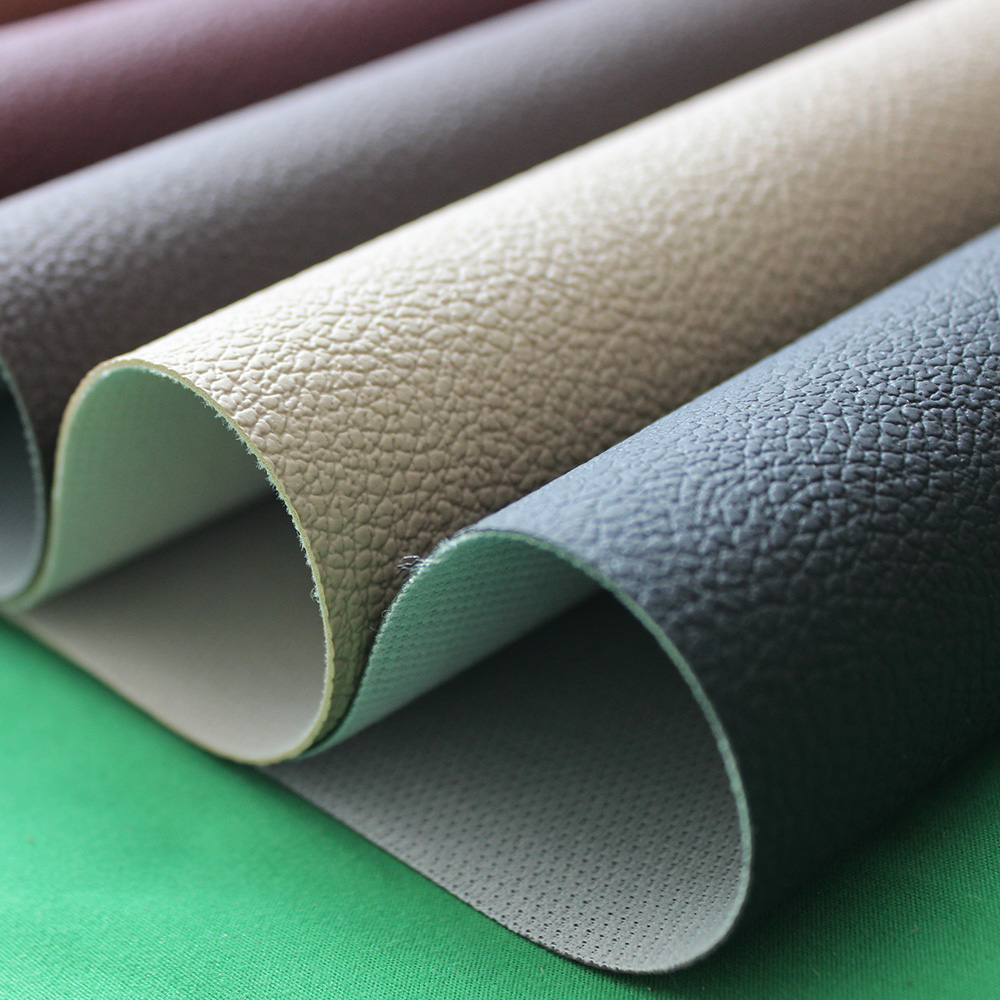
PVC shoe upper leather can use a wide range of grains and finishes.
Fine Grain
Fine-grain surfaces provide a relatively clean leather-inspired appearance.
They can be suitable for casual footwear, fashion shoes and products where manufacturers want a subtle surface texture.
Fine grains also allow stitching, panel shape and shoe construction details to remain visually prominent.
Fine Pebble Grain
Fine pebble surfaces create more visible texture while remaining relatively controlled.
This can provide a leather-like appearance without using an oversized grain.
Fine pebble materials can work across different footwear styles where buyers want a more textured surface.
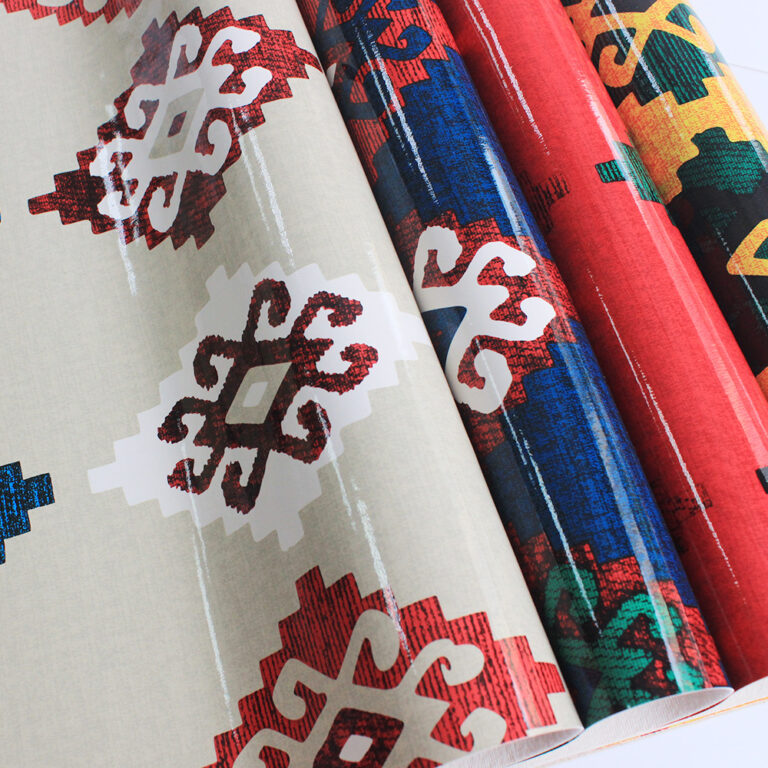
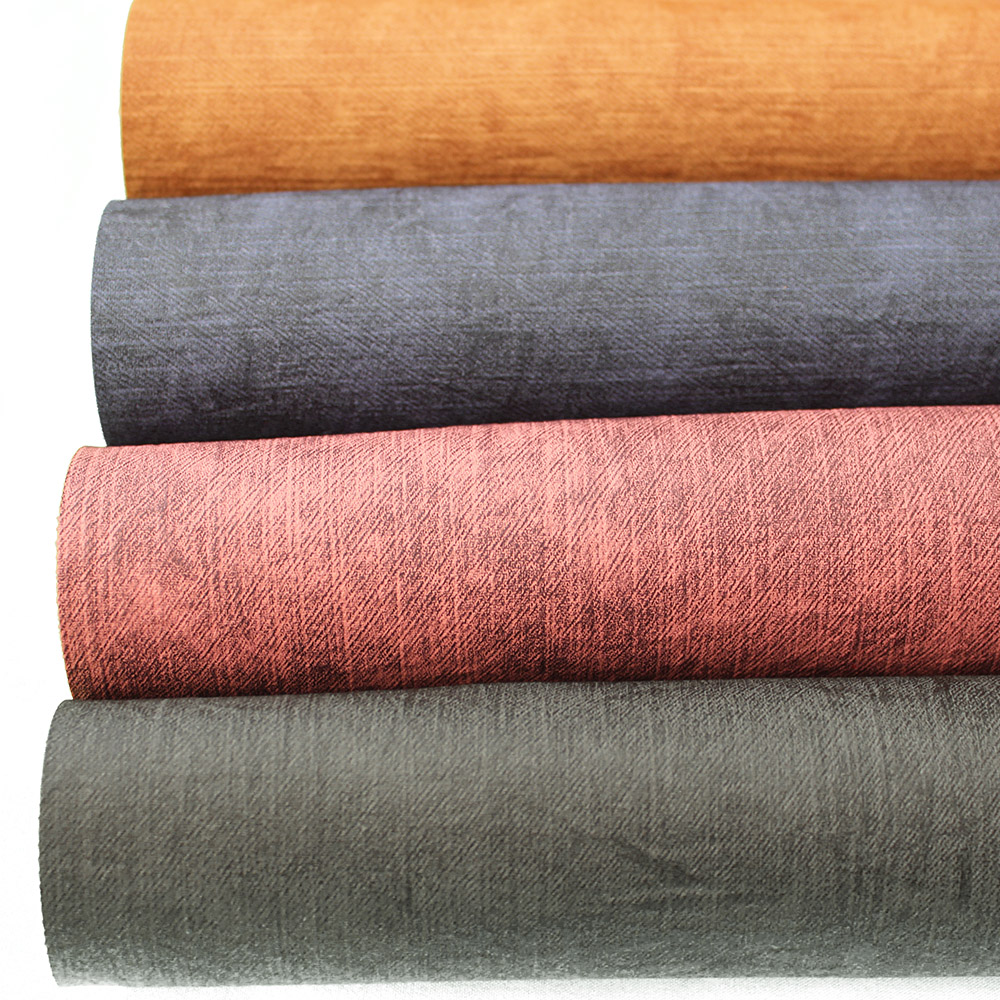
Woven and Textile-Inspired Patterns
Not every footwear material needs to imitate traditional leather grain.
Woven or textile-inspired PVC surfaces can provide a more distinctive decorative effect.
These materials can be used for casual shoes, fashion footwear and decorative panels where the surface pattern is part of the shoe design.
Directional patterns should be considered carefully during cutting.
If separate upper panels are cut in different directions, the visible texture may not align consistently on the finished shoe.
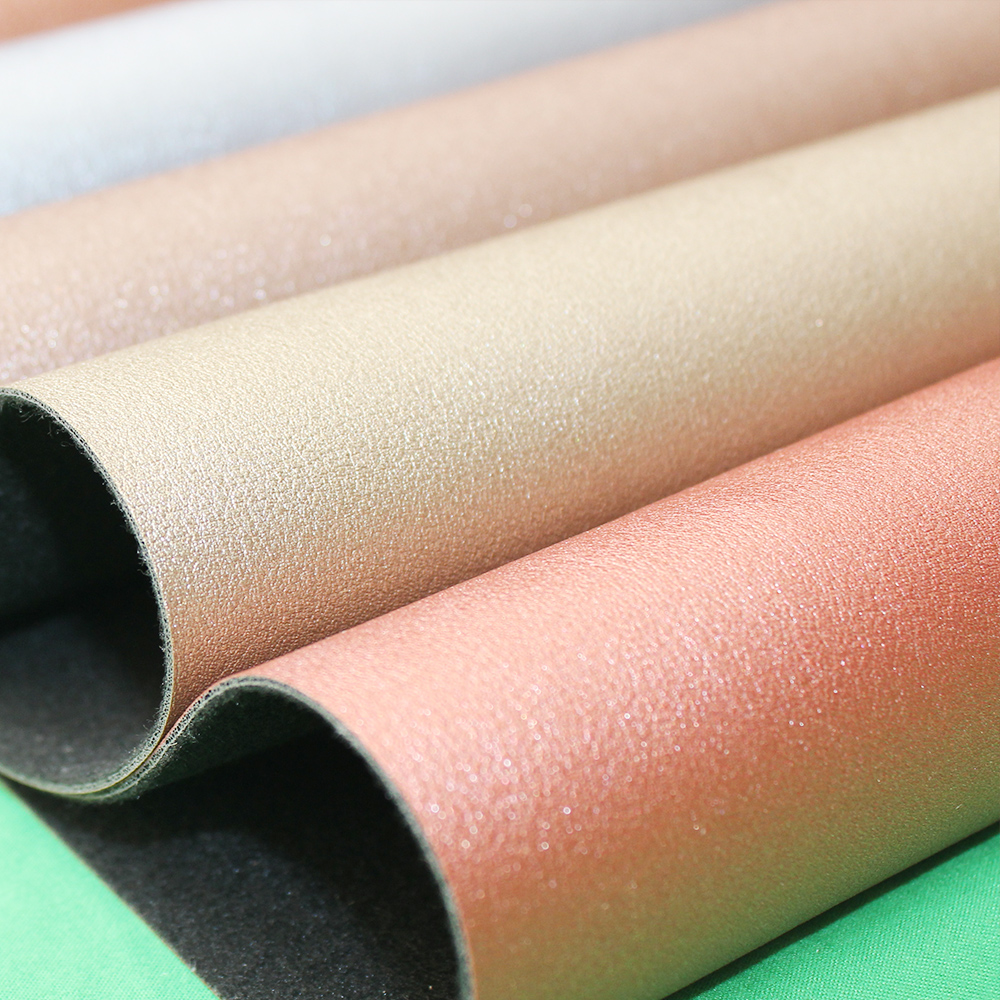
Pearlescent and Decorative Finishes
Fashion footwear can use pearlescent, metallic and other decorative surface effects.
These finishes can create different appearances under changing light and can be used when color and reflection are important parts of the design.
Physical samples are particularly important for decorative finishes.
Screen images cannot accurately show every change in gloss, reflection or color under different lighting conditions.
For buyers who want more background on PVC construction and surface layers, see What Is PVC Synthetic Leather?.
Check Cutting and Stitching Performance
Shoe uppers can contain many relatively small panels.
Accurate cutting is therefore important for both appearance and production efficiency.
The leather should remain stable enough during cutting that upper components maintain their intended dimensions.
Manufacturers should check:
- Cutting edge quality
- Grain distortion
- Stretch during cutting
- Panel dimensional stability
- Material nesting efficiency
- Directional grain requirements
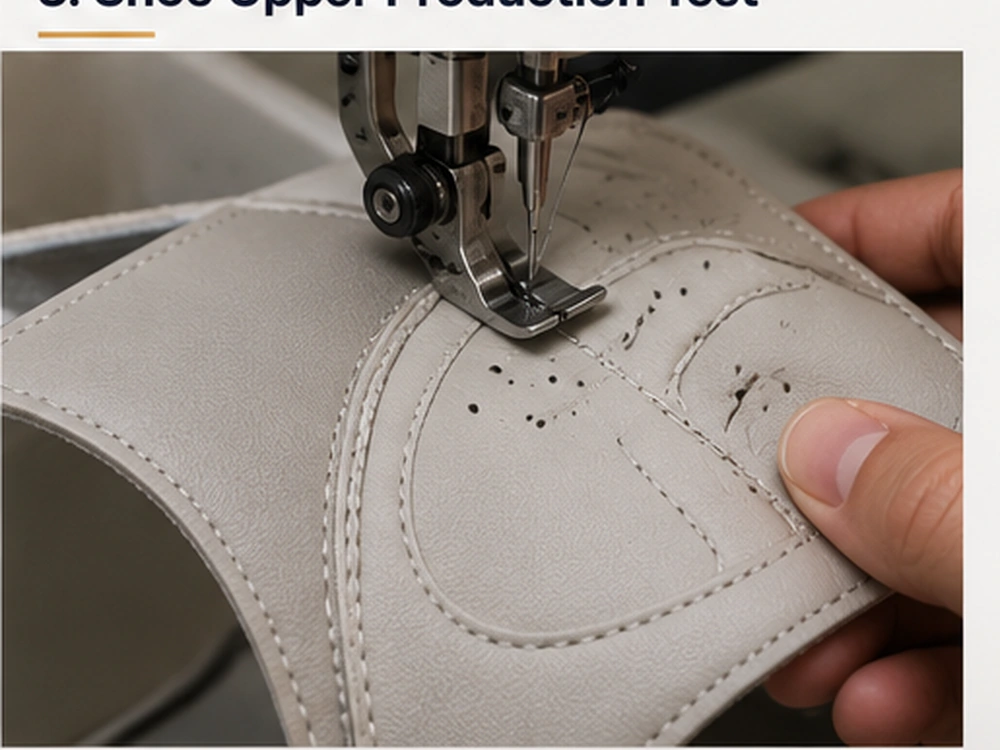
Stitching performance is equally important.
The combination of coating and backing should provide adequate support around the needle holes.
Testing should use the actual:
- Needle
- Thread
- Stitch length
- Sewing speed
- Seam type
- Number of material layers
A material that feels strong when pulled by hand may still behave differently around closely spaced needle holes.
For this reason, complete sewn panels provide more useful information than simple hand testing.
Test Folding, Lasting and Upper Forming
Footwear production requires the upper material to move from a flat sheet into a three-dimensional shape.
During lasting, the upper is pulled and formed around the shoe last.
This process can expose problems that are not visible in a flat sample.
Check whether the material develops:
- Surface whitening
- Grain distortion
- Permanent wrinkles
- Cracking
- Backing separation
- Excessive stretch
- Uneven tension
Areas around the toe, forefoot and heel may behave differently because their curvature and material tension are different.
Manufacturers should therefore produce a representative upper rather than evaluating only one flat panel.
The material direction may also influence forming behavior.
If the backing has different stretch characteristics in the machine and cross directions, cutting orientation should be confirmed before bulk production.
Confirm Bonding Compatibility
Shoe manufacturing frequently combines stitching with adhesive bonding.
PVC leather may need to bond with:
- Shoe lining
- Reinforcement materials
- Foam
- Toe components
- Heel components
- Sole-related structures
- Decorative overlays
Backing construction can influence how adhesive is absorbed or held.
The same adhesive may not perform identically on knitted, terry and brushed backing.
Before approving the material, use the actual production adhesive and bonding conditions.
Check for:
- Weak bonding
- Edge lifting
- Delamination
- Excessive adhesive absorption
- Adhesive penetration
- Visible surface marks
- Material deformation
If heat or pressure is used during bonding, the leather should also be evaluated under the intended process conditions.
A successful material specification should match both the shoe design and the factory’s manufacturing system.
Define the Required Footwear Performance
Different footwear projects can require different performance standards.
There is no single test specification suitable for every shoe upper.
Depending on the customer and destination market, buyers may need to define requirements for:
Flex Resistance
The forefoot area bends repeatedly during walking.
Flex testing can help evaluate whether the coating remains stable under repeated bending.
Abrasion Resistance
Some parts of the upper can experience repeated contact and rubbing.
Abrasion requirements should be defined according to the shoe application and customer’s standard.
Tear and Tensile Strength
The complete material should provide enough mechanical stability for cutting, stitching and the intended shoe structure.
Stitch-Hole Strength
Seams can concentrate stress around needle holes.
The actual material and seam construction should therefore be tested together.
Coating Adhesion
The PVC coating and textile backing should remain properly bonded during production and use.
Color Fastness
Dry and wet rubbing performance may be relevant depending on the shoe color, lining and expected usage.
Cold and Heat Performance
Footwear sold into different climates may require project-specific temperature or aging tests.
Chemical and Restricted-Substance Requirements
Brands and destination markets may specify limits for particular substances or require compliance with their own chemical standards.
These requirements should be provided before bulk production rather than assumed from the product name.
Consider Shoe Uppers and Sandal Components Separately
Shoe uppers and sandals are both footwear applications, but their material requirements are not always identical.
A closed shoe upper may contain several stitched panels, lining, reinforcement and lasting operations.
Sandal components may include:
- Upper straps
- Wide bands
- Decorative panels
- Instep components
- Other exposed footwear sections
Some PVC leather materials can work for both applications, but manufacturers should not automatically assume that every shoe upper construction is ideal for sandal straps.
Straps may require different thickness, edge finishing, dimensional stability or reinforcement.
For sandal-specific material selection, buyers can explore the Sandal Leather collection separately.
Test a Complete Shoe Sample Before Bulk Production
Physical testing is one of the most important steps when selecting PVC leather for shoe uppers.
A small swatch can confirm approximate grain, color and hand feel, but it cannot demonstrate complete footwear processing performance.
Whenever possible, produce at least one representative upper or finished shoe using the actual production process.
Evaluate:
| Item | What to Confirm |
|---|---|
| Shoe Type | Casual shoe, fashion shoe, sneaker, boot or other footwear |
| Surface | Fine grain, pebble, woven texture or decorative finish |
| Color | Approved physical reference |
| Finish | Matte, pearlescent, gloss or other surface |
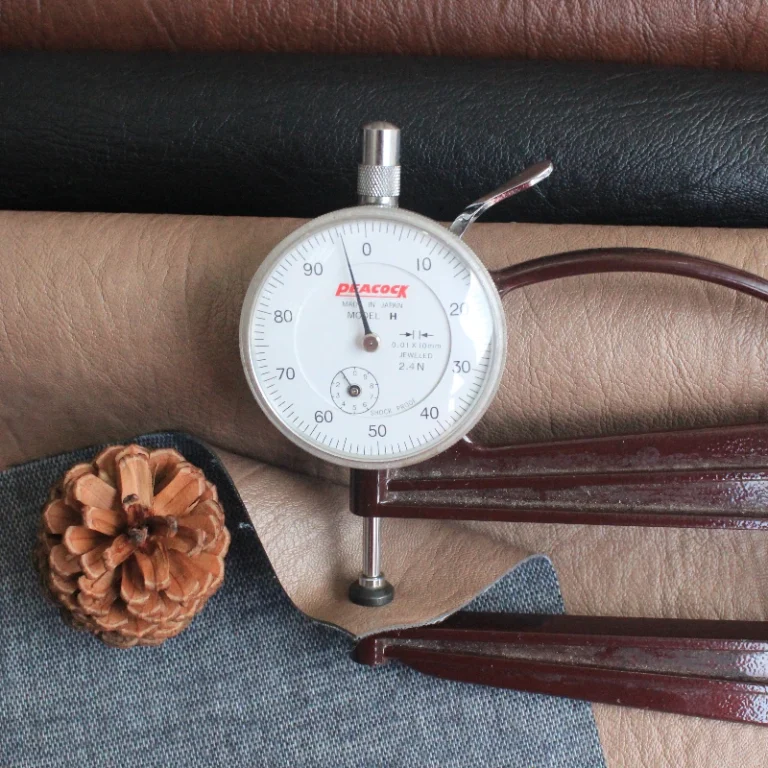
| Thickness | Required specification and tolerance |
| Backing | Textile construction and technical details |
| Flexibility | Suitable for the upper design |
| Stretch | Direction, amount and recovery |
| Cutting | Panel dimensional stability |
| Stitching | Needle-hole and seam performance |
| Folding | Surface behavior at folded areas |
| Lasting | Ability to form around the shoe last |
| Bonding | Compatibility with the selected adhesive |
| Performance | Required footwear testing standards |
| Width | Effective material width |
| Quantity | Trial and bulk requirements |
Inspect the finished sample after cutting, stitching, forming and bonding.
Pay particular attention to areas that experience high tension or repeated bending.
The final purchase specification should clearly identify:
- Product code
- Color
- Grain
- Surface finish
- Thickness
- Backing construction
- Width
- Required testing
- Approved reference sample
- Order quantity
This reduces the risk of receiving a visually similar material that behaves differently during footwear production.
Choosing PVC Leather for Your Shoe Upper Project
The right PVC leather for shoe uppers cannot be selected according to color or thickness alone.
The complete material construction needs to match the shoe design and production process.
A practical selection process is:
Define the shoe type → select thickness and backing → compare grain and finish → evaluate flexibility → test cutting and stitching → test lasting and bonding → produce a shoe sample → approve the final specification.
This approach can help reduce problems such as panel distortion, difficult stitching, poor forming, surface damage and bonding failure during production.
Xiangze Leather supplies PVC Shoe Upper Leather in different grains, thicknesses, finishes and textile backing constructions for footwear manufacturers.
For additional footwear and fashion materials, buyers can also explore our complete Footwear & Garment Leather collection.
Tell us your shoe type, preferred grain and color, required thickness, backing construction, processing method, testing requirements and estimated quantity. We can recommend suitable materials and provide samples for evaluation before bulk production.
About Xiangze Leather
Written by Xiangze Leather Editorial Team
Xiangze Leather supplies PVC synthetic leather for furniture upholstery, bags, footwear, automotive interiors, motorcycle seats and decorative applications. Material samples, specification options and quotation support are available according to project requirements.