PVC Tablecloth Material: Types, Thickness and Backing

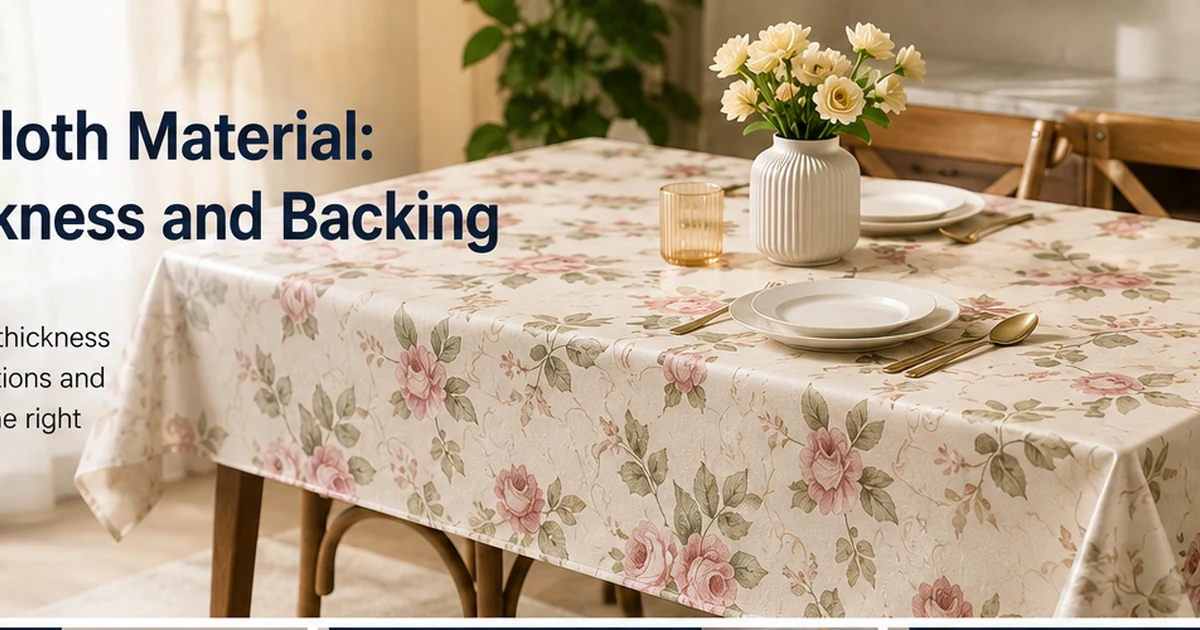
PVC tablecloth material is widely used for household table covers, commercial table protectors and decorative table covering products.
Unlike conventional textile tablecloths, PVC tablecloth material is manufactured with a coated surface and textile backing. This structure allows manufacturers to combine decorative printed patterns with different thicknesses, backing constructions and material flexibility.
However, tablecloth materials that look similar in photographs can behave differently during cutting, rolling, edge finishing and daily use.
For manufacturers, importers and distributors, the right material should therefore be selected according to the finished table cover rather than pattern alone.
Xiangze Leather supplies PVC Tablecloth Material in floral, marble, geometric, botanical and other printed designs for table cover manufacturing.
This guide explains the main types, thicknesses, backing constructions and production factors to consider when selecting PVC tablecloth material.
What Is PVC Tablecloth Material?
PVC tablecloth material is a flexible coated textile supplied in rolls for manufacturing table covers and decorative table protection products.
A typical construction contains:
- A PVC surface layer
- Printed or decorative surface design
- Textile backing
- Optional additional surface finishing depending on the product
The PVC layer creates the visible color, print and surface appearance, while the textile backing supports the material and influences flexibility, body and processing behavior.
This construction is different from an ordinary woven tablecloth.
Because the decorative surface is produced as part of a continuous roll material, manufacturers can cut the material into different table cover dimensions and process it according to their own product requirements.
For buyers who want a broader explanation of coated synthetic leather construction, see What Is PVC Synthetic Leather?.
Common Types of PVC Tablecloth Material
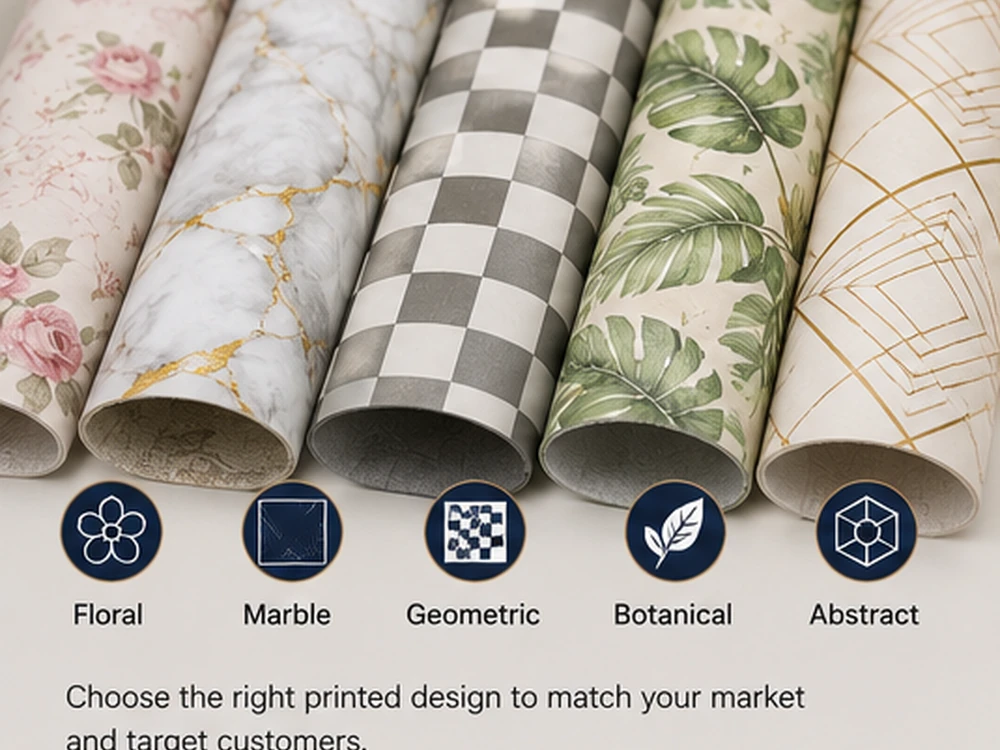
Tablecloth material can be classified primarily according to its surface design and visual style.
The best pattern depends on the target market, furniture style and intended retail positioning.
Floral Printed Tablecloth Material
Floral designs are widely used for household dining tables and decorative table covers.
Patterns can range from small repeated flowers to larger decorative arrangements.
Floral designs can work particularly well for:
- Household dining tables
- Kitchen tables
- Decorative covers
- Seasonal collections
- Traditional home décor
- Retail tablecloth collections
Pattern scale should be considered together with the finished table size.
A very large floral repeat can appear incomplete on small table covers, while very small designs may become visually busy on larger surfaces.
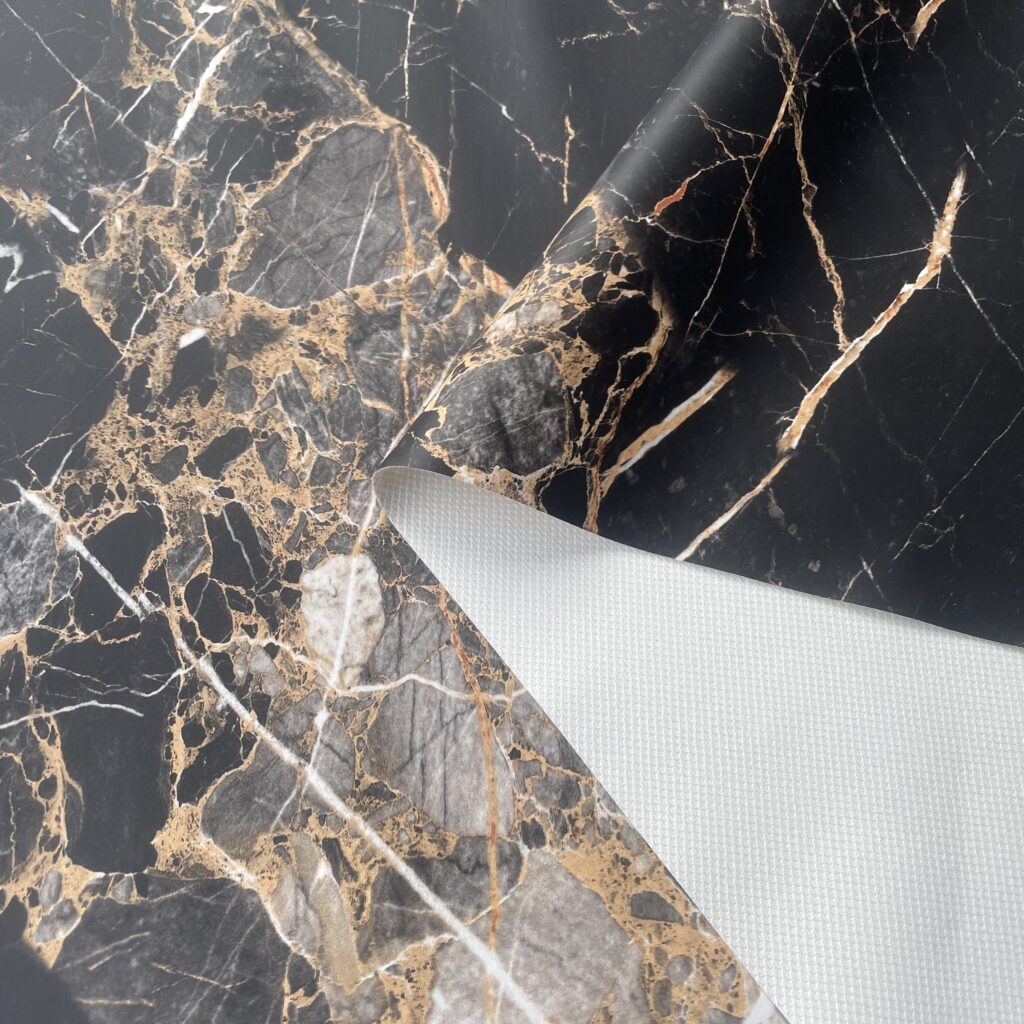
Marble Printed Tablecloth Material
Marble effects create a decorative surface inspired by natural stone.
Common styles can include:
- Grey marble
- White marble
- Black and gold marble
- Light neutral stone effects
- High-contrast decorative marble
Marble patterns are useful when buyers want the table surface to create a more modern decorative appearance.
The direction and repeat of the print should be checked before cutting large table covers.
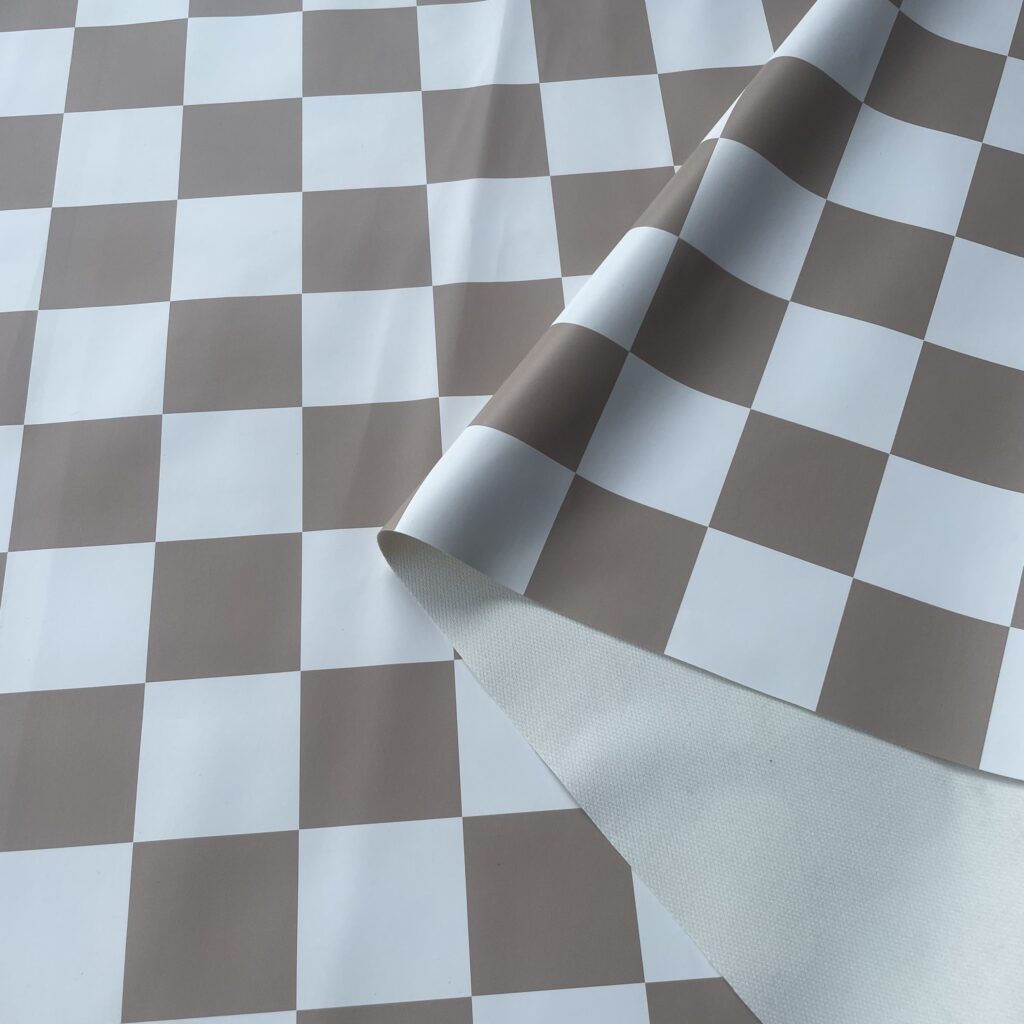
Geometric Printed Material
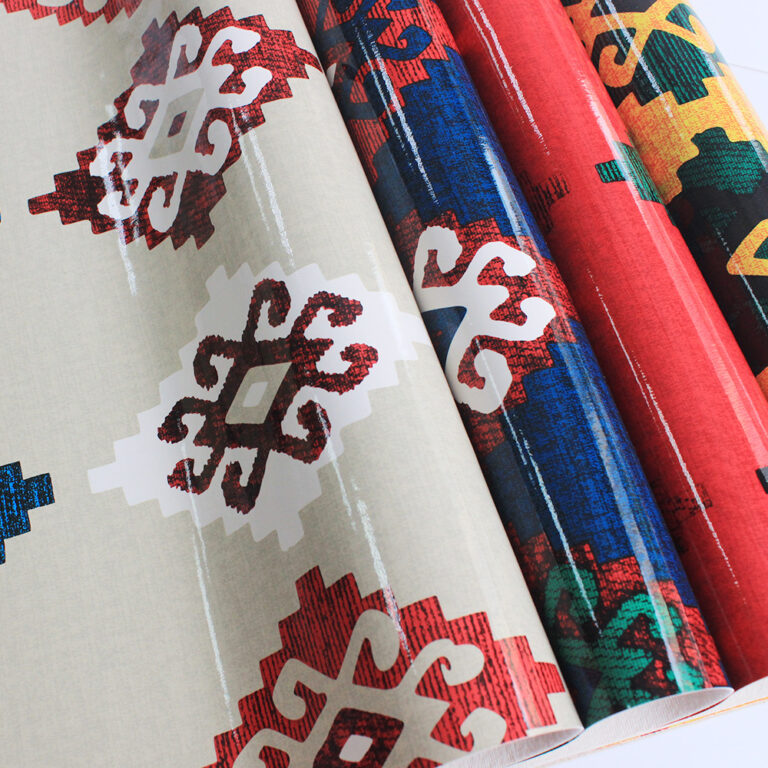
Geometric tablecloth patterns include checkerboards, abstract shapes, lines, grids and other repeated designs.
These patterns can provide a more contemporary appearance than traditional floral prints.
Directional geometric designs require additional cutting attention.
If the pattern contains obvious horizontal or vertical lines, the cutting direction should remain consistent across production.
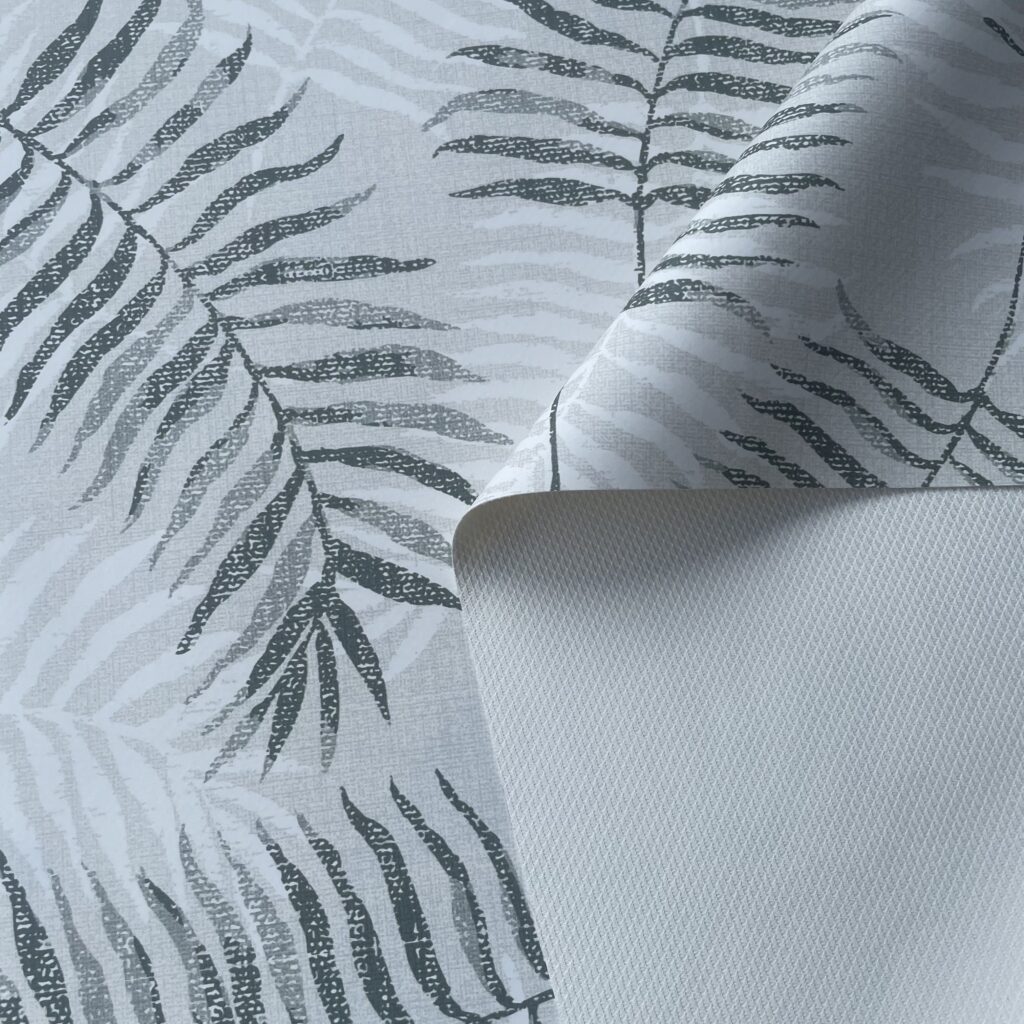
Botanical and Leaf Patterns
Leaf and botanical prints are commonly used for decorative household table covers.
Tropical leaves, monstera patterns and similar designs can provide a stronger decorative style for kitchens, dining spaces and casual interiors.
These designs are highly dependent on color and print quality, so physical samples should be reviewed before bulk production.
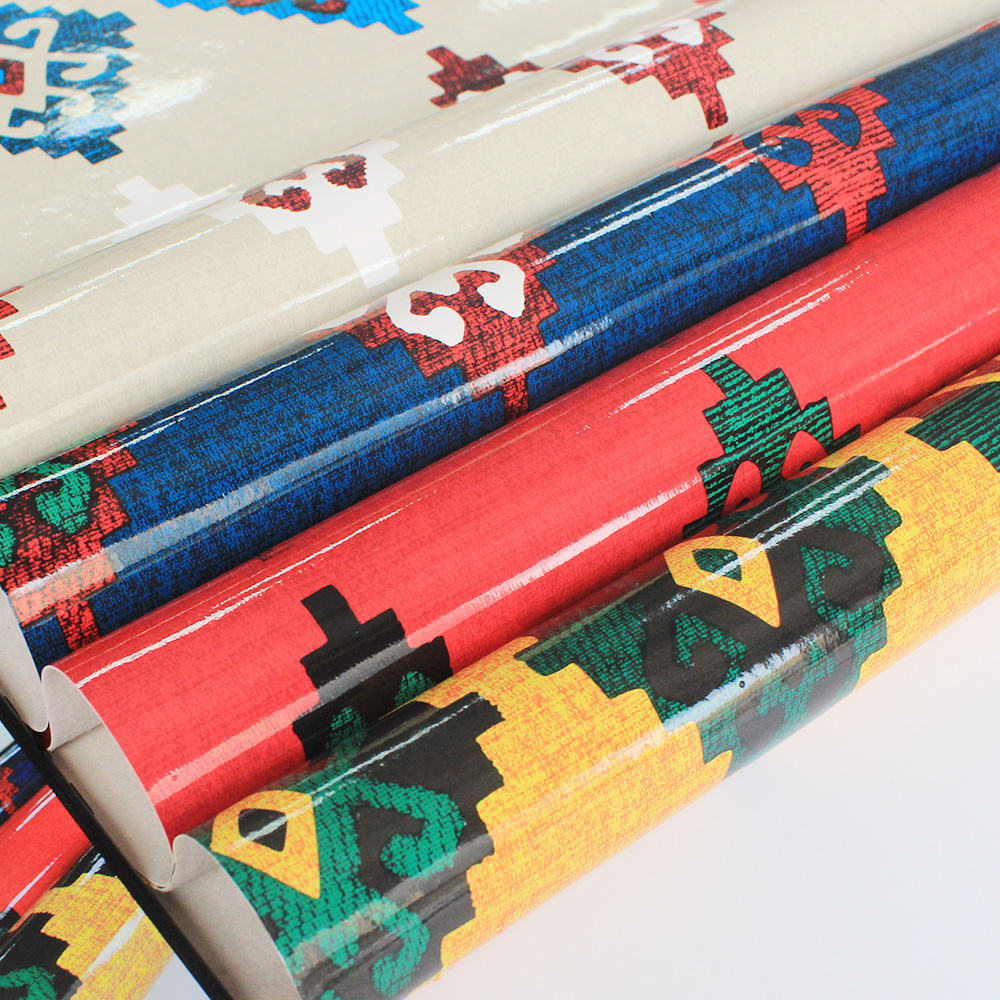
Abstract and Themed Prints
PVC tablecloth material can also use abstract graphics, kitchen-related prints, symbolic patterns and other decorative designs.
These materials are useful for distributors who want different collections for specific markets or seasonal product ranges.
Buyers can compare the available floral, marble, botanical, geometric and other designs in our Tablecloth Leather collection.
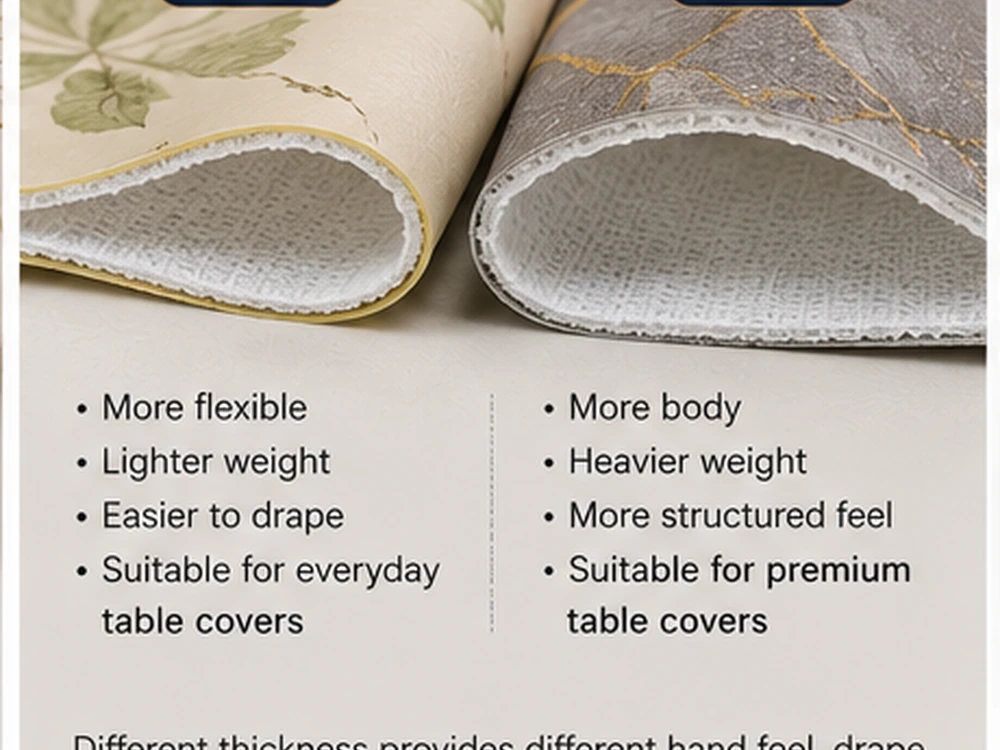
How Thickness Affects Tablecloth Material
Thickness is one of the main structural differences between PVC tablecloth materials.
The correct thickness affects:
- Material body
- Flexibility
- Draping behavior
- Roll weight
- Cutting
- Edge finishing
- Finished table cover feel
There is no single thickness that is automatically best for every tablecloth.
0.45mm PVC Tablecloth Material
A relatively lightweight construction such as 0.45mm can provide a practical balance of flexibility and material body for decorative table covers.
It can be useful where manufacturers want:
- Flexible roll material
- Easier cutting
- Relatively low material bulk
- Good conformity over table edges
- Efficient roll handling
- Decorative printed table covers
Many printed PVC tablecloth materials are designed around this type of lightweight construction.
However, total performance still depends on the surface coating and backing rather than thickness alone.
0.7mm PVC Tablecloth Material
A thicker construction such as 0.7mm provides more material body.
This may be suitable for table covers where buyers want:
- A more substantial hand feel
- Greater material body
- A heavier finished table cover
- Different draping characteristics
- Additional structural support
The trade-off is increased roll weight and potentially less flexibility compared with thinner materials.
Manufacturers should therefore compare both thicknesses using the actual finished table dimensions.
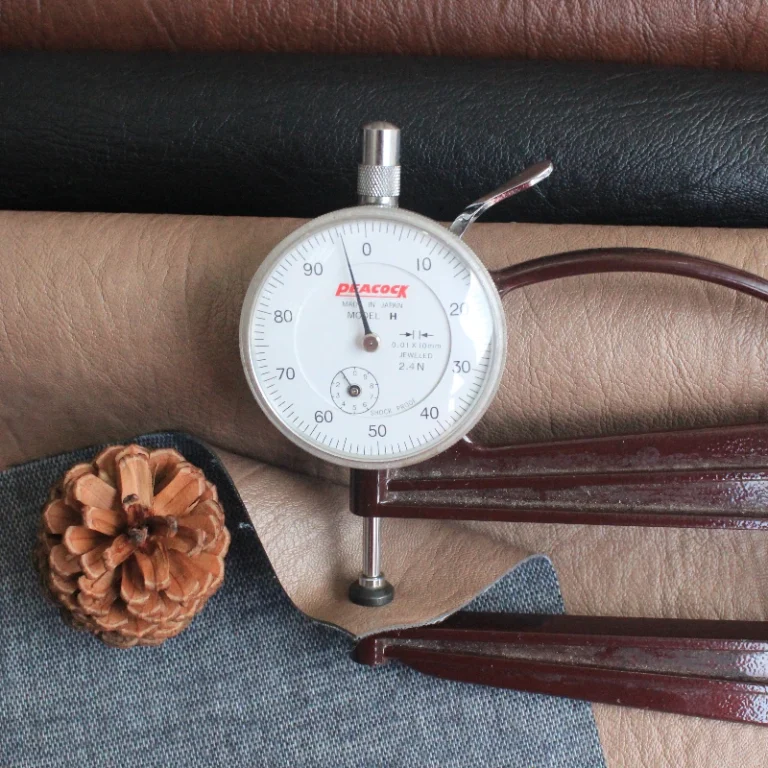
Thickness Tolerance
Bulk orders should specify not only the nominal thickness but also the acceptable production tolerance when this is important to the finished product.
Material thickness should be measured as part of the complete construction.
Comparing two products only by their nominal millimeter value may be misleading if their textile backings and surface structures are different.
Why Backing Construction Matters
The backing is the textile layer underneath the PVC surface.
For tablecloth material, the backing can influence:
- Flexibility
- Material body
- Dimensional stability
- Cutting behavior
- Surface support
- Handling
- Finished hand feel
A decorative print may attract the buyer’s attention first, but the backing plays an important role during manufacturing.
Terry Fabric Backing
Terry Fabric Backing is commonly used in PVC tablecloth constructions.
Its textile structure supports the coated surface while maintaining enough flexibility for roll-based table covering applications.
For manufacturers, important factors to check include:
- Backing density
- Total material thickness
- Flexibility
- Stretch
- Surface stability
- Cutting behavior
A terry-backed material should be evaluated as a complete construction rather than selecting it according to the backing name alone.
Other Textile Backings
Different tablecloth products can also use other textile structures depending on manufacturing requirements.
The backing should match the required balance between flexibility and dimensional stability.
A material that stretches too easily may distort during cutting or handling.
A material that is excessively rigid may not drape naturally around table edges.
The correct backing therefore depends on the finished table cover design.
For a detailed explanation of textile constructions, see Common PVC Leather Backing Options.
Consider Width and Finished Table Size
Roll width is another important specification for tablecloth manufacturers.
The useful material width should match the intended finished table cover dimensions.
Before ordering, manufacturers should consider:
- Finished table width
- Required edge drop
- Cutting allowance
- Pattern direction
- Edge-finishing allowance
- Production waste
For example, the material needs to be wide enough to cover the required table surface while allowing sufficient material around the edges.
If several finished sizes will be produced from the same roll, cutting efficiency should be calculated before confirming the order.
Pattern direction can also influence material consumption.
A non-directional abstract pattern may provide more cutting flexibility than a printed design that needs to face one particular direction.
Select the Print According to the Target Market
Tablecloth material is strongly influenced by visual preference.
The same technical construction can be produced with very different printed surfaces for different markets.
A distributor may require several collections, such as:
| Market Style | Typical Pattern Direction |
|---|---|
| Traditional Home | Floral and decorative motifs |
| Modern Interior | Marble and geometric patterns |
| Kitchen | Food, kitchen or small repeated prints |
| Natural Style | Botanical and leaf patterns |
| Minimalist | Light marble, subtle geometric or simple designs |
| Decorative Retail | Strong color and statement prints |
There is no universal best-selling pattern for every market.
Buyers should consider local furniture styles, consumer preferences and retail positioning.
Physical samples are especially important because photographs may not accurately show:
- Actual color
- Print sharpness
- Gloss
- Surface texture
- Pattern scale
- Material hand feel
The complete Decorative Leather collection also includes PVC materials for packaging, table covers and other decorative applications.
Check Surface and Cleaning Requirements
Table covers are frequently exposed to food, drinks and daily handling.
The surface therefore needs to be evaluated according to the expected use environment.
PVC-coated surfaces are generally easier to wipe than absorbent textile fabrics, but cleaning performance still depends on the actual surface finish and the type of contamination.
Before production, buyers should define any specific requirements for:
- Water exposure
- Food stains
- Oil
- Common household liquids
- Cleaning agents
- Repeated wiping
- Surface abrasion
- Color transfer
Do not assume that every PVC tablecloth material provides identical stain or chemical resistance.
If a particular cleaner or disinfectant will be used in commercial environments, test that product on the selected material before approving bulk production.
Strong solvents or aggressive chemicals should not be used unless compatibility has been confirmed.
Evaluate Flexibility and Draping
Tablecloth material needs to lie properly across a table surface and around table edges.
This behavior is influenced by:
- Thickness
- Backing
- Surface coating
- Material temperature
- Roll storage
- Finished table dimensions
A material with more body may remain flatter across a table surface but may create a more structured edge.
A thinner material may drape more easily but behave differently during handling.
Neither result is automatically better.
The correct choice depends on the appearance required for the finished table cover.
Manufacturers should test the material on a representative table rather than evaluating it only as a small flat swatch.
Check whether the material:
- Lies flat
- Drapes evenly
- Forms unwanted waves
- Retains roll curl
- Creates excessive stiffness around corners
- Maintains the printed pattern without distortion
Allowing the material to reach the expected operating temperature before evaluation can also provide a more representative result.
Check Cutting and Edge Finishing
PVC tablecloth material can be supplied in rolls and converted into different finished sizes.
The material may be processed through:
- Straight cutting
- Die cutting
- Rounded corner cutting
- Edge trimming
- Sewing
- Binding
- Heat-related finishing where applicable
- Other table cover production methods
The selected production method should be tested with the actual material.
Check whether the material cuts cleanly without excessive backing fraying or surface damage.
For printed patterns, verify that cutting lines remain visually aligned with the design.
If the finished tablecloth uses sewn or bound edges, the backing and total thickness should also work with the selected sewing equipment.
Different factories may use different finishing methods, so material approval should always consider the actual production process.
Understand Printed Pattern Repeat
Printed PVC tablecloth material is normally produced with a repeating design across the roll.
Pattern repeat is important because it affects the appearance of the finished table cover.
Before bulk ordering, buyers should consider:
- Repeat dimensions
- Pattern direction
- Position of large design elements
- Cutting orientation
- Matching requirements
- Finished cover size
For highly visible marble or floral designs, a small sample may not show the complete repeat.
A larger sample can provide a better understanding of how the design will appear across a full table surface.
If exact pattern positioning is important, discuss this before production.
Test the Material Before Bulk Production
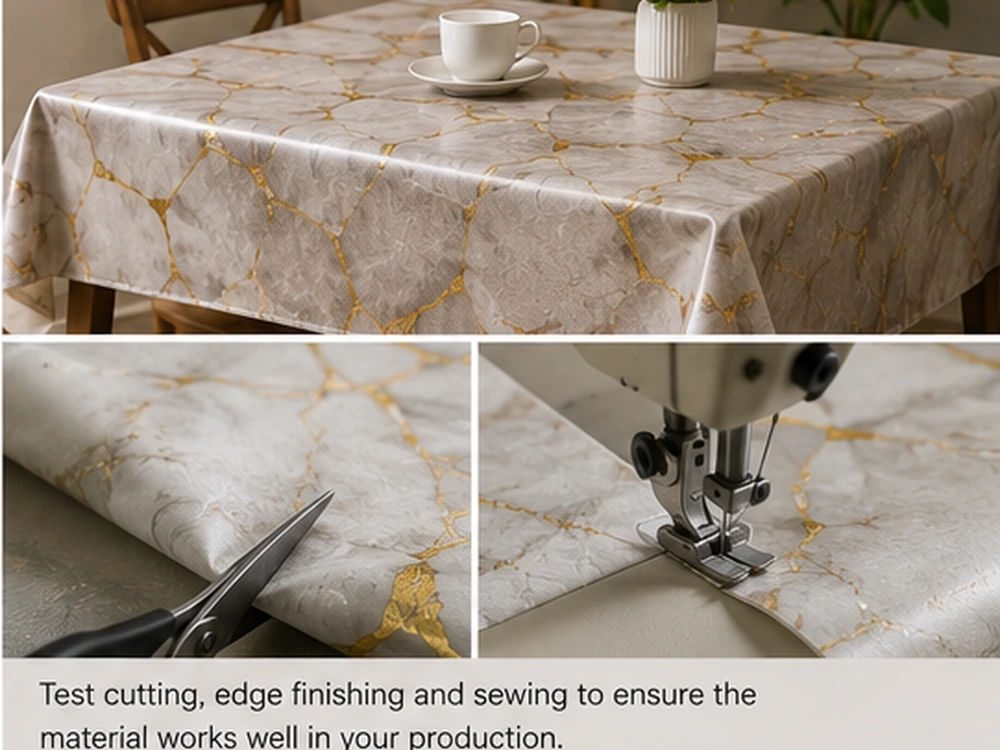
Physical sample evaluation is one of the most important steps when selecting PVC tablecloth material.
A photograph can show the approximate pattern but cannot fully demonstrate thickness, backing, flexibility, draping or surface feel.
Whenever possible, obtain a sample large enough to test on the intended table or manufacturing process.
Evaluate:
| Item | What to Confirm |
|---|---|
| Application | Household, commercial or decorative table cover |
| Pattern | Floral, marble, geometric, botanical or other print |
| Color | Approved physical reference |
| Surface | Required gloss and texture |
| Thickness | Required value and tolerance |
| Backing | Textile construction |
| Width | Suitable for finished table dimensions |
| Flexibility | Required draping behavior |
| Cutting | Clean and dimensionally stable |
| Pattern Direction | Correct orientation during cutting |
| Edge Finish | Compatible with the intended process |
| Cleaning | Required stain and cleaner resistance |
| Roll Quality | Surface and print consistency |
| Quantity | Trial and bulk requirements |
A representative finished table cover should ideally be produced before a large order.
This allows manufacturers to evaluate how the material looks across the full table surface and how it behaves around edges and corners.
The final purchase specification should clearly identify:
- Product code
- Printed pattern
- Approved color
- Thickness
- Backing
- Width
- Required surface characteristics
- Pattern direction if applicable
- Performance requirements
- Approved physical sample
- Order quantity
Choosing PVC Tablecloth Material for Your Market
The right PVC tablecloth material should be selected according to both appearance and construction.
Printed pattern determines the visual style, while thickness, backing and width influence how the material behaves during manufacturing and on the finished table.
A practical selection process is:
Define the table cover application → select the pattern → confirm thickness → evaluate backing → confirm width → test cutting and finishing → make a full-size sample → approve the final specification.
This process helps manufacturers compare materials more accurately than choosing from photographs alone.
Xiangze Leather supplies PVC Tablecloth Material for household table covers, commercial table protectors and decorative table covering products.
Available options include floral, marble, geometric, botanical, abstract and other printed designs with different material constructions.
For additional decorative PVC applications, buyers can explore our Decorative Leather collection.
Tell us your target market, preferred printed design, thickness, width, backing and estimated order quantity. We can help compare suitable tablecloth materials and provide samples for evaluation before bulk production.

About Xiangze Leather
Written by Xiangze Leather Editorial Team
Xiangze Leather supplies PVC synthetic leather for furniture upholstery, bags, footwear, automotive interiors, motorcycle seats and decorative applications. Material samples, specification options and quotation support are available according to project requirements.