Car Seat Leather Thickness and Backing Guide

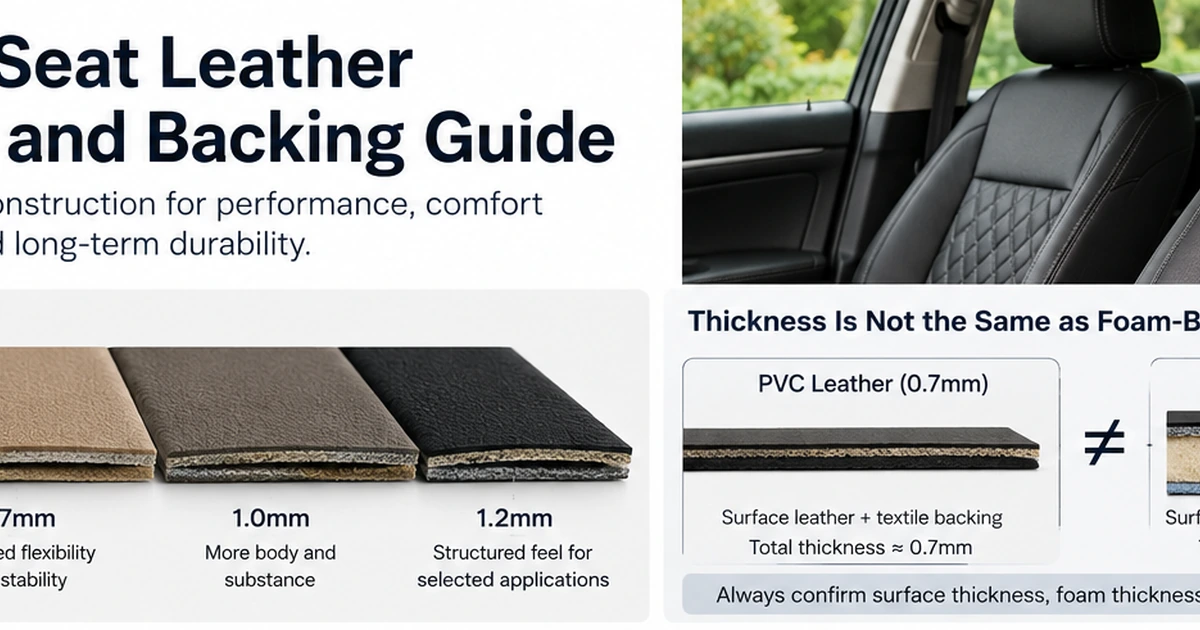
Car seat leather thickness and backing should be evaluated together rather than as separate specifications.
Two automotive upholstery materials can have a similar surface grain and nominal thickness but behave very differently during cutting, sewing, stretching and seat installation because their backing constructions are different.
A relatively thin PVC leather with a stable textile backing may provide more controlled upholstery behavior than a thicker material with excessive stretch. At the same time, a flexible knitted construction may be more suitable for a curved seat panel than a more rigid material of the same thickness.
For automotive seat manufacturers, seat-cover factories and material buyers, the objective is therefore not to find the thickest leather or the strongest backing.
The objective is to select a complete construction that matches the seat shape, foam, panel design and manufacturing process.
Xiangze Leather supplies Car Seat Leather in different thicknesses, grains and backing constructions for automotive seating and interior upholstery.
This guide focuses specifically on how thickness and backing affect car seat leather selection.
Why Thickness and Backing Need to Be Evaluated Together
PVC automotive leather is a composite material.
A typical construction includes a PVC surface structure combined with a supporting backing underneath.
The visible surface determines characteristics such as:
- Grain
- Color
- Gloss
- Decorative finish
- Surface appearance
The backing influences how the complete material behaves mechanically during production.
Important factors include:
- Flexibility
- Stretch
- Recovery
- Dimensional stability
- Sewing performance
- Tear behavior
- Material body
- Upholstery handling
This means that nominal thickness alone does not describe the complete material.
For example, two materials can both be specified as 0.7mm but use different backing fabrics. One may stretch more easily around a curved seat, while another may provide better dimensional control during cutting and sewing.
Likewise, two materials using similar backing fabrics can behave differently if their coating thickness, grain structure and complete construction are different.
For a broader explanation of the complete material-selection process, see How to Choose Automotive Leather for Car Seats.
What Thickness Is Used for Car Seat Leather?
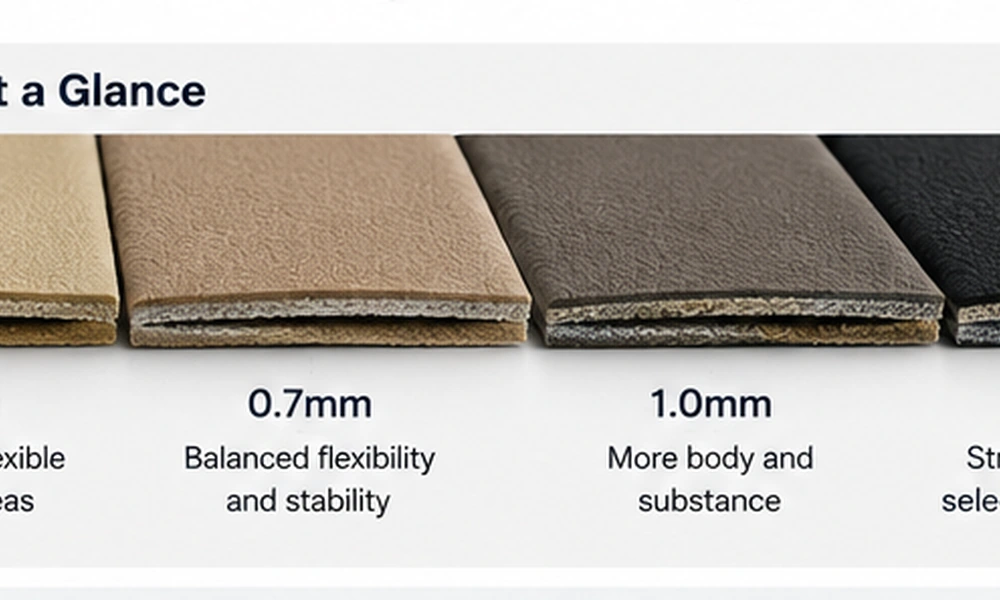
There is no single thickness that is correct for every automotive seat.
Xiangze’s current car seat materials include several constructions around 0.65mm, 0.7mm, 1.0mm and 1.2mm.
These values should be treated as product specifications rather than universal automotive standards.
The correct thickness depends on:
- Seat shape
- Surface coating
- Backing
- Foam structure
- Sewing process
- Panel design
- Required hand feel
- Finished upholstery construction
Around 0.65mm
A relatively lightweight automotive leather construction can provide good flexibility and lower material bulk.
This can be useful where the material needs to wrap around:
- Curved seat sections
- Headrests
- Armrests
- Smaller upholstered components
- Seat-cover panels
Lower thickness can also reduce bulk where several layers meet at a sewn seam.
However, a thinner surface construction still requires sufficient backing support.
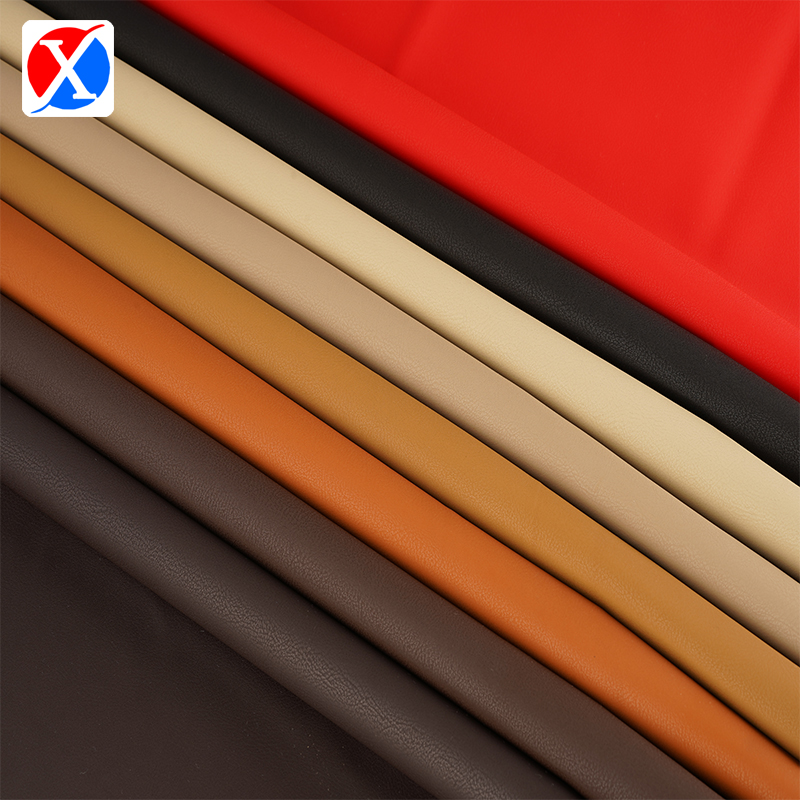
For example, XZ60004 0.65mm DE90 Fine Pebble Grain PVC Automotive Leather combines a 0.65mm construction with Terry Fabric Backing.
This illustrates why thickness should always be read together with the backing specification.
Around 0.7mm
The 0.7mm range is also used in several automotive upholstery constructions.
Depending on the backing, this thickness can provide a practical balance between:
- Flexibility
- Surface body
- Sewing
- Panel handling
- Upholstery wrapping
However, two 0.7mm materials may still behave differently.
A 0.7mm material with Terry Fabric Backing does not necessarily provide the same stretch or dimensional behavior as a 0.7mm material with Knitted Fabric Backing.
For example, XZ73255 Fine Grain PVC Leather with 28G Knitted Backing uses a 0.7mm PVC construction together with a knitted textile backing.
The complete structure should therefore be tested rather than selecting the material according to the 0.7mm figure alone.
Around 1.0mm
A 1.0mm construction provides more material body than many lighter automotive upholstery leathers.
It may be considered where the buyer wants:
- More substantial hand feel
- Greater surface body
- Structured seat panels
- Automotive interior components
- A different balance between flexibility and support
Increasing thickness can influence sewing and wrapping.
The manufacturer should check whether the material remains flexible enough around the intended seat curves and whether seam intersections become excessively bulky.
Around 1.2mm
A 1.2mm construction can provide still more body, but its behavior depends heavily on the backing.
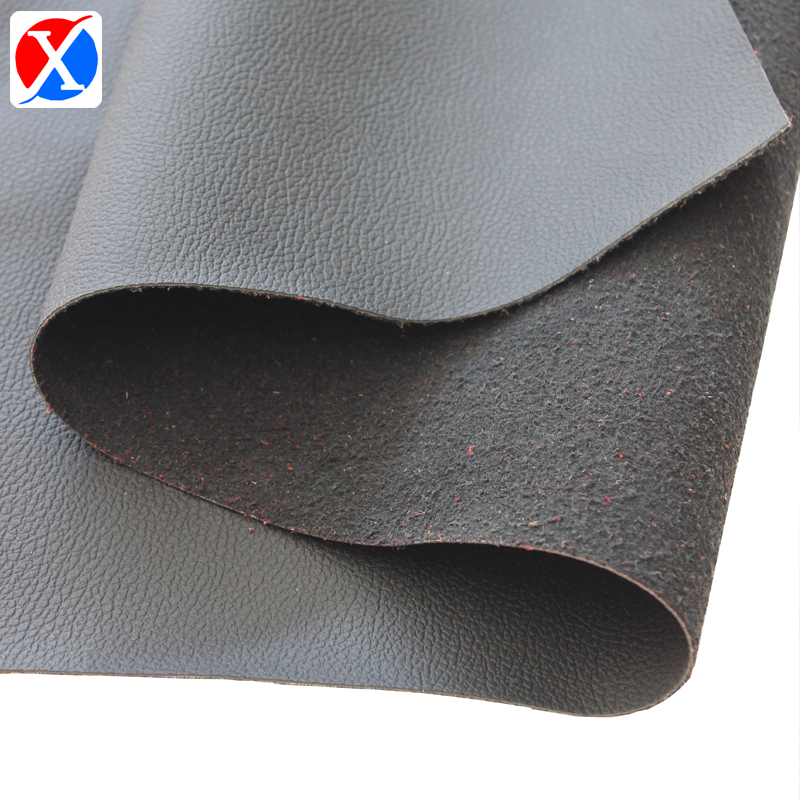
For example, XZ73205 1.2mm K646 Automotive Grain PVC Leather uses Recycled Leather Fiber Backing rather than a conventional lightweight textile backing.
This creates a different material structure from a terry- or knitted-backed automotive leather.
A thicker or more structured construction may be suitable for selected seat and automotive interior components, but it should be tested carefully around:
- Tight curves
- Folded edges
- Seams
- Panel joints
- Upholstery attachment points
Thicker does not automatically mean more durable.
Durability depends on the complete coating, backing and required test performance.
Nominal Thickness Is Not the Same as Finished Seat Padding
One common source of confusion is the difference between leather thickness and the thickness of a foam-backed or quilted composite.
A conventional textile-backed PVC automotive leather may be specified at approximately 0.7mm or 1.0mm.
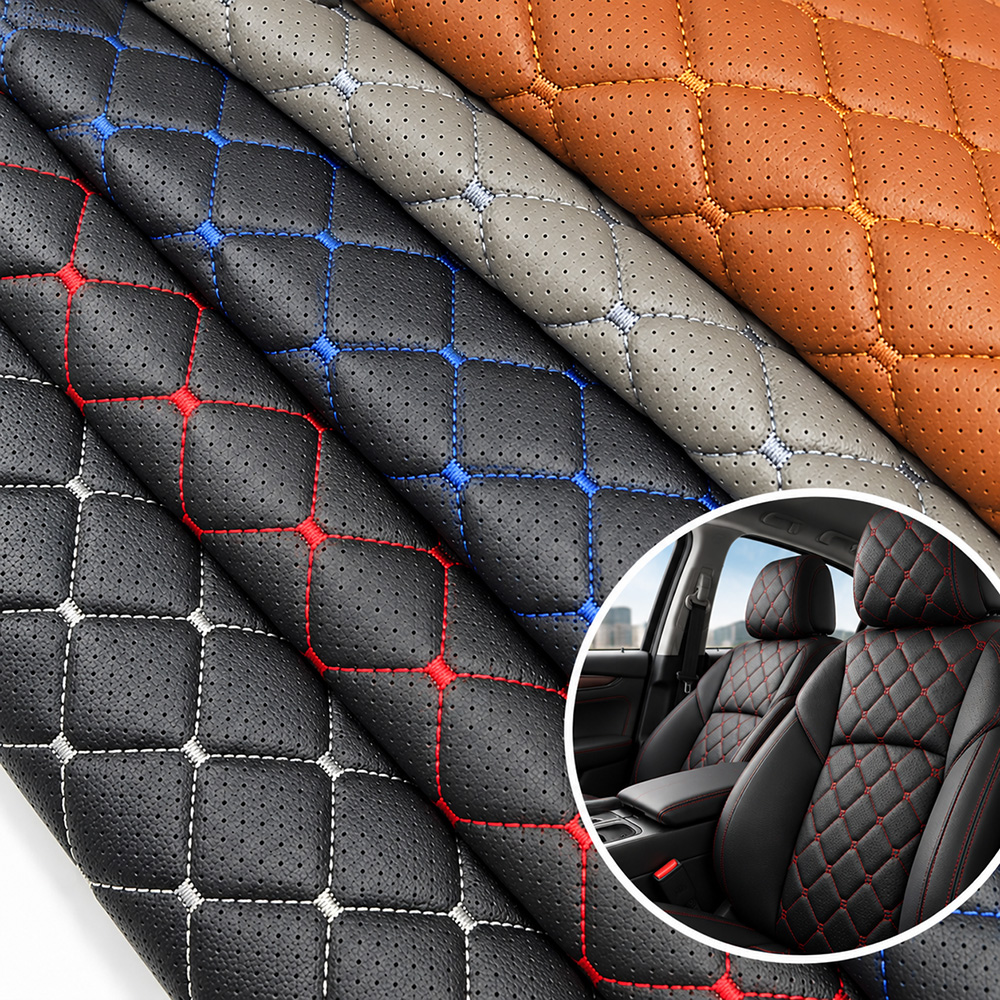
A quilted material or foam-backed construction may include several millimeters of additional foam underneath the surface material.
These specifications should not be compared directly.
For example:
0.7mm PVC leather + textile backing
is structurally different from:
PVC surface + 3mm foam
or:
PVC surface + 5mm foam + supporting backing
The foam is used to create cushioning, quilting depth or a more three-dimensional upholstery construction.
It does not mean that the PVC surface itself is 3mm or 5mm thick.
For decorative padded car-seat panels, buyers should therefore confirm:
- Surface leather thickness
- Foam thickness
- Backing
- Total composite thickness
- Quilting or stitching construction
Foam-backed decorative materials are better compared separately from conventional flat Car Seat Leather constructions.
Terry Fabric Backing for Car Seat Leather
Terry Fabric Backing is one of the textile constructions used in Xiangze automotive leather.
Its loop-textured structure can provide textile support while maintaining sufficient flexibility for many automotive upholstery applications.
It can be considered for:
- Car seats
- Seat covers
- Headrests
- Armrests
- Selected door panels
- Automotive interior upholstery
Important characteristics to evaluate include:
- Fabric density
- Stretch
- Material flexibility
- Sewing behavior
- Total thickness
Not every terry fabric has the same weight or textile structure.
For example, XZ60004 uses Terry Fabric Backing, while XZ60016 uses a specified 90D Terry Backing construction.
Even when both materials belong to the same backing family, their actual construction should still be confirmed through the product specification and physical sample.
Terry backing can be useful when manufacturers want a relatively flexible textile-supported automotive leather without using a highly stretchable backing.
Knitted Fabric Backing for Car Seats
Knitted Fabric Backing uses interlocking yarn loops.
Compared with more dimensionally stable constructions, knitted fabric can generally provide greater flexibility and stretch.
This can be useful when the leather needs to conform around:
- Curved seat cushions
- Seat bolsters
- Headrests
- Armrests
- Contoured upholstery sections
However, excessive stretch can create manufacturing problems.
Possible issues include:
- Distorted cutting dimensions
- Uneven panel shapes
- Grain deformation
- Misaligned seams
- Excessive material tension
- Wrinkles after installation
For this reason, manufacturers should evaluate both stretch and recovery.
A backing that stretches easily but does not recover sufficiently may not produce a stable finished seat.
XZ73255 provides one example of a 0.7mm automotive leather using a 28G knitted construction.
The material should be tested in the same direction in which it will be cut and installed.
Mesh Fabric Backing
Mesh Fabric Backing uses an open or grid-like textile construction.
Depending on yarn size, density and mesh structure, it can provide a different balance between flexibility, material weight and support.
For automotive applications, buyers should evaluate:
- Mesh density
- Stretch direction
- Tear performance
- Sewing stability
- Material recovery
- Complete leather thickness
A lightweight open mesh and a denser automotive mesh should not be treated as equivalent simply because both are described as mesh backing.
The exact construction should always be confirmed on the product specification and physical sample.
Recycled Leather Fiber Backing
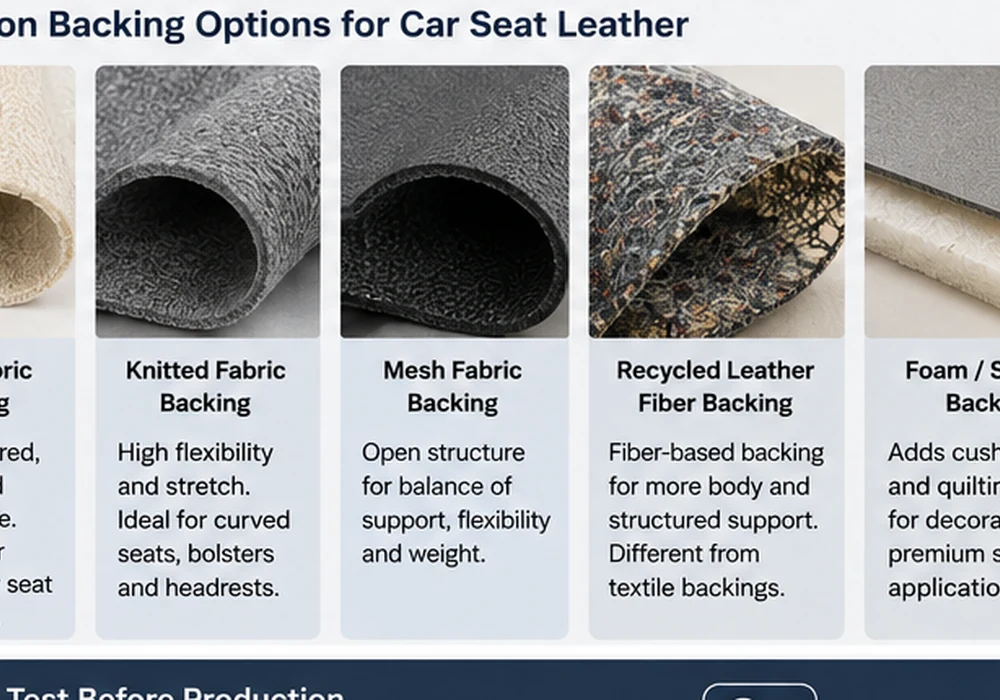
Recycled Leather Fiber Backing is structurally different from conventional terry, knitted or mesh textiles.
It provides a more substantial fiber-based supporting structure underneath the PVC surface.
Depending on the complete product, this can contribute to:
- Additional material body
- Different stiffness
- Structured hand feel
- Dimensional support
XZ73205 is an example of a 1.2mm automotive material using this backing construction.
This type of material should be evaluated carefully during:
- Cutting
- Sewing
- Folding
- Seat wrapping
- Edge finishing
The more substantial backing can provide useful structure, but it may not behave like a lightweight textile-backed leather around very tight curves.
Backing selection should always follow the seat design.
For a detailed comparison of textile and specialty backing constructions used across Xiangze products, see Common PVC Leather Backing Options.
How Backing Changes Stretch and Recovery
Stretch is especially important in automotive seating because the material needs to move from a flat roll into a three-dimensional upholstered shape.
However, maximum stretch is not the objective.
The correct material should provide enough movement to fit the seat while maintaining the intended panel dimensions and surface appearance.
If stretch is too low, manufacturers may experience:
- Difficult wrapping
- Excessive tension
- Wrinkles
- Poor conformity around foam
- Difficult installation
If stretch is too high, problems can include:
- Cutting distortion
- Grain deformation
- Uneven seams
- Loss of shape
- Panel misalignment
Recovery is therefore just as important as stretch.
After the material has been stretched, it should maintain a stable finished appearance rather than remaining permanently distorted.
Manufacturers should test stretch in both material directions because many textile backings behave differently along and across the roll.
How Thickness Affects Sewing
Car seat covers are normally assembled from multiple panels.
The leather thickness and backing therefore directly affect seam construction.
Thicker materials can create greater bulk where two or more panels overlap.
This can influence:
- Needle selection
- Thread selection
- Stitch length
- Sewing-machine feeding
- Seam appearance
- Folding around seam allowances
A lighter material may pass through multiple-layer seams more easily, but the backing must still provide sufficient support around the needle holes.
Stitch-hole performance cannot be judged simply by pulling the leather by hand.
The correct test uses the actual:
- Needle
- Thread
- Stitch spacing
- Sewing machine
- Number of layers
planned for production.
How Thickness and Backing Affect Curved Seat Areas
Seat cushions and backrests contain both relatively flat panels and highly curved sections.
The same material can behave differently across these areas.
Important locations include:
- Side bolsters
- Seat cushion corners
- Headrests
- Armrests
- Backrest edges
- Seat-cover transitions
A relatively firm or thick material may remain visually stable on a flat center panel but become difficult to wrap around a narrow bolster.
A flexible knitted-backed material may conform more easily to curves but require greater control during cutting and sewing.
This is why evaluating an automotive leather only as a flat swatch is not enough.
Whenever possible, test it on an actual seat component or representative foam shape.
Do Perforation and Grain Change Thickness Selection?
Surface design can also influence how the material behaves.
Perforated automotive leather contains repeated holes in the surface.
Depending on the perforation process and complete construction, buyers should evaluate:
- Surface stability
- Stretch around perforations
- Sewing distance from perforated areas
- Tear behavior
- Backing visibility
- Finished seat design
Strongly embossed grains can also influence hand feel.
A deeper grain may make a material feel visually and physically different from a very fine grain even when their nominal thickness is similar.
Thickness, backing, grain and surface process should therefore be evaluated as one complete construction.
Thickness and Backing Are Not Performance Standards
A common sourcing mistake is assuming that a thicker material or stronger-looking backing automatically provides better automotive performance.
Thickness alone does not define:
- Abrasion resistance
- UV resistance
- Light fastness
- Heat aging
- Cold resistance
- Coating adhesion
- Flame performance
- Odor
- Fogging
- Restricted-substance compliance
These requirements need separate specifications and test methods.
For example, two 1.0mm materials can have different abrasion or aging performance depending on their coating formulation and finishing system.
The customer should provide applicable performance requirements before bulk production.
How to Compare Car Seat Leather Samples
When evaluating samples, compare several constructions side by side rather than selecting the first material that matches the required color.
A practical comparison can include:
| Item | What to Check |
|---|---|
| Application | Seat cushion, backrest, headrest, armrest or interior panel |
| Surface | Grain, perforation and finish |
| Thickness | Nominal value and tolerance |
| Backing | Exact construction |
| Material Body | Soft, medium or structured |
| Flexibility | Ability to follow seat curves |
| Stretch | Direction and amount |
| Recovery | Ability to return after stretching |
| Cutting | Dimensional stability |
| Sewing | Needle-hole and seam performance |
| Wrapping | Performance around foam |
| Grain Stability | Distortion after stretching |
| Coating Adhesion | Stability during flexing |
| Performance | Required automotive tests |
| Width | Effective production width |
Do not compare thickness without comparing the backing at the same time.
A more useful comparison is:
Thickness + backing + seat shape + production method
rather than simply:
0.7mm vs 1.0mm
Test the Complete Seat Construction
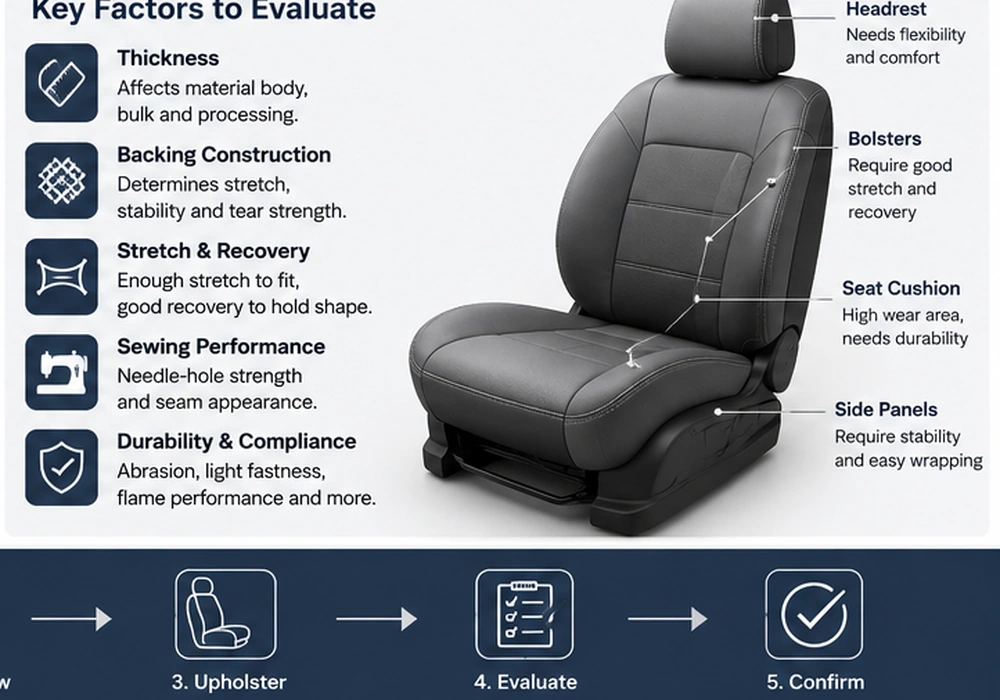
A physical upholstery trial provides more useful information than a small material swatch.
Whenever possible:
- Cut the material using the actual seat-panel template.
- Sew it with the intended needle and thread.
- Combine it with the actual foam and surrounding materials.
- Stretch it around the representative seat shape.
- Check seams and corners.
- Inspect the surface for grain distortion or whitening.
- Leave the upholstered panel under tension and check recovery.
- Perform the required project-specific tests.
This process can reveal differences between materials that appear very similar when lying flat.
For example, a slightly thicker material may still upholster easily if its backing is sufficiently flexible, while a thinner but highly stable construction may require more tension around complex curves.
The actual production trial should determine the final choice.
Recommended products
-
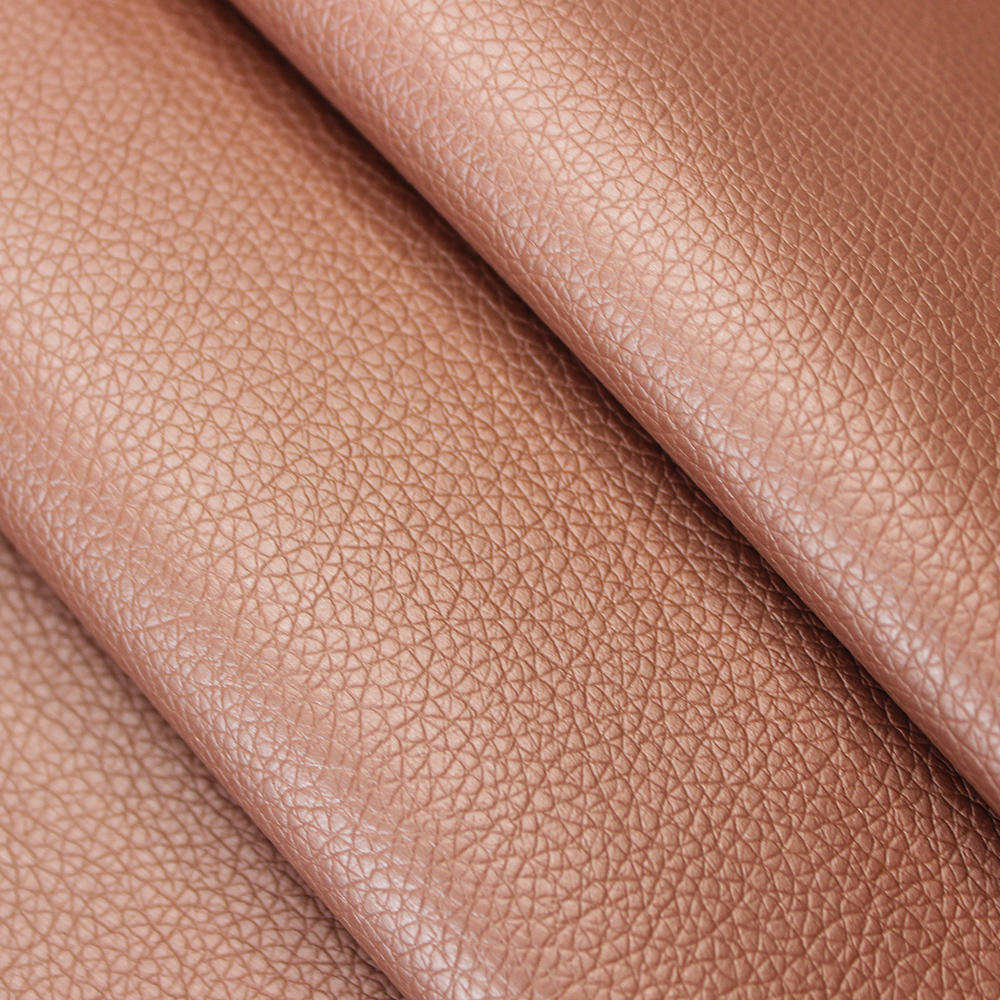
XZ73255 0.7mm Fine Litchi Grain PVC Leather with 28G 3+1 Knitted Backing for Car Seats
-
XZ60004 0.65mm DE90 Fine Pebble Grain PVC Leather with Terry Backing for Car Seats
-
XZ73205 1.2mm K646 Automotive Grain PVC Leather with Recycled Leather Fiber Backing
-
XZ73418 0.7mm Perforated Quilted PVC Leather with 5mm Foam for Car Seat Panels
Choosing Thickness and Backing for Your Car Seat Project
There is no universal best thickness or backing for automotive seating.
The correct combination depends on the seat design and manufacturing method.
A practical selection process is:
Define the seat component → select the approximate thickness → compare backing constructions → evaluate stretch and recovery → test cutting and sewing → upholster an actual sample → confirm performance requirements → approve the final specification.
For general car seat material selection, read How to Choose Automotive Leather for Car Seats.
For a deeper comparison of textile constructions, see Common PVC Leather Backing Options.
Xiangze Leather supplies Car Seat Leather with different thicknesses, surface grains and backing constructions for automotive seating and interior upholstery.
Buyers sourcing materials for other vehicle applications can also explore the broader Auto & Motorcycle Leather range.
Tell us the seat component, required thickness, preferred backing, grain, color, production method and applicable performance standards. Samples can be provided for cutting, sewing and upholstery evaluation before bulk production.

About Xiangze Leather
Written by Xiangze Leather Editorial Team
Xiangze Leather supplies PVC synthetic leather for furniture upholstery, bags, footwear, automotive interiors, motorcycle seats and decorative applications. Material samples, specification options and quotation support are available according to project requirements.