PVC Leather Thickness for Bags: How to Choose

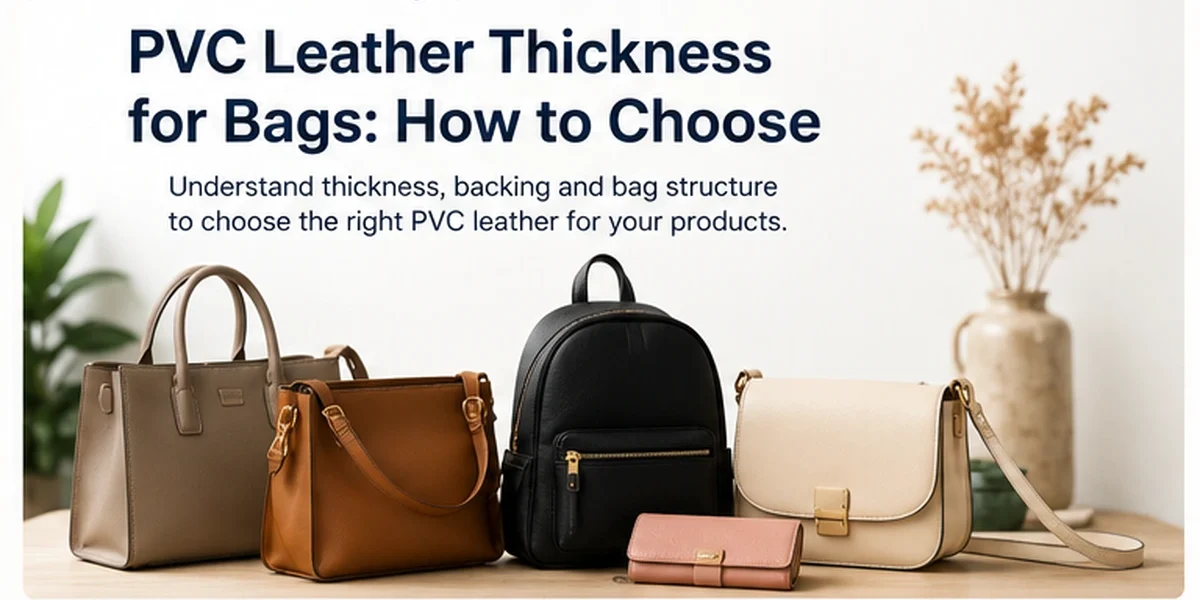
PVC leather thickness for bags should be selected according to the finished bag structure rather than choosing the thickest material available.
A soft handbag, backpack, structured tote, wallet and travel bag can require very different levels of material body, flexibility and folding performance.
Thickness also cannot be evaluated by itself.
A 0.8mm PVC leather with Brushed Fabric Backing may behave differently from a 0.8mm material using Oxford, Terry or another backing construction. The coating, backing, stiffness, reinforcement and finished bag design all influence how the material performs during cutting and assembly.
For bag manufacturers, the most practical approach is to select thickness together with the backing and actual bag construction.
Xiangze Leather supplies PVC Bag Leather in different thicknesses, grains and backing constructions for handbags, backpacks, wallets, luggage and fashion accessories.
This guide explains how to compare PVC leather thickness for different bag applications.
Why PVC Leather Thickness Matters for Bags
Thickness influences several parts of bag manufacturing.
It can affect:
- Material body
- Flexibility
- Folding
- Sewing
- Edge finishing
- Skiving
- Finished weight
- Panel structure
- Corner forming
- Hand feel
However, thickness does not directly tell you how strong the material is.
A thicker PVC leather with an unsuitable backing or poor coating adhesion may perform worse than a thinner construction specifically designed for the application.
For this reason, bag leather should be evaluated as:
PVC surface + backing + thickness + hand feel + reinforcement + finished bag structure
rather than simply comparing millimeter values.
For a broader explanation of bag material selection, see How to Choose Synthetic Leather for Bags.
What Thickness Is Common for PVC Bag Leather?
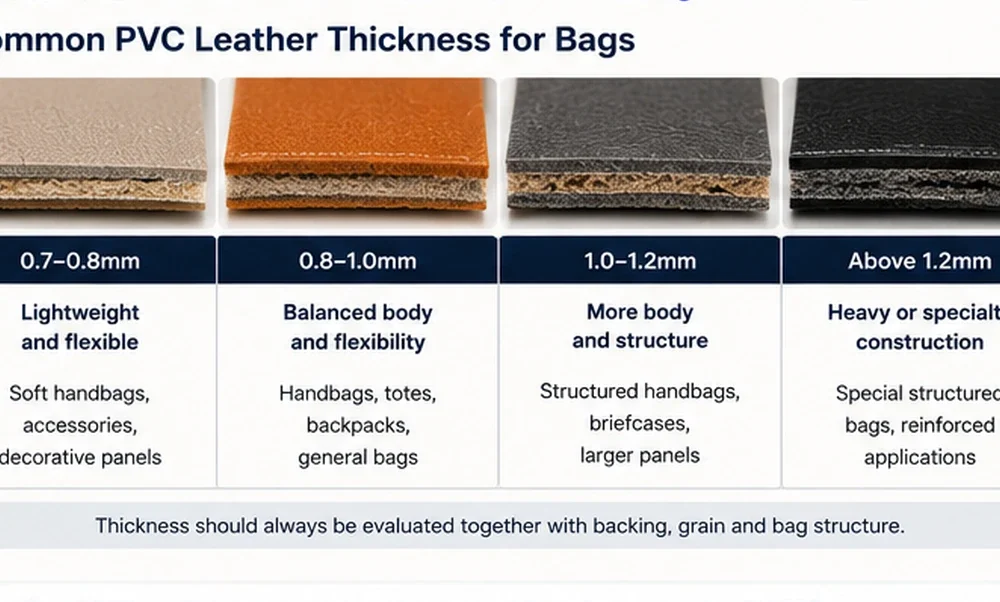
PVC bag leather is manufactured across a relatively broad thickness range.
Xiangze’s current bag materials include constructions around:
- 0.7mm
- 0.75mm
- 0.8mm
- 0.85mm
- 0.9mm
- 1.0mm
- 1.1mm
- 1.2mm
- 1.25mm
as well as more specialized constructions around 1.7mm and 2.0mm.
These values should not be treated as fixed industry rules.
The correct thickness depends on the bag design and complete material construction.
A useful starting comparison is:
| Thickness Range | General Material Character | Possible Bag Applications |
|---|---|---|
| Around 0.7–0.8mm | Lightweight and flexible | Soft handbags, decorative panels, lightweight bags |
| Around 0.8–1.0mm | Balanced body and flexibility | Handbags, totes, backpacks, general bag production |
| Around 1.0–1.2mm | More material body | Structured handbags, briefcases, larger bag panels |
| Above 1.2mm | Heavier or specialty construction | Selected structured products, special panels and reinforced applications |
These are general selection ranges rather than performance standards.
The actual backing and hand feel can change how materials within the same thickness range behave.
Around 0.7–0.8mm: Lightweight and Flexible Bag Leather
PVC leather around 0.7–0.8mm can provide relatively low material bulk and good flexibility.
This range can be useful for:
- Soft handbags
- Shoulder bags
- Tote bags
- Cosmetic bags
- Decorative panels
- Small accessories
- Selected backpack panels
Thin material is generally easier to:
- Fold
- Turn around curves
- Sew through multiple layers
- Use on smaller components
- Combine with lining or reinforcement
However, thinner does not automatically mean softer.
The backing construction can make a major difference.
For example, a 0.75mm PVC leather with Oxford Fabric Backing can provide a different level of dimensional stability from a 0.8mm material with Brushed Fabric Backing.
The first may feel more controlled during panel cutting, while the second may provide a softer construction depending on the complete material.
When Is This Range Too Thin?
A lightweight material may require additional reinforcement when used on:
- Large structured panels
- Bag bottoms
- Handle attachment areas
- Heavy backpacks
- Business bags
- Luggage
The finished bag construction should therefore be considered together with leather thickness.
A thin body panel with appropriate internal reinforcement can still produce a structured bag.
Around 0.8–1.0mm: A Practical General-Purpose Range
Many general handbag and backpack projects can begin by comparing materials in the 0.8–1.0mm range.
This range can provide a practical balance between:
- Flexibility
- Material body
- Sewing performance
- Finished weight
- Folding
- Surface structure
It can be suitable for:
- Handbags
- Tote bags
- Backpacks
- Shoulder bags
- Cosmetic bags
- Wallet components
- Fashion accessories
However, two materials in this range can still feel very different.
For example:
0.8mm + Brushed Fabric Backing
can behave differently from:
1.0mm + Terry Fabric Backing
or:
1.0mm + Cotton Velvet Backing
even though the nominal thickness difference is relatively small.
The material should therefore be physically compared rather than selected only from a specification sheet.
Around 1.0–1.2mm: More Body for Structured Bags
PVC leather around 1.0–1.2mm can provide additional material body.
It may be useful for:
- Structured handbags
- Business bags
- Briefcases
- Larger totes
- Travel bags
- Structured backpack panels
- Decorative exterior panels
The additional thickness can help create a more substantial hand feel.
However, thicker materials also require more attention during manufacturing.
Possible challenges include:
- Bulkier seams
- Greater folding resistance
- More difficult corner forming
- Increased need for skiving
- More demanding edge finishing
- Greater sewing-machine load
Backing becomes especially important in this thickness range.
A 1.2mm material with Double-Needle Brushed Fabric Backing may have a different balance of flexibility and structure from a 1.2mm material with Imitation Cotton Fleece Backing.
Thickness alone therefore cannot determine whether the material is suitable for a structured bag.
What About 1.7mm and 2.0mm PVC Leather?
Xiangze’s current bag range also includes more specialized constructions around 1.7mm and 2.0mm.
These should not be treated as the standard choice for ordinary handbags.
A very thick material may be appropriate when the design requires:
- Strong material body
- Special double-sided construction
- Thick decorative panels
- Particular structural effects
- A substantial finished hand feel
But increased thickness creates trade-offs.
A 2.0mm material can be significantly more difficult to:
- Fold
- Turn at corners
- Stitch through multiple layers
- Skive
- Edge paint
- Combine with reinforcement
- Use on small wallet components
For example, a 2.0mm smooth glossy construction with Needle-Punched Cotton Backing should be evaluated very differently from a conventional 0.8–1.0mm handbag leather.
Similarly, a 1.7mm double-sided construction has a different purpose from a standard textile-backed bag leather.
These products should be selected because the finished design requires their particular structure—not because thicker material is assumed to be better.
Thickness and Backing Must Be Selected Together
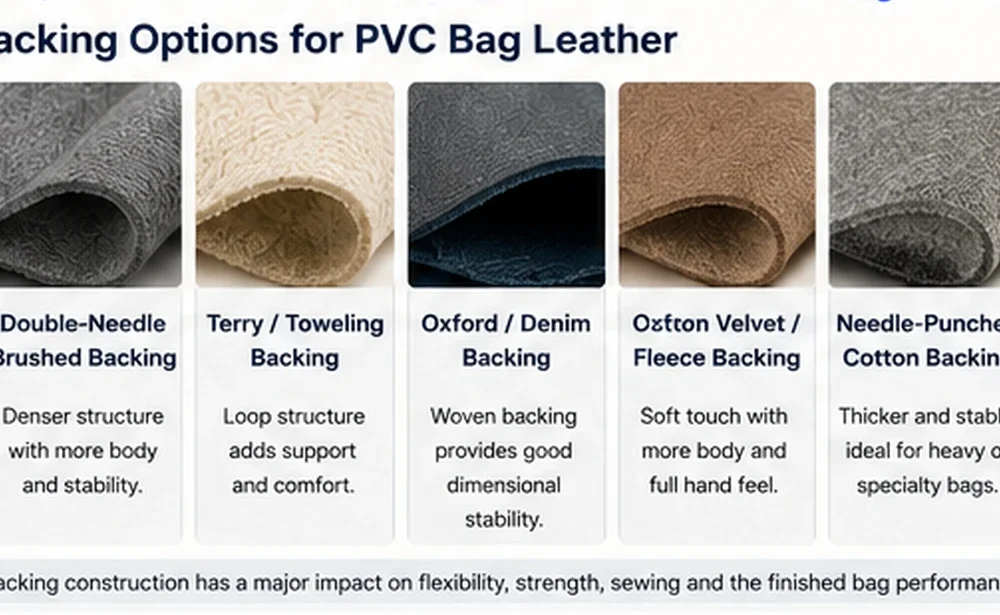
Backing is one of the most important reasons why thickness alone cannot predict material behavior.
The textile or supporting layer underneath PVC leather can influence:
- Flexibility
- Stretch
- Tear behavior
- Dimensional stability
- Sewing
- Folding
- Material body
Xiangze’s bag leather range currently uses backing constructions including:
- Brushed Fabric Backing
- Single-Needle Brushed Fabric Backing
- Double-Needle Brushed Fabric Backing
- Terry Fabric Backing
- Toweling Backing
- Oxford Fabric Backing
- Denim Fabric Backing
- Cotton Velvet Backing
- Imitation Cotton Fleece Backing
- Needle-Punched Cotton Backing
- Double-Sided Backing
The same nominal thickness can therefore represent very different materials.
For a complete explanation of these constructions, see Common PVC Leather Backing Options.
How Brushed Backing Changes a Thin Bag Leather
Brushed Fabric Backing is used in several flexible bag leather constructions.
A material around 0.8mm with brushed backing can provide:
- Flexible handling
- Additional textile support
- Moderate material body
- Good suitability for sewn bag panels
It can work particularly well for general handbags and fashion accessories.
However, brushed constructions can vary in density and thickness.
Single-Needle and Double-Needle Brushed Fabric Backing should also not be treated as identical.
A denser backing may add more body and stability to the complete material.
Oxford and Woven-Style Backings for Structured Panels
Oxford Fabric Backing provides a more structured woven textile construction.
For thinner PVC leather, this can help provide:
- Dimensional stability
- Controlled stretch
- Clean panel cutting
- More structured handling
This can be useful when a relatively lightweight PVC surface still needs stable support underneath.
For example, a 0.75mm Oxford-backed material may be considered for handbag, luggage and wallet applications where controlled panel dimensions are important.
The correct choice depends on whether the bag design needs soft drape or stronger shape control.
Terry and Toweling Backings Around 1.0mm
Terry Fabric Backing and Toweling Backing are used in several Xiangze bag products around the 1.0mm range.
These loop-textured textile structures can provide a useful combination of:
- Material body
- Flexibility
- Sewing support
- Hand feel
Although Terry and Toweling are closely related terms, products using these backing names should still be compared individually.
Fabric density, weight and construction can differ.
A 1.0mm leather with Terry Backing should therefore be evaluated as a complete sample rather than assumed to behave identically to every other 1.0mm terry-backed product.
Cotton Velvet and Fleece Backings
Cotton Velvet Backing and Imitation Cotton Fleece Backing provide softer and fuller textile structures.
When combined with medium or thicker PVC constructions, they can add:
- Material body
- Softer reverse-side feel
- Fuller hand feel
- Additional structural character
However, they can also increase total material bulk.
Manufacturers should check:
- Multi-layer sewing
- Edge folding
- Skiving
- Corner forming
- Finished weight
A fuller backing may be useful for certain fashion bags but unnecessary for lightweight products.
Choose Thickness According to the Bag Type
Different bag types usually require different structural behavior.
Soft Handbags
Soft handbags normally benefit from:
- Lower or medium thickness
- Flexible backing
- Good drape
- Easy folding
- Controlled stretch
A range around 0.7–1.0mm can be a practical starting point depending on the exact backing and design.
Structured Handbags
Structured handbags require more shape control.
Possible starting points include:
- Medium thickness
- Stable backing
- Controlled stretch
- Good edge-finishing behavior
Leather around 1.0–1.2mm may provide additional body, but internal reinforcement is often just as important as leather thickness.
Backpacks
Backpacks need to balance flexibility and strength.
The main body may use a medium-thickness material, while:
- Bottom panels
- Straps
- Handles
- Hardware areas
may need stronger reinforcement or different material constructions.
Using the thickest leather across every component can unnecessarily increase weight and production difficulty.
Wallets
Wallets and card holders normally benefit from lower material bulk.
Important requirements include:
- Easy folding
- Skiving
- Edge painting
- Multi-layer sewing
- Repeated opening
A thick material can make several folded layers excessively bulky.
For wallet production, the finished layer stack matters more than the thickness of one individual sheet.
Briefcases and Business Bags
Briefcases usually need:
- Controlled shape
- Stable panels
- Professional surface appearance
- Clean edges
Medium or heavier materials can be considered, but reinforcement boards and internal structure also contribute significantly to shape retention.
Travel Bags and Luggage
Travel bags may require greater abrasion and tear performance than fashion handbags.
However, strength should not be created simply by increasing thickness.
Backing, reinforcement and high-stress-area design are equally important.
The broader Bag & Luggage Leather collection includes materials for different handbag, backpack and luggage constructions.
Do Grain and Surface Finish Affect Thickness Choice?
Yes.
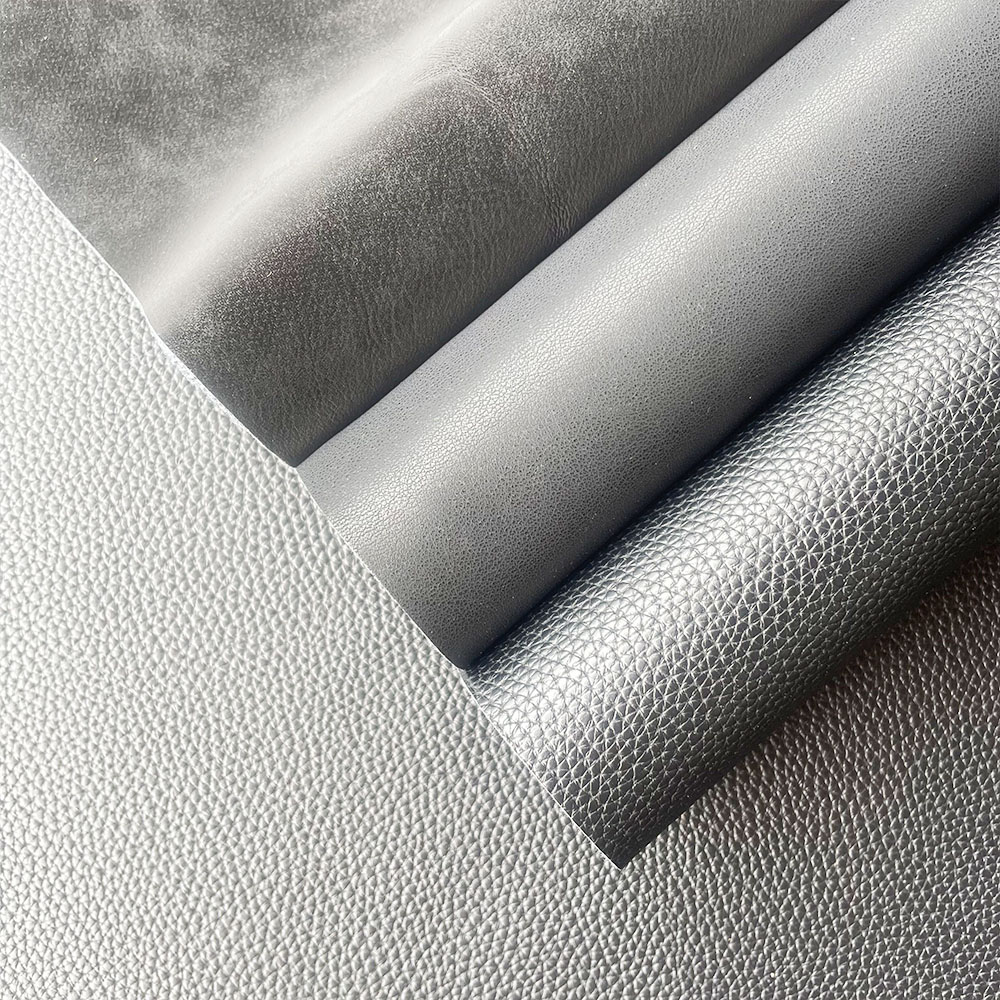
Two PVC leathers with the same thickness can feel different because their surface structures are different.
For example:
- Fine grain can create a relatively controlled surface.
- Large pebble grain can make the material feel visually more substantial.
- Deep embossed patterns can influence folding behavior.
- Glossy surfaces can show creases differently.
- Metallic finishes may require additional care during handling.
- Distressed surfaces may behave differently when stretched around corners.
A very deep grain on a thick material can produce a much more substantial appearance than a fine grain at the same thickness.
The complete visual and structural effect should therefore be approved on a physical sample.
How Thickness Affects Sewing
Bag manufacturing frequently involves several overlapping layers.
At seam intersections, the sewing machine may need to pass through:
- Outer PVC leather
- Folded seam allowance
- Lining
- Foam
- Reinforcement
- Binding
- Additional leather panels
A seemingly small increase in leather thickness can create a much larger increase in total seam thickness.
Manufacturers should therefore test:
- Needle size
- Thread
- Stitch length
- Presser-foot feeding
- Seam appearance
- Needle-hole strength
- Material feeding
A 1.2mm material may work well as one flat layer but become difficult when four folded layers meet at a corner.
This is why sample production is essential.
How Thickness Affects Folding and Corners
Bag leather often needs to fold around:
- Side seams
- Bottom corners
- Flaps
- Gussets
- Zipper openings
- Handle attachments
Thin material generally folds more easily.
Thicker material can create more substantial edges but may also produce bulky corners.
If the design requires tight folding, manufacturers may need to use:
- Skiving
- Relief cuts
- Different seam allowances
- Edge painting
- Additional forming techniques
The preferred thickness should therefore match the factory’s actual production method.
How Thickness Affects Skiving and Edge Painting
Structured handbags and wallets commonly use exposed painted edges.
The material needs to respond well to cutting and skiving.
Important checks include:
- Clean cut edge
- Coating stability
- Backing stability
- Skiving consistency
- Edge-paint adhesion
- Surface damage during processing
Thicker leather often requires more skiving before folding or edge construction.
If the backing becomes unstable after skiving, the finished edge may become uneven.
The sample should therefore be tested using the actual edge-finishing process.
Do Thicker Bags Last Longer?
Not necessarily.
Thickness is only one part of durability.
Bag performance can also depend on:
- Backing strength
- Coating adhesion
- Abrasion resistance
- Tear resistance
- Flexing performance
- Seam construction
- Reinforcement
- Hardware installation
- Edge finishing
A thick material can still fail if the coating separates or the backing tears around stitching holes.
Likewise, a relatively thin leather with a suitable backing and reinforcement can perform well in the correct application.
The correct question is therefore not:
“What is the thickest bag leather?”
but:
“What thickness and backing combination works for this bag structure?”
Test Thickness Using the Actual Bag Construction
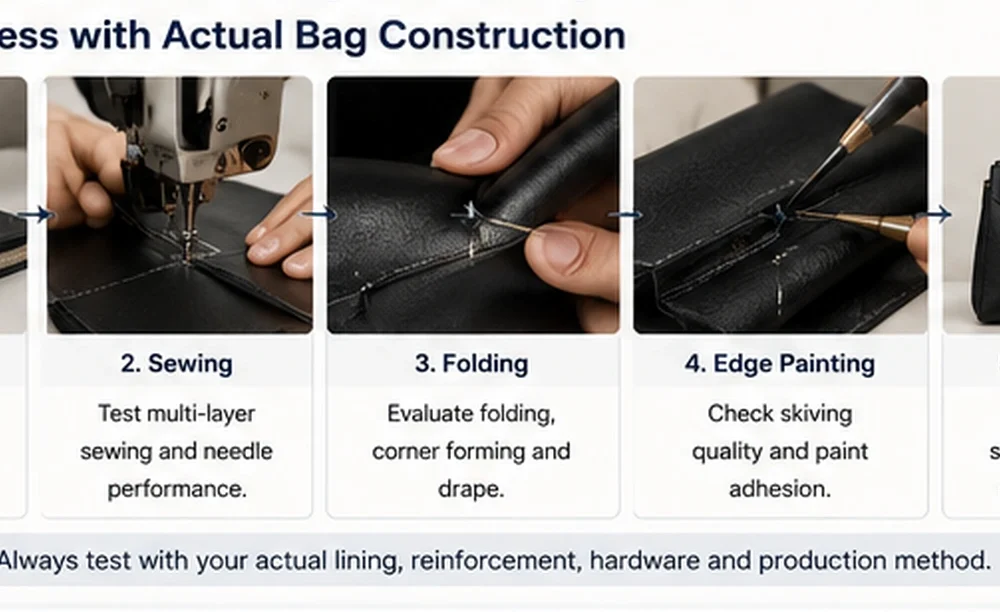
A small swatch is useful for checking surface grain and hand feel.
It is not enough for confirming the correct thickness.
Whenever possible, make a representative bag panel or complete trial bag.
Test:
- Cutting
- Sewing
- Folding
- Skiving
- Edge painting
- Bonding
- Zipper installation
- Hardware installation
- Corner forming
- Finished panel shape
Evaluate the leather together with the actual:
- Lining
- Foam
- Reinforcement
- Adhesive
- Thread
- Hardware
This provides a much more reliable result than bending a loose sample by hand.
Compare Bag Leather Samples Side by Side
When comparing thickness options, use a structured checklist.
| Item | What to Confirm |
|---|---|
| Bag Type | Handbag, backpack, wallet, briefcase or luggage |
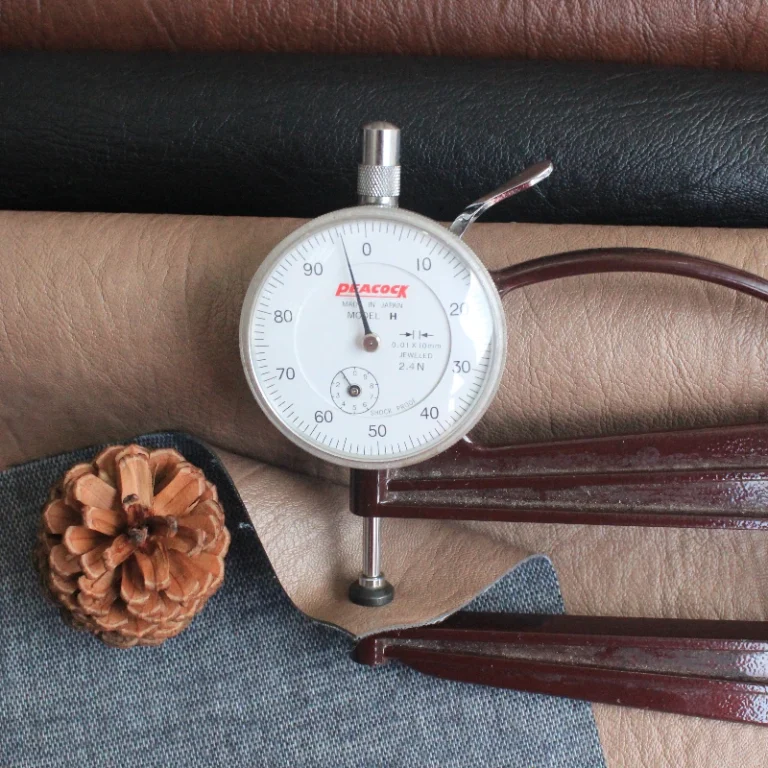
| Thickness | Nominal value and tolerance |
| Backing | Exact backing construction |
| Material Body | Soft, medium or structured |
| Flexibility | Suitable for the required folds and curves |
| Cutting | Panel dimensional stability |
| Sewing | Multi-layer seam performance |
| Folding | Corner and flap behavior |
| Skiving | Material stability after thinning |
| Edge Painting | Clean and stable finished edges |
| Reinforcement | Compatibility with internal structure |
| Weight | Suitable for finished product |
| Surface | Grain, color and finish |
| Performance | Required abrasion, tear or compliance tests |
| Width | Effective production width |
Do not approve the final material according to thickness alone.
The most useful comparison is:
bag type + thickness + backing + reinforcement + production method
Choosing PVC Leather Thickness for Your Bag Project
There is no universal best PVC leather thickness for bags.
The correct specification depends on the finished bag and how the material will be processed.
A practical selection process is:
Define the bag type → choose an approximate thickness range → compare backing constructions → evaluate material body → test sewing and folding → check edge finishing → produce a trial bag → approve the final specification.
For general bag material selection, read How to Choose Synthetic Leather for Bags.
For more information about the textile layer underneath PVC leather, see Common PVC Leather Backing Options.
Xiangze Leather supplies Bag Leather with different thicknesses, surface grains and backing constructions for handbags, totes, backpacks, wallets and luggage.
Buyers sourcing more decorative embossed, printed, glitter or animal-pattern materials can also explore the broader Bag & Luggage Leather range.
Tell us your bag type, required thickness, preferred backing, surface grain, color, reinforcement method and production requirements. We can recommend suitable constructions and provide samples for cutting, sewing and bag-production evaluation before bulk production.

About Xiangze Leather
Written by Xiangze Leather Editorial Team
Xiangze Leather supplies PVC synthetic leather for furniture upholstery, bags, footwear, automotive interiors, motorcycle seats and decorative applications. Material samples, specification options and quotation support are available according to project requirements.