PVC Sofa Leather Thickness, Backing and Durability Guide

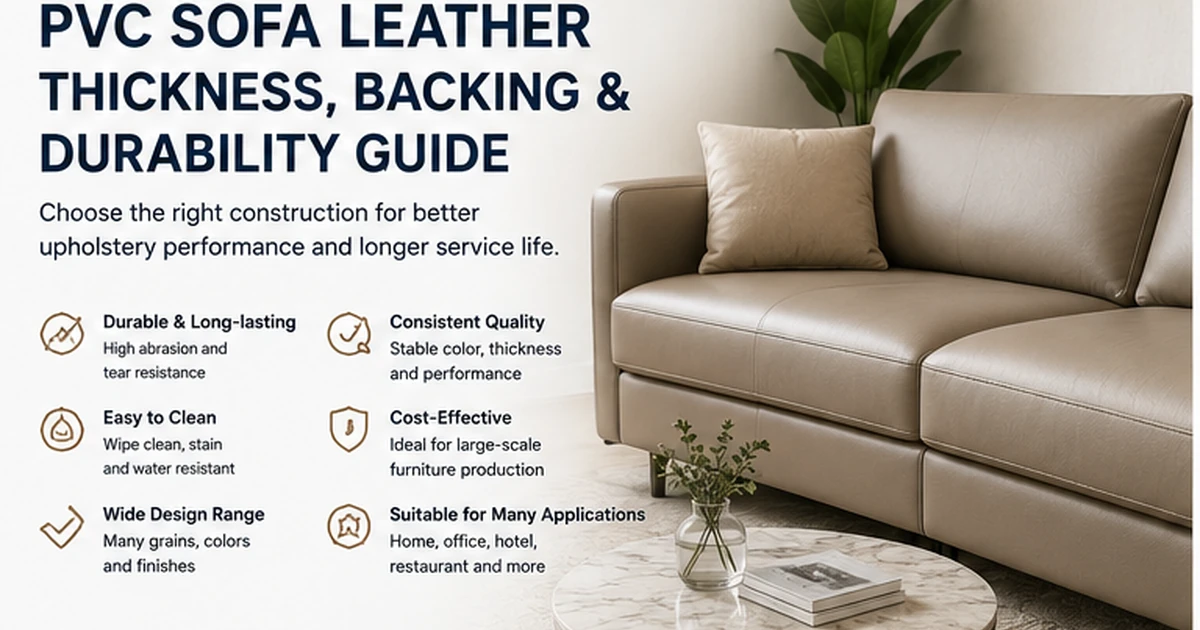
PVC sofa leather thickness, backing and durability should be evaluated together rather than as separate specifications.
Two PVC upholstery materials can have a similar surface grain and nominal thickness but behave differently during cutting, sewing, stretching and upholstery because their backing constructions and coating systems are different.
A thicker material is also not automatically more durable.
Durability depends on the complete construction, including the PVC surface, backing, coating adhesion, flexibility and the performance requirements of the finished sofa.
For furniture manufacturers and upholstery buyers, the objective is therefore not simply to select the thickest PVC leather available. The objective is to choose a material construction that matches the sofa shape, foam, production method and expected level of use.
Xiangze Leather supplies PVC Sofa Leather in different thicknesses, grains and backing constructions for residential and commercial upholstery.
This guide focuses specifically on how thickness and backing influence upholstery performance and how durability requirements should be evaluated before bulk production.
Why Thickness Alone Does Not Determine Sofa Leather Quality
Thickness is one of the first specifications buyers usually compare.
It affects:
- Material body
- Flexibility
- Hand feel
- Sewing
- Corner wrapping
- Finished appearance
- Material weight
However, thickness does not directly tell you:
- Abrasion resistance
- Tear strength
- Coating adhesion
- Flex resistance
- Cleaning resistance
- Color fastness
- Light resistance
- Flame performance
- Service life
A 1.2mm PVC leather with an unsuitable backing may be more difficult to upholster than a 0.9mm material with a construction designed for curved furniture.
Likewise, a 0.7mm material can still provide suitable upholstery performance when its backing, coating and finished furniture design work together correctly.
The most useful comparison is therefore:
Thickness + backing + softness + sofa structure + required durability
rather than thickness alone.
For a broader sofa-material selection process, see How to Choose PVC Leather for Sofa Upholstery.
Common PVC Sofa Leather Thickness Ranges
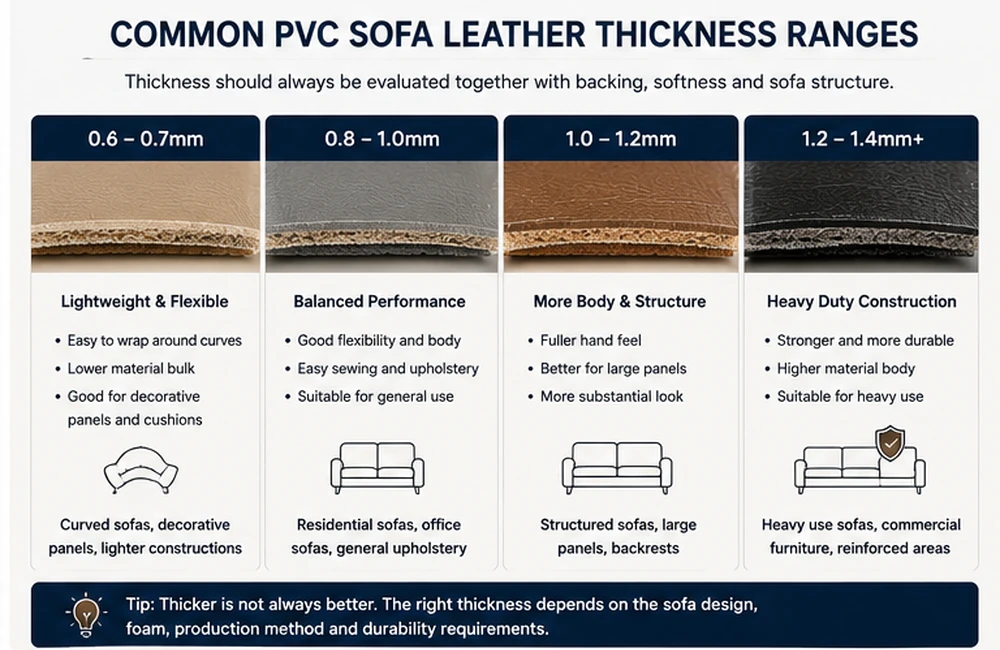
There is no universal standard thickness for every sofa.
Xiangze’s current sofa leather range includes relatively lightweight constructions around 0.6–0.7mm, medium constructions around 0.8–1.1mm, and more substantial materials around 1.2–1.4mm or above.
The correct thickness depends on the complete product.
| Thickness Range | General Character | Possible Upholstery Use |
|---|---|---|
| Around 0.6–0.7mm | Lightweight and flexible | Curved upholstery, decorative panels, lighter sofa constructions |
| Around 0.8–1.0mm | Balanced flexibility and body | General residential and commercial sofa upholstery |
| Around 1.0–1.2mm | More material body | Structured sofas, larger upholstery panels |
| Around 1.2–1.4mm+ | More substantial construction | Selected heavy or structured upholstery applications |
These ranges are only starting points.
Backing, foam, grain and softness can significantly change how materials in the same thickness range behave.
Around 0.6–0.7mm: Lightweight Sofa Leather
Relatively thin PVC sofa leather can offer good flexibility and lower material bulk.
It may be useful for:
- Curved sofa sections
- Decorative panels
- Cushioned furniture
- Smaller components
- Upholstery requiring easier wrapping
Thin material can be easier to pull around rounded foam and can reduce bulk where several layers meet at a seam.
However, lower thickness means backing support becomes particularly important.
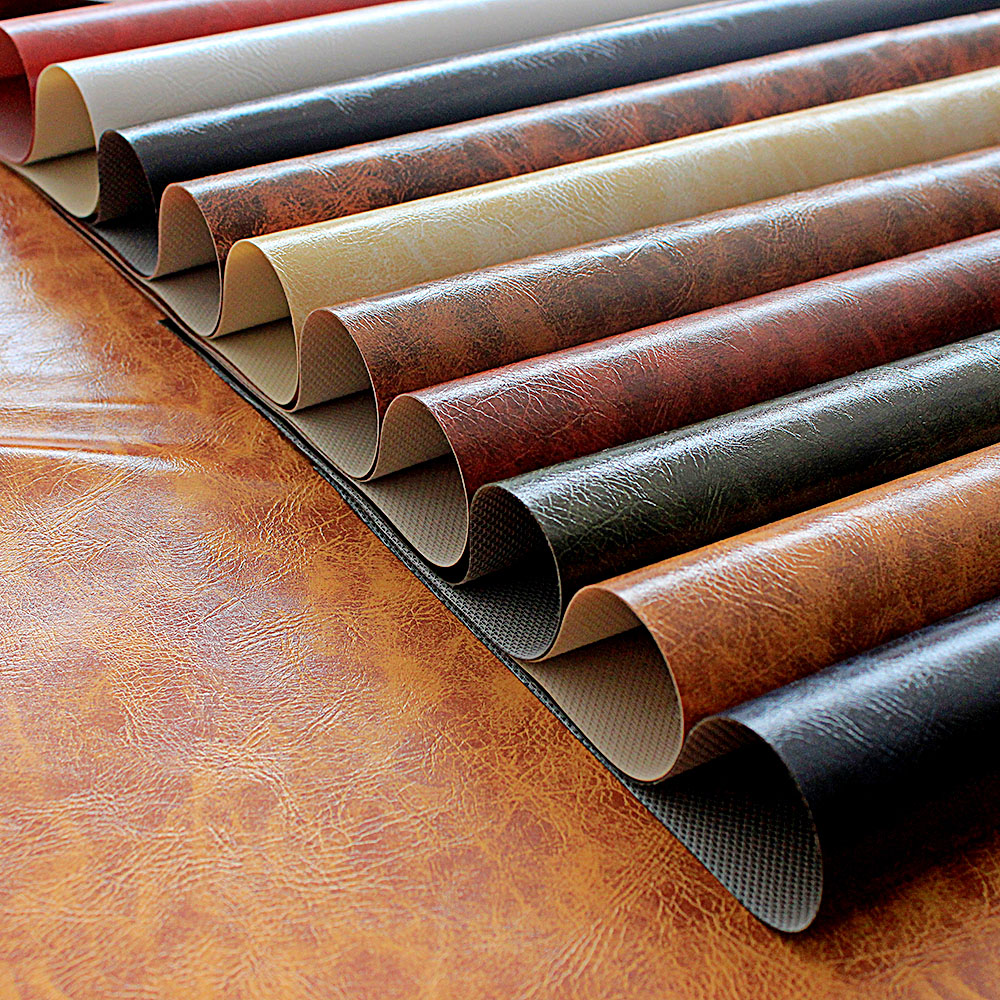
For example, XZ60060 0.6mm Distressed PVC Leather uses Terry Fabric Backing.
The 0.6mm specification should therefore not be evaluated separately from the textile structure underneath it.
A thin material with a suitable backing can perform well in its intended application, while a poorly matched construction may stretch or distort during upholstery.
Around 0.8–1.0mm: A Practical General Upholstery Range
Many general sofa projects can begin by comparing PVC leather around 0.8–1.0mm.
This range can provide a practical balance between:
- Material body
- Flexibility
- Sewing performance
- Upholstery handling
- Finished weight
It can work for:
- Residential sofas
- Office sofas
- Chairs
- Commercial seating
- Sofa cushions
- Backrests
Backing still makes a significant difference.
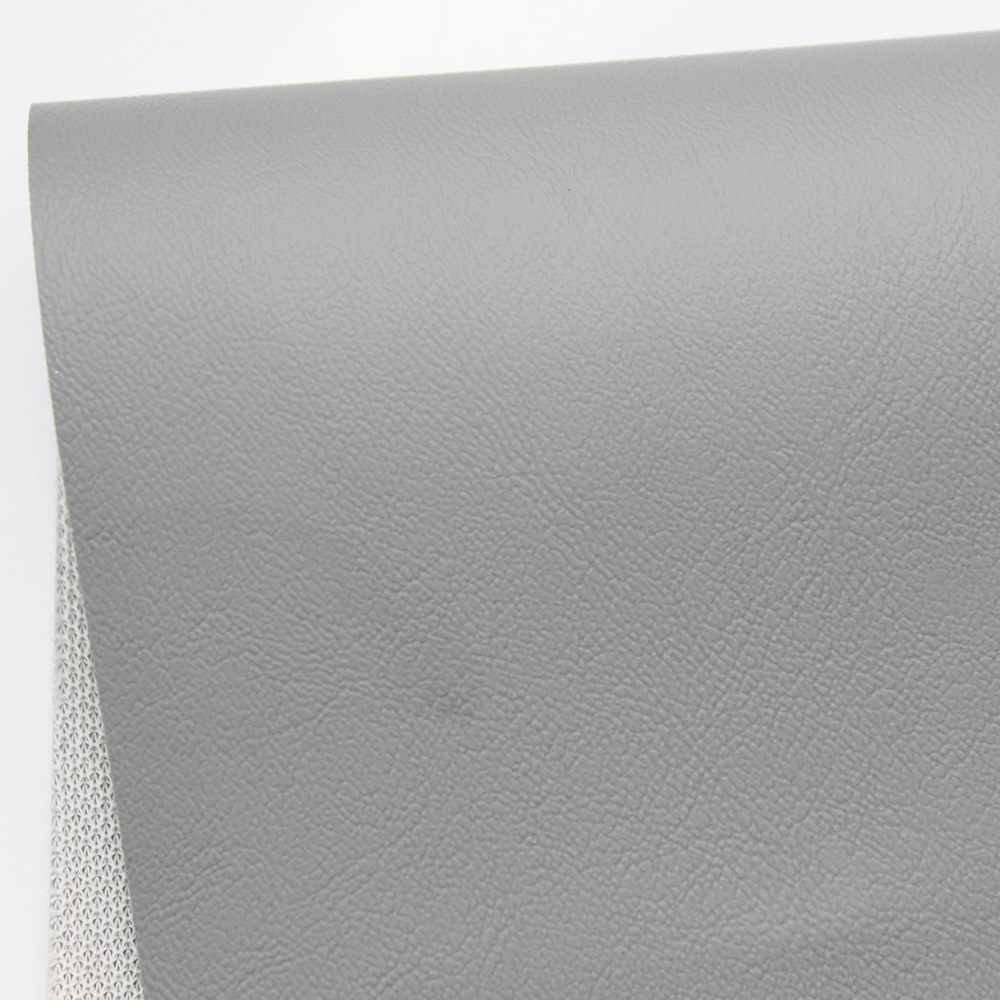
For example, XZ73420 0.9mm Fine Grain PVC Upholstery Leather uses a Pique Mesh Backing.
A 0.9mm mesh-backed construction will not necessarily behave like a 0.9mm terry- or brushed-backed material.
This is why physical upholstery testing is more reliable than selecting only from thickness data.
Around 1.0–1.2mm: More Body and Structure
PVC leather around 1.0–1.2mm generally provides more body.
It may be useful for:
- Structured residential sofas
- Office seating
- Large backrest panels
- Furniture requiring a fuller material feel
- Upholstery with more defined seams
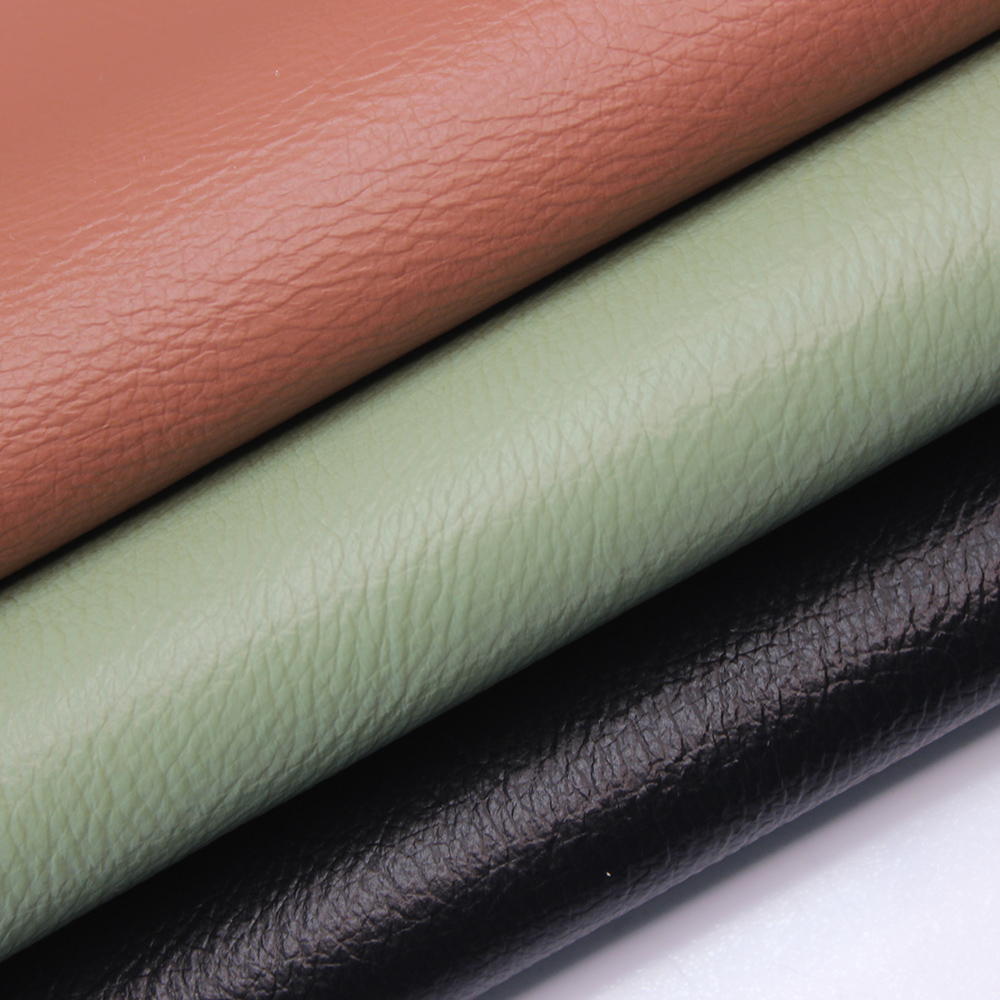
For example, XZ73456 1.1mm Natural Wrinkle Grain PVC Upholstery Leather uses Double-Needle Brushed Fabric Backing.
The backing adds another structural factor beyond the 1.1mm thickness.
A more substantial textile structure can provide additional support, but the complete material may also become less flexible than a lighter construction.
Manufacturers should therefore check:
- Tight corner wrapping
- Seam thickness
- Needle penetration
- Folding behavior
- Upholstery tension
The target should be sufficient body without creating unnecessary production difficulty.
Around 1.2–1.4mm and Heavier Constructions
Heavier PVC upholstery constructions can provide a more substantial hand feel and stronger visual body.
They can be considered for:
- Large sofa panels
- Structured furniture
- Selected commercial furniture
- Upholstery designs requiring more material substance
However, more thickness creates potential trade-offs.
These can include:
- Bulkier seams
- Greater folding resistance
- More difficult corner wrapping
- Increased material weight
- More demanding sewing
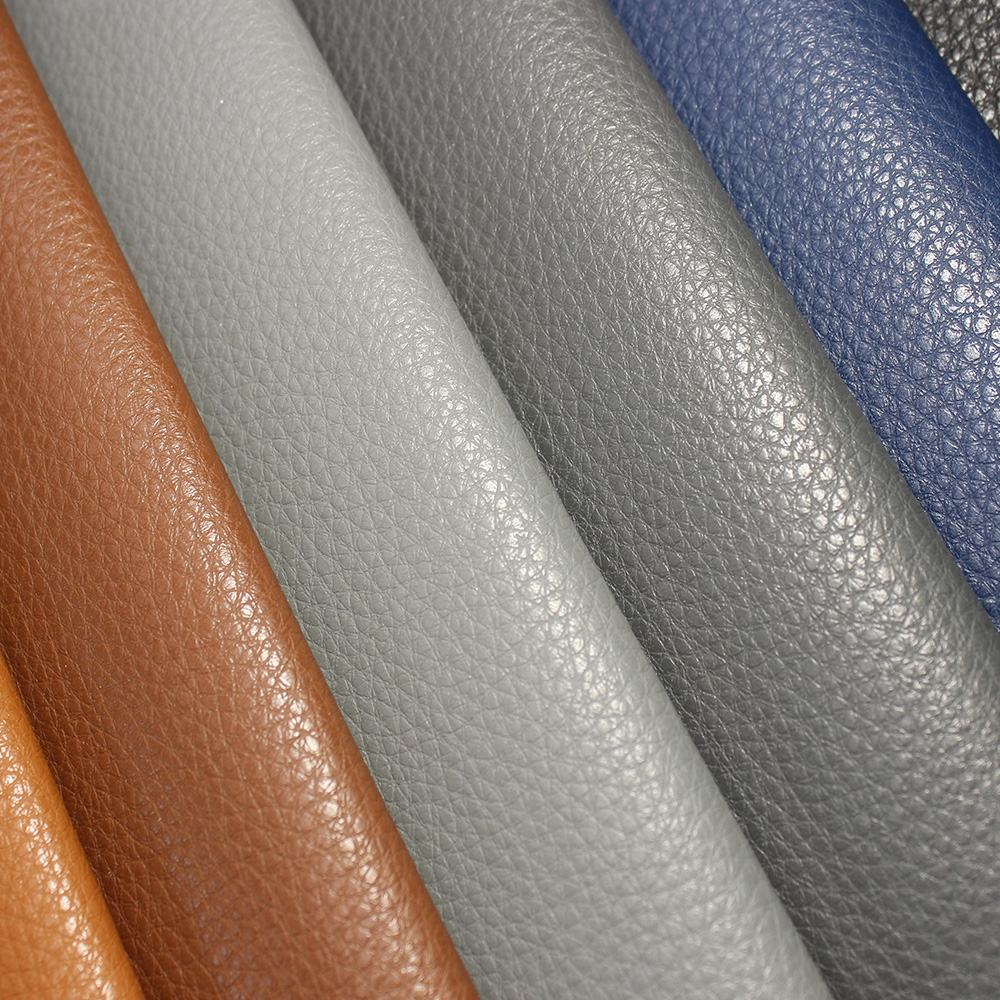
For example, XZ73320 1.4mm Eco Upholstery Leather uses Recycled Leather Fiber Backing.
This is structurally different from a conventional terry or mesh-backed sofa leather.
The more substantial backing contributes to the complete material body, meaning the product should be tested according to the actual sofa structure rather than treated simply as “1.4mm leather.”
Backing Can Change How the Same Thickness Performs
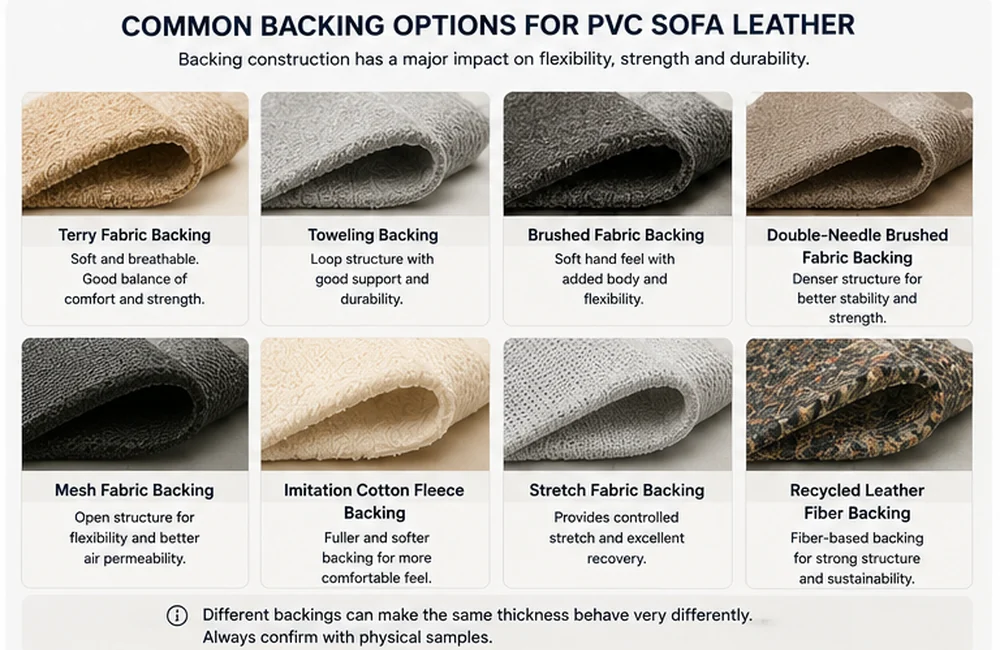
Backing is the supporting structure underneath the PVC surface.
It can affect:
- Stretch
- Recovery
- Tear behavior
- Dimensional stability
- Material body
- Sewing
- Stapling
- Wrapping
- Adhesive bonding
This explains why two sofa materials with the same nominal thickness can behave differently during production.
Xiangze’s sofa upholstery products currently use several backing types, including:
- Terry Fabric Backing
- Toweling Backing
- Brushed Fabric Backing
- Double-Needle Brushed Fabric Backing
- Mesh Fabric Backing
- Imitation Cotton Fleece Backing
- Stretch Fabric Backing
- Textured Fabric Backing
- Microfiber Backing
- Recycled Leather Fiber Backing
- Double-Sided constructions
For a complete explanation of these structures, see Common PVC Leather Backing Options.
Terry and Toweling Backing
Terry Fabric Backing and Toweling Backing are loop-textured textile constructions.
They can provide a balance between:
- Flexibility
- Material body
- Textile support
- Upholstery handling
These structures can work well for general sofa and furniture applications.
However, the commercial terms Terry and Toweling do not guarantee identical fabric weight or density.
Buyers should still confirm the individual product.
Important factors include:
- Backing density
- Stretch
- Total thickness
- Tear performance
- Sewing behavior
A relatively lightweight PVC surface with terry backing can behave very differently from a thicker material using the same general backing family.
Brushed Fabric Backing
Brushed Fabric Backing has a raised textile surface.
It can add:
- Soft reverse-side feel
- Material body
- Textile support
- Controlled flexibility
Brushed backing is commonly useful for sofa upholstery where buyers need a balance between softness and panel stability.
Different brushed constructions can still vary significantly.
Fabric weight and density should therefore be confirmed where technical performance is important.
Double-Needle Brushed Fabric Backing
Double-Needle Brushed Fabric Backing generally provides a denser textile structure than lighter brushed constructions.
It can contribute:
- Additional material body
- Controlled stretch
- Better panel support
- Stable handling during cutting and sewing
This can make it suitable for sofa materials where manufacturers want a more substantial construction without relying on surface thickness alone.
However, denser backing also affects total material bulk.
Multi-layer seams and tight upholstery corners should be tested before production.
Mesh Fabric Backing
Mesh Fabric Backing uses an open textile structure.
Depending on density, it can provide:
- Flexibility
- Lower backing weight
- Surface support
- Controlled conformity around upholstery shapes
Mesh is useful for selected sofa constructions where flexibility is important.
However, not all mesh structures are equivalent.
A lightweight mesh and a dense reinforced mesh may have very different:
- Stretch
- Tear strength
- Sewing performance
- Recovery
The actual product specification should therefore be confirmed.
Imitation Cotton Fleece Backing
Imitation Cotton Fleece Backing provides a softer and fuller textile structure.
It can add:
- Material body
- Soft reverse-side feel
- Additional thickness
- Fuller hand feel
This can be useful for furniture where the manufacturer wants a softer overall construction.
However, extra backing thickness can influence:
- Seam bulk
- Folding
- Stapling
- Corner wrapping
Manufacturers should evaluate the complete material rather than assuming a fuller backing automatically provides better durability.
Stretch Fabric Backing
Stretch Fabric Backing is useful where sofa leather needs to conform around curved or deeply cushioned sections.
The important characteristic is not simply how far the material stretches.
Recovery is equally important.
Too little stretch can cause:
- Difficult wrapping
- Excessive tension
- Wrinkles
- Poor conformity
Too much stretch can cause:
- Panel distortion
- Grain deformation
- Uneven seams
- Loss of shape
The correct backing provides controlled stretch with sufficient recovery.
Microfiber and Recycled Leather Fiber Backing
Microfiber and Recycled Leather Fiber Backing are more specialized structures.
Microfiber Backing can provide a dense fine-fiber support layer with different flexibility and hand-feel characteristics from conventional textile backings.
Recycled Leather Fiber Backing generally creates a more substantial fiber-based structure.
Neither should automatically be described as superior.
Their suitability depends on:
- Sofa shape
- Required flexibility
- Finished thickness
- Sewing method
- Desired material body
The actual construction should be compared using physical samples.
How Thickness and Backing Affect Upholstery Durability
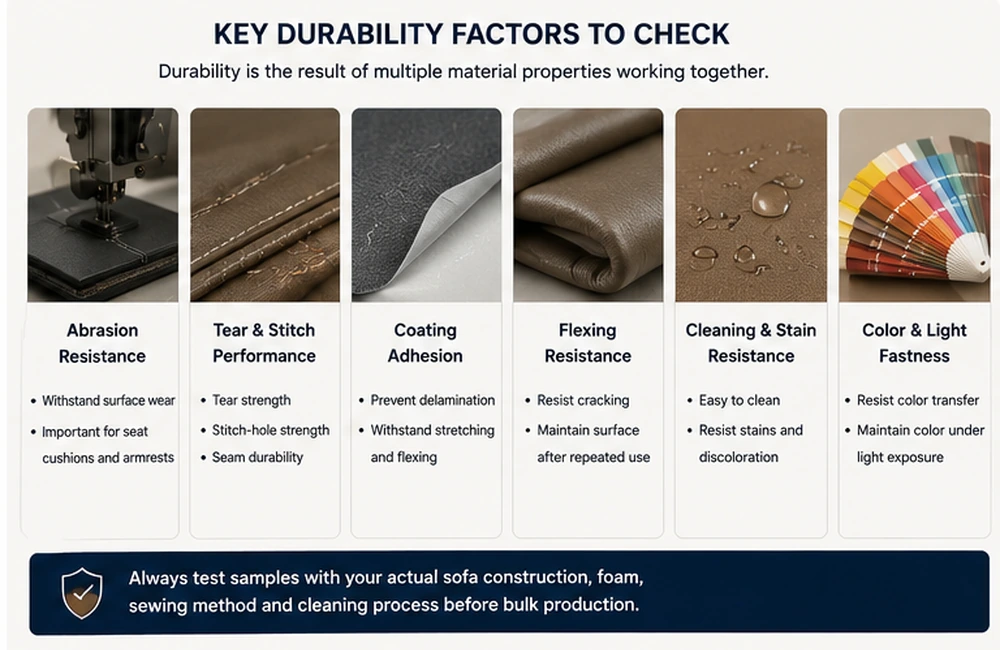
Durability is the result of several interacting material properties.
Thickness and backing influence durability indirectly by affecting how the material handles stress.
For example, upholstery leather may fail because of:
- Excessive stretch
- Tear around seams
- Coating separation
- Repeated flexing
- Abrasion
- Surface cracking
The correct thickness and backing can help support the material, but they do not replace durability testing.
A thicker material with poor coating adhesion can still peel.
A strong backing with insufficient stitch-hole performance can still fail around seams.
A flexible surface that cannot resist repeated abrasion may still wear prematurely.
This is why durability should be evaluated according to specific tests rather than visual inspection alone.
Abrasion Resistance
Abrasion resistance is particularly important on high-contact sofa areas.
These include:
- Seat cushions
- Front seat edges
- Armrests
- Backrests
- Commercial seating surfaces
Different applications can require different abrasion levels.
A decorative residential sofa does not necessarily need the same performance specification as a hotel lounge or restaurant booth.
Manufacturers should define the required abrasion test and target value according to the project.
Thickness should not be used as a substitute for abrasion data.
Tear and Stitch-Hole Performance
Backing contributes significantly to tear and seam behavior.
Stress can concentrate around:
- Needle holes
- Seams
- Stapled edges
- Tight upholstery corners
A material may feel difficult to tear by hand but still fail around closely spaced stitching holes.
Testing should therefore use the actual:
- Needle
- Thread
- Stitch spacing
- Sewing machine
- Number of material layers
planned for production.
This is more useful than comparing backing strength by hand.
Coating Adhesion
The PVC surface and backing need to remain bonded during processing and use.
Poor coating adhesion can result in:
- Peeling
- Bubbling
- Delamination
- Surface separation
These problems can become more visible after:
- Stretching
- Folding
- Sewing
- Repeated sitting
- Heat exposure
Coating adhesion should therefore be part of durability evaluation.
For buyers who want a broader explanation of PVC coated material construction, see What Is PVC Synthetic Leather?.
Flexing and Repeated Movement
Sofas are not static products.
Seat cushions compress, backrests move and recliners repeatedly bend during use.
Flexible areas should therefore be checked for repeated flexing.
Potential problems include:
- Surface cracking
- Permanent creasing
- Grain deformation
- Coating separation
- Loss of recovery
Recliners and sofa beds require particular attention because mechanical movement creates more repeated bending than many conventional sofa designs.
Cleaning and Stain Resistance
Durability also includes the ability to maintain the surface during routine cleaning.
Residential and commercial sofas can be exposed to:
- Drinks
- Food
- Oil
- Sweat
- Clothing dye
- Household cleaners
Restaurant and hotel furniture may be cleaned more frequently than residential sofas.
The selected surface should therefore be tested with the actual cleaning process where required.
Strong solvents and aggressive chemicals should not be assumed safe for every PVC formulation.
A material that performs well under abrasion testing may still respond poorly to an incompatible cleaner.
Color Fastness
Dry and wet rubbing can affect upholstery appearance.
Color-fastness testing may be particularly relevant for:
- Dark upholstery
- Light-colored clothing contact
- Hotel furniture
- Commercial seating
- Frequently used sofas
Light-colored sofa leather can also need testing for possible dye transfer from denim or other dark clothing.
Color performance should therefore be defined separately from material thickness.
Light and Heat Aging
Sofas positioned near windows can receive substantial sunlight and heat.
Depending on the project, buyers may need requirements for:
- Light fastness
- UV exposure
- Heat aging
- Color stability
- Surface hardening
Standard indoor PVC sofa leather should not automatically be treated as outdoor upholstery.
Outdoor furniture requires a separate material formulation and weathering specification.
Cold Resistance
Low-temperature performance can matter when sofas are:
- Exported to cold regions
- Transported during winter
- Stored in unheated warehouses
A material that performs well at room temperature may behave differently under cold conditions.
If cold cracking is a project concern, the appropriate test should be specified before production.
Flame and Chemical Requirements
Commercial furniture projects may require additional standards.
Depending on the customer and destination market, requirements can include:
- Flame performance
- REACH
- RoHS
- Phthalates
- Heavy metals
- PAHs
- APEO
- Formaldehyde
- Odor
- Other customer-specific restrictions
These specifications are independent of thickness.
A 1.4mm PVC leather does not automatically meet a flame or chemical standard because it is thicker.
The required standard and test method should always be confirmed.
Match Durability to the Sofa Application
Different sofas require different priorities.
Residential Sofas
Typical priorities include:
- Comfortable hand feel
- Flexibility
- Attractive grain
- Practical abrasion performance
- Easy cleaning
Extreme commercial specifications may not be necessary unless requested by the customer.
Office Sofas
Office furniture may require:
- Stable appearance
- Repeated-use durability
- Easy cleaning
- Good dimensional stability
- Abrasion resistance
Hotel Furniture
Hotel upholstery may require:
- Higher repeated-use performance
- Strong seam construction
- Cleaning resistance
- Color stability
- Project-specific compliance
Restaurant Booths
Restaurant furniture can place greater emphasis on:
- Abrasion
- Stain resistance
- Cleaning resistance
- Coating stability
- Repeated daily use
Recliners and Sofa Beds
Moving furniture should place more emphasis on:
- Flexibility
- Recovery
- Coating adhesion
- Repeated flexing
- Seam stability
The correct material specification should therefore begin with the sofa application.
Test Thickness and Backing on the Actual Sofa
A small swatch is useful for checking:
- Color
- Grain
- Basic hand feel
But it is not enough to confirm upholstery performance.
Whenever possible, test a larger sample with the actual factory process.
A useful trial includes:
- Cut the intended upholstery panel.
- Sew it with the production needle and thread.
- Install it over the actual foam or representative cushion.
- Stretch it around curves and corners.
- Staple or attach it using the production method.
- Inspect seams and high-tension areas.
- Check the surface for whitening or grain distortion.
- Leave the sample under tension and check recovery.
- Perform the required durability tests.
This process often reveals differences that are impossible to see when materials are lying flat on a table.
Compare Sofa Leather Samples Side by Side
A structured comparison makes material selection easier.
| Item | What to Confirm |
|---|---|
| Application | Residential, office, hotel, restaurant or recliner |
| Thickness | Nominal value and tolerance |
| Backing | Exact backing construction |
| Material Body | Soft, medium or structured |
| Flexibility | Ability to wrap around sofa shapes |
| Stretch | Direction and amount |
| Recovery | Shape after stretching |
| Sewing | Needle-hole and seam behavior |
| Stapling | Edge stability |
| Wrapping | Performance around foam and corners |
| Abrasion | Required project level |
| Tear | Required seam and material performance |
| Coating Adhesion | Stability during flexing |
| Cleaning | Compatibility with intended cleaners |
| Color Fastness | Required rubbing performance |
| Aging | Light, heat or cold requirements |
| Compliance | Required market or customer standards |
| Width | Effective production width |
Do not approve a sofa leather because it has the highest thickness value.
The better comparison is:
sofa application + thickness + backing + flexibility + durability requirements
Recommended products
-
XZ73456 1.1mm Natural Wrinkle Grain PVC Leather for Sofa Upholstery
-
XZ73420 0.9mm Fine Grain PVC Leather for Sofa Upholstery with Pique Mesh Backing
-
XZ60060 0.6mm Distressed PVC Leather for Sofa Upholstery with Terry Backing
-
XZ73320 1.4mm Litchi Grain PVC Leather with Recycled Leather Fiber Backing for Sofa Upholstery
Choosing PVC Sofa Leather Thickness, Backing and Durability
There is no universal best PVC sofa leather thickness or backing.
The correct construction depends on how the finished sofa will be manufactured and used.
A practical selection process is:
Define the sofa application → select an approximate thickness → compare backing constructions → evaluate softness and flexibility → define durability requirements → test sewing and upholstery → complete performance testing → approve the physical sample.
For a complete general selection guide, read How to Choose PVC Leather for Sofa Upholstery.
For more detail on backing structures, see Common PVC Leather Backing Options.
Xiangze Leather supplies Sofa Leather with different thicknesses, grains and backing constructions for residential and commercial upholstery.
Buyers sourcing materials for chairs, benches and other furniture can also explore the broader Sofa & Upholstery Leather range.
Tell us your sofa application, required thickness, preferred backing, grain, color and durability requirements. We can recommend suitable materials and provide samples for cutting, sewing and upholstery evaluation before bulk production.

About Xiangze Leather
Written by Xiangze Leather Editorial Team
Xiangze Leather supplies PVC synthetic leather for furniture upholstery, bags, footwear, automotive interiors, motorcycle seats and decorative applications. Material samples, specification options and quotation support are available according to project requirements.