PVC Leather Specification Checklist for B2B Buyers

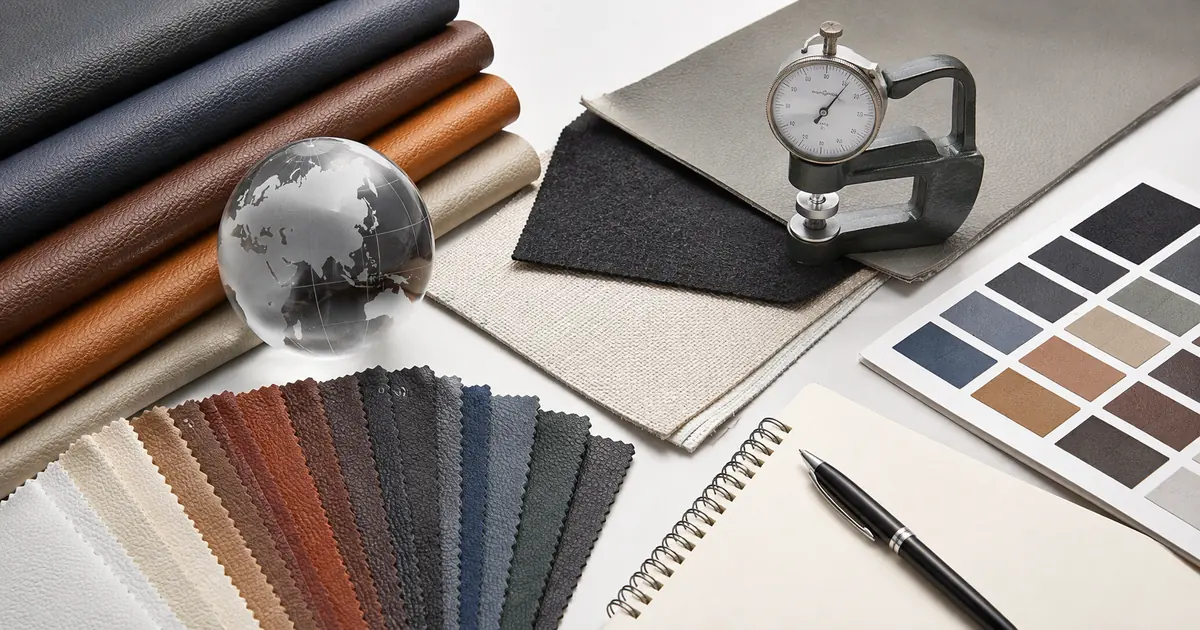
A clear PVC leather specification helps buyers, suppliers and factories work from the same material standard.
Terms such as “black PVC leather,” “1.0mm sofa leather,” or “PVC leather for bags” are usually not detailed enough for bulk production.
Two materials can have the same color and nominal thickness but differ in backing, flexibility, grain, gloss, stretch, coating performance and processing behavior.
For B2B buyers, a useful specification should answer five basic questions:
- What is the material used for?
- What is the exact material construction?
- What should the surface look like?
- What performance must the material achieve?
- What physical sample and tolerances define an acceptable bulk order?
Xiangze Leather supplies PVC Leather Materials for automotive interiors, furniture, bags, footwear, packaging and other manufacturing applications.
This checklist can be used when comparing samples, preparing a purchase specification or confirming a material before bulk production.
Define the Application and Exact Component
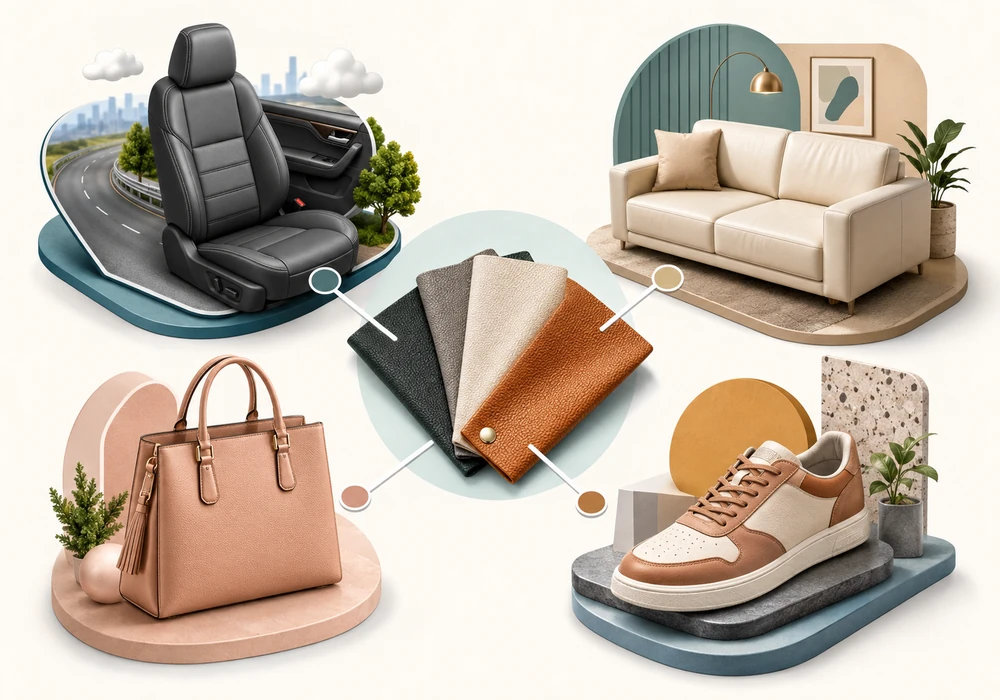
The specification should begin with the finished application.
Writing only:
Application: Furniture
or:
Application: Bags
may still be too broad.
Whenever possible, identify the exact product or component.
Examples include:
| Industry | More Precise Application |
|---|---|
| Automotive | Seat cushion, backrest, headrest, door panel |
| Motorcycle | Rider seat, passenger section, saddle cover |
| Furniture | Sofa seat, chair backrest, headboard, commercial bench |
| Bags | Handbag body, gusset, bottom panel, wallet, strap |
| Footwear | Shoe upper, boot upper, sandal strap |
| Packaging | Jewelry box, watch box, notebook cover |
| Table Cover | Household or commercial table covering |
This matters because different components may need different levels of flexibility, body and mechanical performance.
For example, a car seat bolster and an automotive door panel do not necessarily require the same material behavior even though both are automotive applications.
Buyers can compare application-specific materials through Auto & Motorcycle Leather, Sofa & Upholstery Leather, Bag & Luggage Leather, Footwear & Garment Leather and Decorative Leather.
Confirm Thickness, Width and Backing
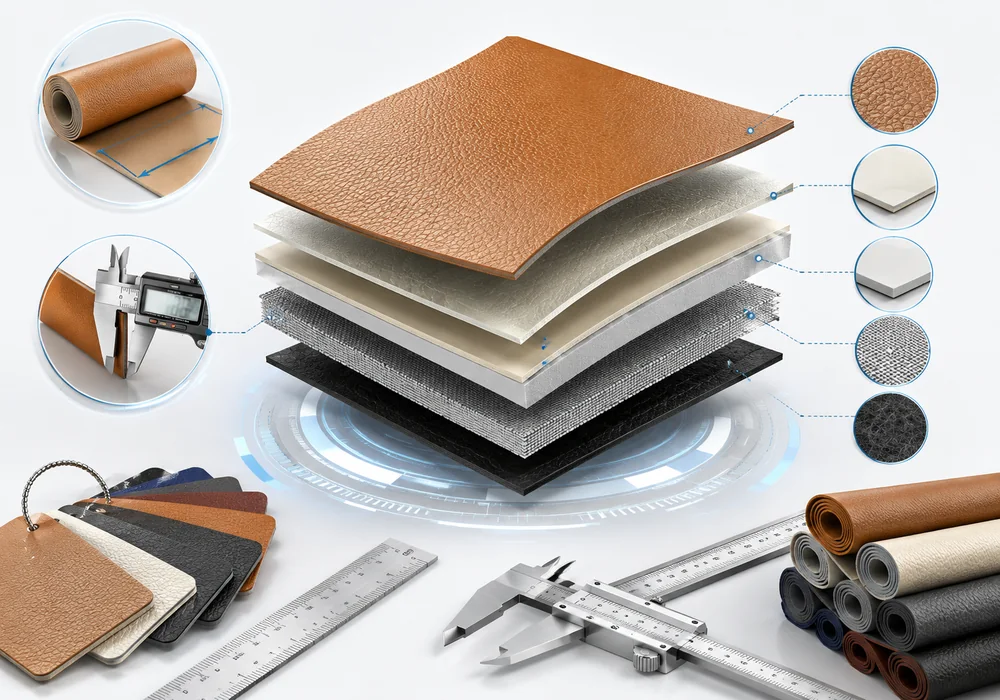
These are some of the most important structural specifications in a PVC leather order.
Thickness
Record:
- Nominal thickness
- Required tolerance where applicable
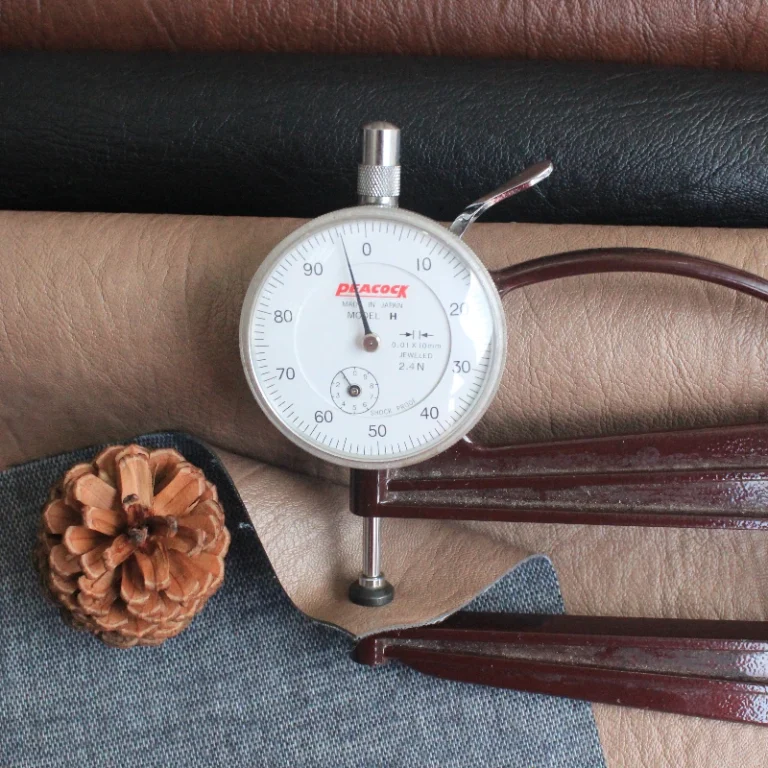
- Whether thickness refers to the complete material construction
For example:
Thickness: 1.0mm
is more useful when accompanied by:
Thickness tolerance: according to approved specification
or a customer-defined tolerance where one exists.
Do not assume that thicker material is automatically stronger.
Thickness mainly influences characteristics such as:
- Material body
- Flexibility
- Folding
- Sewing
- Wrapping
- Finished weight
Actual durability depends on other parts of the construction as well.
Width
Confirm the effective usable roll width for the selected material.
Width can affect:
- Cutting layouts
- Material utilization
- Number of seams
- Production efficiency
- Cost per finished product
This is particularly important for large sofa panels, automotive seat patterns and table-cover production.
Do not assume that every PVC leather product is supplied at exactly the same width.
Backing Construction
The backing should be recorded by its actual construction rather than simply as:
Fabric backing
Xiangze Leather currently works with backing types including:
- Brushed Fabric Backing
- Double-Needle Brushed Fabric Backing
- Single-Needle Brushed Fabric Backing
- Terry Fabric Backing
- Toweling Backing
- Knitted Fabric Backing
- Mesh Fabric Backing
- Stretch Fabric Backing
- Four-Way Stretch Fabric Backing
- Oxford Fabric Backing
- Denim Fabric Backing
- Microfiber Backing
- Spunlace Nonwoven Backing
- Imitation Cotton Fleece Backing
- Recycled Leather Fiber Backing
- Foam Backing
- Other application-specific constructions
Backing can affect stretch, recovery, dimensional stability, stitching and bonding.
For a full explanation, see Common PVC Leather Backing Options.
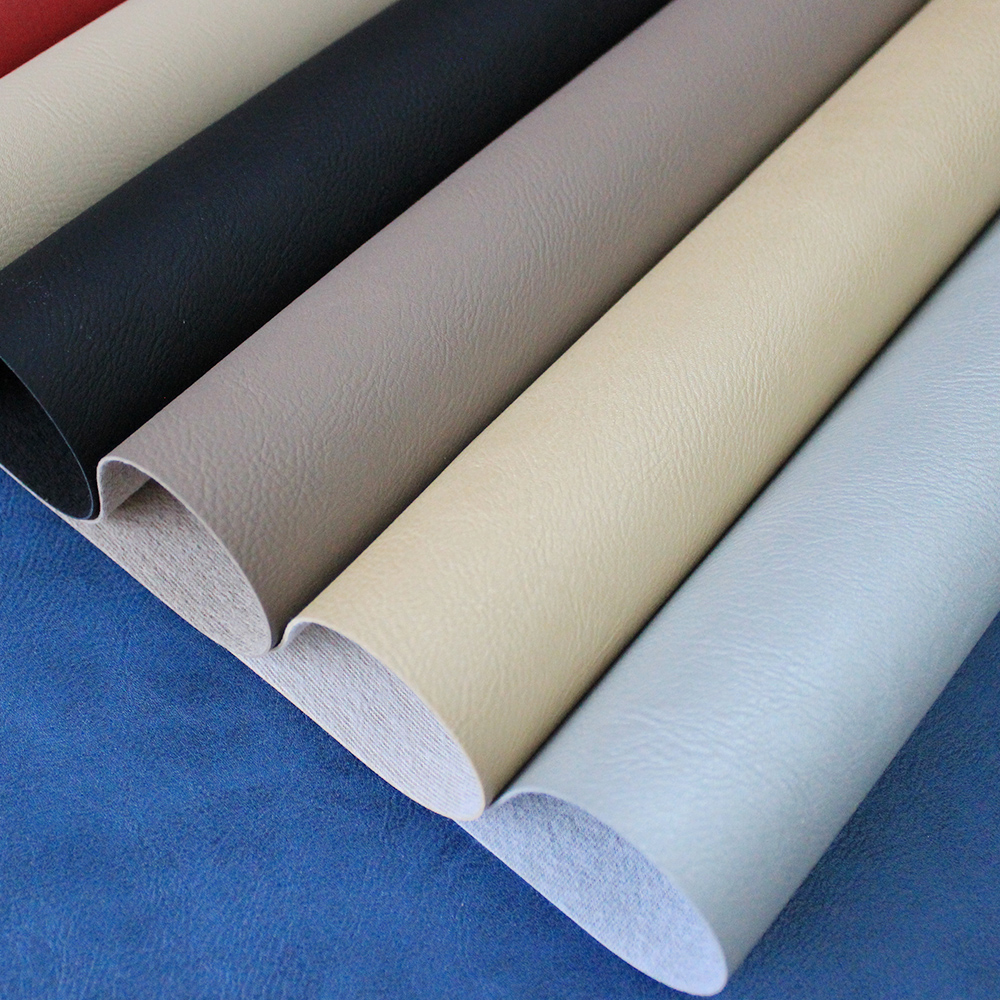
Record Grain, Color and Surface Characteristics
Appearance specifications should be written clearly enough that both buyer and supplier know what is being approved.
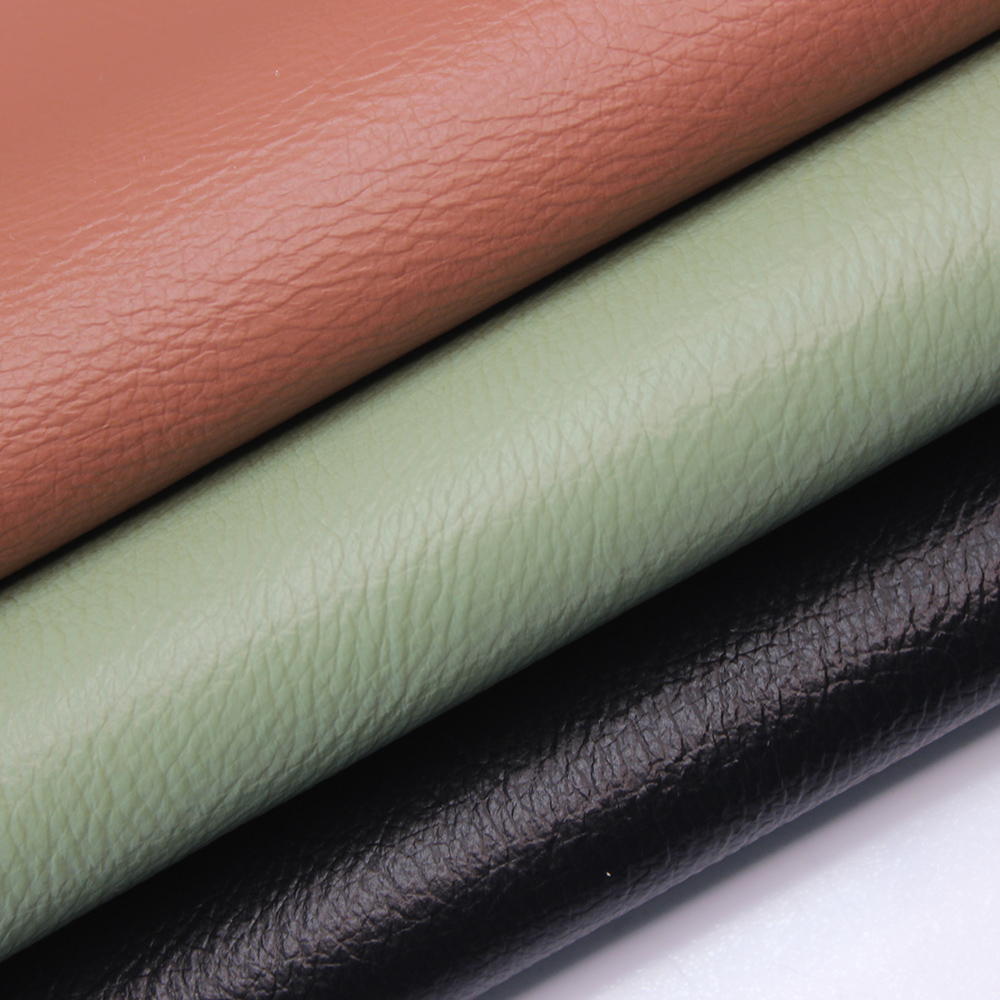
Surface Grain
Record the exact grain or pattern where known.
Examples include:
- Fine grain
- Pebble grain
- Litchi grain
- Natural wrinkle grain
- Woven texture
- Crocodile pattern
- Geometric embossing
- Smooth surface
- Printed design
If a supplier product has already been approved, use its product code rather than relying only on the descriptive grain name.
For example:
Product: XZ73456
is a more precise reference than:
Natural wrinkle leather
because many products can use visually similar grain descriptions.
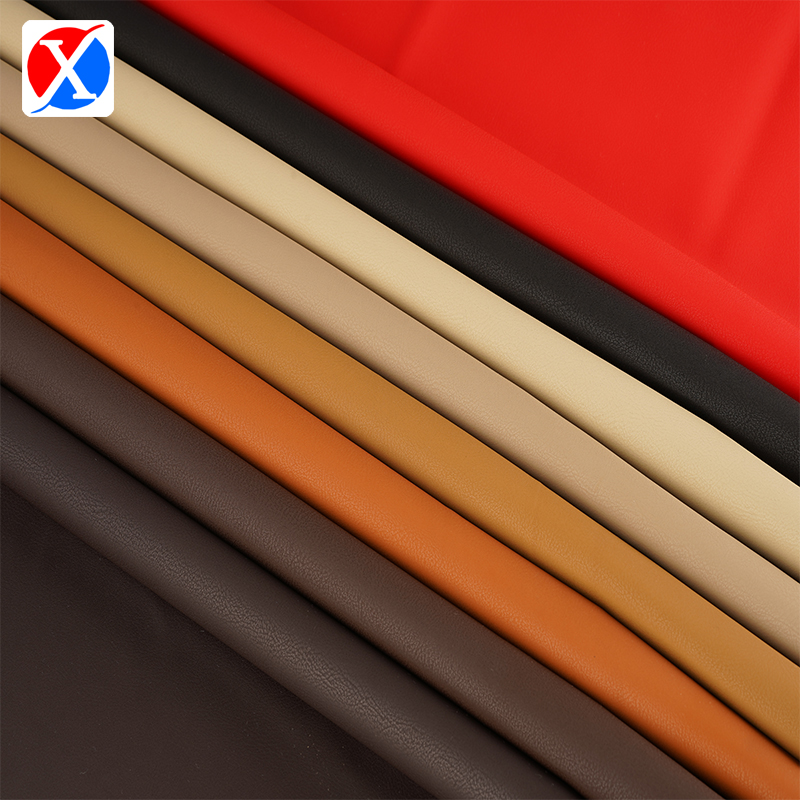
Color
The specification should identify the agreed color reference.
Possible references include:
- Supplier standard color
- Approved physical leather sample
- Customer color swatch
- Other physical reference
A Pantone reference may help during initial communication, but a physical sample is preferable when exact appearance matters.
Record something such as:
Color: Dark Brown — approved physical sample dated XX/XX
rather than only:
Color: Brown
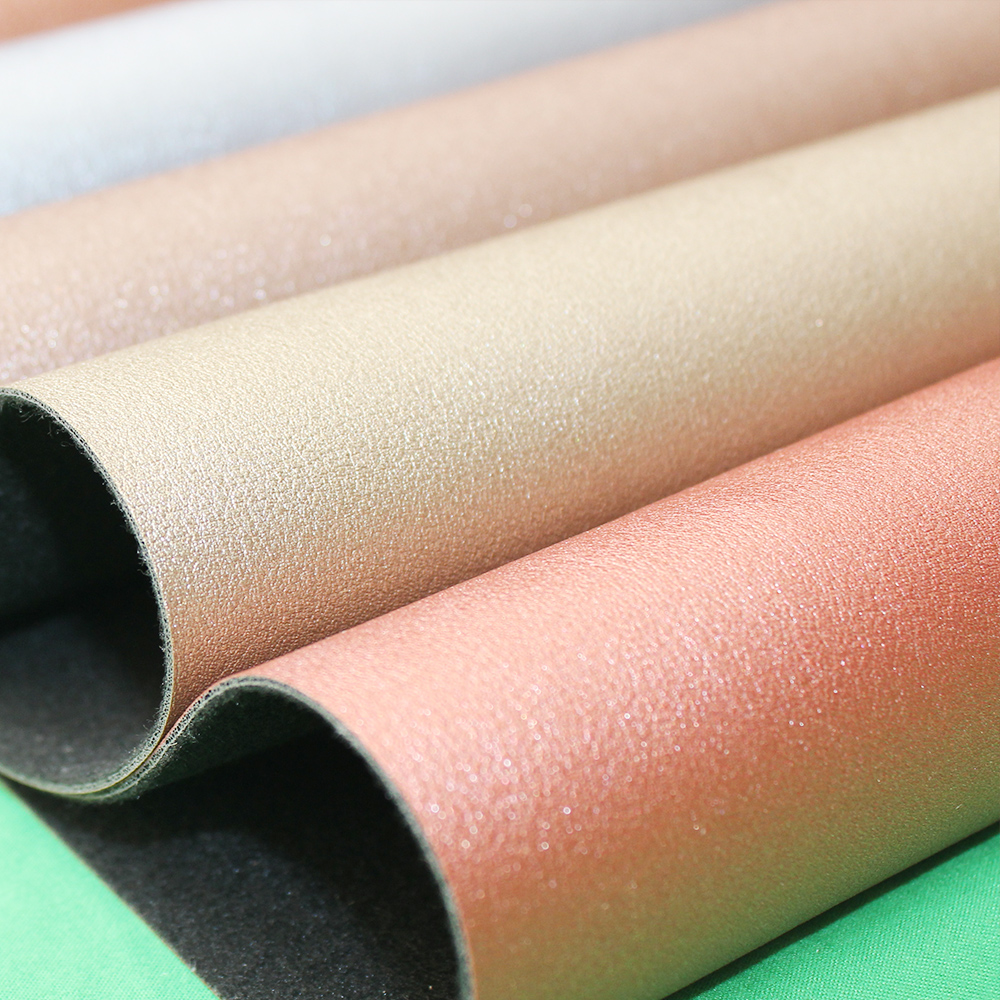
Surface Finish
Surface Finish describes the final appearance of the surface.
Examples include:
- Matte
- Semi-matte
- Low gloss
- Semi-gloss
- High gloss
- Metallic
- Pearlescent
- Distressed
- Two-tone
Surface Process
Surface Process should be recorded separately when it is relevant.
Examples can include:
- Embossed
- Printed
- Perforated
- Quilted
- Other special processing
This distinction is useful because Surface Finish describes how the finished surface looks, while Surface Process describes how the decorative or functional effect is produced.
For more background on PVC material construction, see What Is PVC Synthetic Leather?.
Define Hand Feel, Flexibility and Stretch
Specifications such as thickness and backing do not completely describe how a material feels or behaves.
Depending on the product, the buyer may also need to confirm:
- Softness
- Firmness
- Flexibility
- Material body
- Stretch direction
- Stretch amount
- Recovery
Hand Feel
Useful descriptions can include:
- Soft
- Medium-soft
- Medium
- Firm
However, these descriptions are subjective.
For important projects, the approved physical sample should become the final reference for hand feel.
Stretch
Stretch can be especially important for:
- Car seats
- Motorcycle seats
- Rounded sofas
- Shoe uppers
- Other curved products
Record whether the material needs:
- Low stretch
- Controlled stretch
- High flexibility
- Multi-directional stretch
Where stretch is technically important, define an actual test method or approved sample behavior rather than relying only on a descriptive term.
Recovery
A material should not only stretch.
It may also need to recover sufficiently after stretching.
Poor recovery can cause:
- Loose seat covers
- Wrinkles
- Distorted panels
- Grain deformation
- Loss of shape
Automotive buyers can compare different constructions in Car Seat Leather and Motorcycle Seat Leather.
Define Required Performance Tests
One of the most common B2B purchasing mistakes is using vague descriptions such as:
High abrasion
Good UV resistance
Flame retardant
These terms do not define a measurable specification.
If performance is important, the purchase requirement should identify the actual test standard and acceptance level.
Depending on the application, requirements may include:
- Abrasion resistance
- Tensile strength
- Tear strength
- Stitch-hole strength
- Coating adhesion
- Flex resistance
- Color fastness
- Cleaning resistance
- Light fastness
- UV resistance
- Heat aging
- Cold resistance
- Hydrolysis resistance where relevant
- Flame performance
- Odor
- Fogging for applicable automotive projects
Not every material needs every test.
The correct list depends on the finished product.
Automotive
Automotive projects may place greater emphasis on:
- Abrasion
- Light aging
- Heat aging
- Cold performance
- Odor
- Fogging
- Flame requirements
- Customer-specific standards
Furniture
Furniture projects may need:
- Abrasion
- Coating adhesion
- Color fastness
- Cleaning resistance
- Flame performance where specified
Bags
Bag manufacturers may prioritize:
- Tear strength
- Stitch-hole performance
- Abrasion
- Flexing
- Coating adhesion
Footwear
Footwear projects may require:
- Flex resistance
- Tear
- Stitching performance
- Bonding
- Color fastness
- Application-specific aging tests
Packaging
Packaging materials may focus more on:
- Folding
- Bonding
- Surface appearance
- Color consistency
- Processing performance
The test method should match the application rather than copying specifications from another industry.
Confirm Compliance and Destination-Market Requirements
Performance testing and chemical compliance should not be confused.
A material can have good physical durability but still require separate chemical documentation.
Depending on the customer and destination market, requirements may include:
- REACH
- RoHS
- Phthalate limits
- Heavy-metal limits
- PAHs
- APEO restrictions
- Formaldehyde requirements
- Customer restricted-substance lists
- Low-odor requirements
Write the exact requirement in the specification when it applies.
Avoid vague statements such as:
Eco-friendly leather required
unless the buyer also defines what that means.
A better specification would identify the required standard, substance restriction or customer protocol.
The destination market should also be recorded where it affects testing or compliance.
Confirm Processing and Approved Sample Requirements

A complete B2B specification should include how the material will actually be processed.
This is important because laboratory properties alone do not guarantee good factory performance.
Depending on the application, processing may include:
- Cutting
- Sewing
- Folding
- Skiving
- Edge painting
- Stapling
- Wrapping
- Stretching
- Lasting
- Adhesive bonding
- Quilting
- Perforation
- Hardware installation
If a particular process is critical, record it in the specification.
For example:
Application: handbag
Processing: cutting + sewing + skiving + edge painting
provides more useful information than only:
Application: bag
Approved Physical Sample
For important orders, retain an approved physical sample.
This can become the production reference for:
- Color
- Grain
- Gloss
- Thickness
- Backing
- Hand feel
- General appearance
The specification can record:
Bulk material must match approved sample XYZ
The physical sample and written specification should be used together.
Neither one should replace the other.
Use a Final PVC Leather Specification Checklist
Before approving a material for bulk purchase, the buyer can use the following checklist.
| Specification Item | What to Confirm |
|---|---|
| Finished Application | Exact product and component |
| Product Code | Supplier reference |
| Material | PVC synthetic leather |
| Thickness | Nominal value and tolerance |
| Width | Effective usable width |
| Backing | Exact backing construction |
| Grain | Approved surface grain or pattern |
| Color | Approved physical color reference |
| Surface Finish | Matte, semi-matte, gloss, metallic, etc. |
| Surface Process | Embossed, printed, perforated, quilted, etc. |
| Hand Feel | Soft, medium-soft, medium or firm |
| Stretch | Required direction and behavior |
| Recovery | Required stability after stretching |
| Processing | Cutting, sewing, bonding, wrapping, etc. |
| Abrasion | Required test and acceptance level |
| Tear / Tensile | Required where applicable |
| Coating Adhesion | Required where applicable |
| Color Fastness | Required test method |
| Aging | UV, light, heat or cold requirement |
| Flame | Exact standard if required |
| Chemical Compliance | REACH, RoHS or customer standard |
| Destination Market | Country / customer program |
| Approved Sample | Physical reference confirmed |
| Bulk Inspection | Items to compare with approved sample |
If a specification is not required, it does not need to be added simply to make the document longer.
The objective is to define the factors that actually matter to the finished product.
A useful specification sheet should be complete enough to prevent misunderstandings but specific enough to remain practical.
Building a Reliable PVC Leather Specification
A strong PVC leather specification connects three things:
finished application + material construction + measurable requirements
The buyer should first define the finished product, then confirm thickness, backing, width, grain, color and hand feel, followed by any performance and compliance standards relevant to that application.
The final material should also be evaluated using the actual production process and an approved physical sample whenever possible.
For more information about the structure underneath PVC leather, see Common PVC Leather Backing Options.
For a broader introduction to the material itself, read What Is PVC Synthetic Leather?.
Xiangze Leather supplies PVC leather for automotive interiors, furniture, bags, footwear, packaging and decorative manufacturing applications. Our current website structure includes dedicated application categories for these different industries, rather than treating every PVC leather construction as interchangeable.
Tell us your application, required thickness, backing, surface, color, processing method and performance requirements. We can recommend suitable materials and provide samples for evaluation before bulk production.
About Xiangze Leather
Written by Xiangze Leather Editorial Team
Xiangze Leather supplies PVC synthetic leather for furniture upholstery, bags, footwear, automotive interiors, motorcycle seats and decorative applications. Material samples, specification options and quotation support are available according to project requirements.