Quilted Automotive Leather: Materials, Backing and Applications

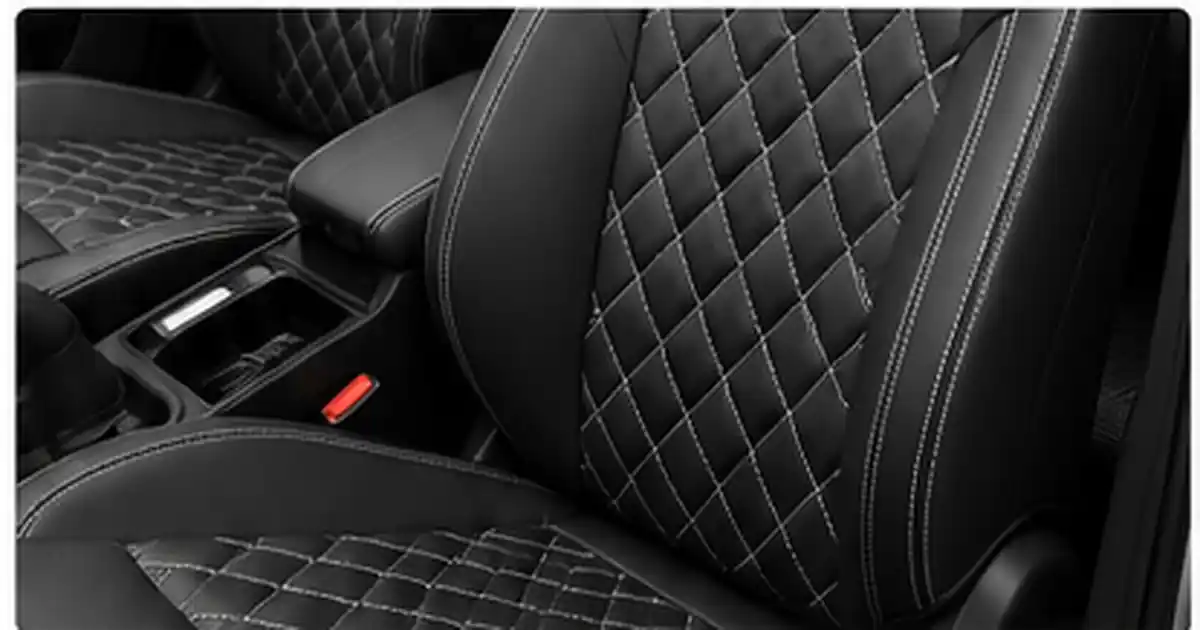
Quilted automotive leather is widely used when vehicle upholstery requires more visual depth than a conventional flat leather surface.
Instead of relying only on grain and color, quilted materials combine synthetic leather with stitching and, depending on the construction, foam or textile backing. This creates raised patterns such as diamonds, geometric shapes, stripes, chevrons and other decorative designs.
For automotive upholstery manufacturers, however, the visible pattern is only one part of the material.
The surface leather, foam thickness, backing construction, stitching pattern and finished composite thickness can all affect cutting, sewing, flexibility and installation.
Understanding these layers makes it easier to select quilted automotive leather for car seats, seat covers, door panels and other interior upholstery applications.
For buyers comparing different vehicle upholstery materials, our broader Auto & Motorcycle Leather collection includes both conventional and decorative automotive leather constructions.
What Is Quilted Automotive Leather?
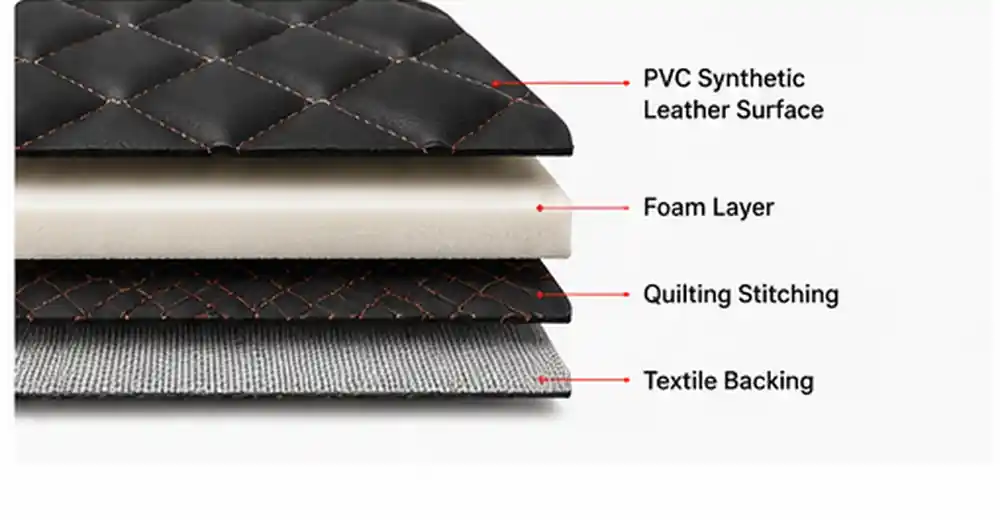
Quilted automotive leather is a decorative upholstery material in which synthetic leather is stitched into repeated patterns.
Depending on the product, the stitching may pass through a foam layer, textile backing or another supporting layer underneath the leather surface.
This creates a three-dimensional structure that differs from ordinary embossed leather.
Embossing forms a pattern mainly by pressing texture into the material surface. Quilting creates the design through stitching and the construction underneath the surface.
A typical quilted automotive material may contain:
- PVC synthetic leather surface
- Optional foam layer
- Quilted stitching
- Textile or supporting backing
The exact construction varies between products.
Some materials use relatively thick foam to create a strongly padded appearance. Others use thinner constructions or textile backing where the stitched pattern itself is the main decorative feature.
This is why quilted leather should be evaluated as a complete composite rather than only by looking at the top PVC layer.
The Quilted Automotive Leather collection includes diamond, geometric, perforated, contrast-stitch and other decorative constructions for automotive upholstery projects.
Understand the Surface Material, Foam and Backing
Three components have a particularly important influence on how quilted automotive leather looks and behaves: the surface material, the internal foam and the backing.
PVC Synthetic Leather Surface
The top layer determines the primary color, grain, gloss and hand feel of the material.
A relatively fine grain can create a clean automotive appearance, while stronger grains can make the surface texture more visible between stitched sections.
Surface finishing also influences the visual effect of quilting.
Matte or semi-matte surfaces tend to emphasize the shape of the stitched panels differently from high-gloss surfaces. Color and stitching combinations can further change the appearance of the finished seat.
Some quilted materials also combine additional surface processes such as perforation.
For example, a perforated quilted surface uses both stitching and hole patterns to create a more complex decorative effect. When selecting this construction, buyers should confirm both the quilting pattern and perforation layout before production.
Foam Layer
Foam is commonly used underneath quilted automotive leather to create depth.
When stitching compresses the foam along the seam lines, the areas between the stitches remain raised. This produces the padded three-dimensional appearance associated with diamond and geometric quilted upholstery.
Foam thickness therefore influences pattern definition.
A thicker foam construction can create deeper raised sections, while a thinner construction produces a flatter visual effect.
However, thicker is not automatically better.
Additional foam changes the total thickness of the composite and can affect cutting, sewing, folding and installation. A heavily padded panel may also behave differently around tight seat curves compared with a thinner material.
The correct foam thickness should therefore be selected according to the required appearance and the actual upholstered component.
Textile Backing
Not every quilted automotive leather uses the same rear construction.
Possible options include foam-supported constructions, terry fabric backing, brushed backing and other textile structures.
The backing helps support the material during cutting, sewing and upholstery processing.
A textile-backed material may provide different flexibility and dimensional behavior from a thick foam-backed quilted composite.
This becomes especially important when the material needs to be combined with conventional automotive leather in the same seat.
The quilted center panel and the surrounding flat leather should work together during sewing and installation without creating excessive differences in thickness or stretch.
For a more detailed explanation of common textile constructions, see our PVC Leather Backing Options guide.
Recommended products
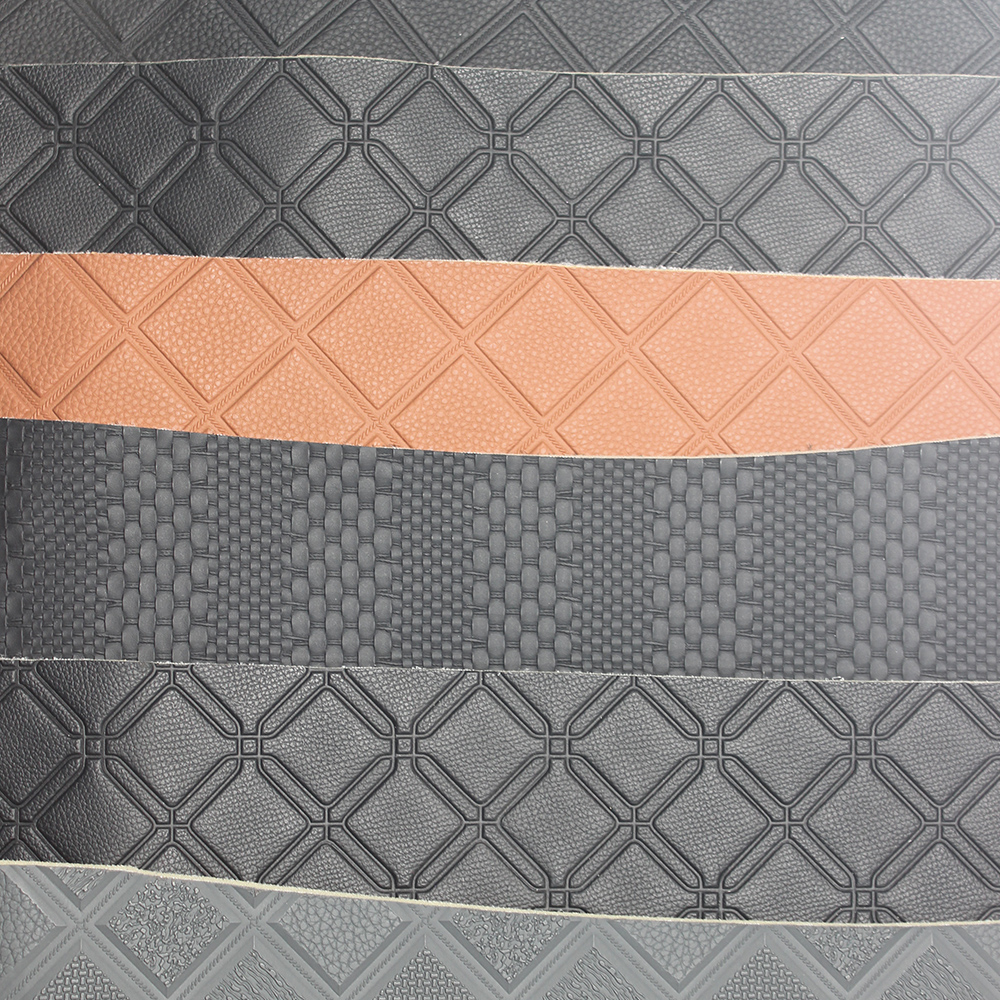
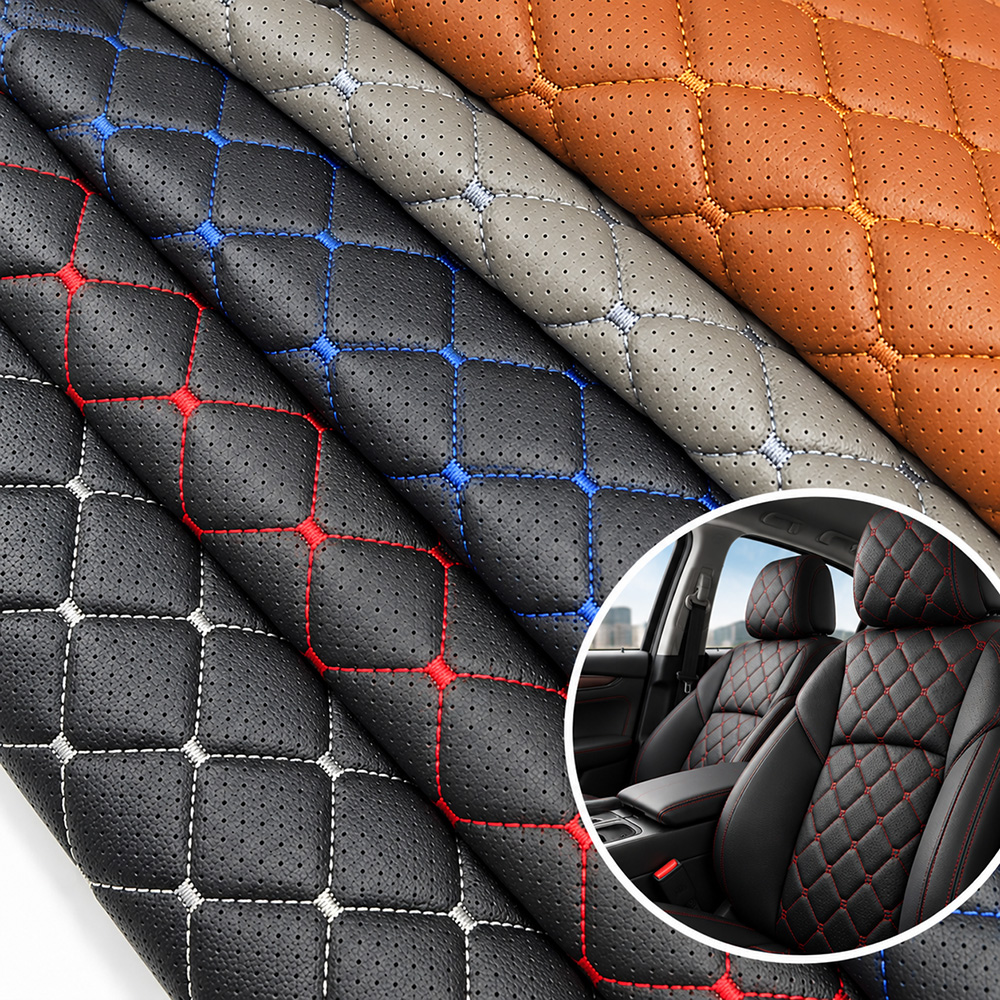
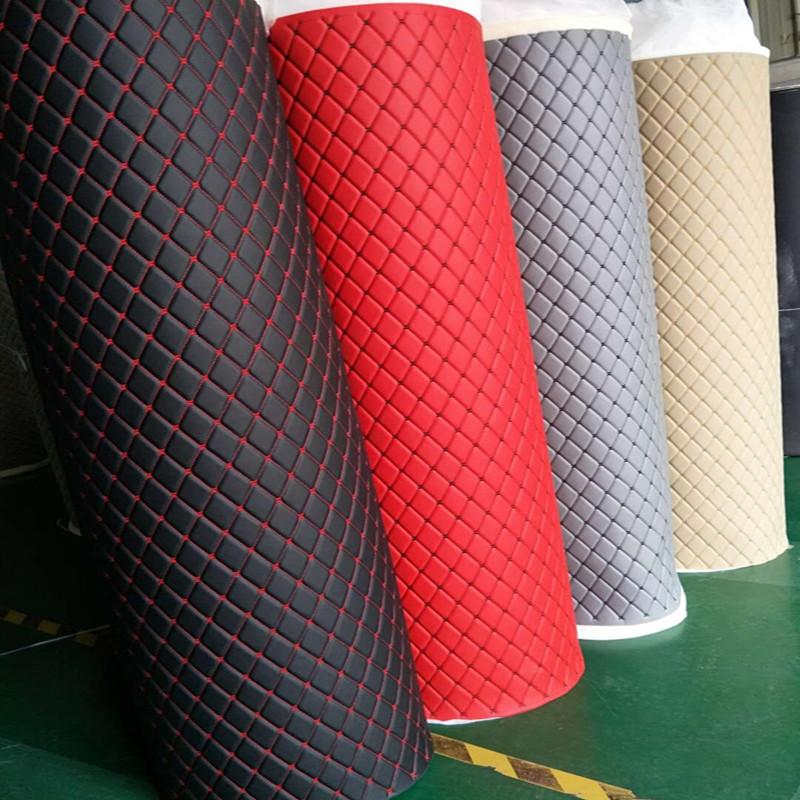
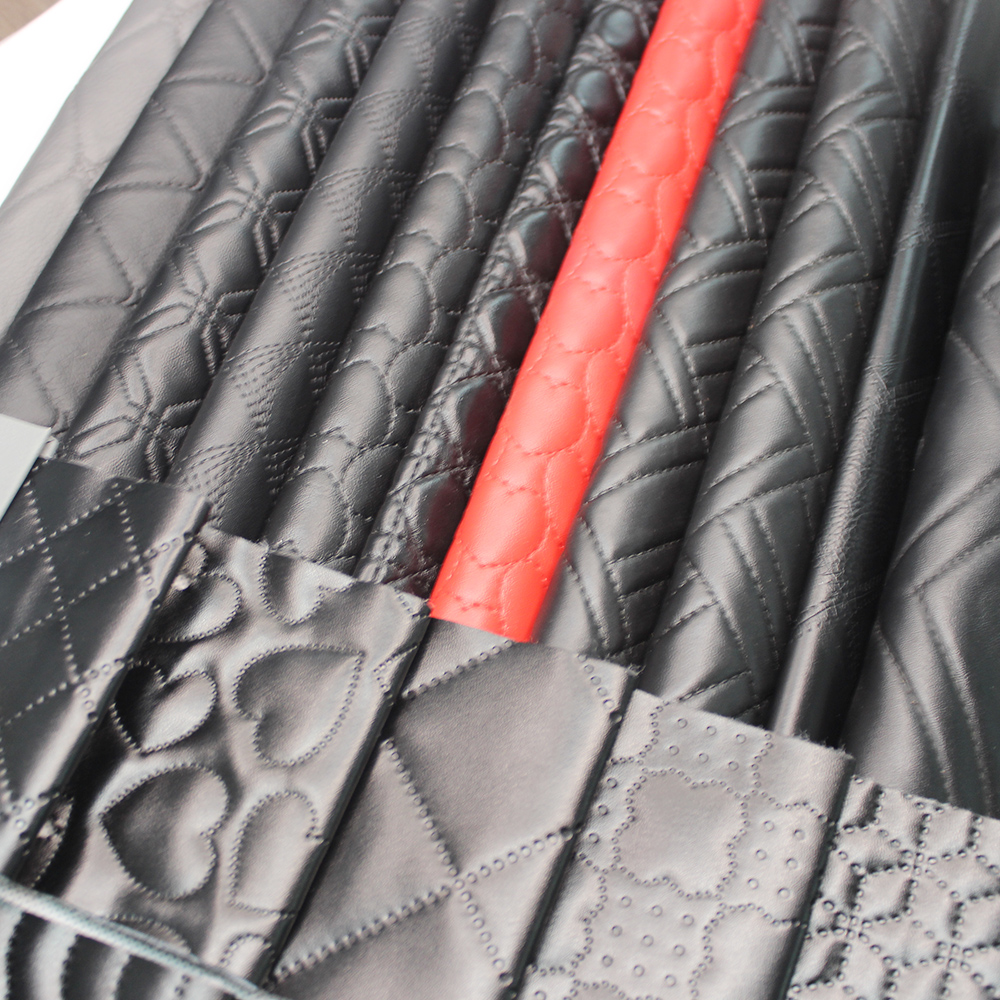
Compare Quilted Patterns and Stitching Designs
Pattern selection is one of the most visible decisions when choosing quilted automotive leather.
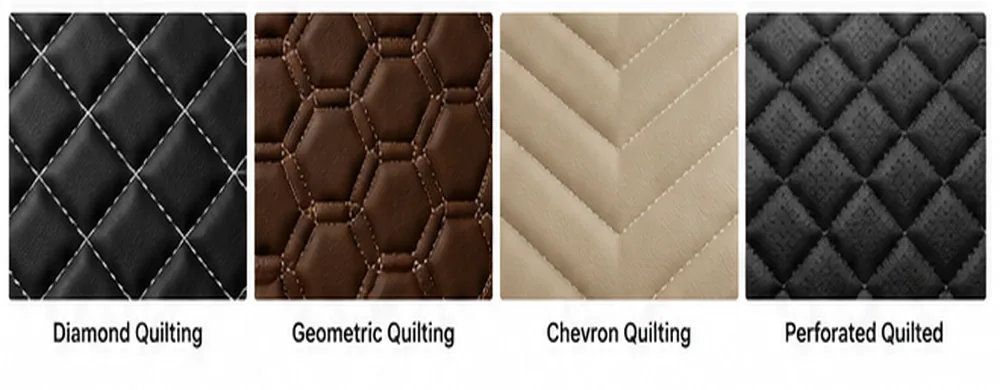
Diamond Quilting
Diamond quilting is one of the most recognizable automotive upholstery patterns.
Repeated diagonal stitching forms raised diamond-shaped sections and creates a structured decorative appearance.
Diamond panels can be used across larger seat areas or as smaller decorative inserts combined with plain automotive leather.
Pattern scale matters.
Large diamonds create a different visual effect from small, closely spaced quilting, so manufacturers should confirm the dimensions of the pattern against the actual seat panel before ordering.
Geometric Quilting
Geometric quilting includes squares, polygons and more complex repeating stitched layouts.
These patterns can provide stronger visual differentiation than conventional diamond designs and are often used when the seat itself is intended to become a decorative feature of the vehicle interior.
The relationship between the pattern dimensions and the finished panel size should be considered carefully.
If a geometric repeat is too large for a narrow seat insert, the final panel may show only part of the intended design.
Chevron and Directional Patterns
Chevron quilting uses repeating V-shaped lines that create a clear direction across the material.
Directional designs require more attention during cutting than non-directional patterns.
When several panels are sewn into one seat, the direction of the chevrons should remain consistent unless the design intentionally calls for mirrored or opposing patterns.
This can affect cutting layout and material consumption.
Perforated Quilted Leather
Perforation can be combined with quilting to create another layer of surface detail.
The result can be suitable for center panels or decorative seat sections where the buyer wants a more complex surface than conventional stitching alone.
The perforation arrangement, hole size, quilting pattern and foam construction should be evaluated together.
If a specific functional airflow or ventilation requirement exists, it should be tested as part of the complete seat system rather than assumed from the visible perforations alone.
Where Is Quilted Automotive Leather Used?
Quilted leather is primarily selected where decorative appearance and upholstery structure need to work together.
Car Seat Center Panels
Center panels are one of the most common applications.
A quilted insert can create visual contrast with smooth or fine-grain leather used around the seat bolsters.
This allows manufacturers to build a seat from several coordinated materials rather than using the same surface across the entire seat.
When combining materials, check the difference in thickness, stretch and sewing behavior between the quilted panel and surrounding leather.
Buyers selecting materials specifically for seating can also compare our Car Seat Leather collection.
Seat Backrests
Quilted patterns can also be used on backrest sections.
The larger visible surface provides more space for diamond, geometric or directional patterns.
Before production, the pattern should be positioned against the actual panel template so important stitching lines are not unintentionally removed during cutting.
Automotive Seat Covers
Aftermarket and customized seat covers frequently use quilted sections as decorative inserts.
In these applications, manufacturers should consider not only appearance but also how easily the composite can be sewn together with other materials used in the cover.
Door Panels
Selected quilted constructions can also be considered for vehicle door panel upholstery.
Door panels usually have different shape and bonding requirements from seats, so a material that performs well on a seat should still be tested on the actual door-panel process.
The backing and overall composite thickness can influence folding, adhesive bonding and edge finishing.
Armrests and Decorative Interior Panels
Smaller quilted panels can be used on armrests, side panels and custom interior trim.
These applications can use quilted material to coordinate the visual theme across several areas of the vehicle interior.
A common approach is to combine quilted leather with plain automotive leather in matching or contrasting colors.
What Should Buyers Confirm Before Ordering?
Quilted automotive leather requires more specification details than conventional flat leather.
Before approving a material, confirm the following:
| Item | What to Confirm |
|---|---|
| Application | Seat center panel, backrest, seat cover, door panel or trim |
| Surface Material | PVC leather type and grain |
| Color | Approved physical color reference |
| Finish | Matte, semi-matte, gloss or other available finish |
| Quilted Pattern | Diamond, geometric, chevron or other design |
| Pattern Size | Repeat dimensions and direction |
| Stitching | Stitch color, spacing and construction |
| Foam | Required foam thickness if applicable |
| Backing | Foam, terry, brushed or other textile construction |
| Finished Thickness | Complete composite thickness |
| Width | Effective roll width |
| Processing | Cutting, sewing, folding or bonding requirements |
| Performance | Required automotive test standards |
| Quantity | Trial quantity and expected bulk requirement |
One of the most common mistakes is specifying only the visible pattern.
For example, requesting “diamond quilted black leather” does not define the foam thickness, backing, diamond dimensions, stitch color or complete material thickness.
Two visually similar quilted materials can therefore behave differently during production.
The more clearly these specifications are defined before sampling, the easier it is to compare materials correctly.
Test the Complete Quilted Construction
Physical sample evaluation is particularly important for quilted automotive leather.
A flat photograph can show the approximate color and pattern but cannot fully demonstrate foam depth, hand feel, backing structure or sewing behavior.
Whenever possible, evaluate the material using the actual production process.
Cut the sample using the intended panel dimensions and check whether the pattern remains visually balanced after trimming.
Sew it together with the surrounding automotive leather and compare the thickness along the seams.
Test how the material bends around the actual seat or interior component.
For foam-backed materials, check whether compression around stitched or folded areas affects the finished appearance.
For directional designs, confirm the cutting direction before bulk production.
Automotive projects may also require specific tests for abrasion, UV exposure, heat aging, cold resistance, color fastness, odor, fogging, flame performance or restricted substances.
These requirements depend on the customer, vehicle program and destination market, so they should be defined before production rather than assumed from the material appearance.
For more information about selecting conventional and decorative seating materials, see How to Choose Automotive Leather for Car Seats.
Choosing Quilted Automotive Leather for Your Project
Quilted automotive leather should be selected as a complete upholstery construction.
The surface PVC leather determines color, grain and finish. The stitching creates the decorative pattern. Foam can provide depth, while the backing supports processing and helps determine how the material behaves during cutting, sewing and installation.
A practical selection process is:
Define the application → choose the quilted pattern → confirm foam and backing → evaluate finished thickness → make a physical sample → test on the actual component → approve the final specification.
This approach is more reliable than choosing a quilted material according to photographs or pattern appearance alone.
Xiangze Leather supplies Quilted Automotive Leather for car seat panels, seat covers, backrests, door panels and other decorative vehicle interior upholstery applications.
Available constructions include different stitched patterns, foam thicknesses and textile backing options.
Tell us your automotive application, preferred pattern, color, foam thickness, backing requirements, required testing standards and estimated order quantity. Samples can be prepared for material and upholstery evaluation before bulk production.

About Xiangze Leather
Written by Xiangze Leather Editorial Team
Xiangze Leather supplies PVC synthetic leather for furniture upholstery, bags, footwear, automotive interiors, motorcycle seats and decorative applications. Material samples, specification options and quotation support are available according to project requirements.