PVC Leather Grain Types: Fine Grain vs Litchi vs Pebble vs Wrinkle

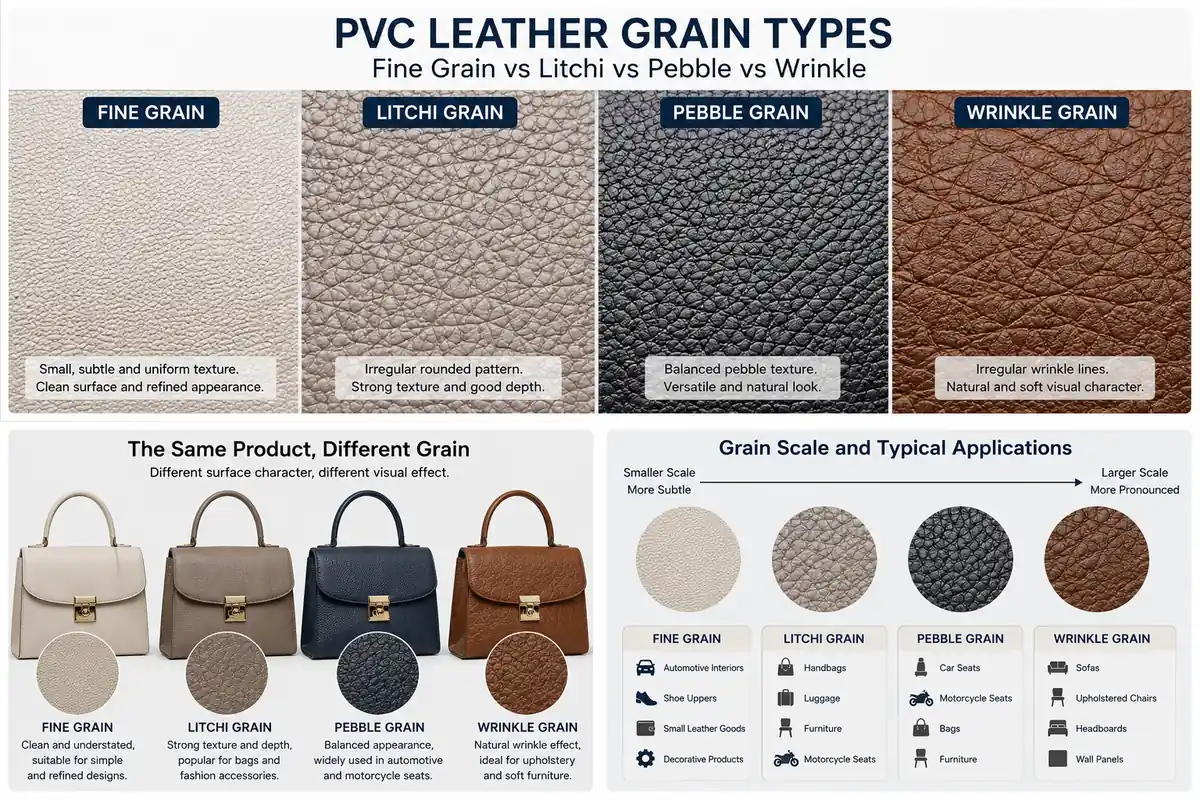
PVC leather is available in many surface textures, but four grain styles appear frequently across automotive interiors, furniture, bags, footwear and other manufactured products: fine grain, litchi grain, pebble grain and wrinkle grain.
At first glance, choosing a grain may seem like a purely visual decision.
In practice, grain scale, embossing depth, surface finish and the size of the finished product can all change how the material looks and feels.
A fine grain that looks balanced on a shoe upper may appear too subtle on a large sofa panel. A stronger litchi or pebble texture may give a handbag more visual structure, while a natural wrinkle grain can create a softer upholstery appearance.
At the same time, grain type should not be used as a shortcut for judging durability.
Abrasion resistance, tear strength, stretch, coating adhesion and other performance characteristics depend on the complete material construction, including coating formulation, thickness and backing.
Xiangze Leather supplies PVC Leather Materials with different grains, surface finishes, thicknesses and backing constructions for a wide range of manufacturing applications.
Understanding the main grain families makes it easier to select suitable samples before confirming the complete specification.
Why PVC Leather Grain Type Matters
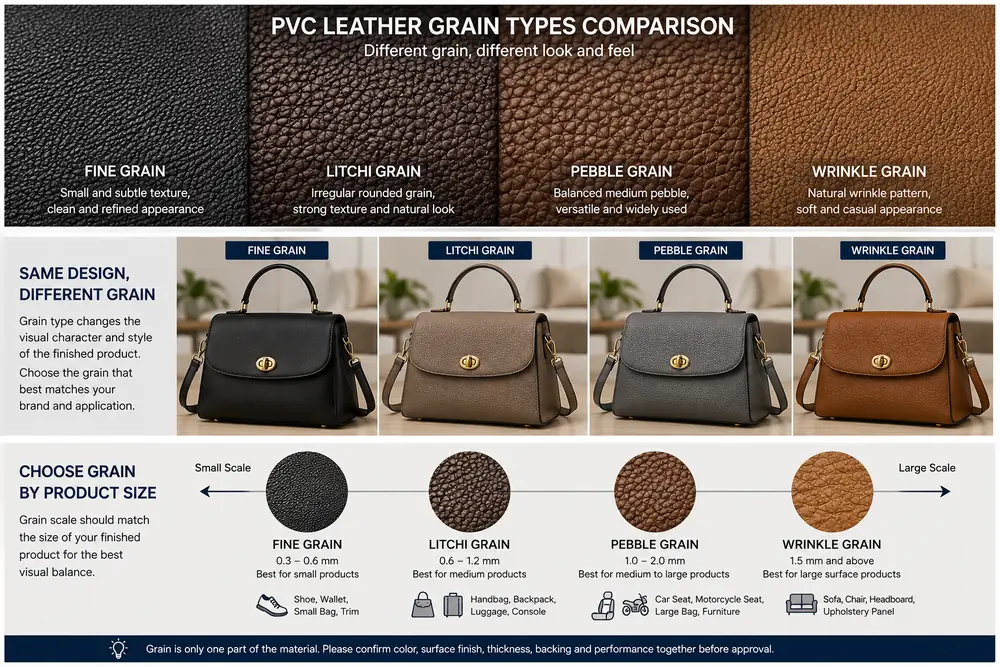
The grain is the visible texture formed on the surface of synthetic leather.
Depending on the manufacturing process, PVC leather can use different embossed patterns to reproduce a natural leather appearance or create a deliberately decorative surface.
Grain selection mainly affects four areas.
Visual Scale
The size of the grain should fit the size of the finished component.
A small texture can look clean and refined on:
- Wallets
- Shoe uppers
- Small bag panels
- Automotive trim
- Smaller decorative components
Larger or more pronounced grain structures can provide stronger visual character on:
- Sofas
- Chairs
- Automotive seats
- Motorcycle seats
- Handbags
- Luggage
This does not mean one grain is restricted to one application. It means the grain should be evaluated at the actual scale of the finished product.
Surface Character
Different patterns create different visual impressions.
Fine grain generally appears more controlled and understated.
Litchi and pebble grains create stronger visible texture.
Wrinkle grain tends to look more irregular and natural.
The final result also depends heavily on surface finish.
For example, the same embossed pattern can look very different when produced with:
- Matte finish
- Semi-matte finish
- Higher gloss
- Two-tone coloration
- Metallic effect
- Distressed treatment
Grain and Surface Finish should therefore be evaluated separately.
Hand Feel
Embossing can affect how the surface feels when touched, but hand feel does not come from the grain alone.
The final softness and flexibility are also affected by:
- PVC coating construction
- Total thickness
- Backing type
- Foam or other supporting layers
- Formulation
- Stretch characteristics
A deep grain does not automatically mean a harder material, and a fine grain does not automatically mean a softer material.
Finished-Product Appearance
Always evaluate a grain after the material is bent, sewn, stretched or wrapped.
A grain that looks good while lying flat can appear different after it is formed over:
- Seat foam
- Sofa cushions
- Bag corners
- Shoe lasts
- Curved decorative panels
For this reason, grain approval should ideally include a representative production trial rather than only a small flat swatch.
For a broader explanation of synthetic leather construction, see What Is PVC Synthetic Leather?.
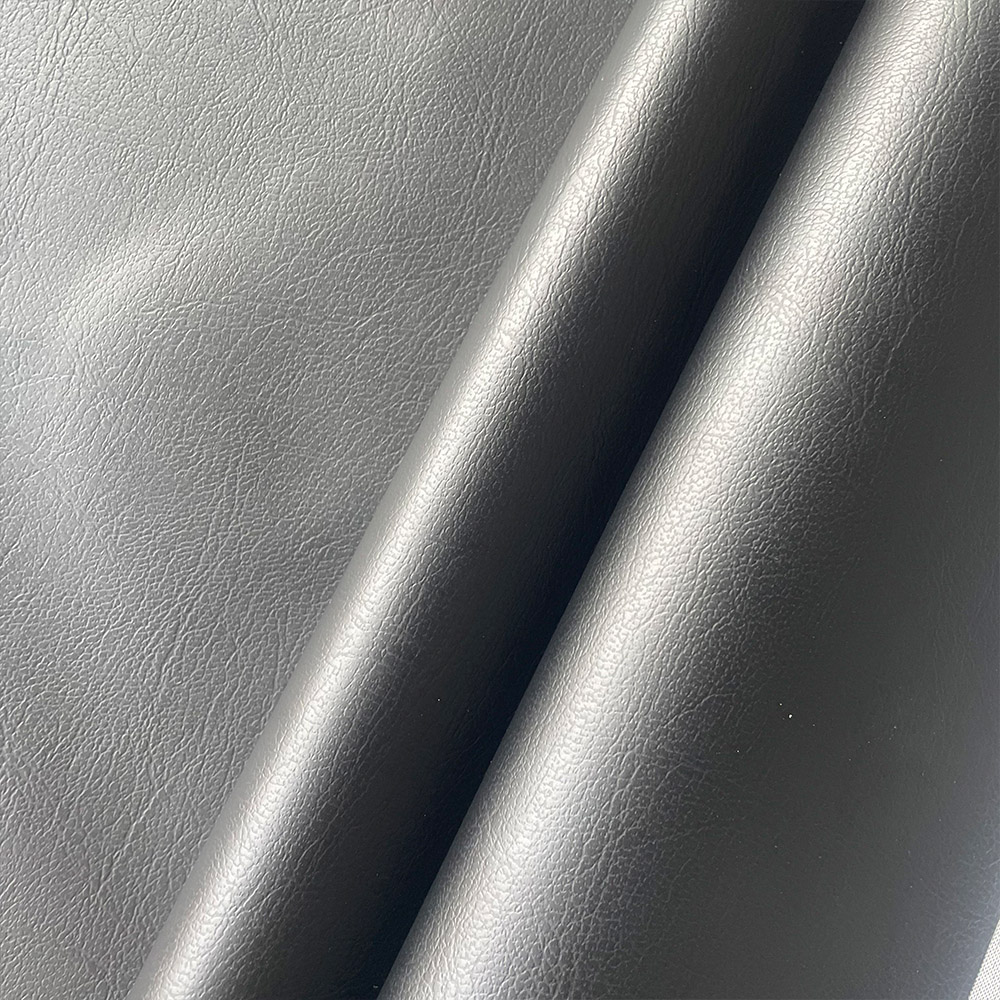
Fine Grain PVC Leather
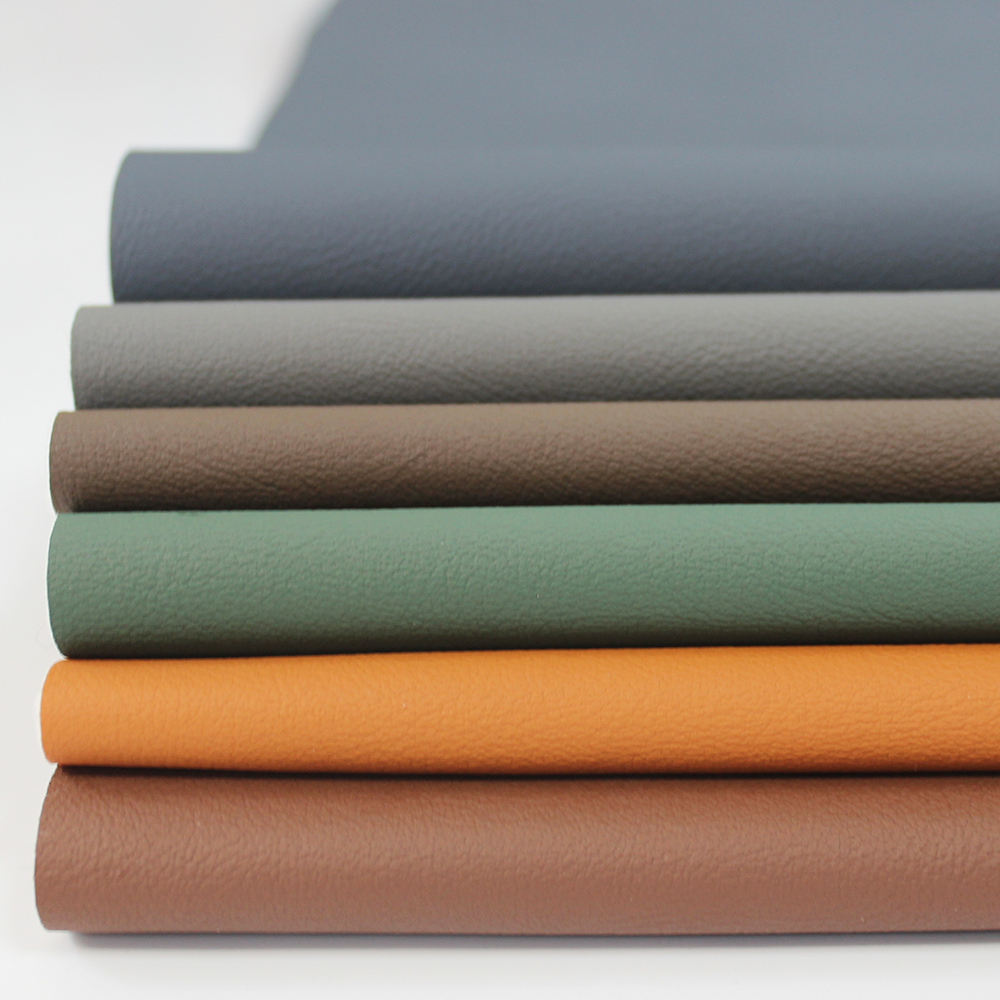
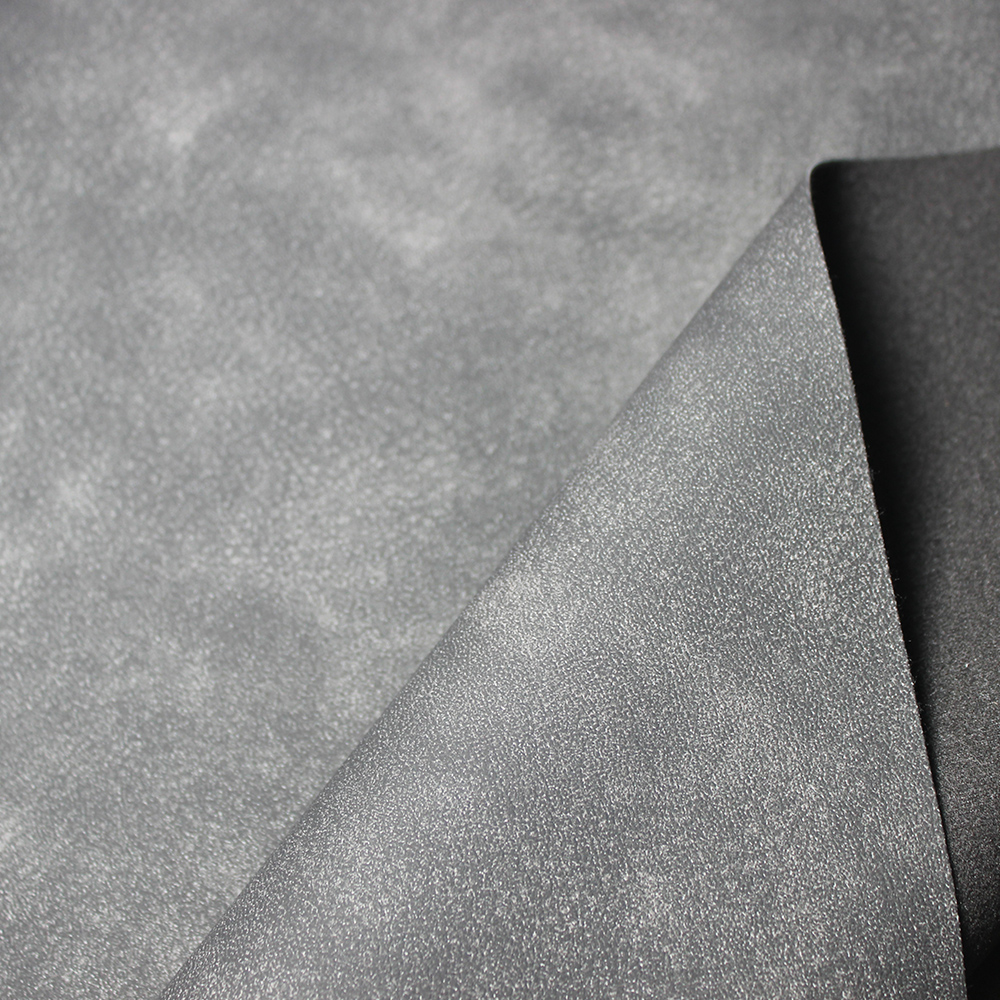
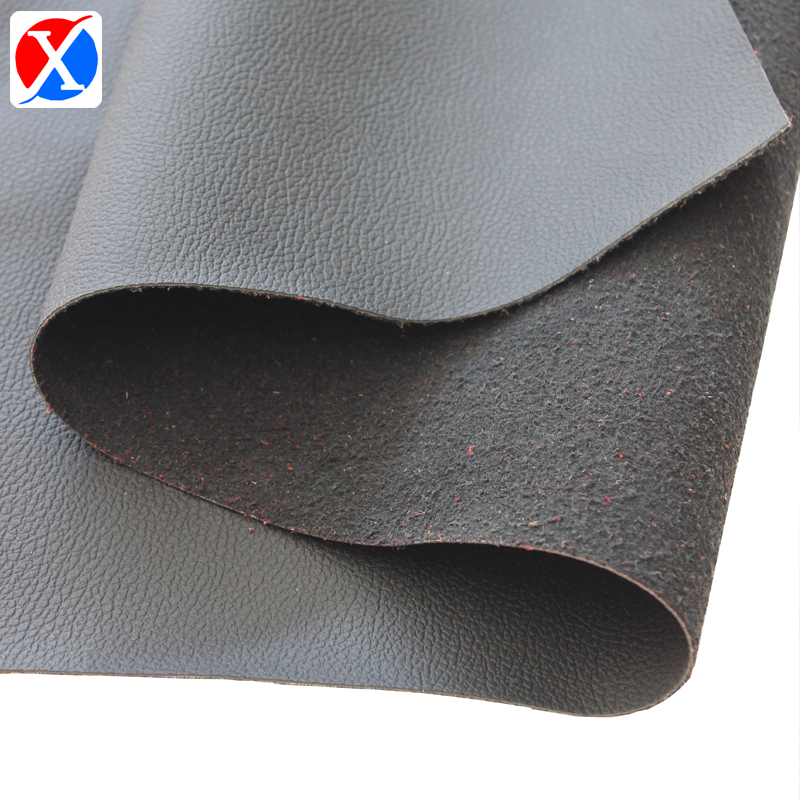
Fine grain describes a relatively small and closely distributed surface texture.
Compared with more pronounced litchi or pebble patterns, the individual grain features are usually less dominant.
This gives the surface a more controlled appearance.
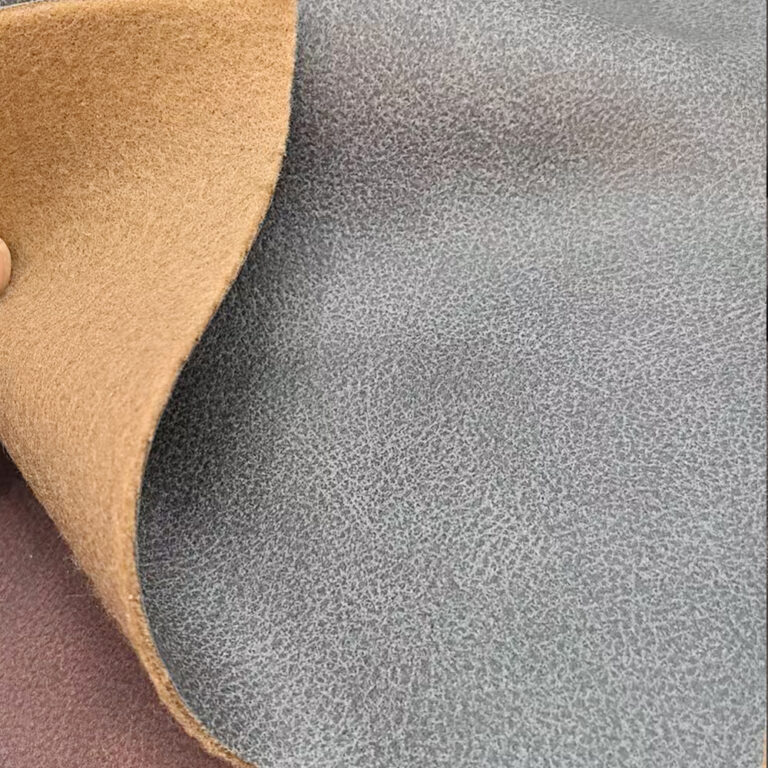
Fine Grain PVC Leather Products
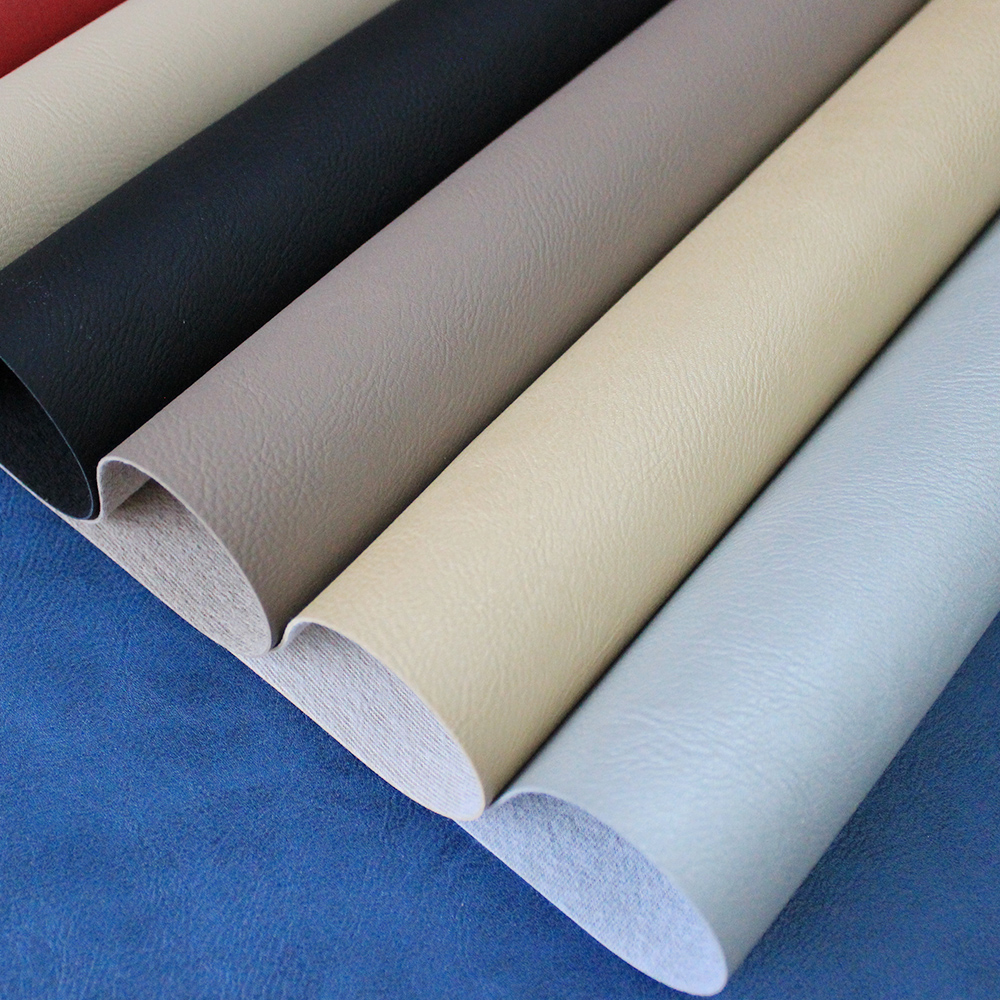
Appearance
Fine grain PVC leather often provides:
- Small pattern scale
- Relatively uniform texture
- Clean surface appearance
- Subtle embossing
- Good visual consistency across smaller components
The exact appearance can still vary significantly between embossing rollers.
One supplier’s “fine grain” may have a much smaller or deeper texture than another supplier’s version.
For production approval, physical samples are therefore more useful than the grain name alone.
Where Fine Grain Works Well
Fine grain can be useful when the surface should support the product design without becoming the dominant visual feature.
Typical applications can include:
- Automotive interiors
- Car-seat panels
- Door panels
- Shoe uppers
- Handbags
- Wallets
- Furniture
- Decorative products
For automotive applications, buyers can compare different constructions through Car Seat Leather.
Fine Grain on Small Products
Fine grain is particularly easy to use on smaller components.
A small handbag or shoe upper may only display a limited section of the embossing pattern. A tightly scaled texture can therefore produce a more consistent appearance across multiple cut pieces.
This can be useful when several panels need to look visually similar after assembly.
Fine Grain on Large Panels
Fine grain can also be used on sofas and vehicle seats, but buyers should inspect a larger sample.
A texture that looks clearly defined on a 10 cm sample may appear visually flatter when spread across a wide upholstery panel.
Large sample evaluation helps determine whether the grain provides enough surface character for the intended design.
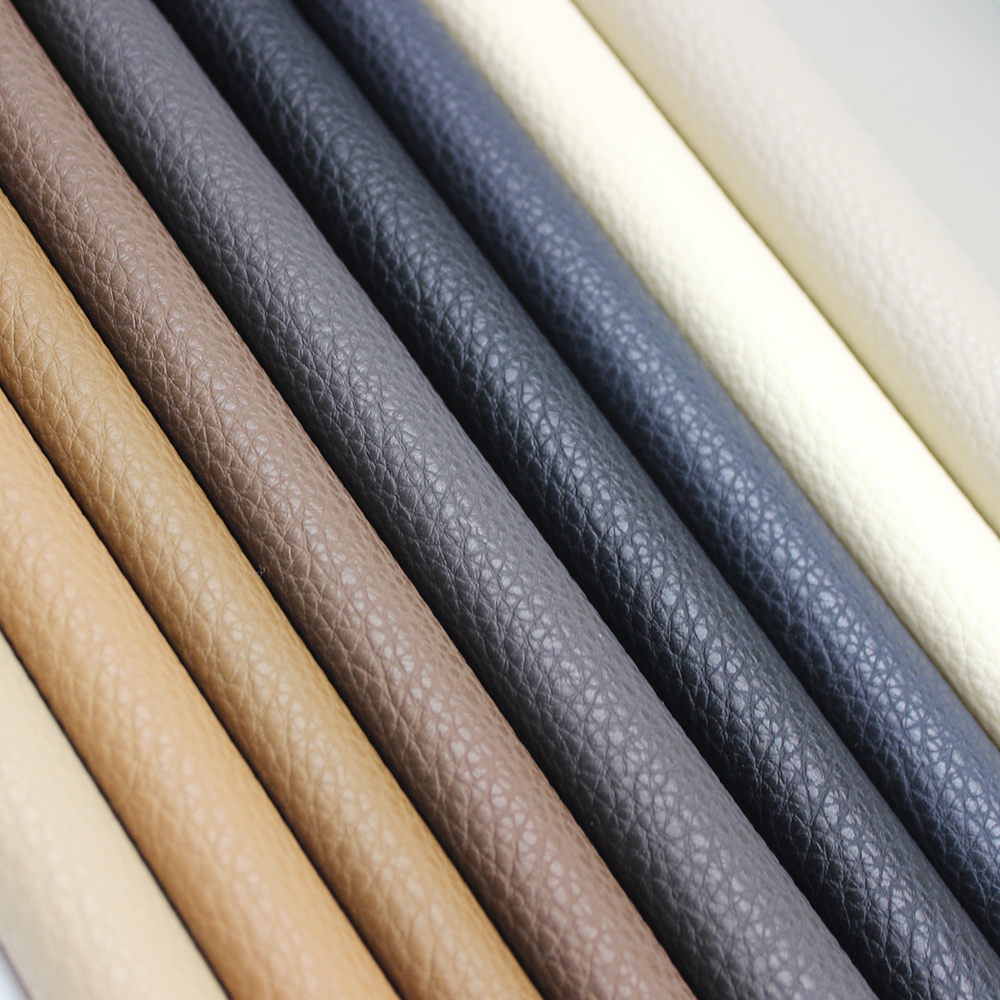
Litchi Grain PVC Leather
Litchi grain—also commonly described as lychee grain—is one of the most recognizable synthetic leather textures.
It uses an irregular rounded grain structure that creates a relatively strong leather-like surface.
Compared with fine grain, the pattern is generally easier to see from a distance.
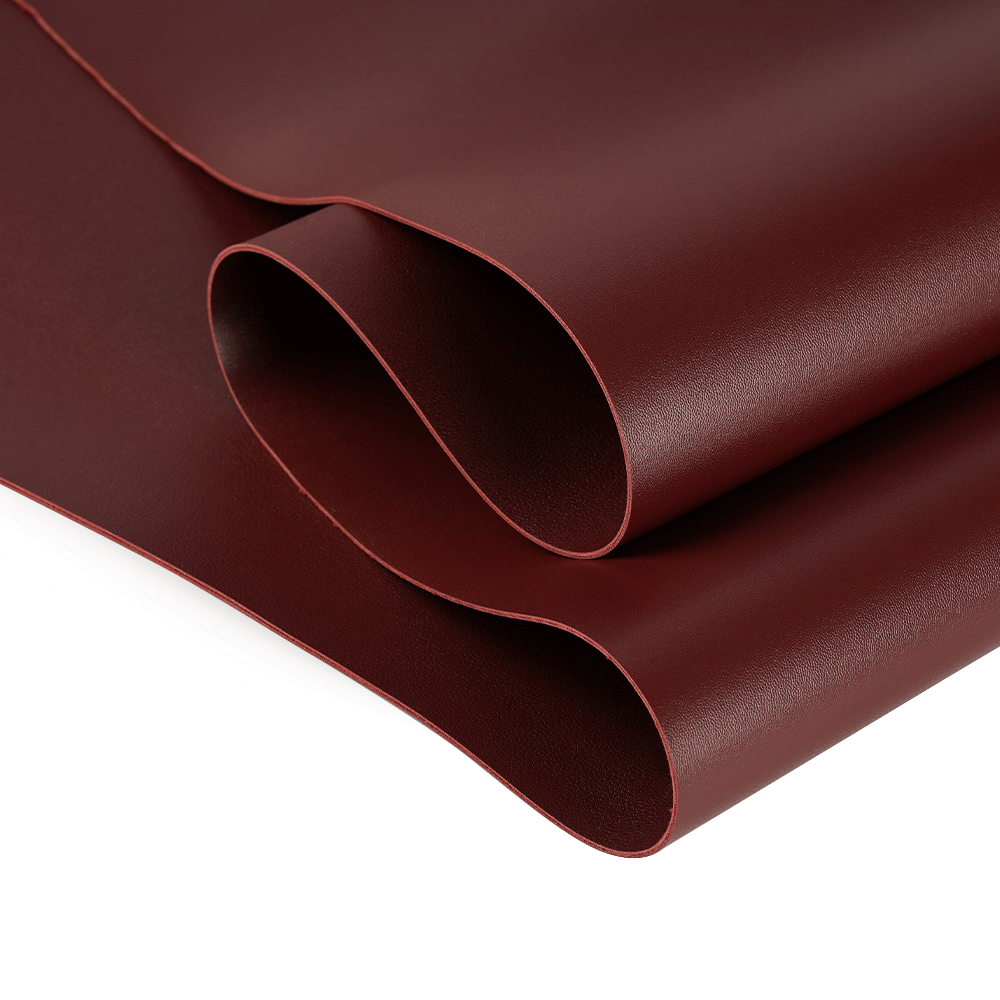
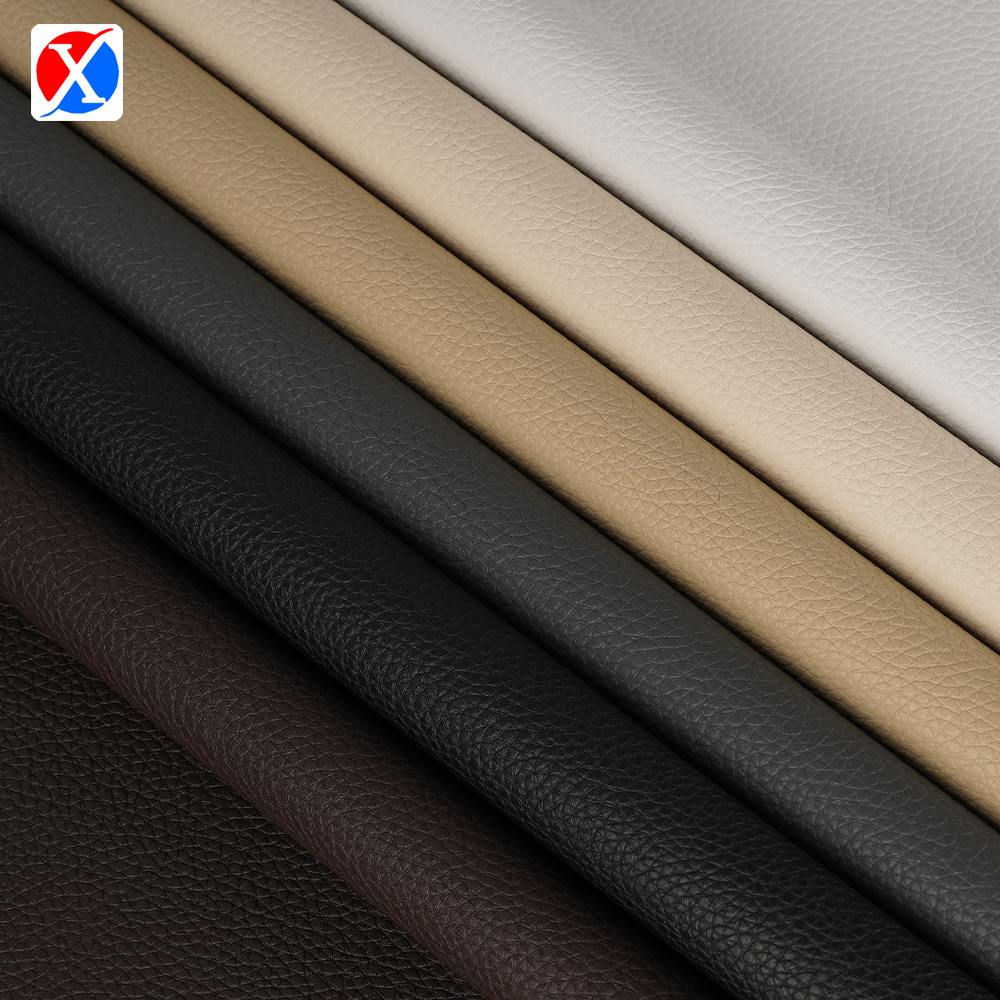
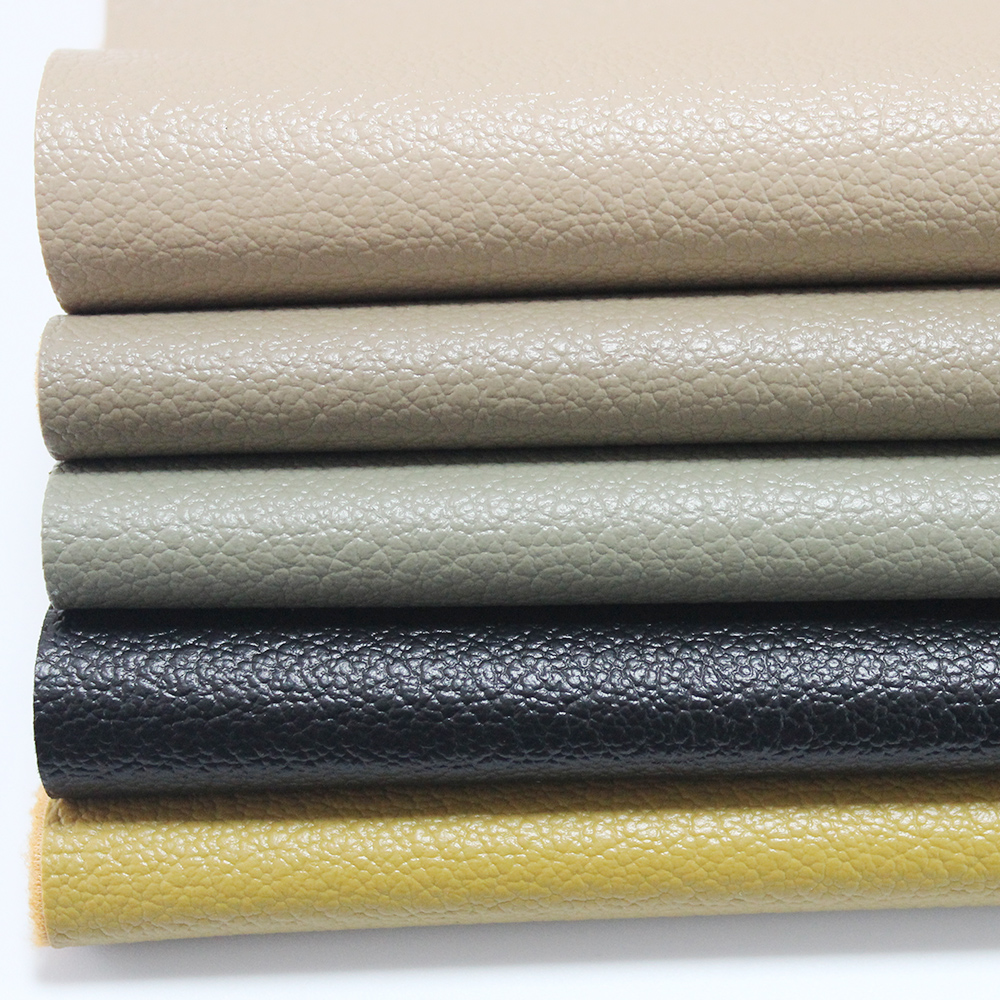
Appearance
Typical visual characteristics include:
- Irregular rounded cells
- Clearly visible embossing
- Stronger surface texture
- Natural-looking variation
- Good visual depth
However, litchi grain is not one standardized pattern.
Different embossing rollers can produce:
- Fine litchi grain
- Medium litchi grain
- Large litchi grain
- Shallow embossing
- Deep embossing
A buyer should therefore specify the actual approved grain rather than relying only on the term “litchi.”
Common Applications
Litchi grain is widely used for products where a recognizable textured leather appearance is desired.
Examples include:
- Handbags
- Backpacks
- Luggage
- Wallets
- Furniture upholstery
- Automotive interiors
- Motorcycle seats
- Shoe materials
It is especially common in Bag & Luggage Leather because the texture remains visible across both medium and relatively large bag panels.
Grain Scale Matters for Bags
For a wallet or small handbag, a smaller litchi pattern may create a more refined appearance.
For luggage or large tote panels, a stronger pattern can remain visually noticeable across the larger surface.
Manufacturers should evaluate the actual cutting pattern when choosing between small and large litchi grains.
Litchi Grain and Surface Finish
Litchi grain can also change significantly depending on finish.
A matte litchi surface can appear restrained and practical.
A higher-gloss or two-tone finish can make the raised parts of the embossing more visible.
This is why a specification such as:
Litchi Grain PVC Leather
is less precise than:
Approved Litchi Grain + Semi-Matte Surface + Approved Color Sample
For bag manufacturers, Bag Leather provides additional examples of different surface and backing constructions.
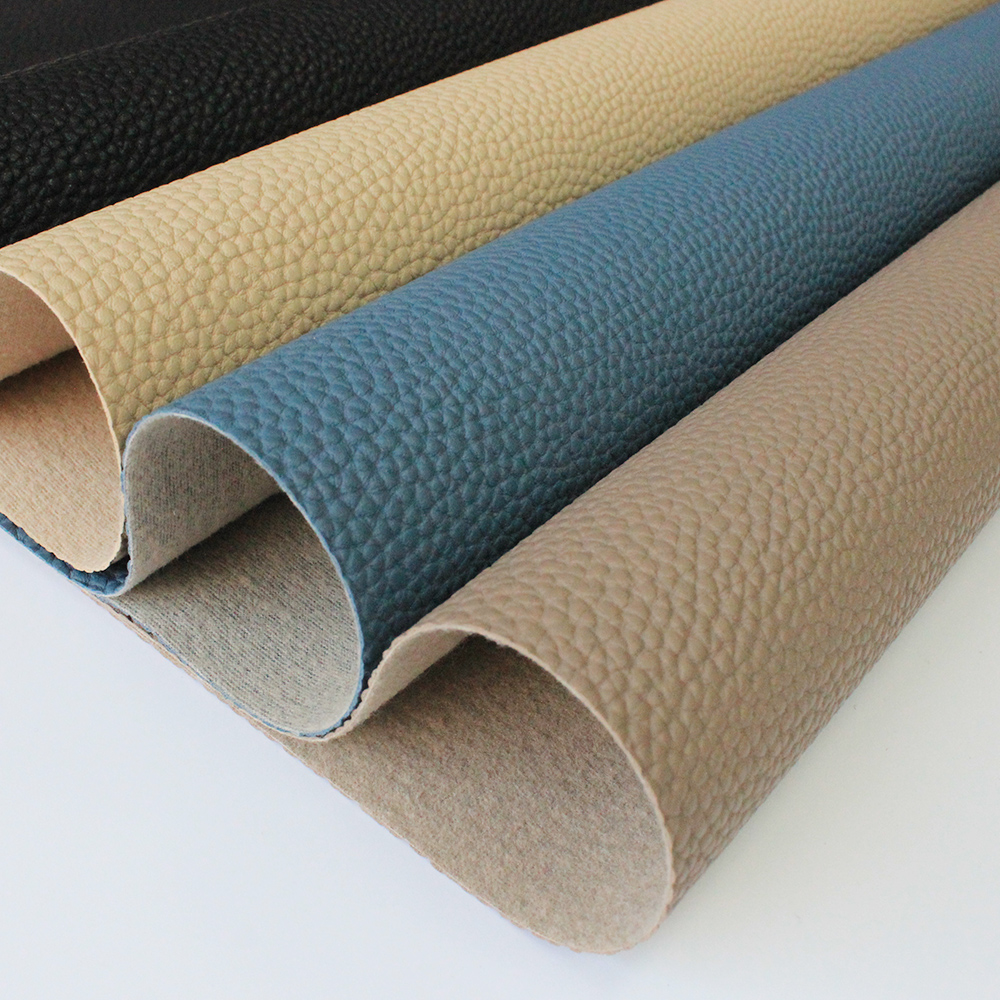
Pebble Grain PVC Leather
Pebble grain also uses rounded or irregular surface features, so it can sometimes look similar to litchi grain.
The terminology is not always used consistently across suppliers.
In general commercial use, pebble grain often describes a surface formed by small to medium rounded raised areas that resemble natural pebbled leather.
Pebble Grain PVC Leather Products
Pebble Grain vs Litchi Grain
There is no universal boundary that separates every pebble embossing from every litchi embossing.
The actual embossing roller is more important than the commercial name.
Two suppliers may even use different names for visually similar surfaces.
For purchasing, compare:
- Grain size
- Grain shape
- Pattern density
- Embossing depth
- Surface finish
- Approved physical sample
rather than approving based only on the word “pebble.”
Visual Effect
Pebble grain can provide a balanced textured appearance without requiring a highly directional pattern.
It can work well when the manufacturer wants visible surface character but does not want a strongly geometric or decorative design.
Depending on grain scale and finish, pebble PVC leather can appear:
- Refined
- Sporty
- Natural
- Structured
- Casual
Automotive and Motorcycle Applications
Pebble-style grains are frequently suitable for automotive and motorcycle applications because they can provide a recognizable textured upholstery appearance.
For example, the grain can be used on:
- Car seats
- Motorcycle seats
- Armrests
- Interior panels
- Headrests
But the grain itself does not determine whether the material is suitable for automotive use.
Automotive projects may also need to consider:
- Stretch
- Recovery
- Abrasion
- Light aging
- Heat aging
- Cold performance
- Flame requirements
- Backing construction
These properties must be confirmed separately.
Relevant materials can be compared through Auto & Motorcycle Leather and Motorcycle Seat Leather.
Pebble Grain for Bags and Furniture
Pebble grain is also commonly suitable for handbags, luggage and furniture.
For these products, buyers should pay particular attention to grain scale.
A medium pebble that looks balanced on a handbag may create a very different visual effect across an entire sofa.
Testing a larger sample is therefore recommended before final approval.
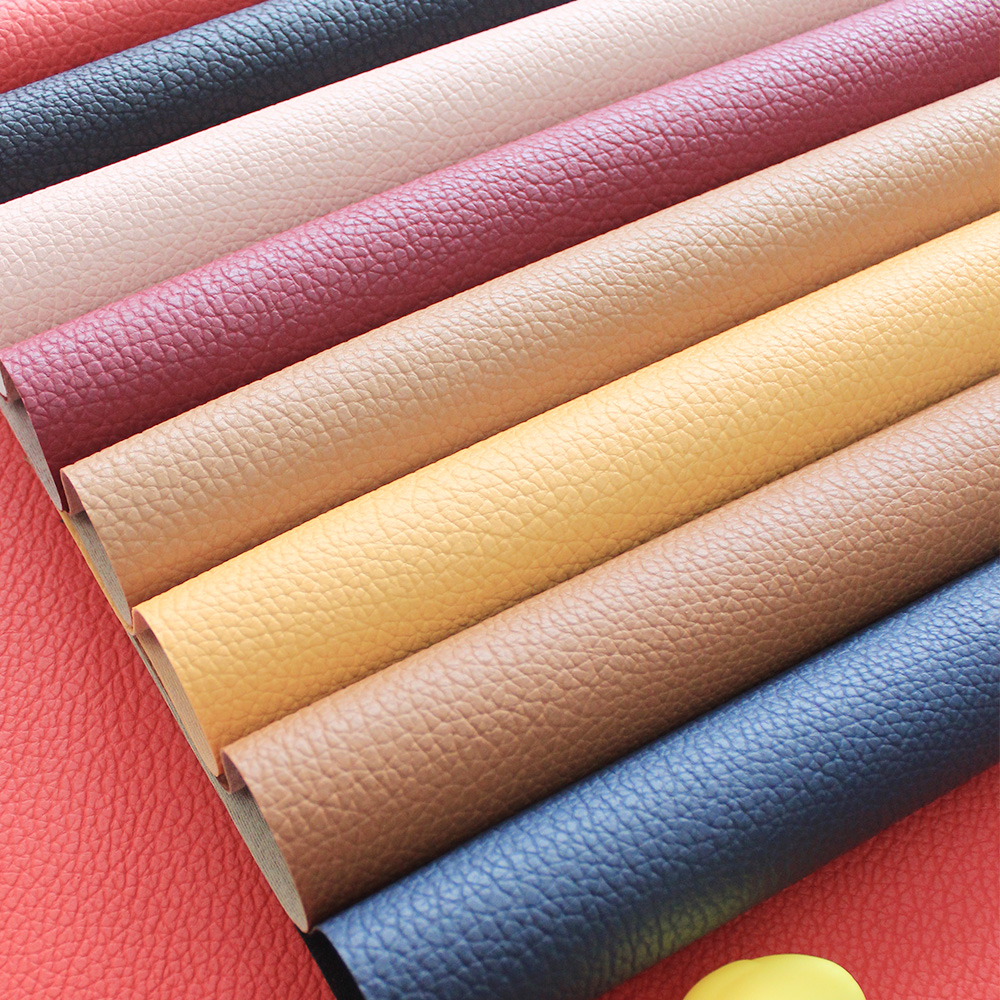
Wrinkle Grain PVC Leather
Wrinkle grain uses a less regular surface structure designed to create a naturally creased or wrinkled visual effect.
Unlike a tightly controlled fine grain, wrinkle patterns often rely on irregular lines and variations to create depth.
Wrinkle Grain PVC Leather Products
-
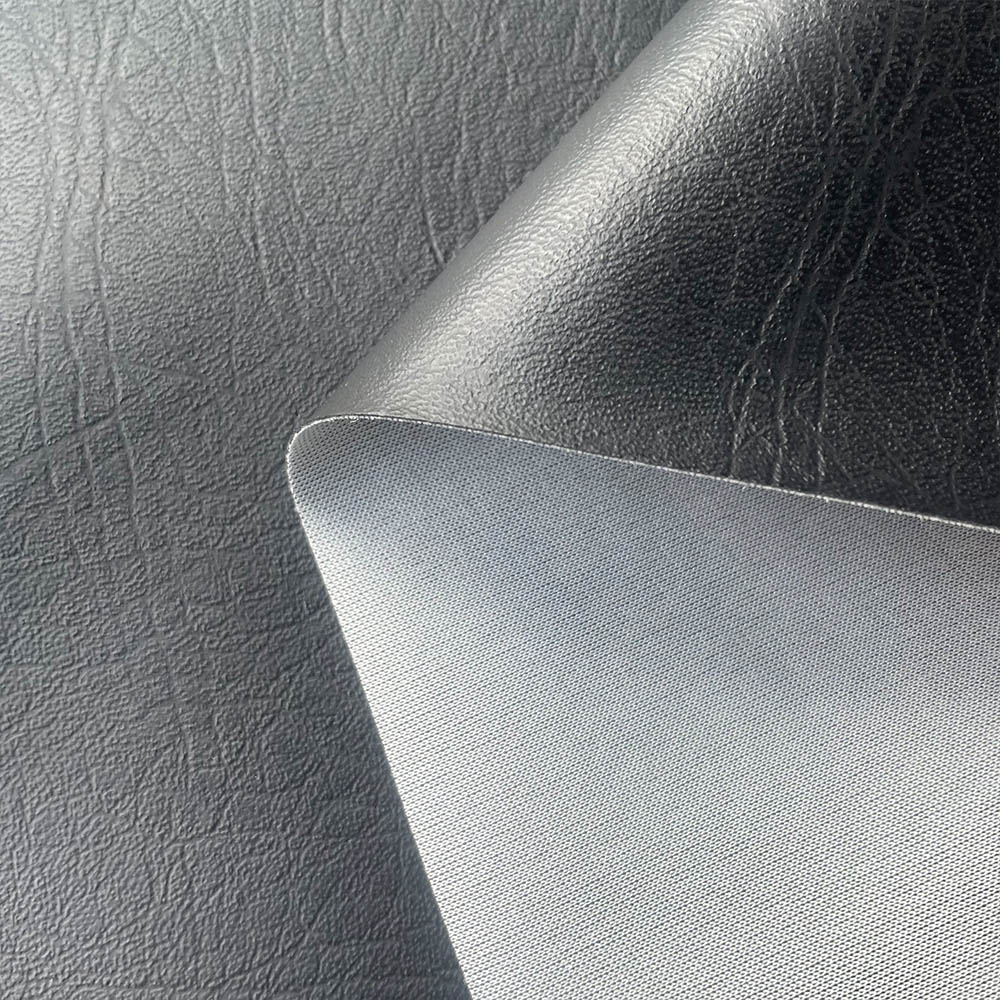
XZ73477 0.6mm Wrinkle Grain PVC Leather for Motorcycle Seats with Single-Sided Backing
-
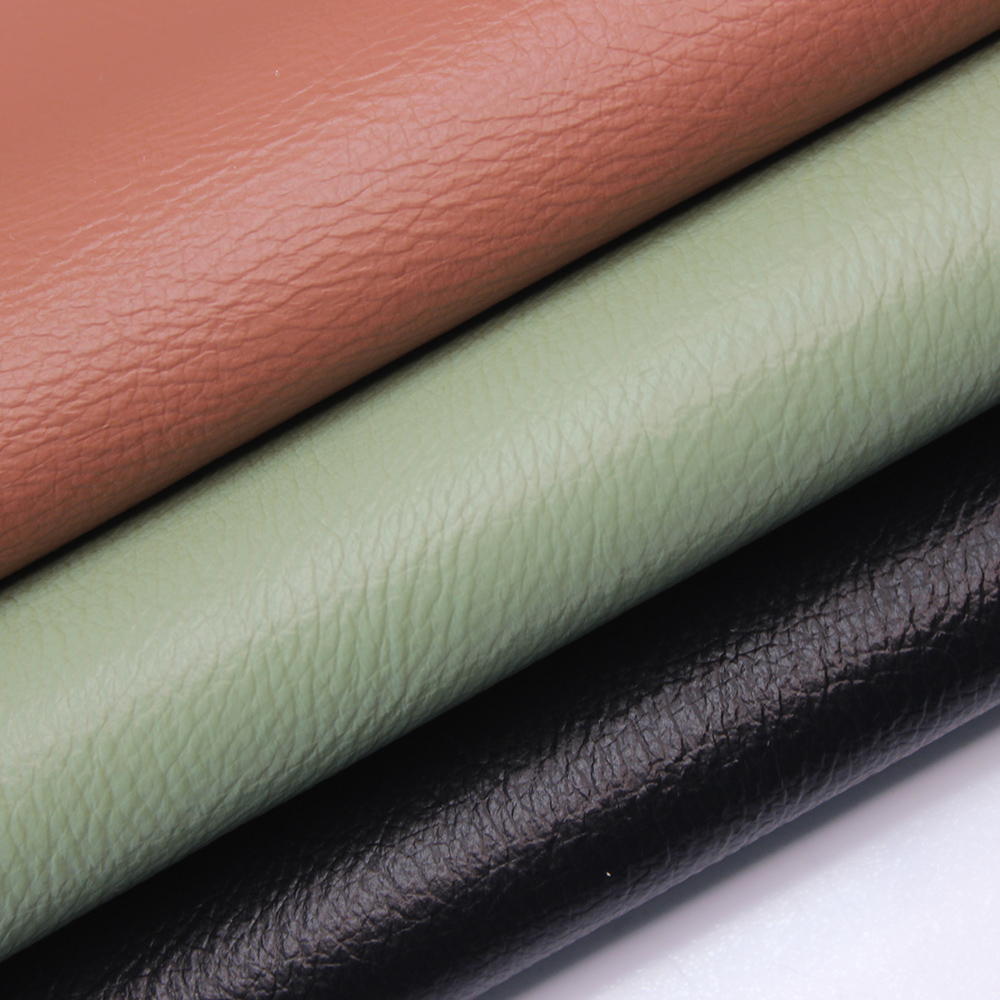
XZ73456 1.1mm Natural Wrinkle Grain PVC Leather for Sofa Upholstery
-
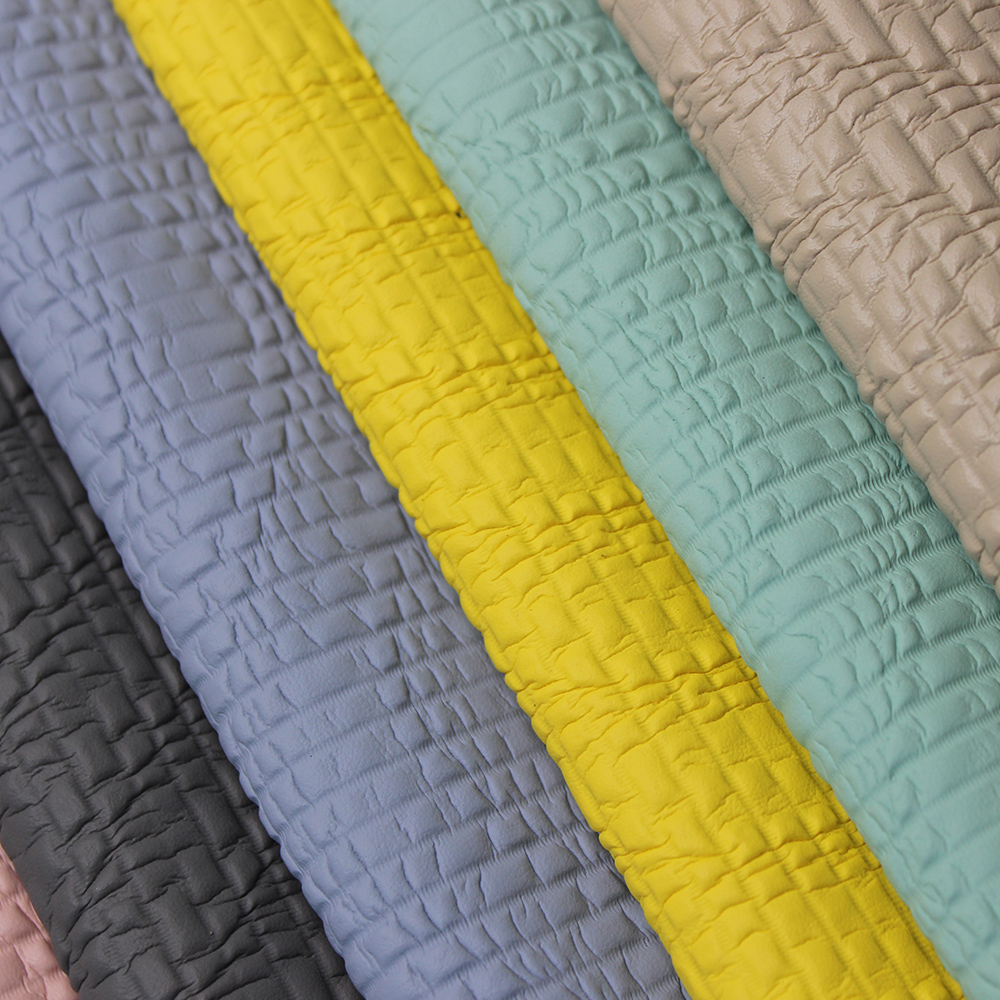
XZ73600 1.0mm Fine Wrinkle Grain PVC Leather for Sofa Upholstery
-
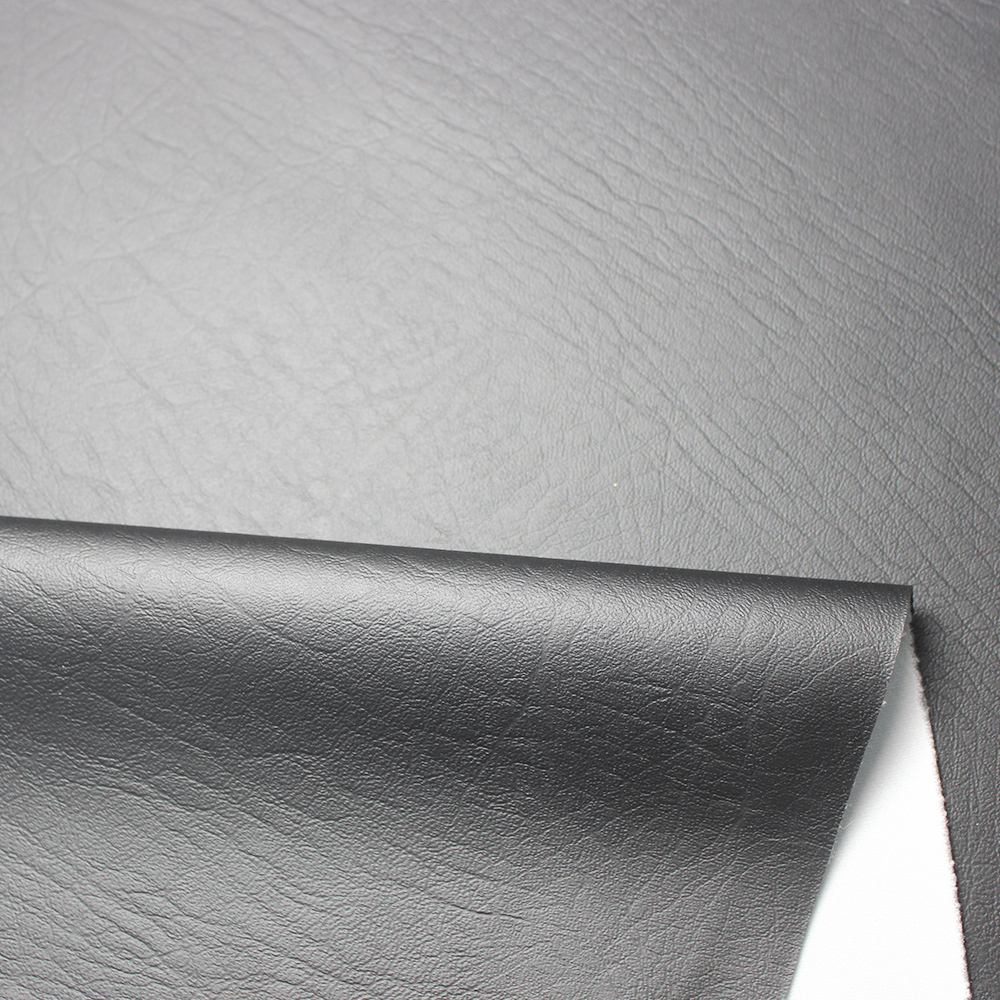
XZ73479 0.7mm Natural Wrinkle Grain PVC Leather for Motorcycle Seats with Four-Way Stretch Backing
Appearance
Wrinkle grain can create:
- Irregular surface lines
- Natural-looking variation
- Softer visual character
- More organic pattern distribution
- Less repetitive appearance
This can be useful for applications where an overly uniform synthetic surface would not fit the design.
Furniture and Upholstery
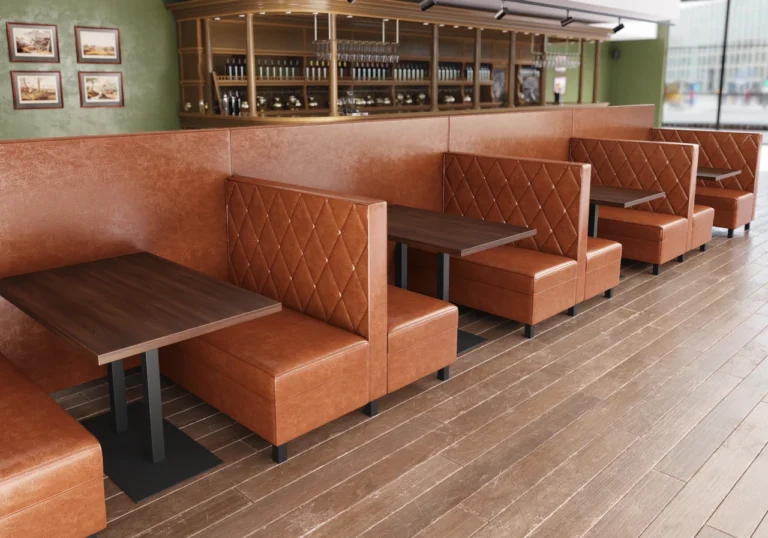
Wrinkle grain works particularly well in furniture because large upholstered surfaces give the pattern enough area to develop visually.
Possible applications include:
- Sofas
- Chairs
- Headboards
- Upholstered wall panels
- Decorative seating
Buyers can compare relevant constructions in Sofa & Upholstery Leather and Furniture Leather.
Grain and Softness Should Be Evaluated Separately
A wrinkle appearance can make a material look soft, but this does not automatically mean the physical material is soft.
A wrinkle-grain PVC leather could still use:
- Different total thicknesses
- Different coating constructions
- Different backing fabrics
- Different stiffness levels
If soft upholstery behavior is required, evaluate:
- Hand feel
- Folding
- Draping
- Upholstery fitting
- Stretch
- Recovery
in addition to the surface grain.
Wrinkle Grain During Upholstery
Wrinkle patterns should also be checked after the material is stretched over foam.
Excessive stretching can flatten or distort some surface structures.
The buyer should inspect whether the grain remains visually balanced around:
- Cushion corners
- Seat edges
- Curved armrests
- Backrest contours
- Sewn seams
A representative upholstery trial provides a more useful approval standard than a small flat sample alone.
How to Choose Between Fine Grain, Litchi, Pebble and Wrinkle
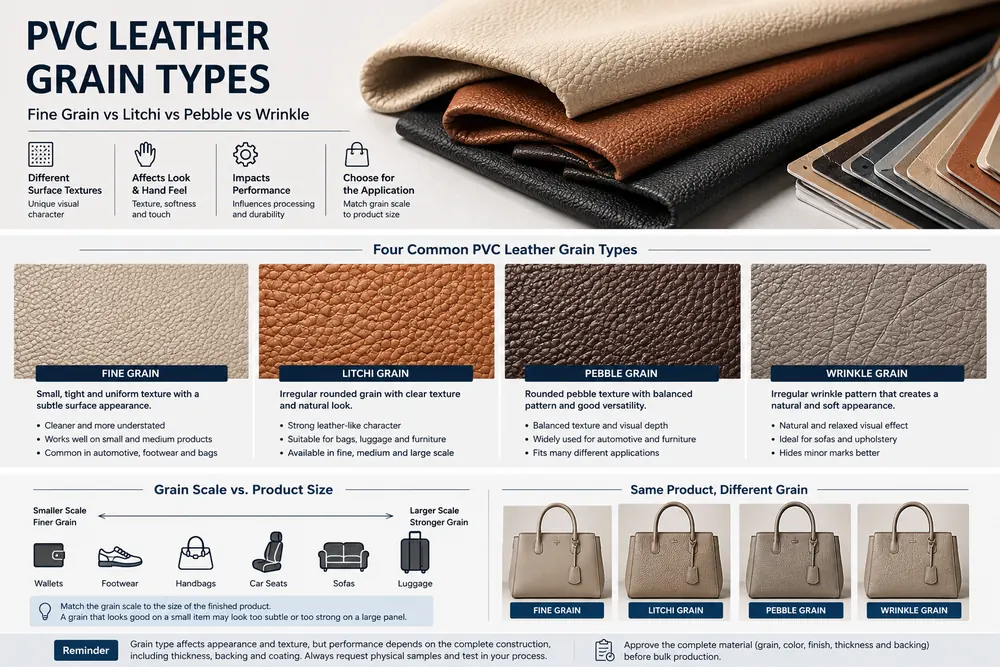
There is no single PVC leather grain that is best for every product.
The correct choice depends primarily on the desired visual effect and the scale of the finished component.
A practical comparison is:
| Grain Type | Typical Visual Character | Common Application Direction |
|---|---|---|
| Fine Grain | Small, subtle and controlled | Automotive trim, footwear, bags, furniture |
| Litchi Grain | Strong, rounded and recognizable | Bags, luggage, furniture, automotive |
| Pebble Grain | Balanced, textured and versatile | Automotive, motorcycle seats, bags, furniture |
| Wrinkle Grain | Irregular, natural and softer-looking | Sofas, furniture, decorative upholstery |
Compare PVC Leather Grain Types
Explore representative fine grain, litchi, pebble and wrinkle PVC leather constructions for different manufacturing applications.
-
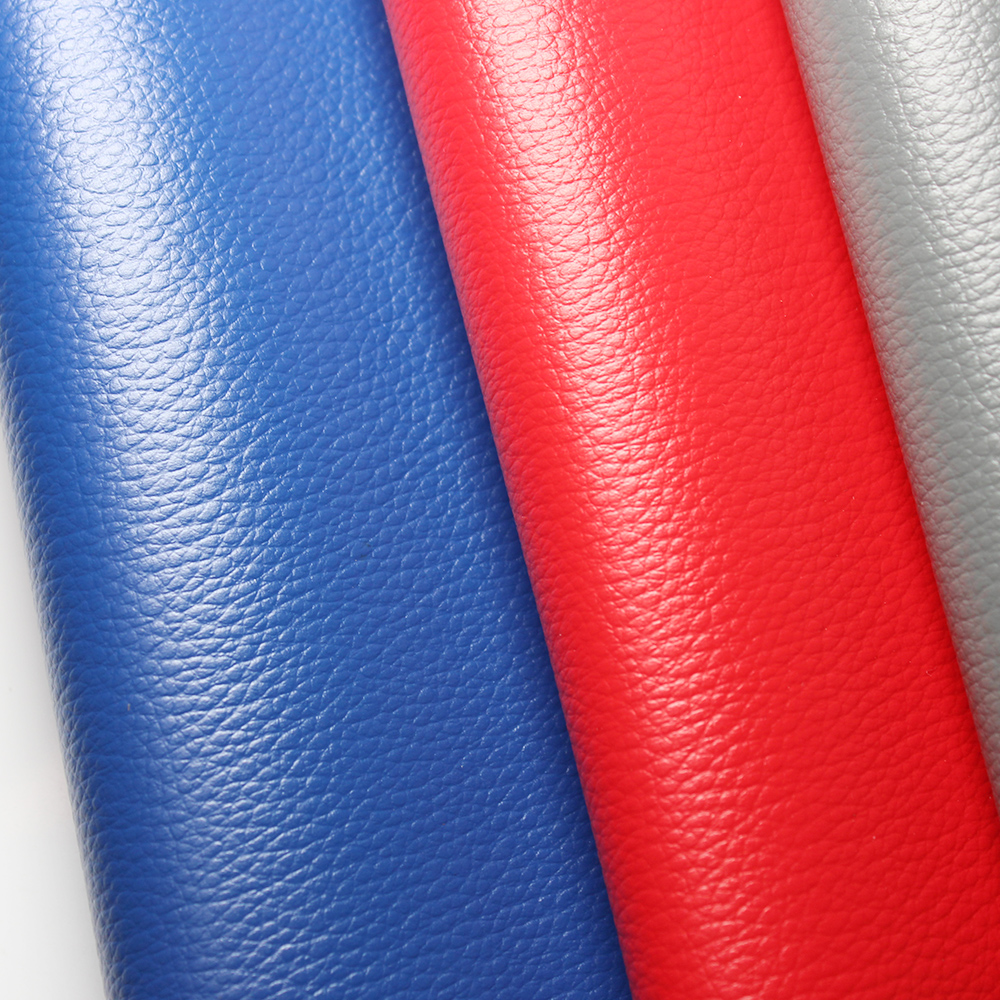
XZ73460 1.2mm Pebble Grain PVC Leather for Motorcycle Seats with Four-Way Stretch Backing
-
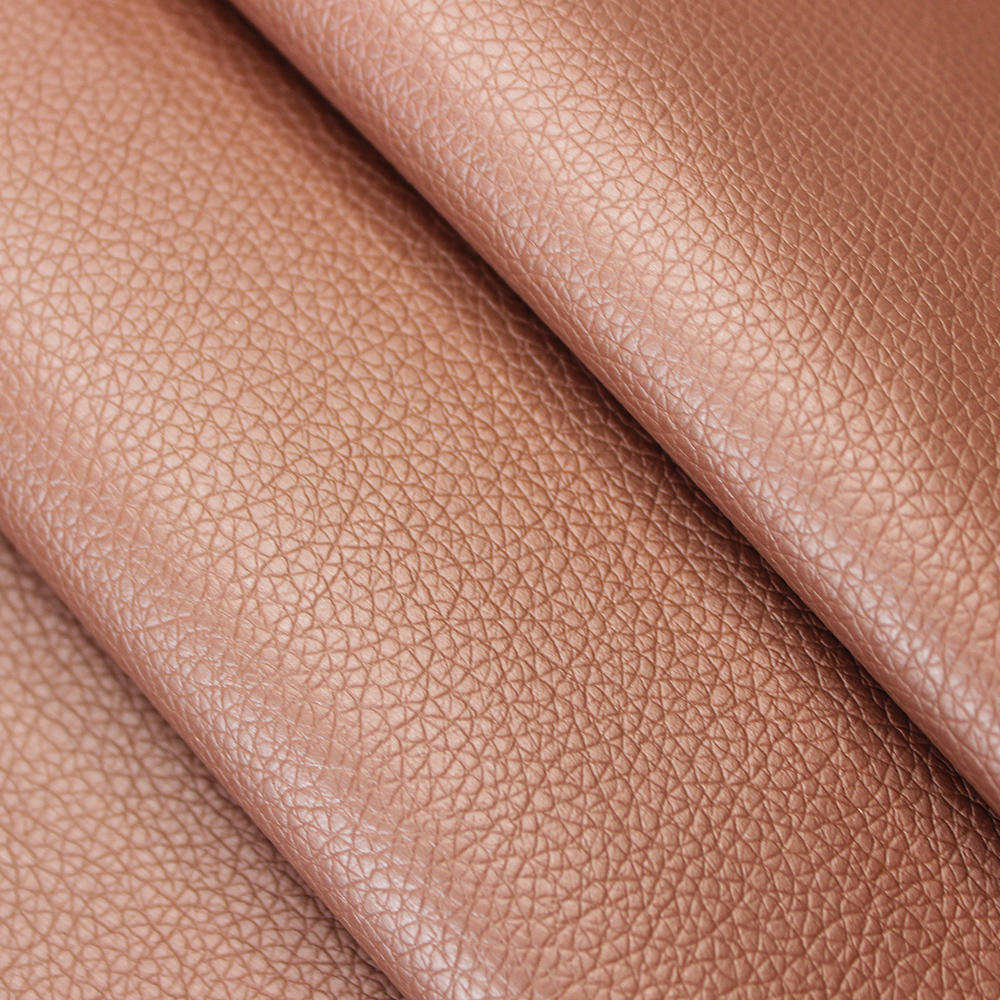
XZ73255 0.7mm Fine Litchi Grain PVC Leather with 28G 3+1 Knitted Backing for Car Seats
-
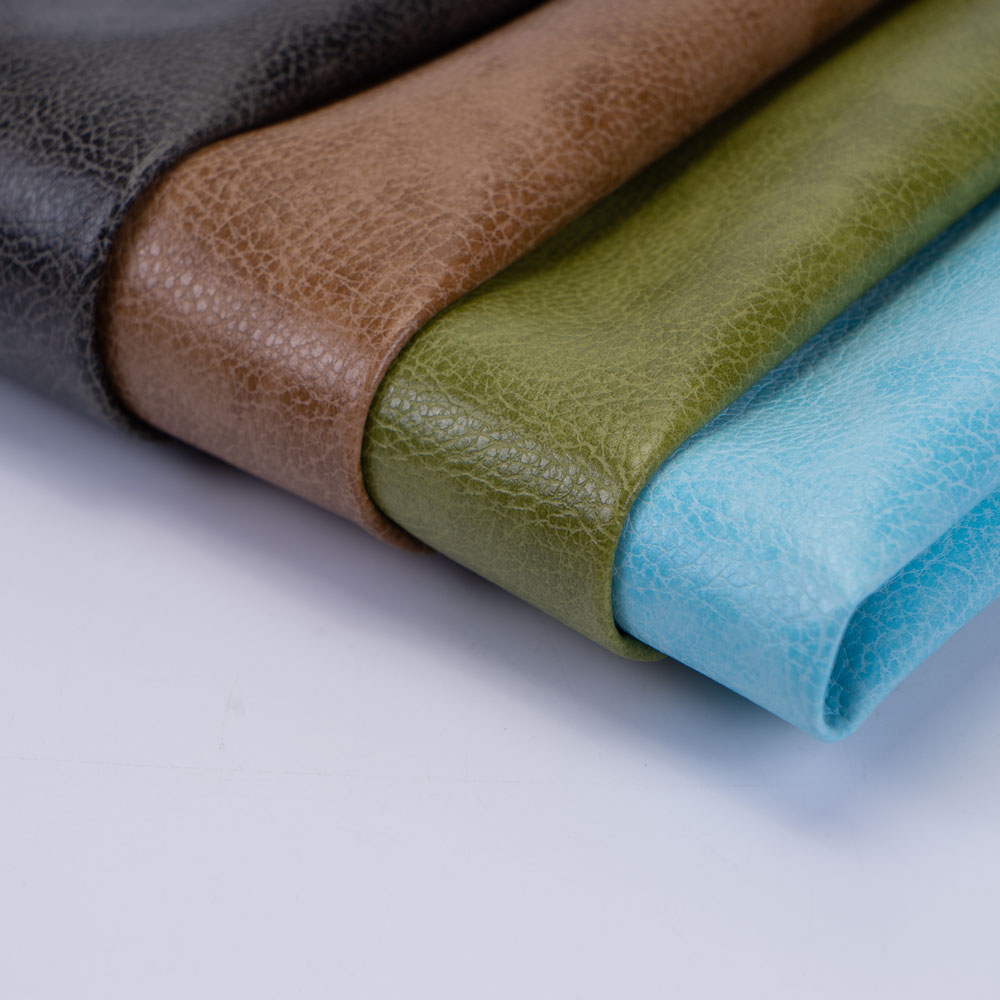
XZ60029 1.0mm Two-Tone Litchi Grain PVC Leather with Terry Backing for Bags
-
XZ73456 1.1mm Natural Wrinkle Grain PVC Leather for Sofa Upholstery
These are application directions, not fixed technical limitations.
The same grain can be used in several industries if the complete material construction meets the project requirements.
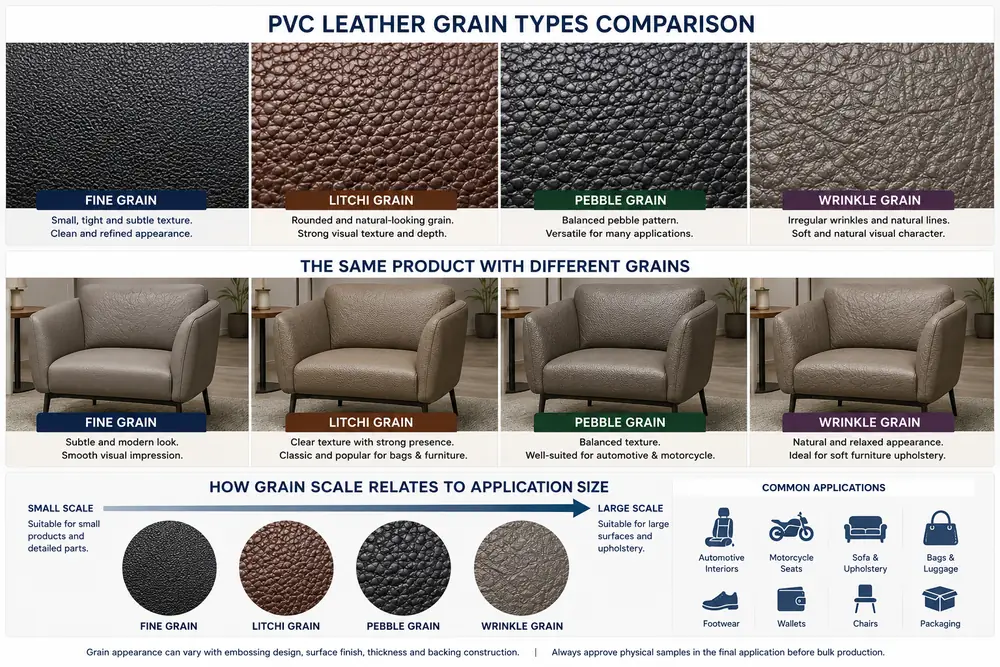
Compare the Grain at the Correct Scale
Do not choose only from enlarged website photographs.
Request physical samples and evaluate them at approximately the same viewing distance and component size as the finished product.
For small products, check whether the pattern looks too large.
For large upholstery panels, check whether the grain becomes too subtle or repetitive.
Compare Surface Finish at the Same Time
Once the grain is selected, compare the finish.
For example:
Fine Grain + Matte
and
Fine Grain + High Gloss
can look like completely different materials.
The final approved reference should therefore include both grain and finish.
Check Thickness and Backing Separately
Surface texture does not tell you what is underneath the material.
Two identical grains may be produced on different backing constructions.
Backing can affect:
- Stretch
- Recovery
- Sewing
- Folding
- Material body
- Dimensional stability
- Upholstery behavior
See Common PVC Leather Backing Options when comparing backing constructions.
Test the Finished Product
The final decision should be based on how the grain works on the actual product.
A useful approval sequence is:
Select grain → select color and finish → confirm thickness and backing → make a representative sample → approve the complete material.
This avoids choosing a surface that looks attractive as a small swatch but performs poorly once converted into the finished component.
When requesting PVC leather samples, tell the supplier your application, preferred grain scale, color, finish, thickness, backing and expected processing method.
Xiangze Leather can provide fine grain, litchi, pebble, wrinkle and other embossed PVC leather constructions for automotive interiors, furniture, bags, footwear and decorative manufacturing applications.

About Xiangze Leather
Written by Xiangze Leather Editorial Team
Xiangze Leather supplies PVC synthetic leather for furniture upholstery, bags, footwear, automotive interiors, motorcycle seats and decorative applications. Material samples, specification options and quotation support are available according to project requirements.