Why Steering Wheel Leather Fails After Wrapping: 5 Common Causes

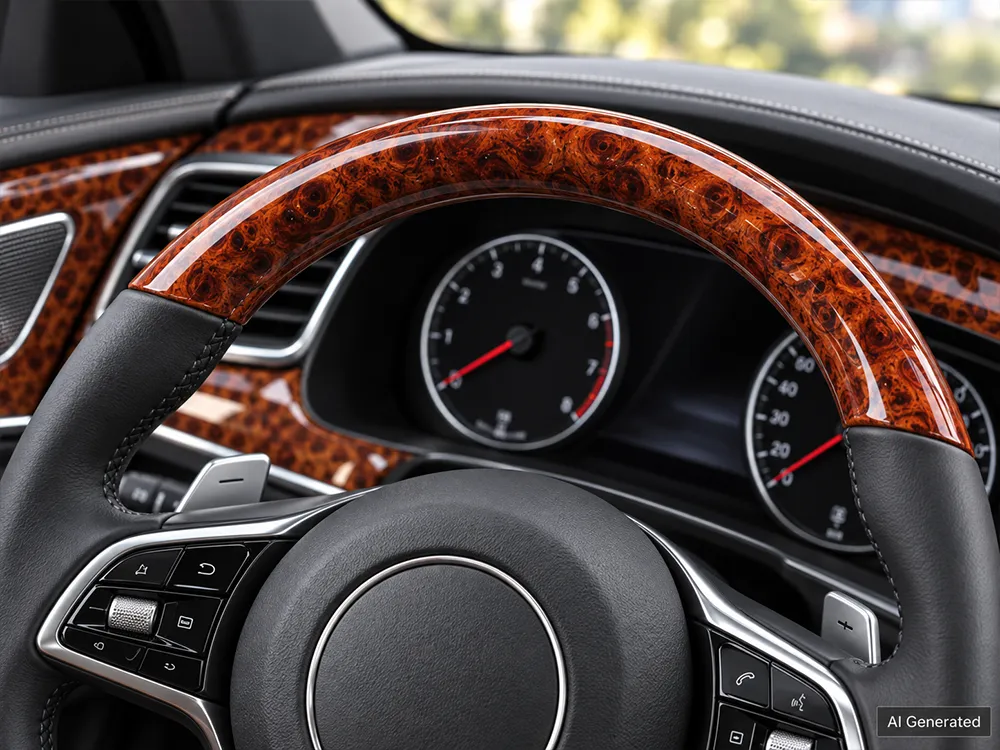
A steering wheel is much more difficult to wrap than a flat automotive interior panel.
The material must conform around a narrow circular rim, transition into spoke areas, remain stable around stitched edges and withstand continuous hand contact after installation.
This is why specifications such as 0.7 mm thickness and knitted fabric backing are useful, but they are not enough to determine whether a synthetic leather will perform well on a finished steering wheel.
For buyers and steering wheel manufacturers, directional stretch, recovery, surface coating, adhesive compatibility and the wrapping process should all be evaluated before bulk production.
Xiangze supplies different synthetic leather for automotive interiors, including materials for car seats, interior trim and selected steering wheel wrapping applications.
Wrinkles and Uneven Surface After Wrapping
Wrinkles usually become most visible around curved sections and transitions between the steering wheel rim and spokes.
The first factor to check is directional elongation.
A synthetic leather may stretch differently in the machine and cross directions. With knitted backing, this difference can become especially noticeable because the textile construction may provide greater flexibility than a more dimensionally stable backing.
If the cut panel is positioned in the wrong direction, one area may stretch smoothly while another area remains under excessive tension.
The result can include:
- surface wrinkles
- local bulging
- grain distortion
- uneven tension
- poor alignment around the spokes
For purchasing, stretch should therefore not be described only as “good flexibility.”
A better specification should consider:
machine-direction elongation + cross-direction elongation + recovery + actual cutting direction
Backing construction is also important. Different textile structures can behave differently during wrapping, stretching and sewing.
See our PVC Leather Backing Options guide for a comparison of knitted, terry, mesh, brushed and other backing types.
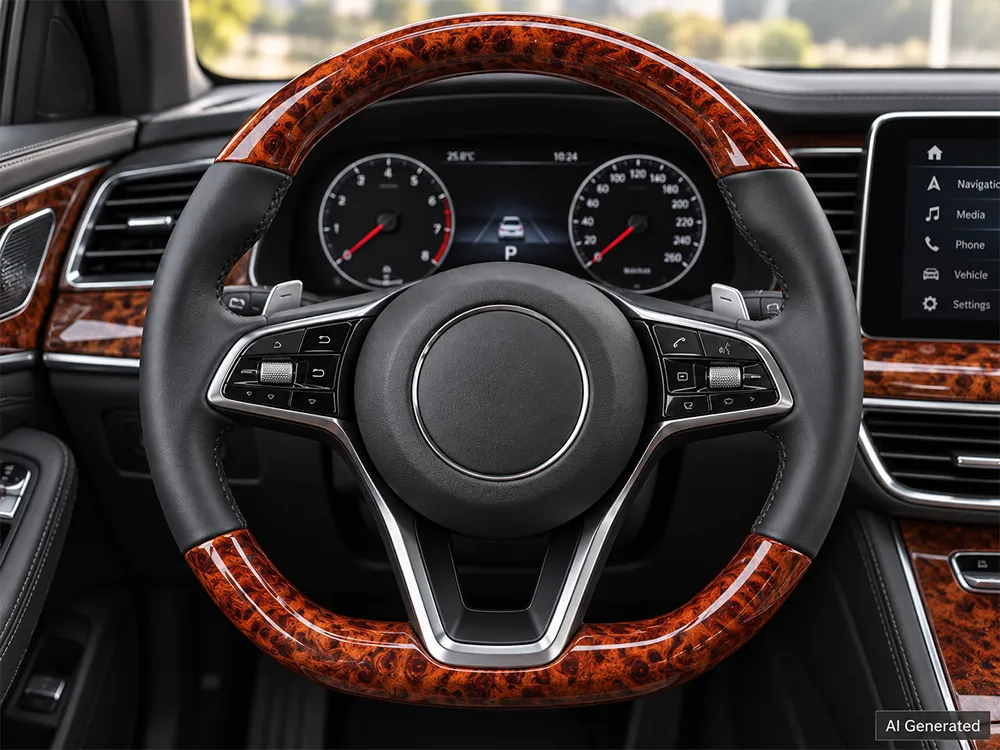
XZ73490 0.7mm High-Gloss PVC Leather for Steering Wheels uses a knitted fabric backing, making directional stretch and recovery especially important during wrapping evaluation.
Leather Lifting or Delamination Around Spokes
Spoke areas are among the most demanding parts of a wrapped steering wheel.
The material changes direction quickly, the curvature becomes more complex, and residual tension in the leather can pull the covering away from the substrate.
If the adhesive system cannot resist this stress, lifting may first appear around:
- spoke transitions
- tucked edges
- corners
- high-tension wrapped areas
The complete bonding system includes:
synthetic leather → backing → adhesive → intermediate layer → steering wheel substrate
Changing only one component can affect the final result.
Adhesive type, coating amount, surface preparation, curing conditions and material rebound should therefore be confirmed together.
This is also why backing should never be treated as only a specification line on the product sheet. A flexible knitted construction may help with wrapping around curves, but its stretch and recovery must still work with the selected adhesive and wrapping method.
For a broader explanation of how thickness and textile construction influence automotive processing, see our Car Seat Leather Thickness and Backing Guide.
Before bulk production, buyers should validate the leather, adhesive, substrate and wrapping process as one system.
Surface Peeling After Repeated Hand Contact
A steering wheel is one of the highest-contact surfaces inside a vehicle.
Unlike a dashboard or door panel, it is continuously exposed to:
hand sweat · skin oils · cosmetics · sunscreen · hand creams · cleaning products
These substances repeatedly contact the top coat while the driver’s hands also create friction.
This makes steering-wheel surface durability different from ordinary abrasion resistance.
One particularly important factor is oleic acid, which is used in automotive material testing to represent substances associated with skin oils and cosmetics.
A steering wheel material may therefore perform well in a normal abrasion test but still develop surface coating problems after long-term hand contact.
For demanding steering-wheel projects, buyers should consider both:
mechanical abrasion resistance + resistance to substances encountered during hand contact
This is also why automotive material evaluation should go beyond appearance alone. Xiangze’s Auto & Motorcycle Leather collection includes different surface, thickness and backing constructions for automotive upholstery applications.
Gloss Change, Discoloration and Premature Wear
Not every shiny steering wheel means the material has completely failed.
Changes in gloss can result from repeated friction, accumulated skin oils, changes in the top coat or a combination of these factors.
The most frequently touched areas normally experience the greatest mechanical and chemical exposure.
Over time, manufacturers may see:
- localized gloss increase
- loss of grain definition
- color change
- surface tackiness
- coating wear
- gradual peeling
Cleaning products can make the problem worse if they are incompatible with the finish.
UV exposure and elevated cabin temperatures can add another aging load, especially for vehicles parked outdoors for long periods.
For steering wheel sourcing, the surface specification should therefore go beyond simply requesting:
matte / gloss / wood grain / black
The buyer should also define the expected requirements for:
top-coat durability · hand-contact resistance · cleaning resistance · color stability
For other automotive upholstery constructions, buyers can also compare materials in our Car Seat Leather collection.
Loose Stitching, Puckering and Edge Problems
Sometimes the leather itself passes material testing but the finished steering wheel still looks poor.
In these cases, the problem may come from the wrapping and sewing process.
Common causes include:
incorrect panel dimensions · uneven stretch direction · excessive sewing tension · insufficient tension · poor spoke alignment · improper edge tucking
If one side of the panel is stretched more than the other, the seam may gradually move away from its intended position.
If stitching tension is too high, puckering can develop around the seam.
If it is too low, the covering can feel loose or shift during use.
For buyers, this means that a steering wheel leather sample should ideally be evaluated through the actual cutting, adhesive, wrapping and sewing process before approving bulk material.
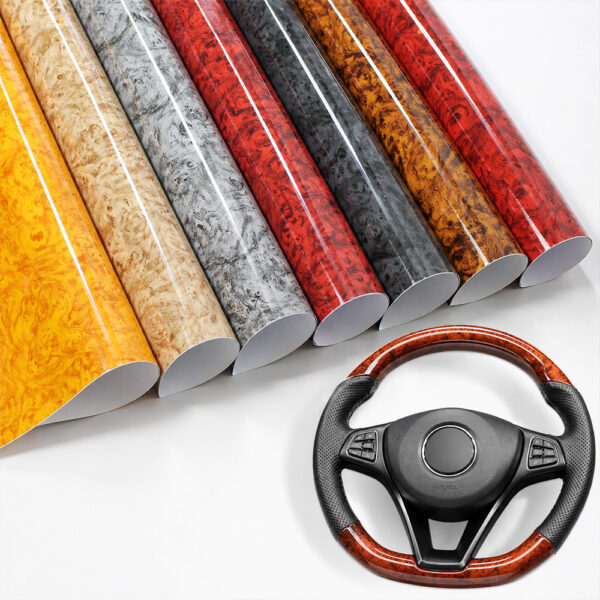
XZ73490 is a 0.7 mm PVC synthetic leather with knitted fabric backing developed for steering wheel wrapping and selected automotive interior trim applications.
The relatively thin construction helps reduce excessive bulk around curved and wrapped sections, while the knitted backing provides textile-supported flexibility.
However, these two specifications should be treated as the starting point rather than the complete steering-wheel specification.
For an actual project, buyers should further evaluate:
directional elongation → recovery → surface coating → adhesive compatibility → cutting direction → stitching → finished-wheel testing
That is the difference between simply buying a 0.7 mm synthetic leather and selecting a material specifically for steering wheel wrapping production.
For other vehicle interior materials and application options, visit Synthetic Leather for Automotive Interiors or contact Xiangze Leather with your steering wheel construction, surface and backing requirements.