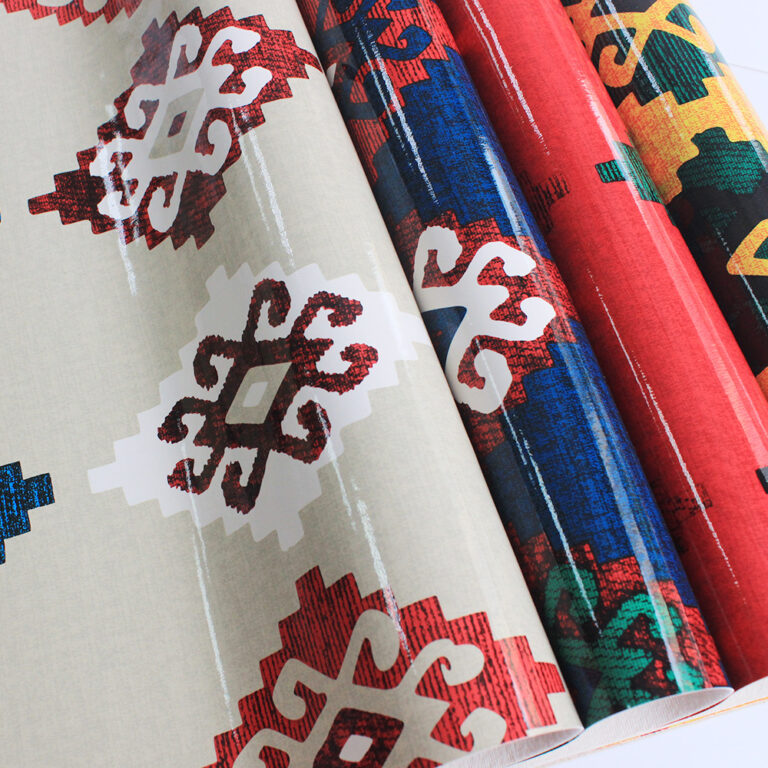
How to Evaluate PVC Leather Samples Before Bulk Production

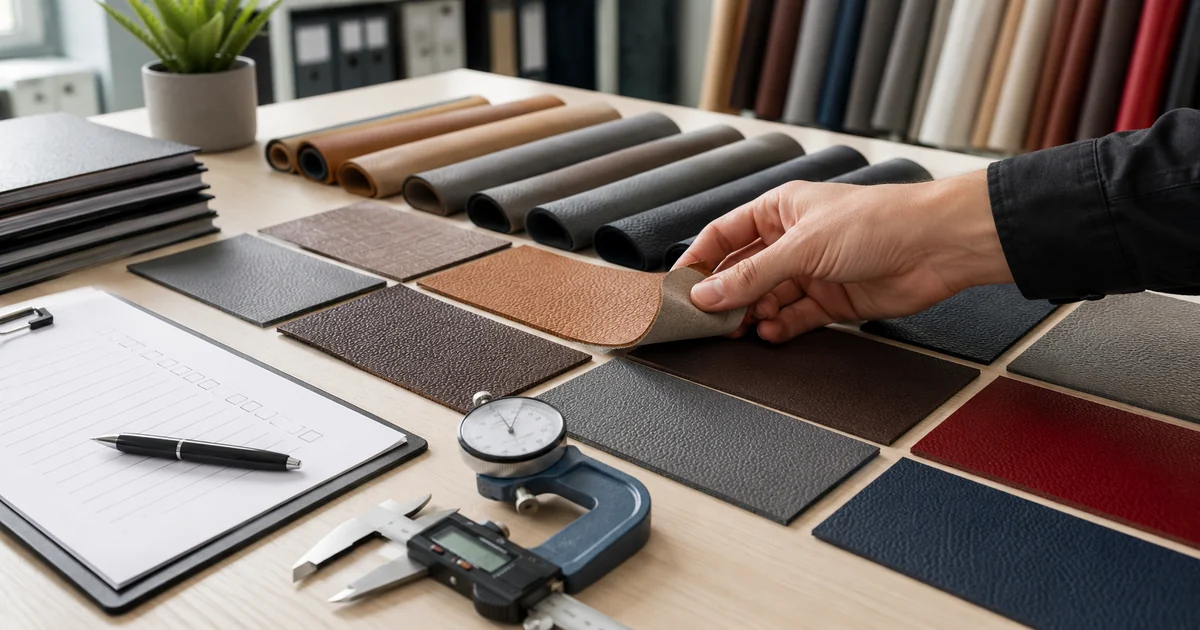
Evaluating PVC leather samples before bulk production is one of the most important steps in material sourcing.
A sample may look suitable when viewed as a small flat swatch but behave differently during cutting, sewing, stretching, wrapping, bonding or installation.
Color and grain are only part of the evaluation.
Manufacturers should also confirm thickness, backing construction, flexibility, material body, processing behavior and any performance requirements relevant to the finished product.
For large orders, the purpose of sample evaluation is not simply to decide whether the leather “looks good.”
The objective is to confirm that the complete material specification can work with the actual product design and production process.
Xiangze Leather supplies PVC Leather Materials for automotive interiors, furniture, bags, footwear, packaging and other manufacturing applications.
This guide explains a practical process for evaluating PVC leather samples before approving bulk production.
Start with the Finished Application
A PVC leather sample cannot be evaluated properly without knowing where it will be used.
Different products place different demands on the material.
For example:
- Car seats require upholstery flexibility, sewing stability and project-specific automotive performance.
- Motorcycle seats may require controlled stretch and good conformity around curved foam.
- Sofas require suitable softness, backing support and upholstery performance.
- Bags may require folding, edge painting, skiving and hardware installation.
- Shoe uppers require flexing, stitching, lasting and bonding performance.
- Packaging leather needs clean folding, wrapping and adhesive compatibility.
This means that the same sample can be suitable for one application but unsuitable for another.
Before evaluation, define:
- Finished product
- Exact component
- Production method
- Required thickness
- Backing preference
- Surface grain
- Color
- Expected usage
- Required testing standards
Buyers comparing applications can explore our Auto & Motorcycle Leather, Sofa & Upholstery Leather, Bag & Luggage Leather, Footwear & Garment Leather and Decorative Leather collections.
Do Not Rely on a Small Swatch Alone
A small swatch is useful during the first stage of material selection.
It can help buyers compare:
- Approximate color
- Surface grain
- Gloss
- Hand feel
- Basic thickness
- Backing appearance
However, a small swatch cannot reliably show how the material behaves during real production.
It is difficult to evaluate:
- Large-pattern repeat
- Cutting stability
- Stretch direction
- Recovery
- Multi-layer sewing
- Corner wrapping
- Upholstery behavior
- Edge painting
- Adhesive compatibility
from a small piece of material.
Once the initial color and surface have been accepted, request a larger sample whenever possible.
The larger sample should be sufficient to produce a representative component rather than only being handled by hand.
For example:
- Upholster a seat or cushion section.
- Produce a handbag panel.
- Sew a shoe upper.
- Wrap a sample packaging box.
- Test an automotive seat panel.
The closer the sample test is to the real production process, the more useful the result becomes.
Check Appearance and Material Specifications
Check Color Under Suitable Lighting
Color should be evaluated using a physical sample.
Computer screens, mobile phones, photography and artificial lighting can all change the apparent color.
When exact color is important, compare the sample with:
- Approved physical color swatch
- Existing production reference
- Customer color card
- Other agreed physical standard
Evaluate the material under consistent lighting.
Pay attention to whether the color changes significantly between:
- Natural daylight
- Indoor lighting
- Warm light
- Cool light
Some metallic, pearlescent, distressed and special-effect surfaces can look especially different depending on viewing angle and lighting.
For bulk production, the approved physical sample should become the reference rather than a photograph.
Evaluate Grain and Pattern Scale
Surface grain should be evaluated according to the dimensions of the finished product.
A grain that looks attractive on a small sample can appear very different across a full sofa panel, car seat or large handbag.
Check:
- Grain size
- Grain depth
- Pattern direction
- Surface uniformity
- Embossing definition
- Print repeat
- Decorative effect
Directional designs require particular attention.
These can include:
- Stripes
- Woven patterns
- Geometric textures
- Chevron patterns
- Printed designs
Manufacturers should determine the cutting direction before bulk production so separate panels remain visually consistent.
Large printed or embossed repeats should ideally be reviewed using a sample large enough to show the complete pattern.
Confirm Surface Finish and Gloss
PVC leather can use different surface finishes.
Common examples include:
- Matte
- Semi-matte
- Low gloss
- Semi-gloss
- High gloss
- Metallic
- Pearlescent
- Distressed
- Two-tone
- Printed effects
Gloss should be evaluated on the actual grain.
The same gloss level can look different on a smooth surface and a deeply embossed surface.
Also check whether the surface shows:
- Scratches
- Finger marks
- Pressure marks
- Creases
- Whitening after folding
High-gloss and smooth surfaces may make minor handling marks more visible than heavily textured materials.
Measure the Actual Thickness
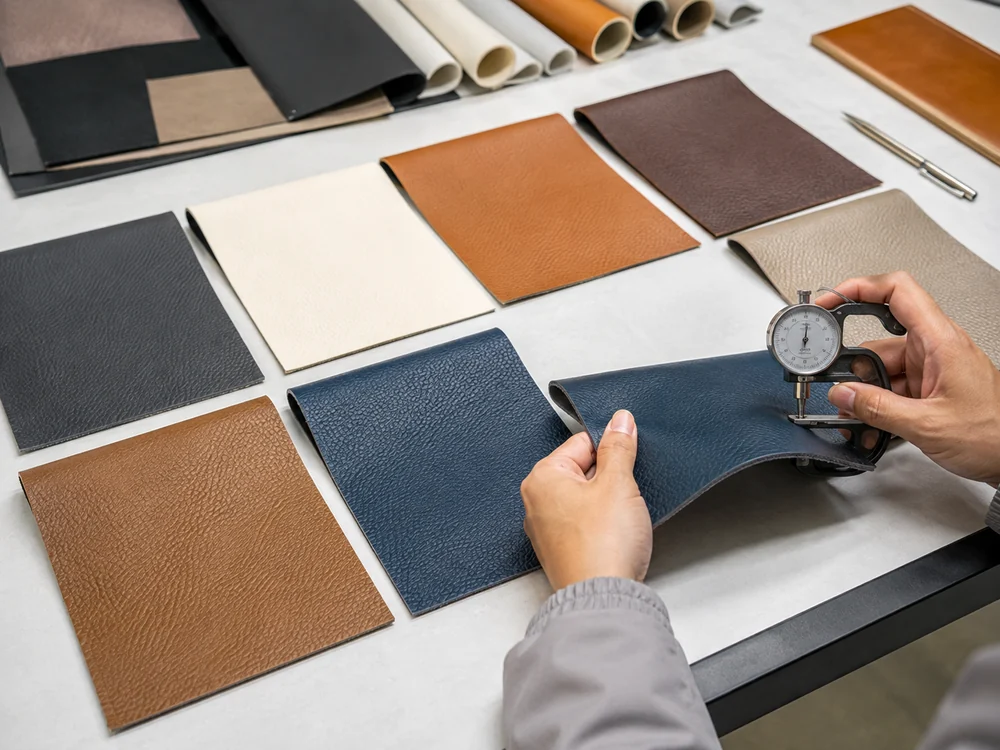
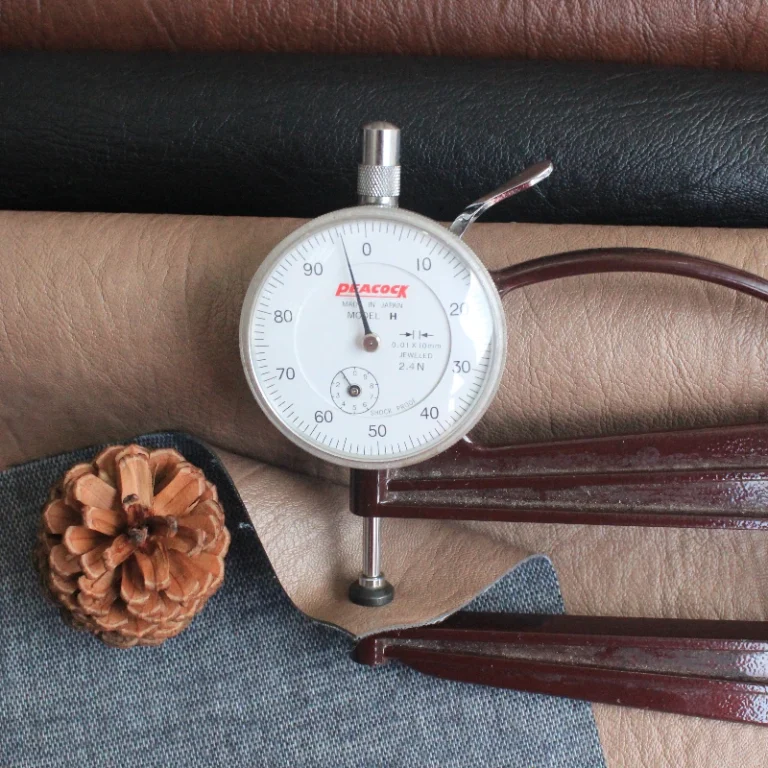
Do not evaluate thickness only by hand feel.
Use an appropriate thickness gauge where accurate specification is required.
Confirm:
- Nominal thickness
- Actual sample thickness
- Acceptable tolerance
- Whether the stated thickness includes the complete backing construction
Thickness should also be evaluated together with the finished application.
A thicker material is not automatically stronger or more durable.
For example, a thicker PVC leather may create problems with:
- Tight folding
- Multi-layer seams
- Corner wrapping
- Skiving
- Shoe lasting
while a thinner material may require more reinforcement in structured products.
The correct specification is determined by the complete construction.
Inspect the Backing Construction
Turn the sample over and inspect the backing carefully.
Backing can significantly affect:
- Stretch
- Recovery
- Flexibility
- Tear behavior
- Dimensional stability
- Sewing
- Bonding
- Material body
Xiangze Leather currently uses many backing constructions, including knitted, terry, brushed, mesh, stretch, four-way stretch, Oxford, denim, microfiber, spunlace nonwoven and other specialized structures.
For a detailed comparison, see Common PVC Leather Backing Options.
Do not accept vague descriptions such as simply “fabric backing” when the backing is important to production.
Where necessary, confirm:
- Exact backing name
- Fabric construction
- Fabric density
- Stretch direction
- Stretch amount
- Backing thickness
Two materials with the same PVC surface and total thickness can behave differently because their backing constructions are different.
Check Hand Feel and Material Body
Hand feel should be evaluated according to the finished product.
Important characteristics can include:
- Softness
- Firmness
- Flexibility
- Surface touch
- Material body
- Recovery
A sofa or soft handbag may need a more flexible material.
A structured briefcase or furniture panel may require more body.
Motorcycle seats may require flexibility together with controlled stretch.
Shoe uppers need enough flexibility for forming and repeated bending without becoming excessively unstable.
The goal is not always maximum softness.
The correct hand feel is the one that works with the finished product structure.
Evaluate Flexibility and Material Behavior
Check Stretch Direction and Recovery
Stretch should be tested in more than one direction.
Some backing fabrics behave differently:
- Along the roll
- Across the roll
A material may stretch easily in one direction while remaining relatively stable in the other.
This can affect:
- Cutting orientation
- Upholstery
- Grain distortion
- Seam alignment
- Shoe forming
- Finished shape
Stretch the sample and then release it.
Observe whether it returns toward its original dimensions.
Poor recovery can lead to:
- Loose upholstery
- Distorted bag panels
- Grain deformation
- Wrinkles
- Permanent stretching
For curved applications, such as Car Seat Leather and Motorcycle Seat Leather, stretch and recovery should ideally be tested on the actual foam shape.
Bend and Fold the Sample
Repeated folding is a simple but useful initial evaluation.
Fold the sample in the directions expected during production and look for:
- Surface whitening
- Grain distortion
- Cracking
- Coating separation
- Permanent crease marks
- Backing damage
Different applications require different folding behavior.
For example:
- Wallets have repeated fold areas.
- Bag flaps open and close repeatedly.
- Shoe uppers flex during walking.
- Recliner upholstery bends during operation.
- Packaging leather folds around rigid edges.
A sample that remains stable when lying flat may behave differently after repeated bending.
Check Coating Adhesion
The PVC surface and backing need to remain bonded as one material.
Poor adhesion can result in:
- Peeling
- Bubbling
- Delamination
- Surface separation
Inspect the sample after:
- Folding
- Stretching
- Sewing
- Cutting
- Repeated handling
If the project has a defined coating-adhesion test requirement, laboratory testing should be used rather than relying only on hand inspection.
Strong backing cannot compensate for poor coating adhesion.
Test the Actual Production Process
Test Cutting Stability
Use the actual cutting method planned for production.
This may include:
- Manual cutting
- Die cutting
- CNC cutting
- Pattern cutting
- Other factory processes
Check whether the material:
- Lies flat
- Maintains dimensions
- Stretches during cutting
- Produces clean edges
- Distorts directional patterns
- Causes excessive waste
Cut several identical pieces where practical and compare their dimensions.
This is particularly important for flexible or stretch-backed materials.
For bags and footwear, accurate panel dimensions directly affect later sewing and assembly.
Test Sewing with the Actual Machine
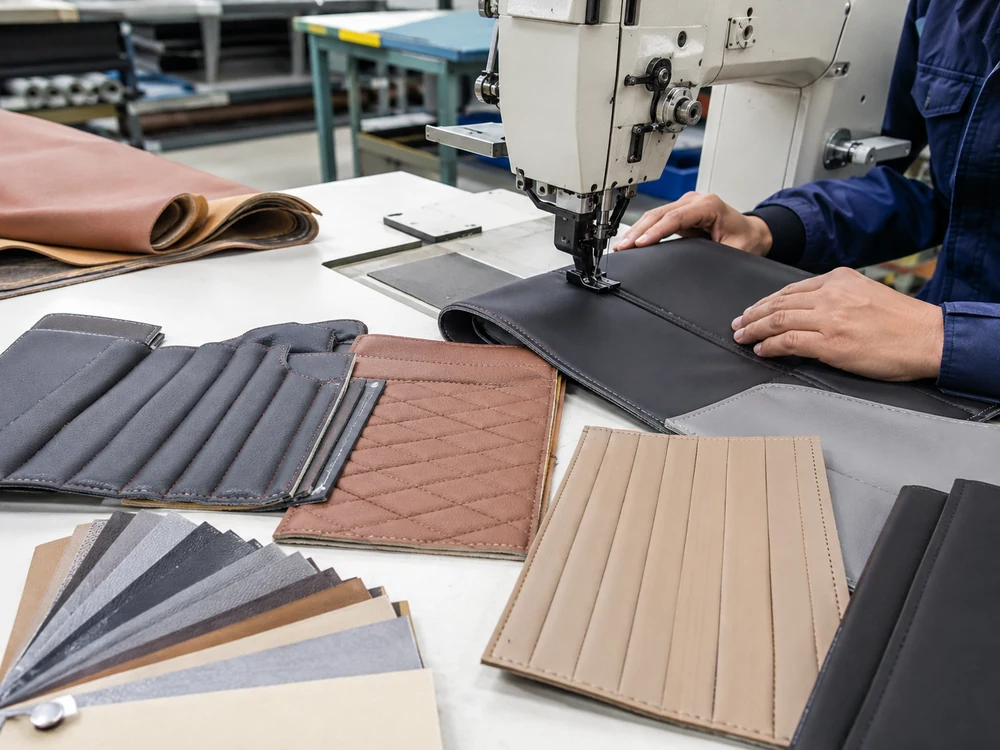
Do not evaluate sewing performance only with a hand needle.
Use the same or similar:
- Sewing machine
- Needle
- Thread
- Stitch spacing
- Sewing speed
- Seam construction
planned for production.
Check:
- Needle penetration
- Stitch-hole strength
- Edge tearing
- Seam appearance
- Material feeding
- Surface scratching
- Wrinkling
- Layer movement
The sample should also be tested using the actual number of material layers.
A material that sews easily as one layer may behave differently when several folded layers meet at a seam.
This is particularly relevant for Bag Leather and Shoe Upper Leather.
Test Folding, Skiving and Edge Finishing for Bags
Bag and small leather goods manufacturers should perform additional processing tests.
Depending on the product, evaluate:
- Folding
- Skiving
- Edge painting
- Binding
- Zipper sewing
- Rivet installation
- Hardware attachment
A leather suitable for a backpack body may not perform well on a wallet edge.
Check whether skiving causes:
- Backing separation
- Uneven thickness
- Surface distortion
For painted edges, confirm:
- Cut-edge quality
- Paint adhesion
- Surface cleanliness
- Finished edge consistency
For a broader bag material selection process, see How to Choose Synthetic Leather for Bags.
Test Upholstery on the Actual Foam
Furniture and vehicle upholstery should be tested as a three-dimensional construction.
Use the intended foam or a representative component.
Evaluate:
- Stretch around curves
- Wrinkling
- Grain distortion
- Seam alignment
- Stapling performance
- Recovery after installation
- Finished appearance
A flat sample cannot accurately reproduce upholstery tension.
For sofa projects, the material can be tested on a cushion or small sofa section.
For car or motorcycle seats, test the leather on the actual seat foam whenever possible.
Buyers sourcing furniture materials can compare Sofa Leather and Furniture Leather constructions separately according to the application.
Test Lasting and Flexing for Shoe Uppers
Footwear production introduces different stresses.
PVC shoe upper leather may need to be:
- Cut
- Sewn
- Folded
- Lasted
- Bonded
- Repeatedly flexed
Use the actual shoe construction when possible.
Pay attention to:
- Surface whitening
- Grain distortion
- Cracking
- Stitch stability
- Stretch during lasting
- Recovery
- Adhesive bonding
A flat sample may look suitable but become difficult to form around the toe or heel.
For footwear-specific selection, explore our Shoe Upper Leather collection.
Test Adhesive Compatibility
Adhesive compatibility is particularly important for:
- Packaging
- Shoe components
- Automotive panels
- Furniture panels
- Reinforced bags
Use the actual:
- Adhesive
- Substrate
- Application quantity
- Drying conditions
- Temperature
- Pressure
planned for production.
Check for:
- Weak bonding
- Edge lifting
- Bubbling
- Delamination
- Adhesive penetration
- Surface staining
- Hardening
- Deformation
For packaging, test the material on the actual cardboard, MDF, plastic or other rigid substrate.
Buyers can compare thin decorative constructions in the Packaging Leather collection.
Confirm Durability and Performance Requirements
Test Cleaning and Stain Resistance
For sofa, automotive, table-cover and other frequently cleaned products, check how the surface responds to expected contamination.
Depending on the application, sample tests may include:
- Water
- Coffee
- Food
- Oil
- Makeup
- Clothing dye
- Mild cleaning solution
- Customer-specified cleaner
Do not use aggressive solvents unless the material specification allows them.
Observe whether cleaning causes:
- Color change
- Loss of gloss
- Surface whitening
- Softening
- Hardening
- Damage to the top finish
The correct test depends on the finished product environment.
Define Performance Testing Before Production
Visual inspection and factory processing tests do not replace laboratory performance tests.
Depending on the project, the buyer may need to specify requirements for:
- Abrasion resistance
- Tear strength
- Tensile strength
- Stitch-hole strength
- Coating adhesion
- Flex resistance
- Color fastness
- Light fastness
- UV exposure
- Heat aging
- Cold resistance
- Flame performance
- Hydrolysis resistance where relevant
- Restricted substances
- Odor
- Fogging for applicable automotive projects
Not every PVC leather needs every test.
The required tests should be selected according to:
- Application
- Customer
- Destination market
- Expected usage
- Contractual specification
Do not assume performance simply because a material is described as automotive, furniture or bag leather.
Compare Samples Using One Standard Checklist
When several samples are being considered, evaluate them using the same criteria.
| Evaluation Item | What to Confirm |
|---|---|
| Application | Exact finished product and component |
| Product Code | Supplier material reference |
| Color | Match to approved physical reference |
| Grain | Pattern, scale and direction |
| Finish | Matte, gloss, metallic or other effect |
| Thickness | Actual value and tolerance |
| Backing | Exact construction |
| Hand Feel | Required softness or firmness |
| Stretch | Direction and amount |
| Recovery | Stability after stretching |
| Cutting | Dimensional stability and clean edges |
| Sewing | Needle-hole and seam behavior |
| Folding | Whitening, cracking or deformation |
| Bonding | Adhesive and substrate compatibility |
| Upholstery | Wrapping and recovery where applicable |
| Surface | Scratch and handling behavior |
| Cleaning | Required stain and cleaner resistance |
| Performance | Required laboratory standards |
| Width | Effective production width |
Using the same checklist makes it easier to compare samples objectively.
Produce and Approve a Representative Sample
Produce a Representative Finished Sample
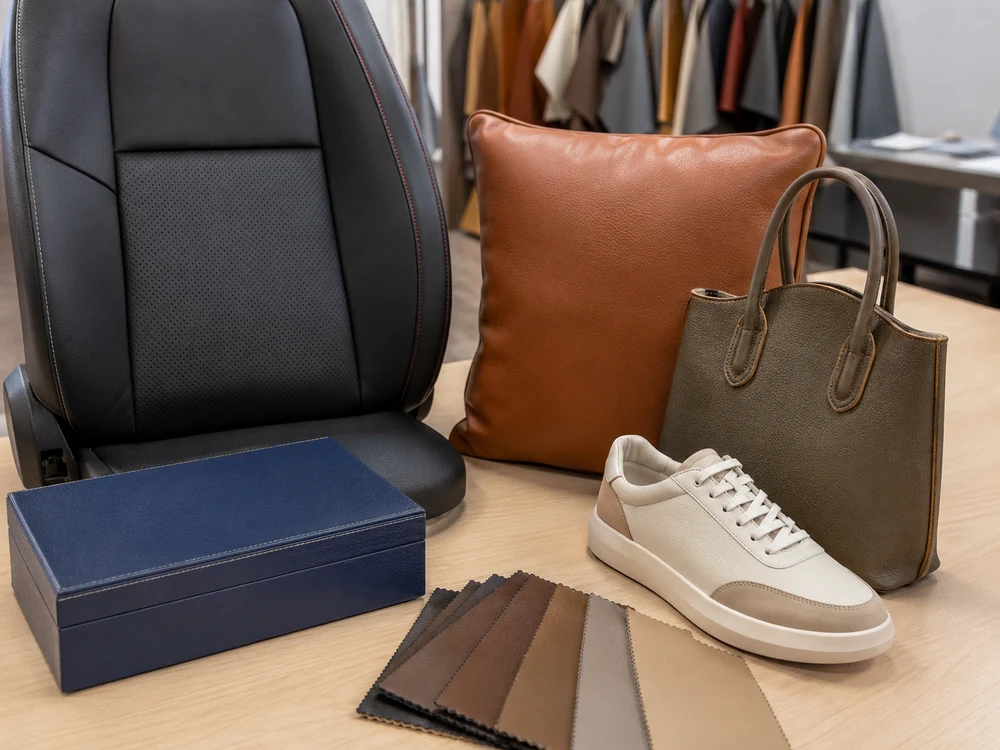
Before a large bulk order, the best test is usually a representative finished component.
Depending on the project, this can be:
- Complete handbag
- Bag panel
- Wallet
- Shoe upper
- Finished shoe
- Sofa cushion
- Upholstered chair panel
- Car-seat panel
- Motorcycle seat cover
- Packaging box
- Table cover
This stage tests the material together with the factory’s:
- Equipment
- Workforce
- Sewing settings
- Adhesive
- Foam
- Reinforcement
- Hardware
- Substrate
- Finishing process
Problems that do not appear during sample inspection can become obvious at this stage.
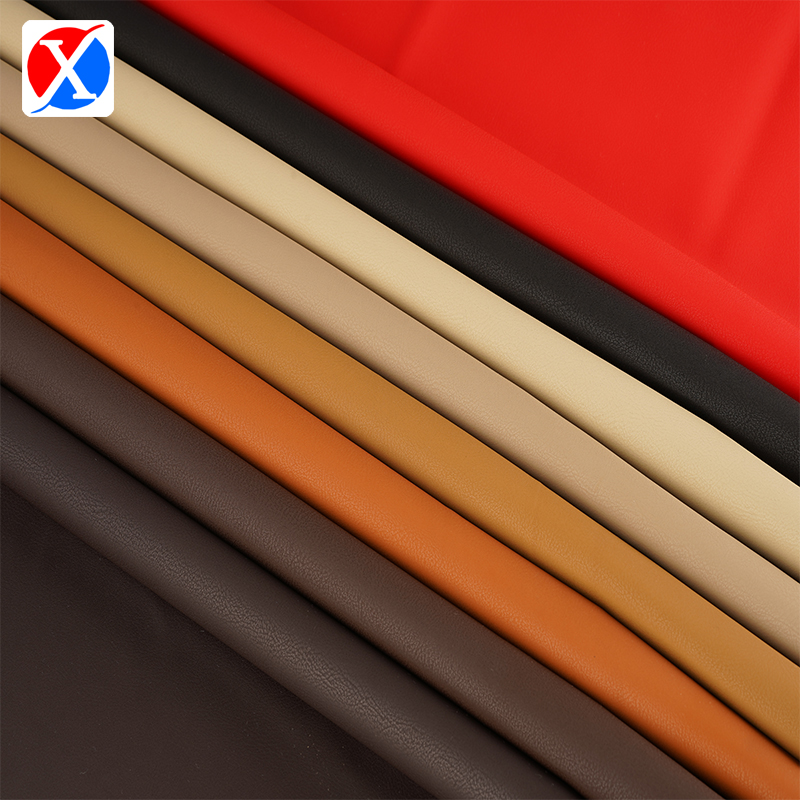
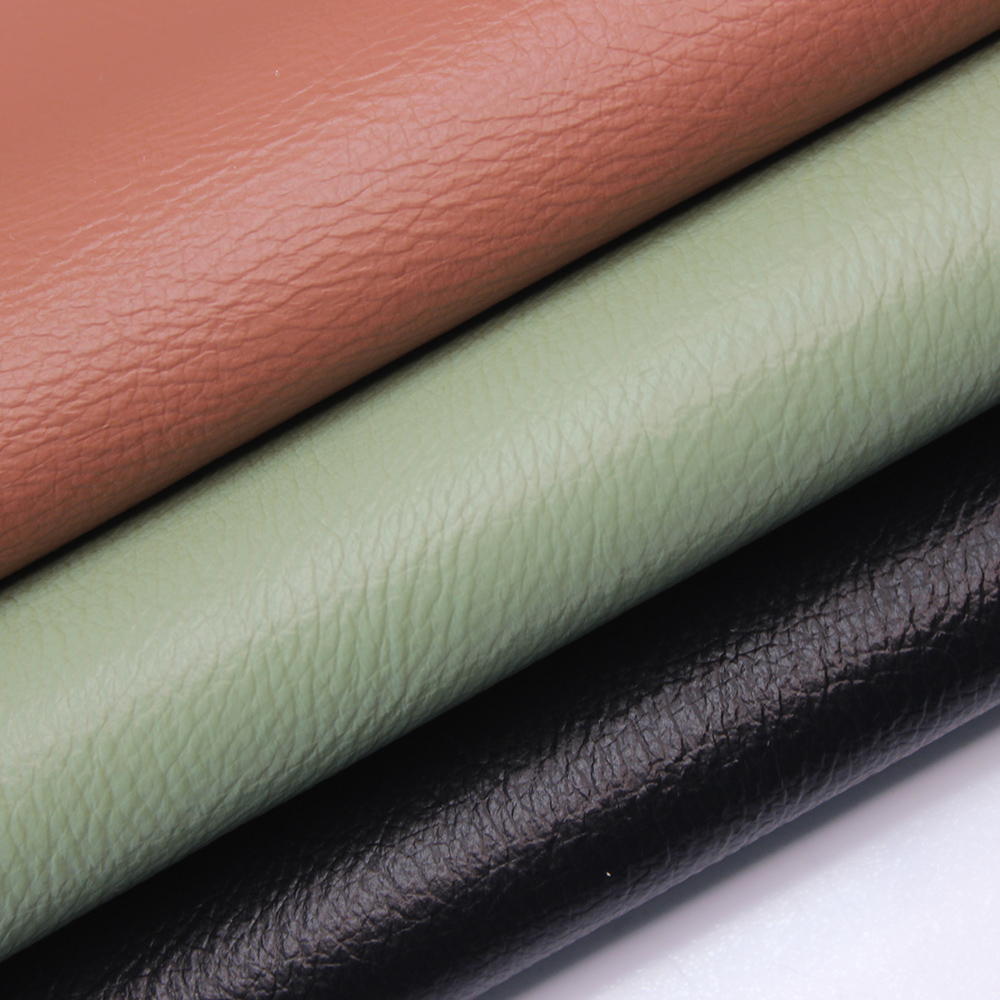
PVC Leather Samples for Different Applications
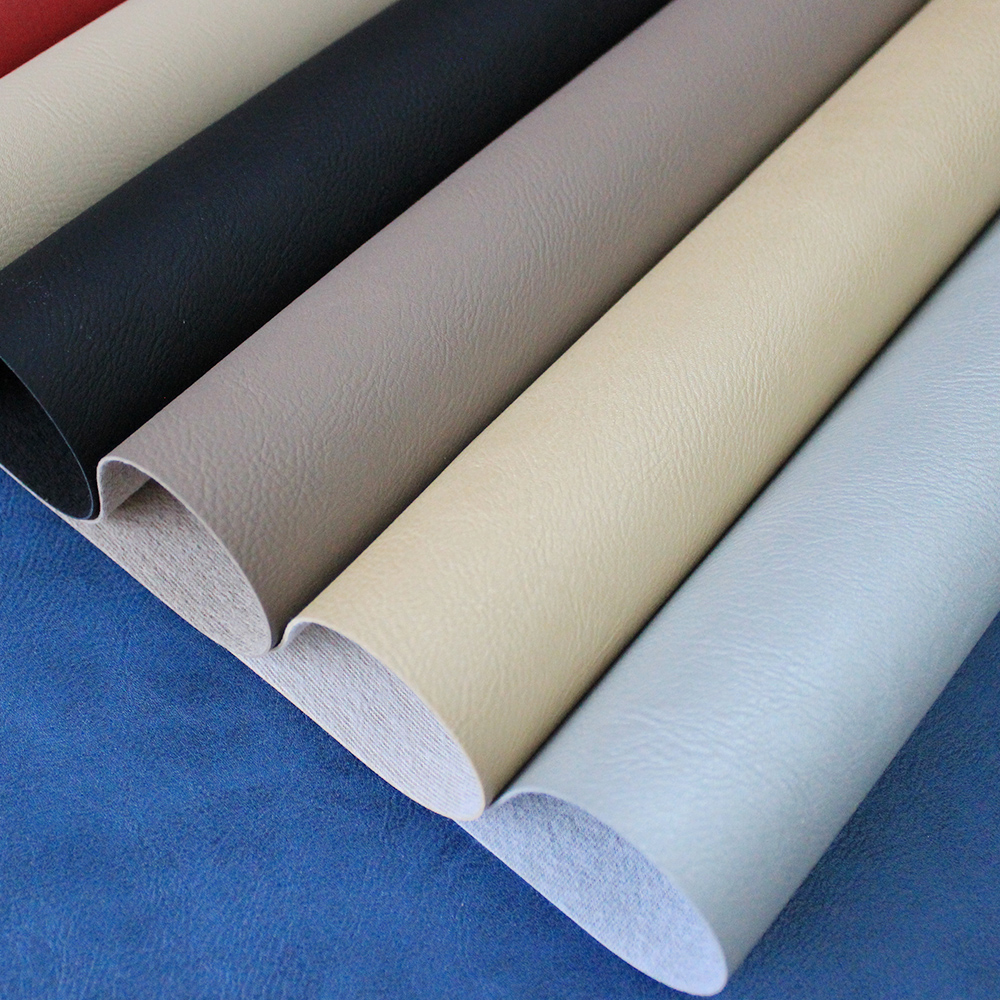
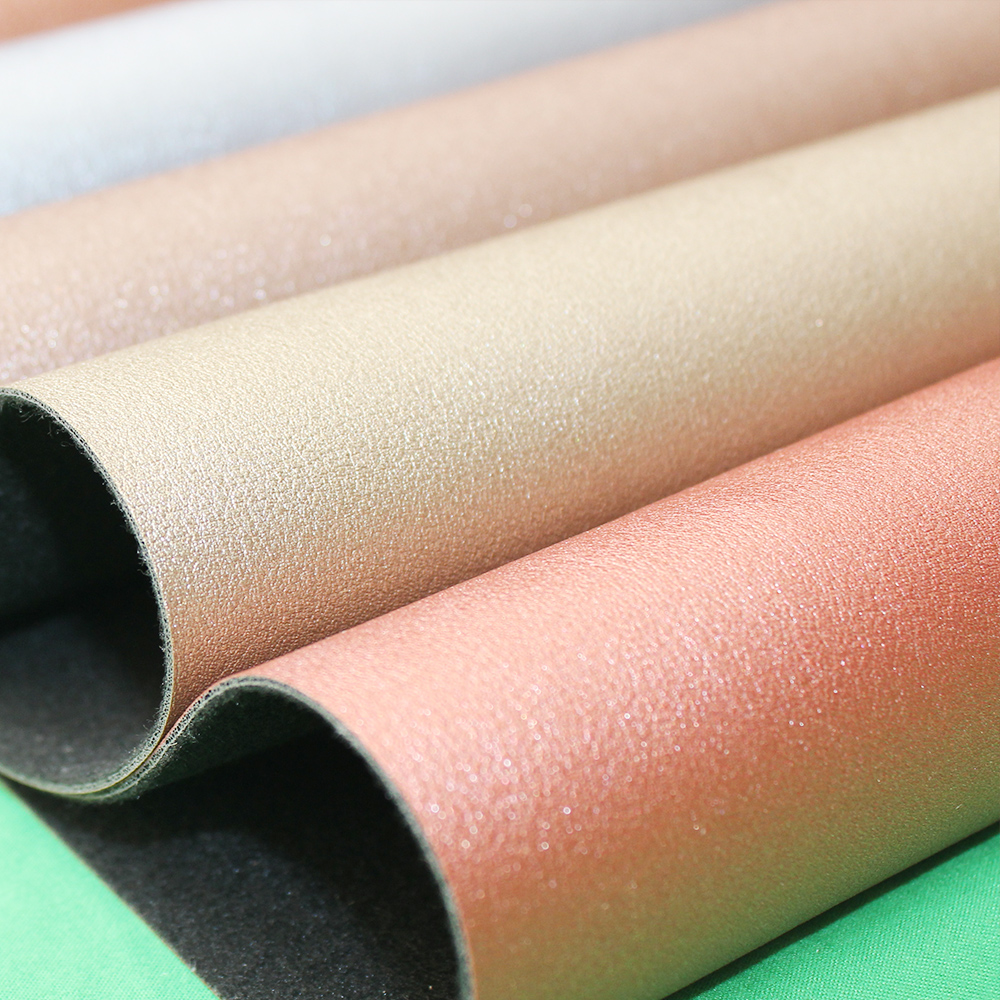
Compare representative PVC leather constructions for automotive, furniture, bag and footwear production before selecting materials for bulk orders.
Create an Approved Sample for Bulk Production
Once the material has passed evaluation, keep an approved physical reference.
This can be treated as the approved sample or golden sample for the order.
The approved reference should represent the agreed:
- Color
- Grain
- Finish
- Thickness
- Backing
- Hand feel
- Overall appearance
The purchase specification should identify the approved product clearly.
A useful bulk-order specification includes:
| Specification | Confirmation |
|---|---|
| Application | Exact product or component |
| Product Code | Confirmed material reference |
| Material | PVC or other agreed construction |
| Color | Approved physical sample |
| Grain | Approved surface reference |
| Finish | Approved gloss or special effect |
| Thickness | Specification and tolerance |
| Backing | Exact backing construction |
| Width | Effective roll width |
| Hand Feel | Approved reference |
| Performance | Required test standards |
| Quantity | Order quantity and tolerance |
| Packing | Roll length, labels and export requirements |
If a customized material is being produced, the approved sample becomes particularly important because it helps both buyer and supplier compare bulk production with the same reference.
Check Bulk Material Against the Approved Sample
Sample approval should not be the end of quality control.
When bulk material arrives or enters production, compare representative rolls with the approved reference.
Check for consistency in:
- Color
- Grain
- Gloss
- Thickness
- Backing
- Hand feel
- Surface appearance
Where relevant, also check:
- Roll width
- Roll length
- Surface defects
- Color variation between rolls
- Print or embossing consistency
If the order includes defined performance requirements, the agreed inspection or testing process should also be followed.
This helps prevent a situation where the initial sample is approved but bulk material differs from the reference.
Common Mistakes When Evaluating PVC Leather Samples
Choosing by Color and Grain Only
An attractive surface does not confirm production suitability.
Backing, flexibility and processing performance also need evaluation.
Choosing the Thickest Material
Thicker does not automatically mean stronger or more durable.
Thickness should match the product structure.
Ignoring the Backing
The backing can change stretch, stability, sewing and bonding behavior.
Using Only a Small Swatch
Small swatches are suitable for initial appearance checks but not for complete production testing.
Testing with Different Equipment
Testing should reproduce the actual factory process as closely as possible.
Skipping Adhesive Testing
A material may sew well but fail when bonded to the intended substrate.
Assuming One Performance Standard Fits Every Application
Automotive seats, handbags, sofas, shoes and packaging do not require identical tests.
Approving Without a Physical Reference
Photographs and written specifications alone may not be enough for color, grain and hand-feel comparison during bulk production.
A Practical PVC Leather Sample Approval Process
A simple evaluation workflow is:
1. Define the application
↓
2. Select initial material options
↓
3. Check color, grain, thickness and backing
↓
4. Request a larger sample
↓
5. Test cutting, sewing, folding, bonding or upholstery
↓
6. Perform required laboratory tests
↓
7. Produce a representative finished product
↓
8. Approve the physical reference
↓
9. Confirm the written specification
↓
10. Compare bulk production with the approved sample
This process is more reliable than choosing PVC leather according to photographs or basic specifications alone.
Evaluating PVC Leather for Your Project
PVC leather sample evaluation should reproduce the conditions the material will experience during real manufacturing and use.
A good-looking sample is only the first step.
The most useful evaluation combines:
appearance + construction + processing + performance + approved physical reference
For information about how PVC coatings and textile structures work together, read What Is PVC Synthetic Leather? and Common PVC Leather Backing Options.
Xiangze Leather supplies PVC synthetic leather for automotive interiors, motorcycle seats, furniture, bags, footwear, packaging and decorative applications.
Tell us your finished product, required grain and color, thickness, backing, manufacturing process and performance requirements. We can recommend suitable materials and provide physical samples for production evaluation before bulk ordering.